 Water damage drying
 Fire & smoke cleanup
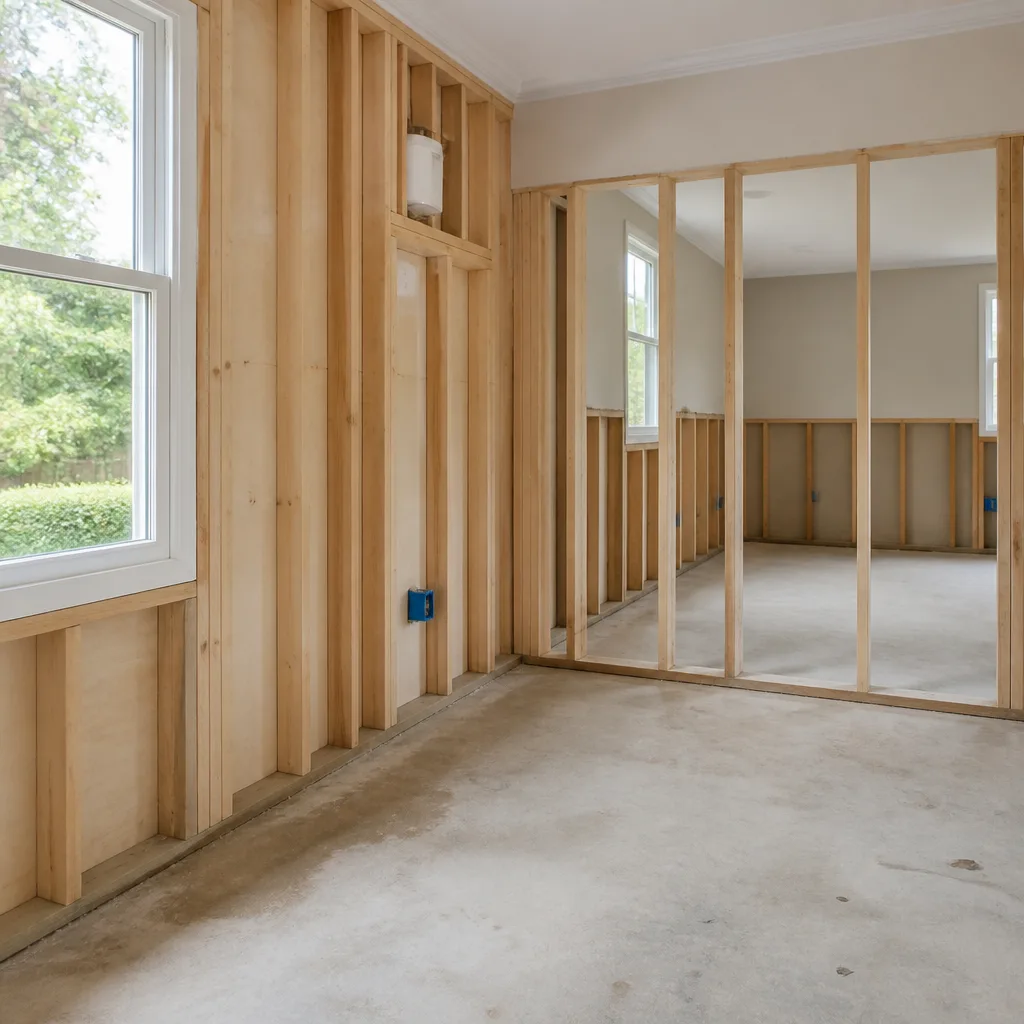 Mold remediation
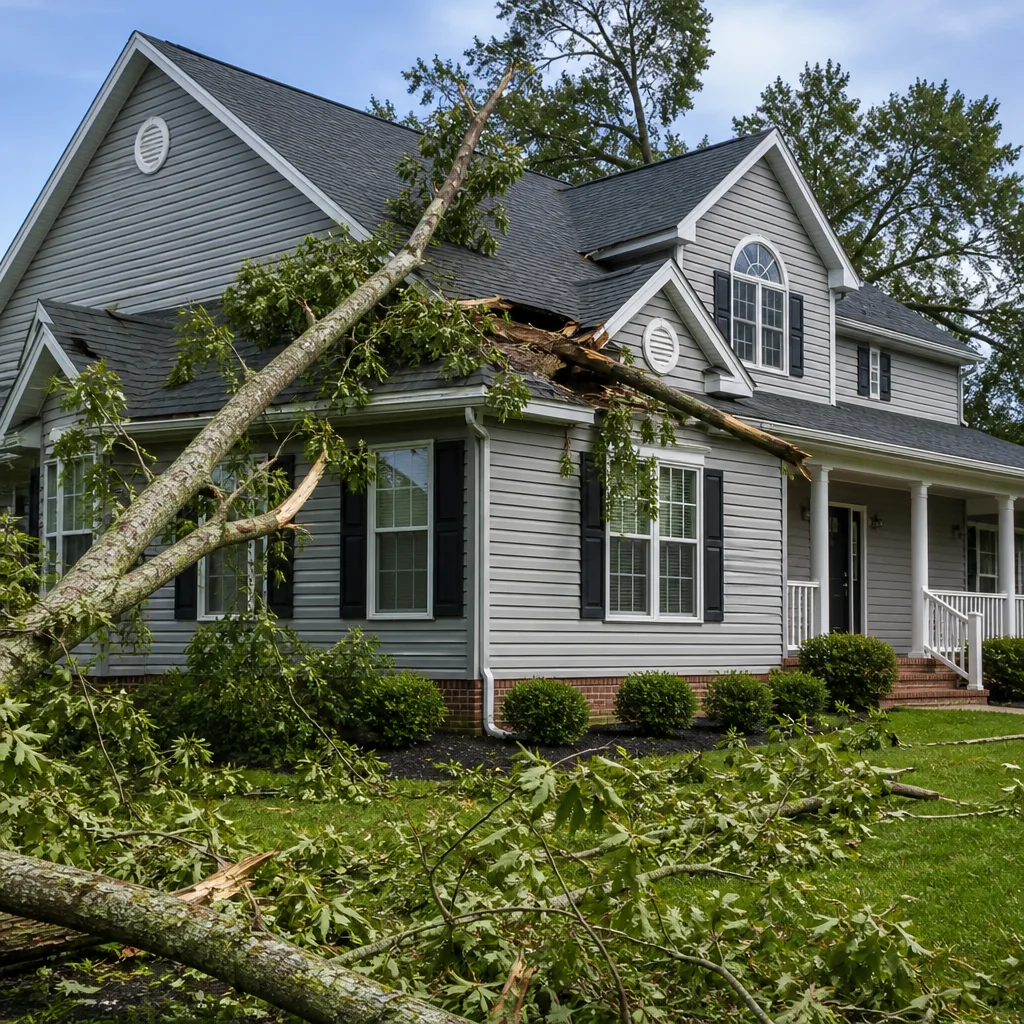 Storm response
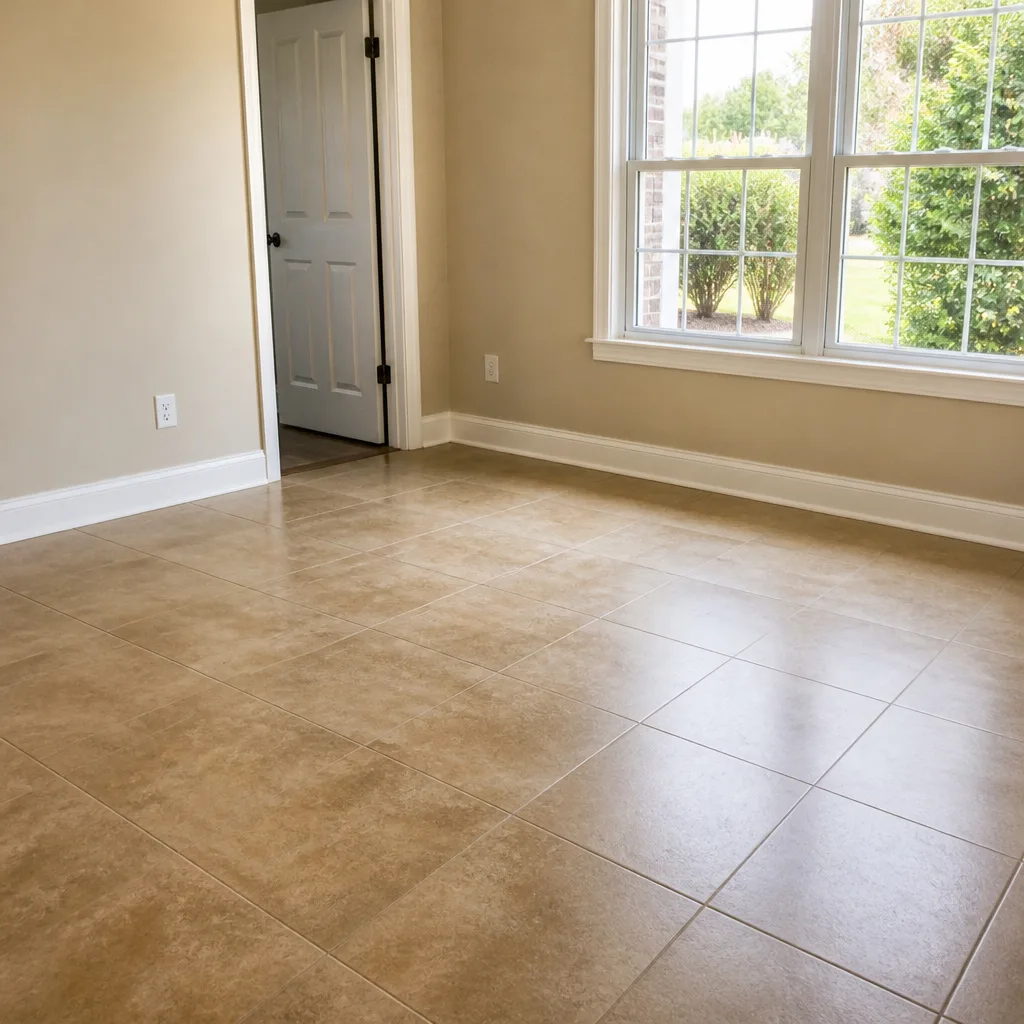 Sewage cleanup
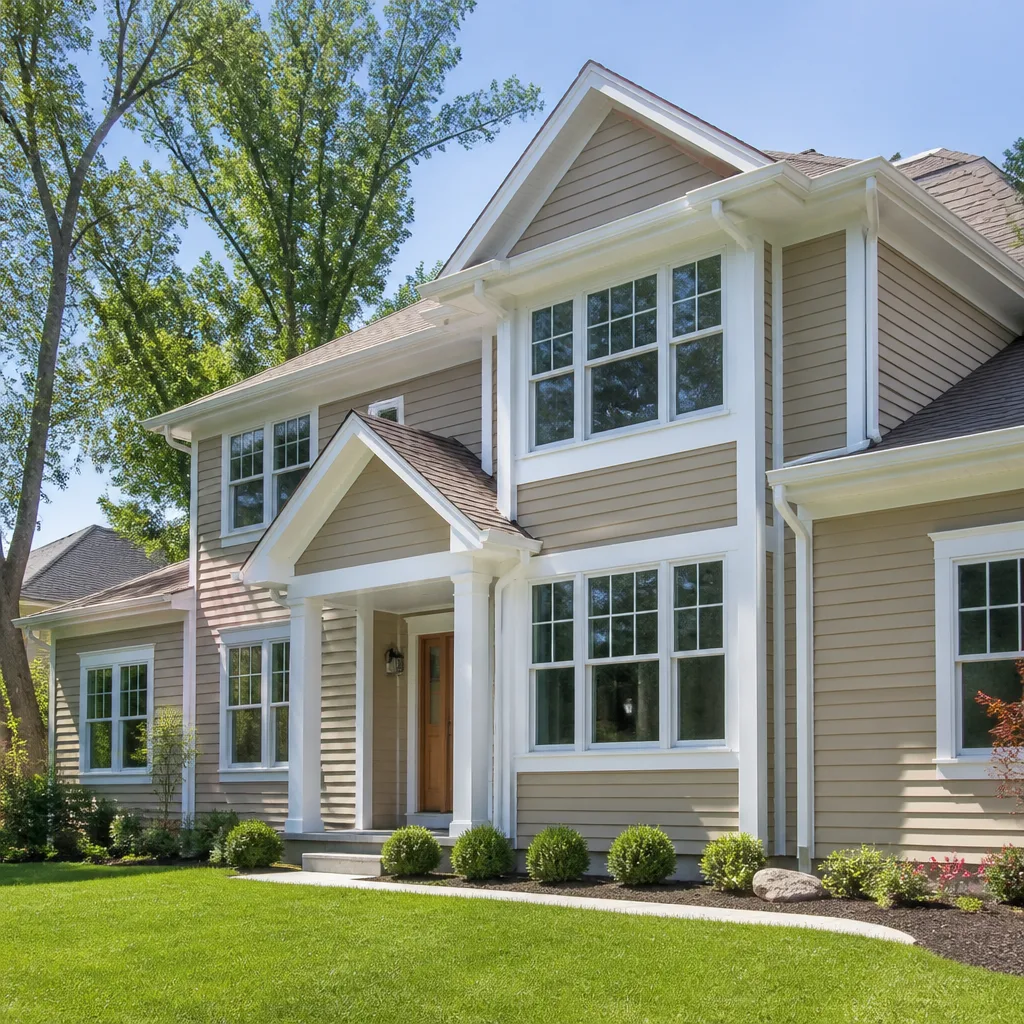 Reconstruction
Free visual inspection and a written scope of work before any mitigation begins - photos, moisture readings, and drying logs go in your claim file
The scope we write is the scope we bill. Anything new gets shown to you, in writing, before we touch it.
Get your free estimateFast, Reliable Mold Remediation Across Canyon Lake
Mold remediation in Canyon Lake usually runs between $1,800 and $6,500 depending on how far the growth has spread behind stucco and into wall cavities. We reach most Canyon Lake homes within 60 to 90 minutes because our Rancho Cucamonga crews are on the 15 freeway corridor, not across the county. This is a gated community built around a 400-acre private lake, and that lake changes how mold behaves here. It isn’t wildfire smoke or ash driving growth the way it does in neighboring Riverside County cities. It’s water: elevated water tables, winter runoff against rear retaining walls, and lake-fed humidity that never fully leaves near-shore homes. If you suspect mold in a Canyon Lake property, call (844) 716-1094 and we’ll send a certified tech who measures moisture before touching anything.
Why Flood Guard Water Damage Is Canyon Lake’s Preferred Mold Remediation Company
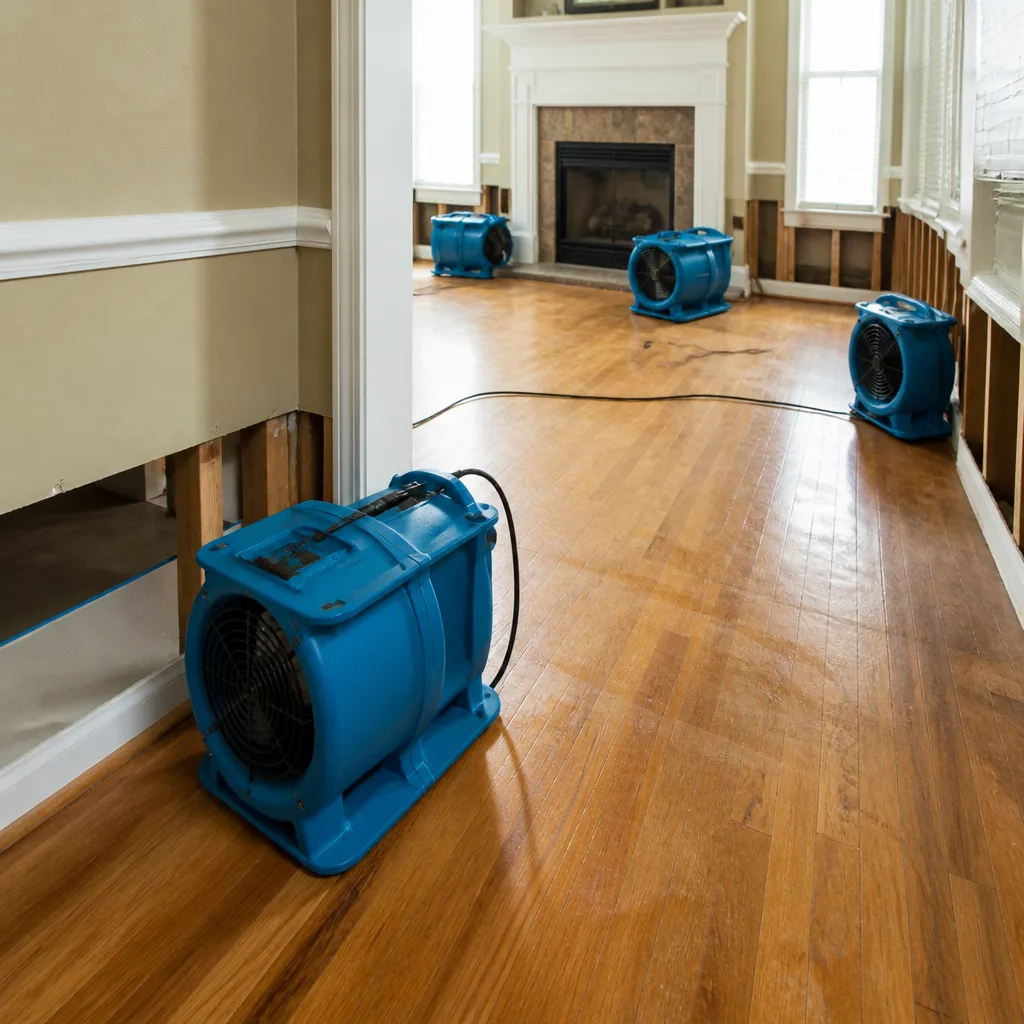
Noel Ibarra built Flood Guard around a simple principle: the equipment has to match the problem. Canyon Lake homes from the 1970s through 1990s hide moisture behind stucco and wood-frame construction in ways a surface inspection won’t catch. We work with IICRC-certified methodology, which means every mold job here begins with moisture mapping, not a glance and a quote. Our Mold Remediation team carries Dri-Eaz drying systems, the same commercial-grade brand used on large-loss jobs, and we document every reading. That matters in Canyon Lake, where a homeowner can’t see what’s happening inside a wall cavity without the right instruments.
We also know the local failure patterns. Hillside view houses above the lake take runoff against downhill-facing patios and rear retaining walls every winter. Tract-style homes near the water sit on soil that holds moisture year-round. A generalist who sprays the visible patch and leaves won’t fix either condition. We scope the water source, contain the affected area, and dry the structure until our readings say it’s dry, not until the surface feels dry to the touch.
Our reputation in Canyon Lake comes from completing jobs, not closing them. Photo-documented assessments, direct adjuster coordination, and a written scope before work starts are standard. We don’t open walls by default, and we don’t skip walls to save time. Injectidry technology lets us dry inside cavities without automatic demolition. That’s the difference between a crew that treats a symptom and a team that closes out a mold problem with clearance data.
Restoration work we handle
Mold Removal Service in Canyon Lake
Mold Removal Service in Canyon Lake addresses visible, active growth on surfaces like drywall, baseboards, window sills, and bathroom ceilings. The job involves physical removal of contaminated material, HEPA-filtered air scrubbing, and antimicrobial application to prevent regrowth. Canyon Lake homeowners typically call us after spotting black staining around a window frame or smelling that musty odor near a rear patio door after winter rains. A contained surface-level removal in a single bathroom or closet typically runs $1,800 to $3,200 in Canyon Lake. When growth extends behind baseboards or into wall cavities, the job moves into full remediation territory and costs climb accordingly.
Containment and Surface Removal
We set negative air pressure with HEPA-filtered air scrubbers before disturbing any moldy material. This prevents spores from spreading through the open floor plans common in Canyon Lake’s tract-style single-family homes. The affected drywall or trim comes out first, then we treat the framing behind it. Skipping containment is how a small bathroom problem becomes a whole-house spore event.
Source Correction Before Cleanup
Removing mold without fixing the moisture source means the same patch returns in months. On Canyon Lake Drive and the surrounding hillside streets, that source is often a failing rear retaining wall drain or a patio slab sloped toward the foundation. We identify the water path during the initial inspection and include source correction in the scope where it falls within our Water Damage Restoration service. That’s the step most spray-and-wipe outfits skip.
Mold Remediation Services in Canyon Lake
Mold Remediation Services in Canyon Lake go beyond surface cleanup to address hidden growth inside wall cavities, under flooring, and around structural framing. This is the service Canyon Lake homeowners need after a winter storm pushes runoff into a lower level, or after a slow slab leak goes undetected for weeks. Full remediation involves containment, removal of damaged drywall or insulation, structural drying with Dri-Eaz equipment, antimicrobial treatment, and post-remediation verification. In Canyon Lake, a full remediation with moderate cavity work on a single room typically lands between $4,000 and $6,500. Larger multi-room jobs on lakefront homes can exceed $8,000 depending on the square footage affected.
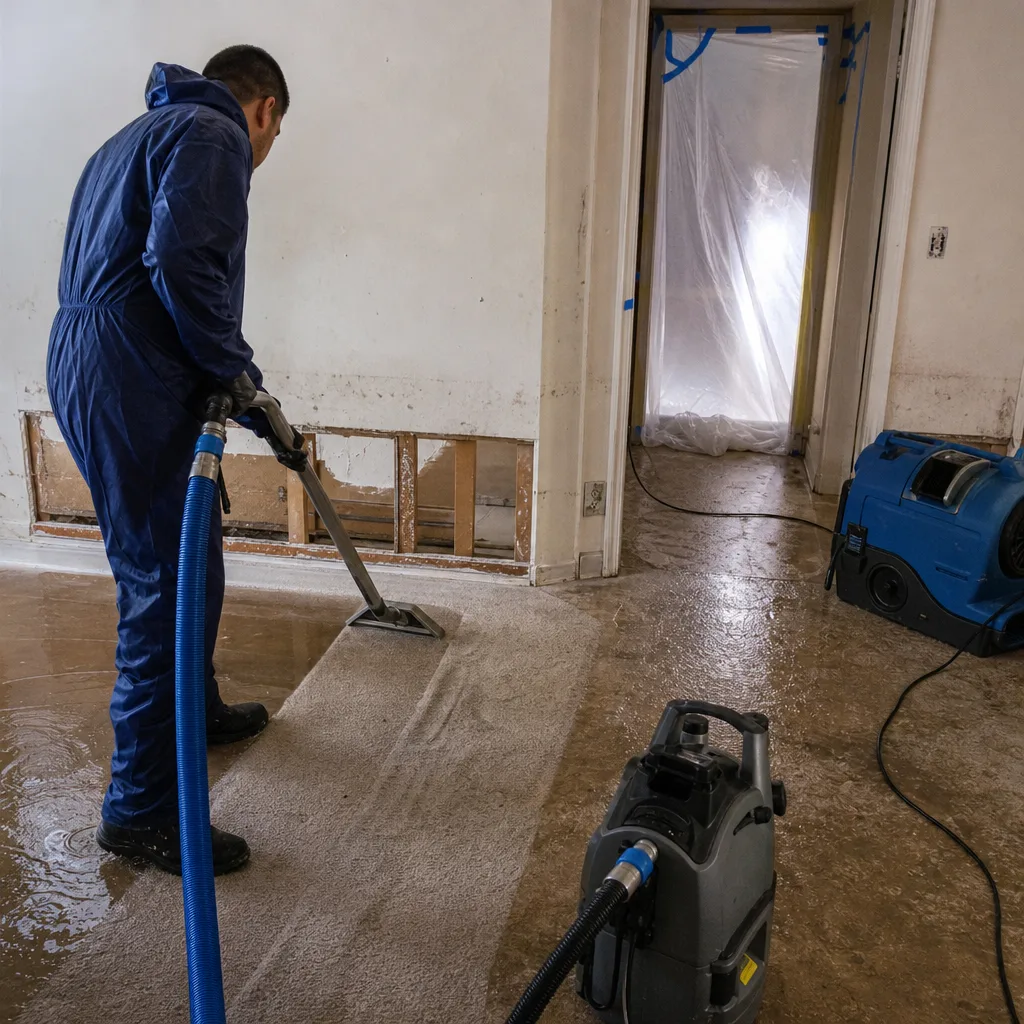
Structural Drying and Cavity Treatment
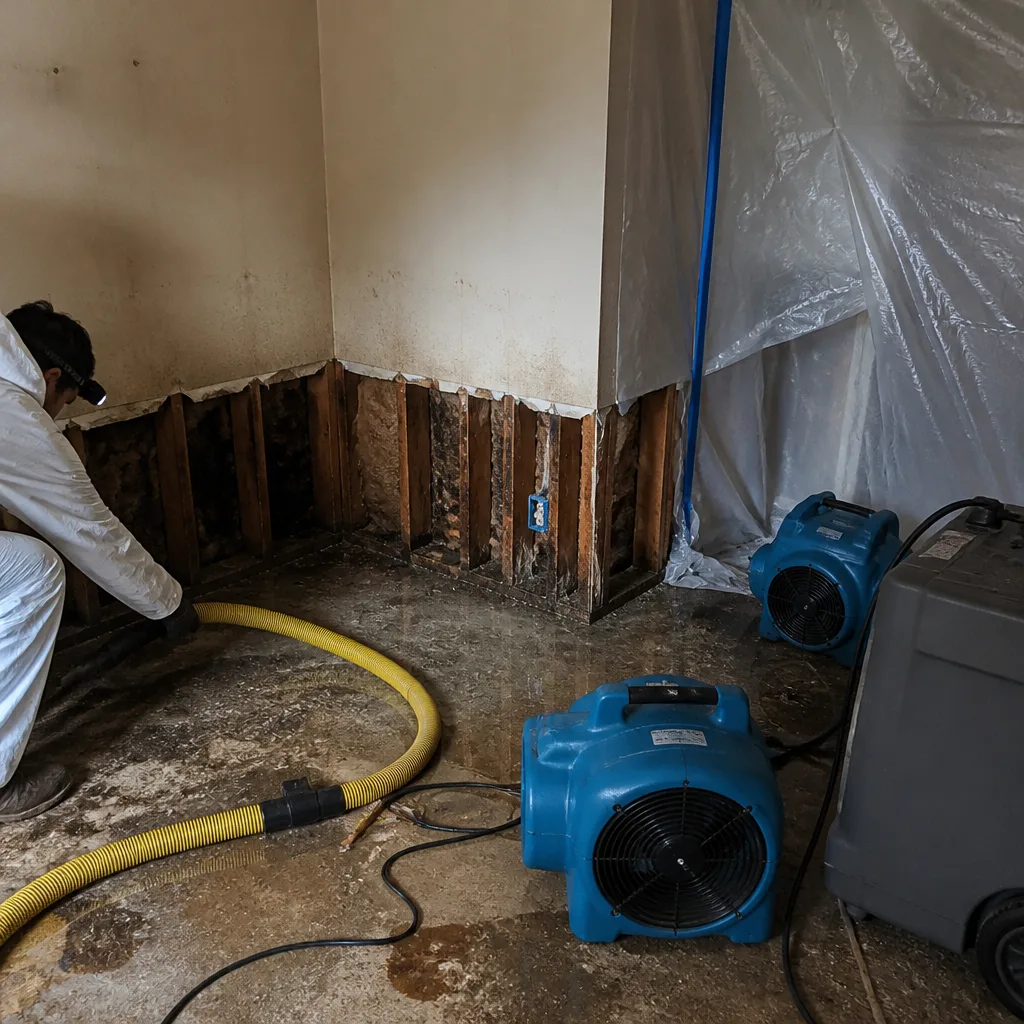
Canyon Lake’s stucco-over-wood-frame construction traps moisture behind the exterior cladding in ways a homeowner will never see. We use moisture meters to map exactly where water has wicked into framing, then deploy Injectidry systems to dry inside those cavities without tearing out every wall. Fewer walls opened means lower repair costs on the back end. But we’ll open a wall when the readings say it’s necessary, which is exactly what a certified protocol requires.
Post-Remediation Verification
We don’t hand you a verbal assurance that the mold is gone. We hand you documented readings. Post-remediation verification confirms the humidity levels and moisture content in treated materials have returned to acceptable ranges before we remove containment. In Canyon Lake, where the lake itself keeps ambient humidity elevated for near-shore homes, this verification step is the difference between a closed job and a callback in four months.
What happens when you call
- 1
A real person answersNo phone trees — you reach a local pro.
- 2
You get an upfront price rangeHonest numbers before anyone is dispatched.
- 3
A background-checked tech heads outLicensed & insured, dispatched right away.
- 4
You approve before work beginsNothing starts until you say go.
Trusted Brands We Service in Canyon Lake
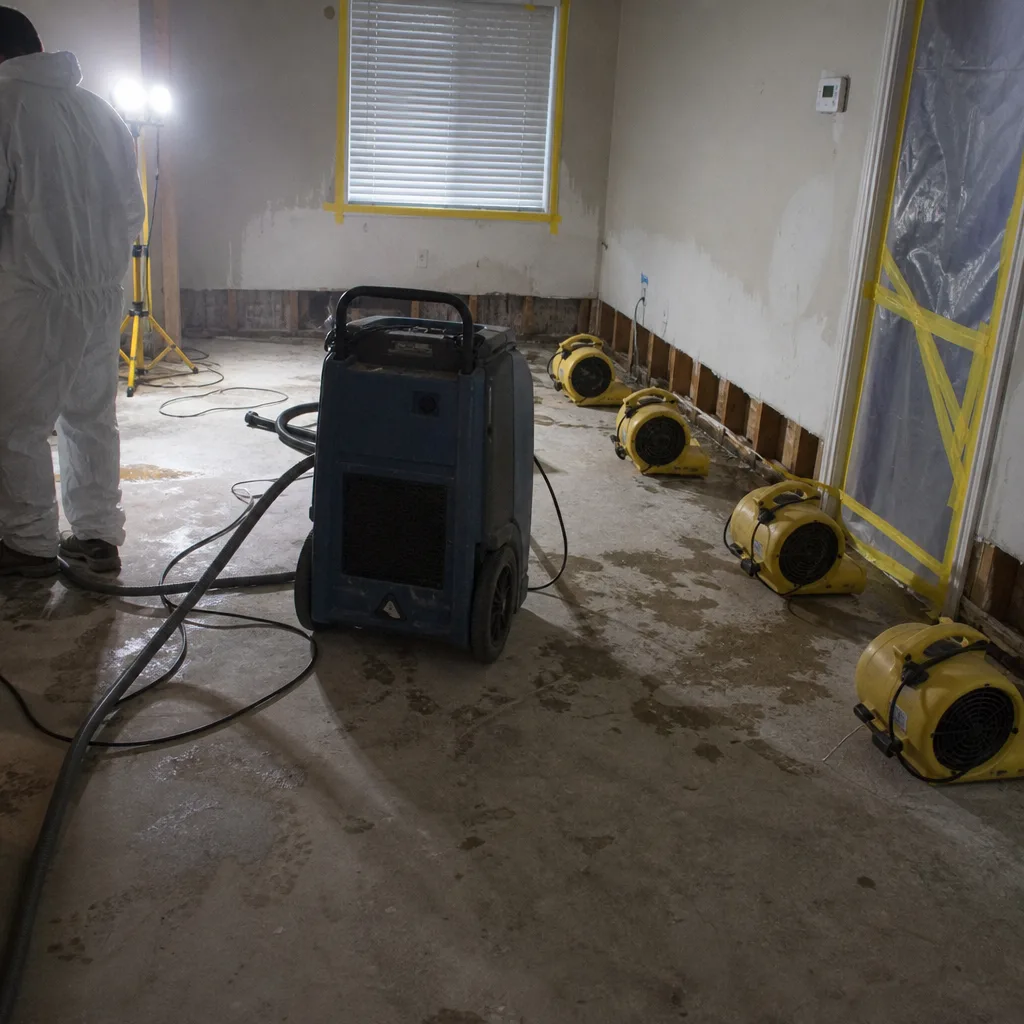
Our techs arrive in Canyon Lake with equipment from Dri-Eaz and Phoenix, the same brands used on commercial restoration jobs across Southern California. These aren’t consumer-grade fans from a big box store. They’re engineered to pull moisture from structural materials, not just circulate air in a room. For Canyon Lake homeowners dealing with hidden mold behind stucco, that equipment quality translates directly to faster drying times and less demolition. Injectidry capability also means we can dry wall and floor cavities without opening them automatically. We maintain our own equipment, calibrate our meters regularly, and show up ready to work on the first visit.
See the difference
 Before
 After
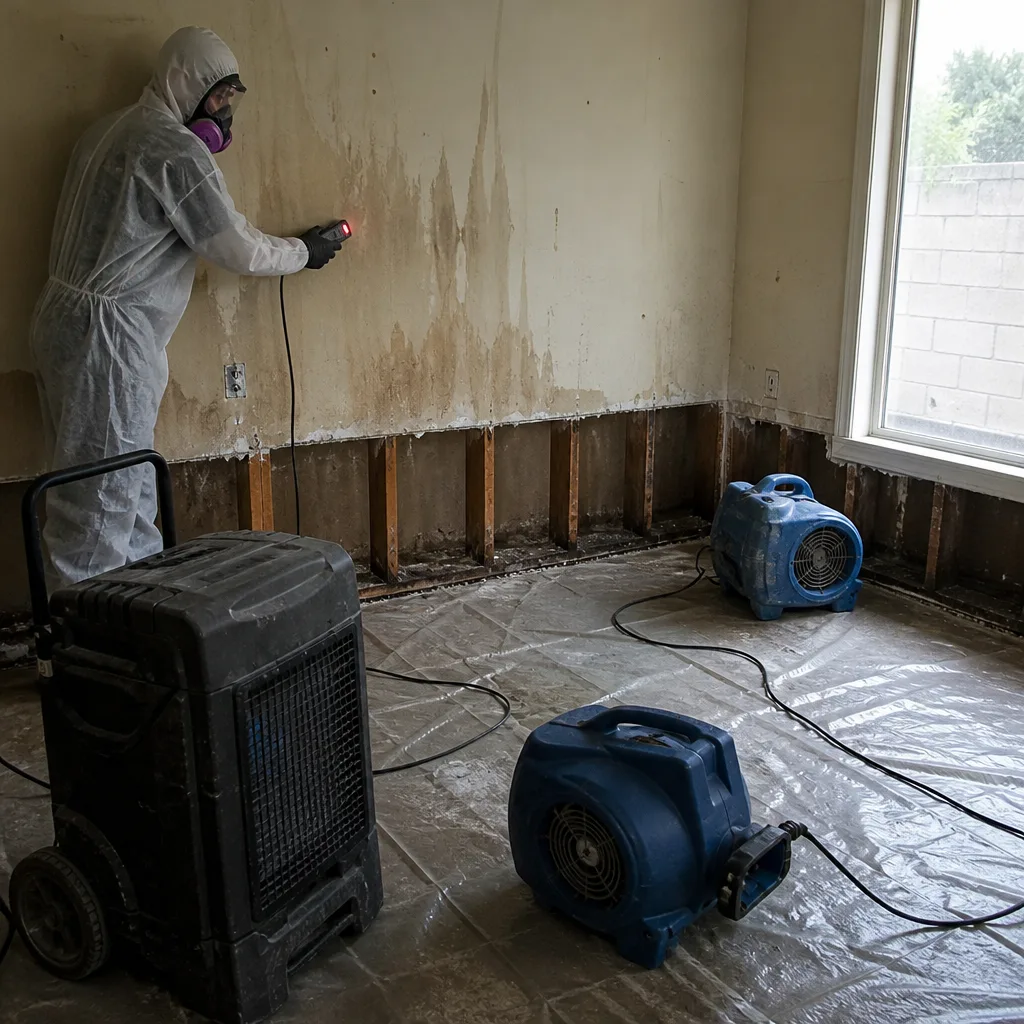 Before
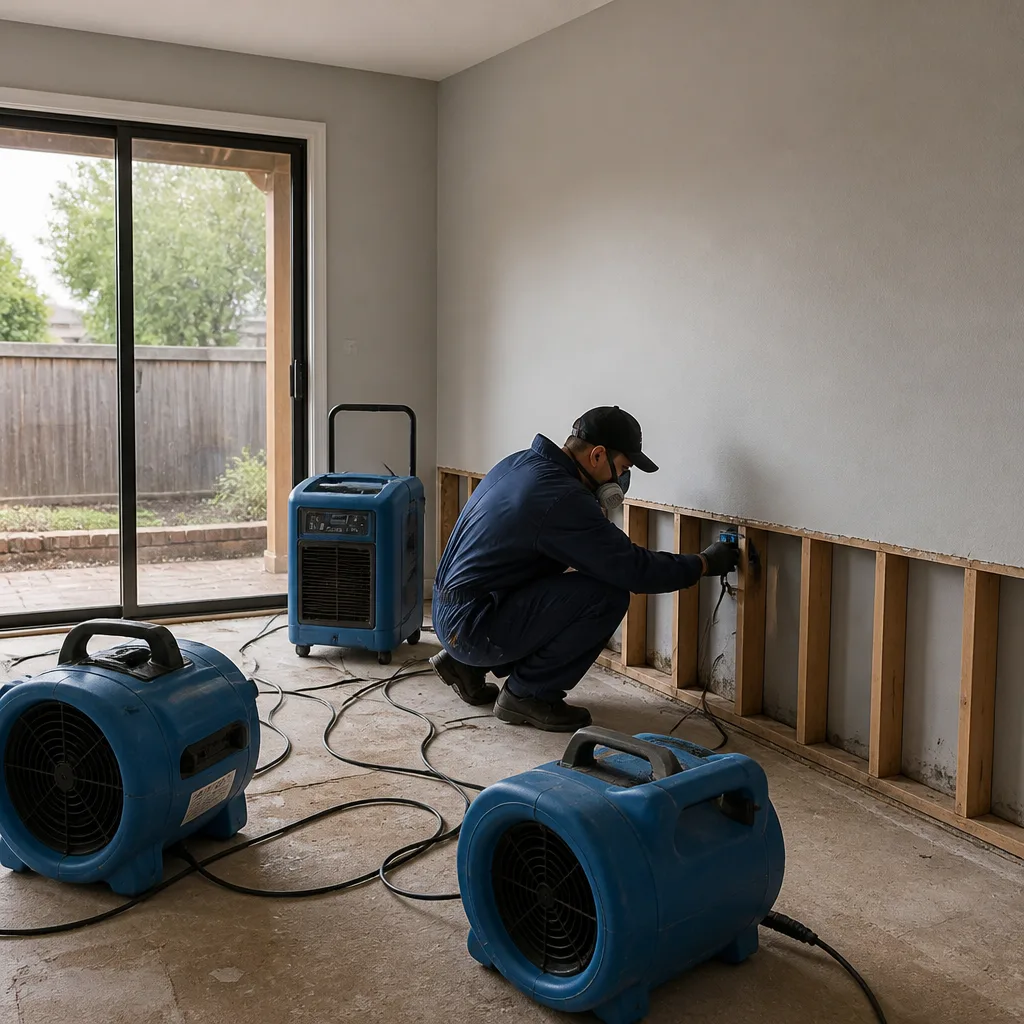 After
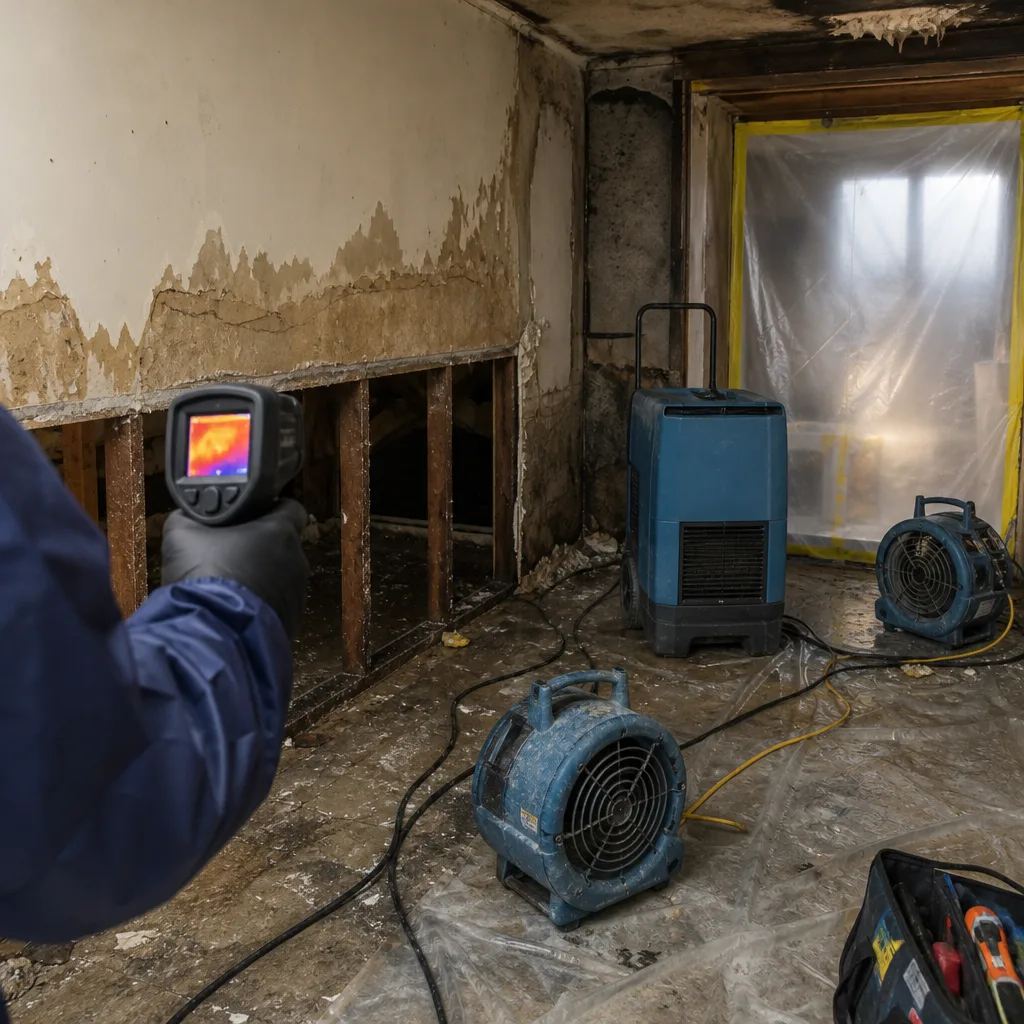 Before
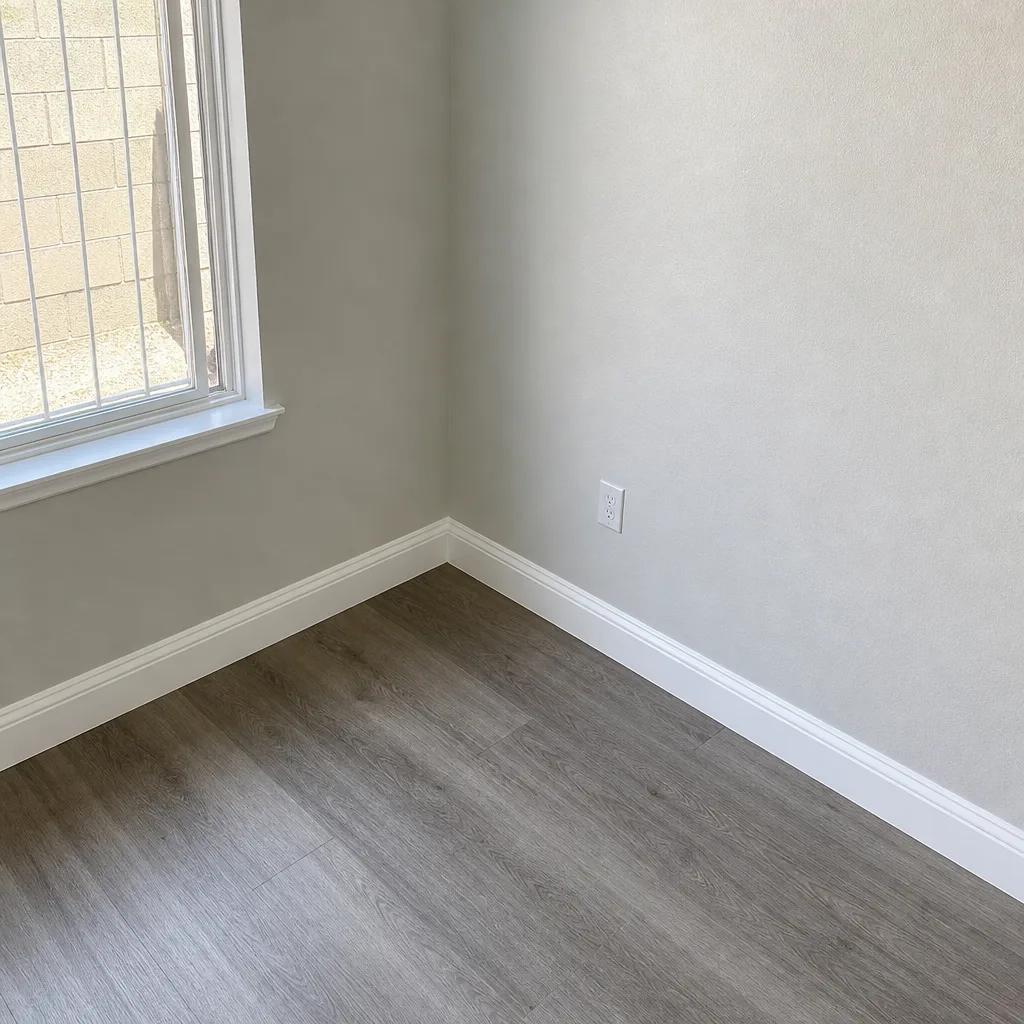 After
Common Mold Remediation Problems We See in Canyon Lake Homes
- Lake-fed humidity behind stucco: The private 400-acre lake acts as a permanent moisture reservoir, so near-shore homes on streets like Canyon Lake Drive sit in elevated ambient humidity year-round. Mold grows inside wall cavities without any visible leak or spill.
- Runoff trapped against rear retaining walls: Hillside homes with downhill-facing patios take winter storm runoff that saturates the soil behind retaining walls. That water wicks into wood-frame walls and the lower level long after the rain stops, which is when mold takes hold.
- Builder-grade doors and open frames left from the 1970s-1990s construction era: Original exterior doors and unsealed frames let category 2 water straight into wall cavities during storms. We regularly find hidden mold behind those areas in Canyon Lake’s tract-style homes.
- Contractors who dry the slab but skip wall cavity readings: After a flood, a generalist might dry the visible patio slab and call it done. The stucco-clad framing behind stays wet, and mold growth starts within 24 to 48 hours inside the wall.
Pricing for Mold Remediation in Canyon Lake, CA
Here’s what Canyon Lake homeowners should expect to pay. Surface-level mold removal in a single bathroom or closet: $1,800 to $3,200. Full remediation with structural drying and cavity treatment in one room: $4,000 to $6,500. Multi-room remediation on a lakefront or hillside home: $6,500 to $12,000 depending on how far growth has spread and whether retaining wall or drainage correction is needed. What moves the price: square footage affected, whether walls need opening, whether insulation must be replaced, and whether the source is an active water intrusion that requires water damage restoration first. We provide a written scope before work starts, so you know the exact number before we cut anything. Call (844) 716-1094 for a free estimate with no obligation.
We Also Serve Cities Near Canyon Lake
Our crews handle mold remediation across the Canyon Lake area, including Meadowbrook, Sedco Hills, Lakeland Village, and Quail Valley. If you’re near the lake but outside the gates, we still reach you fast from the 15 corridor. For full details on coverage, see Mold Remediation in Canyon Lake.
Serving Canyon Lake, CA — Our Local Coverage Area
We’re based in the Canyon Lake area and know this community well. Use the map below to see our service coverage — if you’re nearby, we can almost certainly help.
FAQs About Mold Remediation in Canyon Lake
The lake itself keeps ambient humidity high for near-shore homes, and that moisture penetrates stucco-clad wood-frame walls over time. Mold can grow inside a wall cavity without any visible leak, especially in 1970s-1990s tract homes where original vapor barriers have degraded. If you smell mold but see no water, call (844) 716-1094 and we’ll run moisture mapping to find the hidden source.
Yes, in hillside homes, a rear retaining wall that lacks proper drainage lets winter runoff saturate the soil directly against the downhill-facing wall of the house. That trapped water wicks into framing and lower-level drywall, creating conditions for mold growth days after the storm passes. We inspect the drainage path behind the wall as part of every hillside mold job in Canyon Lake.
We use moisture meters to map the affected wall cavity, then set containment and remove the affected drywall from the interior side. The framing is dried with Dri-Eaz dehumidification or Injectidry cavity drying, treated with antimicrobial, and verified before we rebuild. Stucco on the exterior usually stays intact, which saves you from a full exterior repair.
Mold removal addresses visible surface growth, while full remediation handles hidden colonization inside wall cavities, insulation, and framing. In Canyon Lake, where the lake keeps humidity elevated, surface-only jobs often fail because the real problem is inside the wall. Our remediation service includes containment, structural drying, and post-remediation verification documentation.
Yes. Hillside homes on graded slopes above the lake take runoff against rear retaining walls and downhill-facing patios, and that water enters at the foundation level, not the roofline. Builders’ original patio drains and retaining wall drainage from the 1970s-1990s era were rarely scoped for the storm volumes Canyon Lake gets from Santa Ana and Elsinore mountain convergence storms. If your lower level flooded and now smells musty, call (844) 716-1094 before mold spreads into the framing.
For a free estimate on mold remediation anywhere in Canyon Lake, call Flood Guard Water Damage at (844) 716-1094. We’ll send a certified tech who measures the moisture before doing anything else.
Written by Noel Ibarra, Owner at Flood Guard Water Damage, serving Canyon Lake and the Inland Empire with IICRC-certified mold remediation, water damage restoration, and fire damage restoration.