
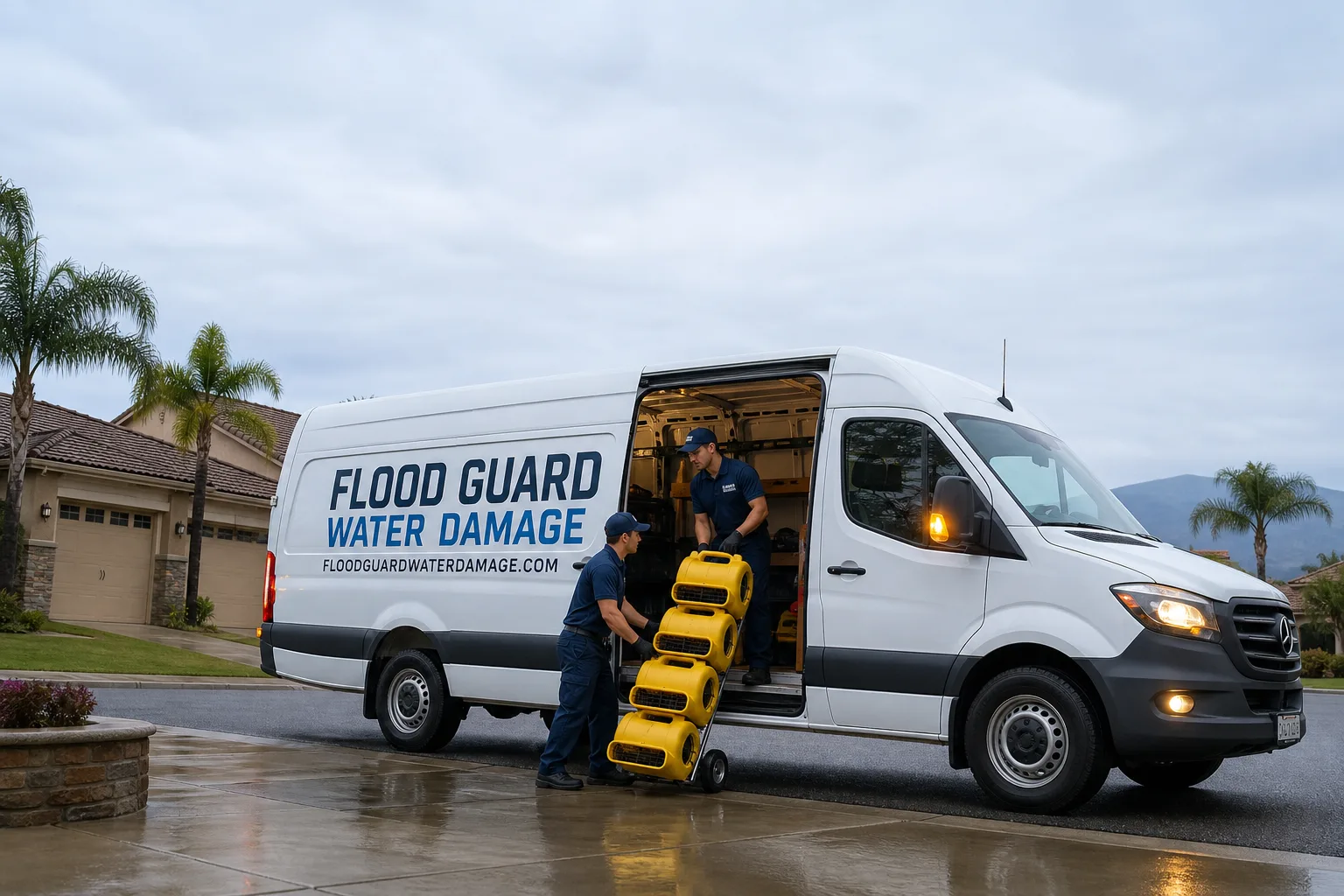
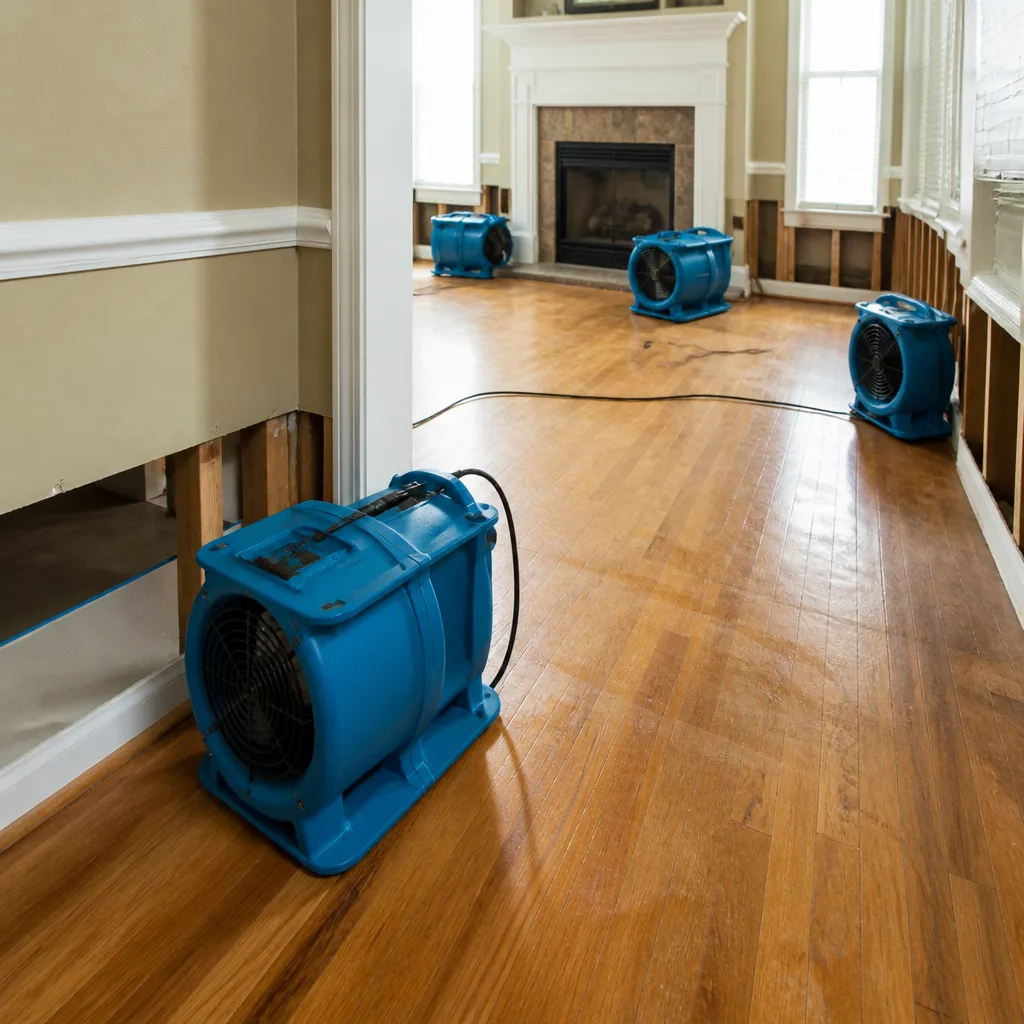
 Water damage drying
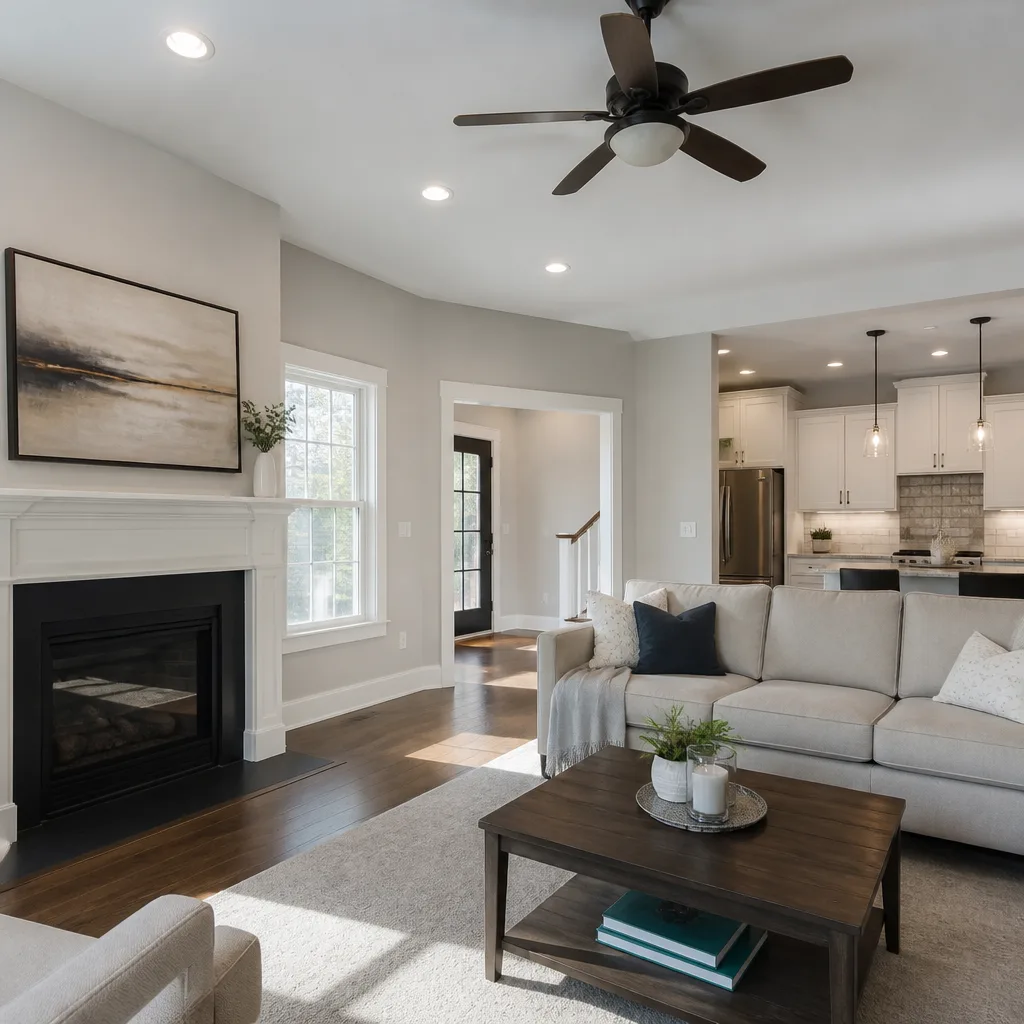 Fire & smoke cleanup
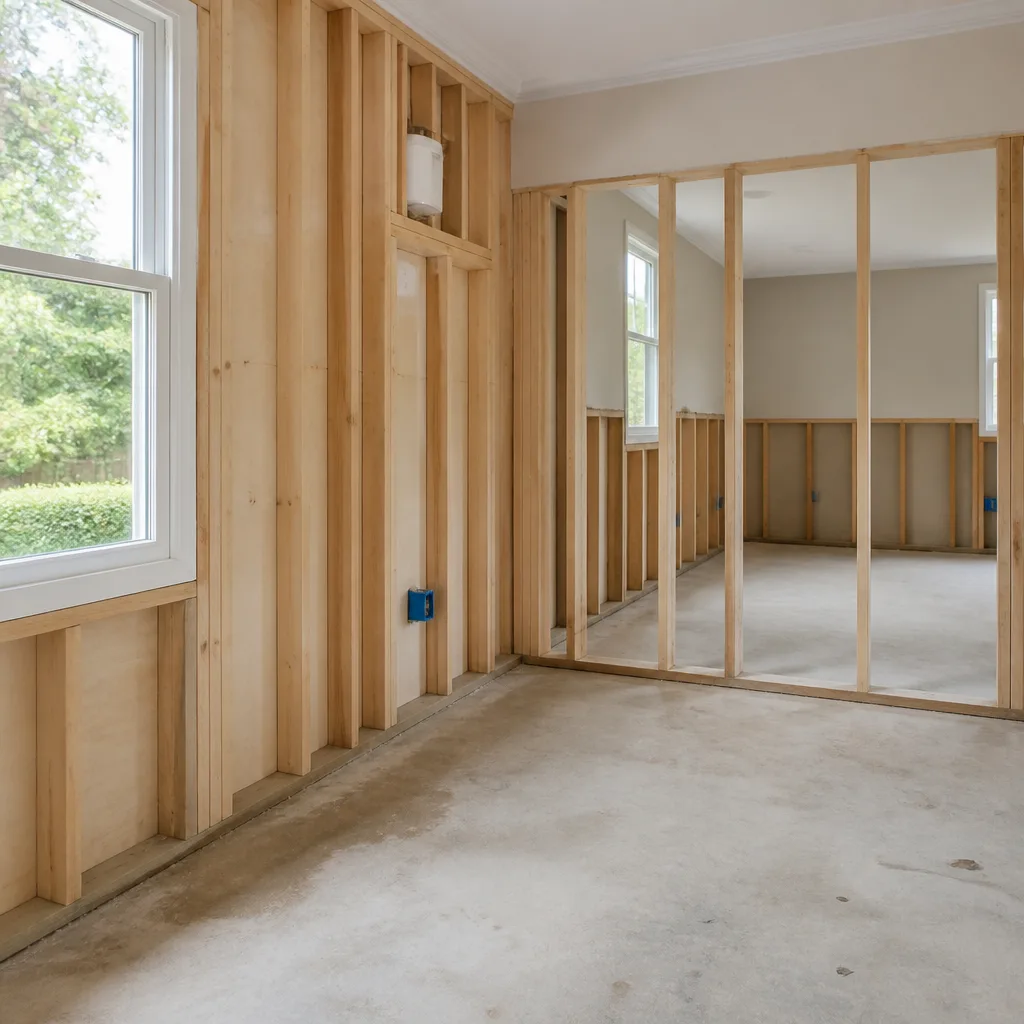 Mold remediation
 Storm response
 Sewage cleanup
 Reconstruction
Free visual inspection and a written scope of work before any mitigation begins - photos, moisture readings, and drying logs go in your claim file
The scope we write is the scope we bill. Anything new gets shown to you, in writing, before we touch it.
Get your free estimateFast, Reliable Mold Remediation Across Grand Terrace
Mold remediation in Grand Terrace usually starts with a call from a homeowner who’s been watching a dark patch spread along the baseboard near the rear patio door, or across the drywall above the garage slab. The fix isn’t just spraying bleach on the visible growth. It’s finding where the hillside runoff off Blue Mountain is entering the wall cavity, removing the contaminated material under containment, drying the structure with commercial-grade equipment, and documenting every step. Our crews know this city’s 1950s to 1980s tract housing well, and we respond fast because a wet wall in Grand Terrace doesn’t stay wet long before it turns into a bigger problem. Call (844) 716-1094 and we’ll get a technician to your home, moisture meter in hand.
Why Flood Guard Water Damage Is Grand Terrace’s Preferred Mold Remediation Company
The homes sitting on sloped lots below Blue Mountain in Grand Terrace don’t behave like the flat-lot slabs of Colton or Highgrove. Runoff sheets down driveways, pushes against rear patio doors, and wicks under the edge of slab foundations. We’ve mapped enough of those failures to know that mold here most often starts low, not at the roofline. That’s why our first step on any Grand Terrace call is a moisture map of the downhill side of the home, not a quick look at the ceiling. It’s the part other crews skip, and it’s the part that keeps mold from returning months later.
Local homeowners in 92313 keep calling us because we treat mold remediation as a science, not a cleanup. Every job follows IICRC-certified methodology. That’s the restoration industry’s technical standard, not a marketing phrase. We use the same equipment brands you’d find on a large commercial loss: Dri-Eaz dehumidifiers, Phoenix air movers, Injectidry wall-cavity drying systems. When we set containment in a Grand Terrace living room, the containment actually holds. When we run negative air, the spores leaving the work zone are filtered, not pushed into the hallway.
Noel Ibarra leads the team, and his approach comes from years of handling emergency water events and the mold that follows. The crew documents everything: moisture readings, equipment logs, photo records, clearance testing. If your insurance adjuster needs to see the paper trail, we coordinate directly with them. Grand Terrace homeowners with mid-century and late-20th-century homes need a remediation contractor who understands what stucco cracks on an uphill wall mean after a Santa Ana storm. That’s us.
Restoration work we handle
Black Mold Removal in Grand Terrace
Black mold removal in Grand Terrace almost always traces back to the same story: water found the lowest point of the home and sat there. In this city, that means the rear patio door, the downhill-facing wall, or the garage slab near the flatwork. The mold itself may look alarming, and it should, but the real work is removing the moisture source and the contaminated material together. Running antimicrobial without fixing the water entry means you’ll be looking at the same stain next winter. We won’t do half a job. We contain the area, remove damaged drywall and insulation, treat the framing, and dry the structure until moisture readings match the baseline for a dry Inland Empire interior.
Containment and HEPA Filtration
A black mold job in an occupied Grand Terrace home requires containment. We set physical barriers around the work zone, run HEPA-filtered negative air machines, and make sure the spores from the affected wall cavity never reach the rest of the house. On older tract homes with open floor plans, this step matters more than ever. A 1970s ranch on a sloped lot has shared air paths between the rear rooms and the kitchen, and without containment the problem migrates.
Category 2 Water and the Plate Line
When hillside runoff enters through a patio door or wicks under a slab edge, we’re usually dealing with Category 2 water, meaning it carried soil, debris, and microbial load with it. The bottom plate of the wall is the danger zone. We pull the lower run of drywall, expose the plate, and treat it before any reconstruction. On a recent job off Michigan Street, the paper on the drywall was already spotting by the time we mapped the cavity. Containment went up, the wet lower run came out, and Injectidry lines went into the wall bay. The room was dry before the drywallers were even scheduled.
Mold Removal Contractor in Grand Terrace
A mold removal contractor in Grand Terrace has to be more than a handyman with a spray bottle. We’re talking about a home’s structural health and the air your family breathes. The homes here, largely built between the 1950s and 1980s, were framed with materials that hold moisture once it gets in. Stucco exteriors crack after dry summers. Composition shingles seal, then split. When the first heavy storm hits, water moves through those openings fast and settles at the lowest elevation of the lot, usually against a rear wall or into a garage. A proper contractor doesn’t just cut out the stained drywall. They find the entry point, dry the cavity, treat the framing, and hand you a written scope before the first cut.
Moisture Mapping Before Demolition
We don’t remove drywall based on a visual guess. Before any demolition on a Grand Terrace home, we run a moisture map with probes and meters. The uphill interior walls are often the quiet suspects. After a storm, water can wick under the slab edge and travel several feet inward without ever showing on the finished surface. We open walls when necessary, not by default. When we do open one, it’s because the measurements told us exactly where the water is.
Injectidry for Non-Invasive Drying
Injectidry is the difference between drying inside the wall cavity and tearing the whole wall out to dry it. Grand Terrace homes on sloped lots with grade changes tend to hold water against foundation walls and under flooring. Injectidry lets us pull that moisture from enclosed spaces without unnecessary demolition, which means less reconstruction cost and a faster return to normal life. We use it on crawl spaces, wall bays, and under tile or hardwood where the water has traveled from the point of entry.
Trusted Brands We Service in Grand Terrace
Our Grand Terrace customers regularly ask what equipment we’re bringing into their homes, and the answer is always the same: the gear professional restorers actually trust. We run Dri-Eaz dehumidifiers and Phoenix air movers, the same brands you’d see on a commercial water-loss dryout in a large building. Injectidry handles the concealed spaces. B-Air moves air where the plate line meets the slab. These aren’t consumer machines from a home center. They’re built to pull moisture from structural materials at a rate that prevents mold from getting a second foothold. Our local stock of filters, hoses, and containment supplies means we’re not waiting on a parts house across the county when a Grand Terrace job needs to start today.
See the difference
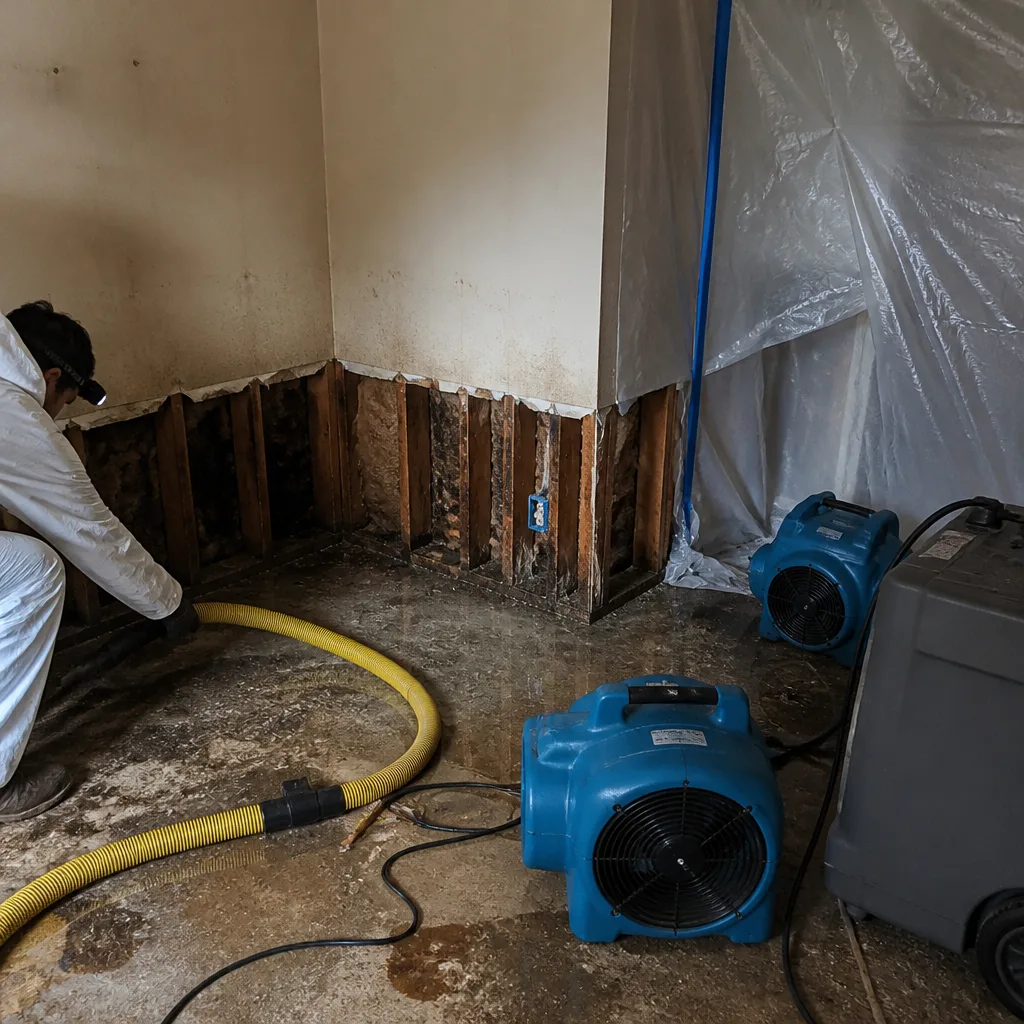 Before
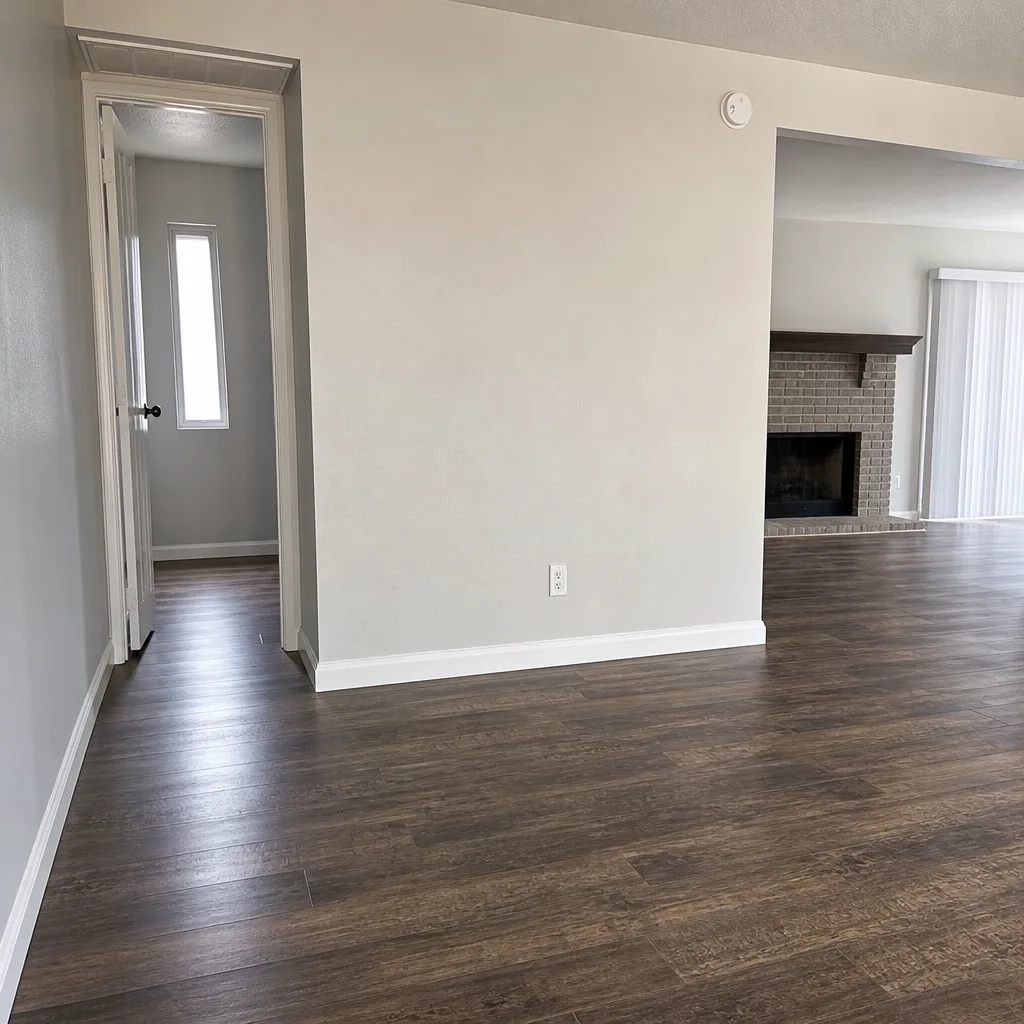 After
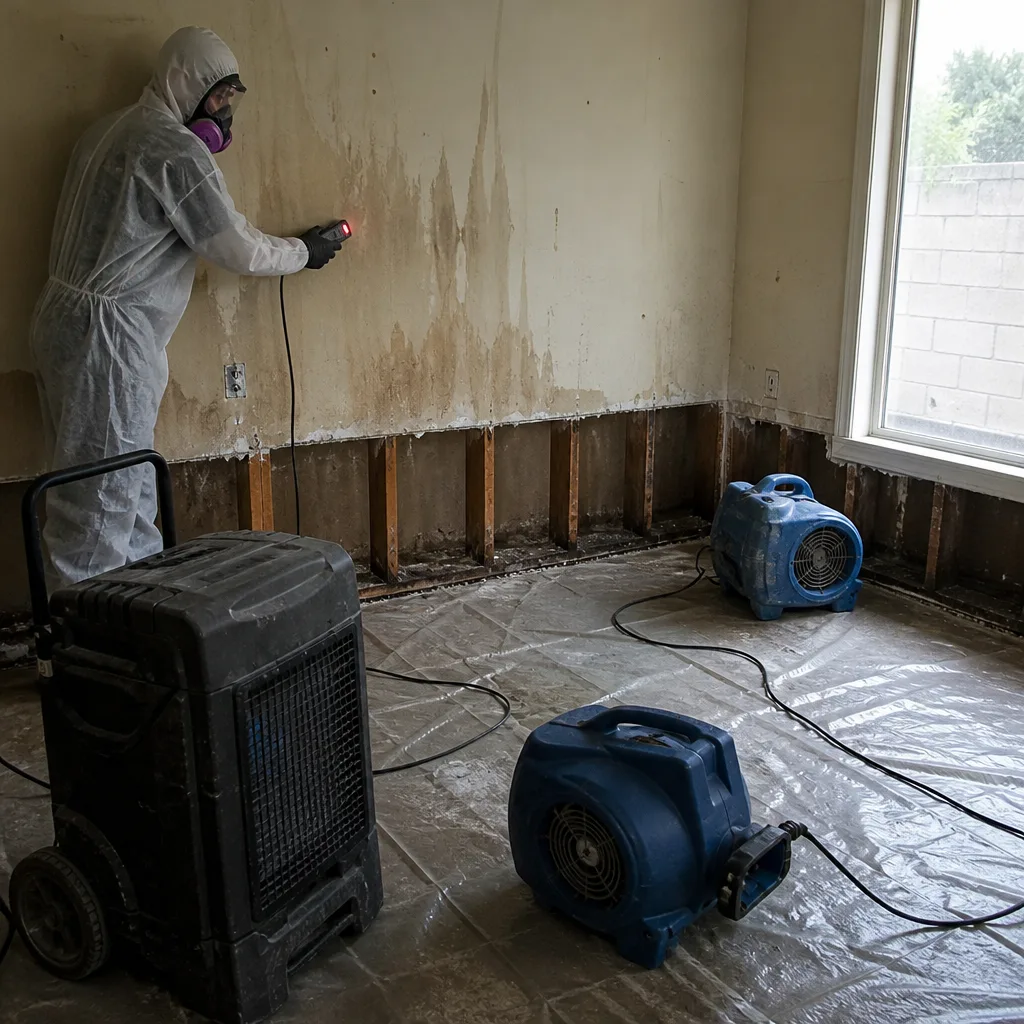 Before
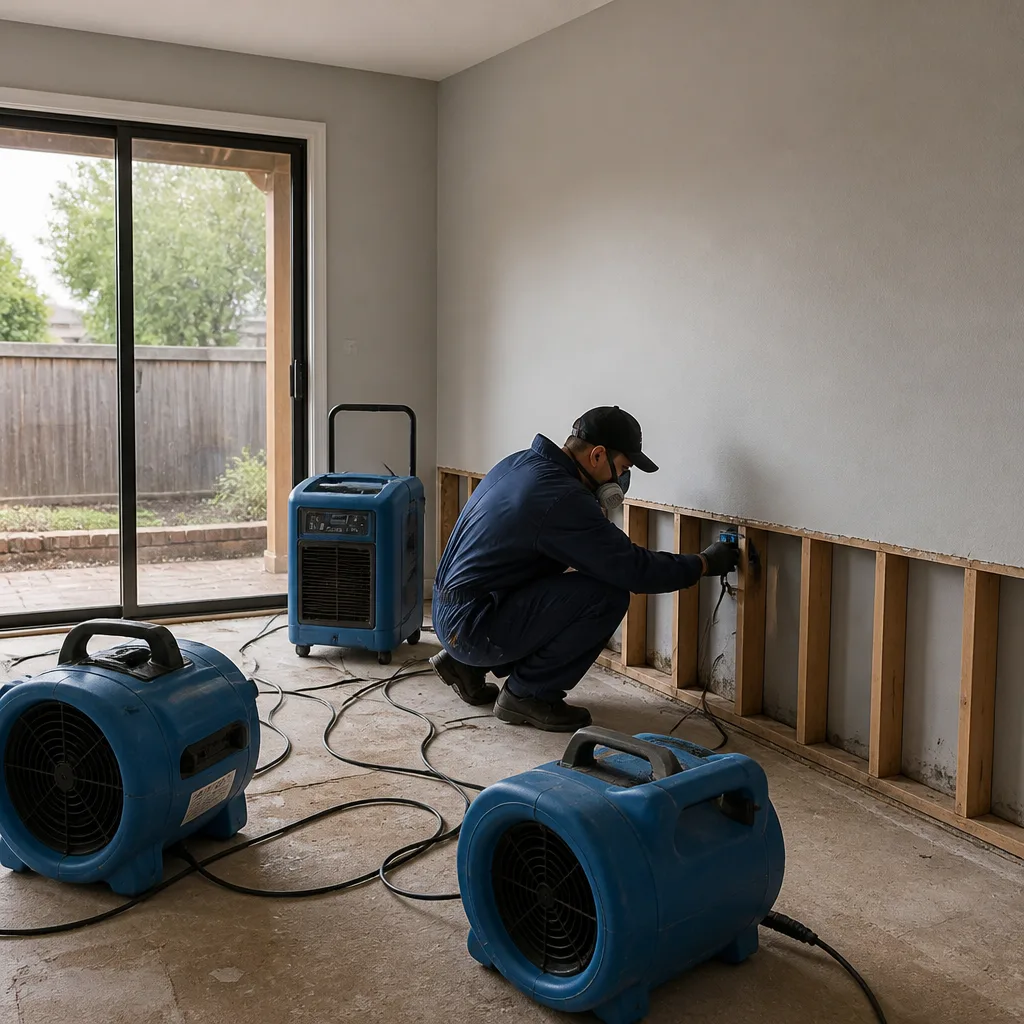 After
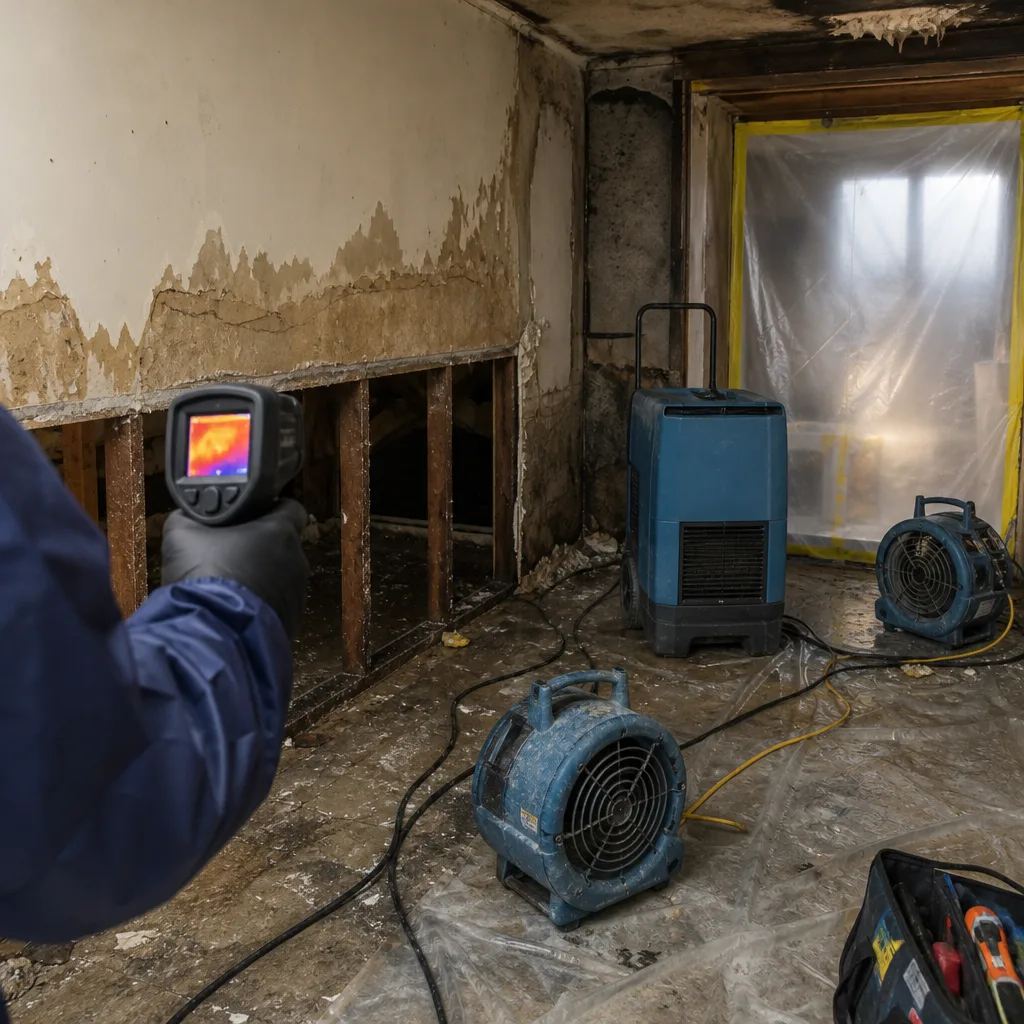 Before
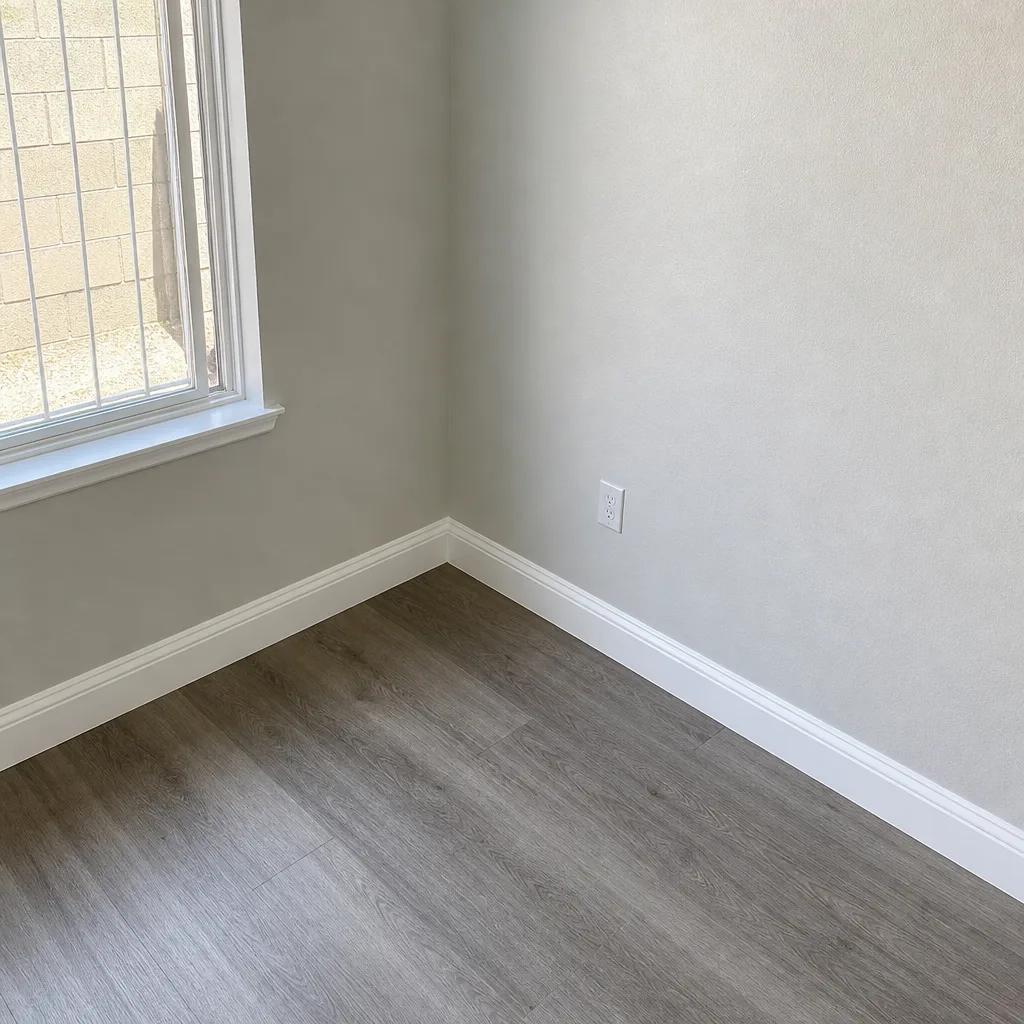 After
Common Mold Remediation Problems We See in Grand Terrace Homes
- Garage-slab mold with no visible roof leak. The water isn’t coming from above. It’s moving downhill from the lot slope, pooling against the garage slab, and wicking up. We trace it to the downhill-side stucco cracks and the drainage path off Blue Mountain, not the shingles.
- Wet uphill walls after a winter storm. Those interior walls facing Blue Mountain look dry, but moisture probes say otherwise. Category 2 runoff carries fine soil into the wall cavity, and by the time surface staining appears, the framing has been wet for weeks.
- Open-floor-plan containment failures. Mid-century tract homes in Grand Terrace love open rooms. That’s great for living, terrible for mold work without proper containment. We always set negative air and barriers so a rear-patio mold problem doesn’t become a whole-house spore problem.
- Recurring mold after a “cleanup” that skipped the drying log. If a crew removes the moldy drywall but doesn’t dry the plate and the cavity to a documented standard, the mold comes back. We keep drying logs on every job and won’t sign off until the numbers are right.
Pricing for Mold Remediation in Grand Terrace, CA
Mold remediation in Grand Terrace runs on a wide band, and honest numbers beat vague ones. A small, contained removal, think a rear patio wall or garage slab section, typically lands between $1,800 and $3,500. A larger job that involves multiple rooms, containment, and structural drying can run $5,000 to $12,000 or more, depending on how long the water sat and how far it wicked. What moves the price in Grand Terrace specifically is a lot slope. Hillside homes take water at the low side, and that water presses against the slab and travels. Foundation access, stucco repair, and the depth of the framing damage all factor in. Every estimate is free, and we hand you a written scope before work begins. Call (844) 716-1094 for an exact number on your home.
We Also Serve Cities Near Grand Terrace
Our crews cover more than Grand Terrace, and we know the neighboring cities’ housing patterns just as well. Highgrove, Colton, Loma Linda, and Rubidoux each have their own water and mold signatures. If you’re in one of those cities, you can read more about our local Mold Remediation approach or check the page covering Mold Remediation in Grand Terrace for details specific to this hillside market.
Serving Grand Terrace, CA — Our Local Coverage Area
We’re based in the Grand Terrace area and know this community well. Use the map below to see our service coverage — if you’re nearby, we can almost certainly help.
FAQs About Mold Remediation in Grand Terrace
Because the water is coming up from the slab, not down from the roof. Grand Terrace sits below Blue Mountain with homes on sloped lots. Storm runoff moves downhill, pools against the garage flatwork or the rear patio door, and wicks under the slab edge. That moisture rises into wall cavities at the lowest point of the house. The ceiling stays dry, and the low wall blooms first. That’s the signature pattern of hillside runoff, not a roof leak. Call (844) 716-1094 and we’ll confirm with a moisture map.
Yes. Category 2, often called gray water, contains soil, organic debris, and microbial material. When it enters through cracked stucco and travels down the backside of your wall, it’s carrying that load into your framing. This isn’t clean plumbing water. The wall cavity needs to be opened, the wet material removed, and the framing treated under containment. We handle Category 2 mold jobs regularly in 92313 homes.
Both, and in the right order. Remediation fixes what’s already wet and contaminated. Then you have to fix the entry point. On a 1960s Grand Terrace tract home, that means sealing exterior stucco cracks, checking the drainage path off the sloped lot, and making sure water moves away from the downhill side of the slab. Windows are the least of the mold problem. Grade and wall penetration matter most. We’ll show you exactly where the water traveled in our written scope.
Always. Containment and HEPA filtration are not options on black mold removal. We seal the work area, run negative air machines, and filter the exhaust. In an open-floor-plan mid-century home, where rear rooms share air with the kitchen and living spaces, this is the only way to prevent spores from spreading into clean areas. The family can usually stay in the home during small jobs, but large remediation may warrant temporary adjustment. We’ll tell you straight before work starts.
Yes. We manage pack-out, content cleaning, remediation, and the drying log under one roof. If a rear room in your Grand Terrace home has mold contamination that runs deep, we’ll remove and inventory the contents, process them properly, and coordinate the clearance testing. You won’t be juggling three different crews and a claims adjuster on your own. Contact (844) 716-1094 and we’ll scope the entire job, not just the visible stain.
Written by Noel Ibarra, Owner at Flood Guard Water Damage, serving Grand Terrace and the surrounding Inland Empire.