 Water damage drying
 Fire & smoke cleanup
 Mold remediation
 Storm response
 Sewage cleanup
 Reconstruction
Free visual inspection and a written scope of work before any mitigation begins - photos, moisture readings, and drying logs go in your claim file
The scope we write is the scope we bill. Anything new gets shown to you, in writing, before we touch it.
Get your free estimateFast, Reliable Water Damage Restoration Across Anaheim
Water damage restoration in Anaheim moves on two clocks. The first is the water clock: gypsum board wicks moisture upward at roughly an inch per hour, and Category 2 contamination starts setting in within 48 to 72 hours. The second is the structural clock: in west Anaheim’s 1950s tract homes, a slab leak can travel under flooring for weeks before you ever see a puddle. We’ve worked these neighborhoods long enough to know that restoring an Anaheim home means dealing with what’s under the slab as much as what’s on the surface. Our crews respond to Anaheim calls from Rancho Cucamonga, and we carry the equipment this housing stock actually requires. If you’re looking at a wet spot, a buckled floor, or a ceiling stain right now, call (844) 716-1094. We’ll map the moisture before anything gets torn out.
Key Takeaways:
- West Anaheim slab leaks often show up as warm flooring or buckled vinyl, not standing water.
- We use IICRC-certified drying protocols and commercial-grade equipment: Dri-Eaz, Phoenix, XPOWER, B-Air, and Injectidry.
- 1950s era finishes, including popcorn ceilings and original paneling, require testing before any demolition.
- Our Water Damage Restoration team documents every moisture reading and drying log so your insurance adjuster gets a clear record.
Why Flood Guard Water Damage Is Anaheim’s Preferred Water Damage Restoration Company
This is not a market where a franchise handoff works. Anaheim’s older housing stock, especially in the flatland ZIPs between the 5 and 57 freeways, was built between 1950 and 1970, and it fails in predictable, specific ways. We know those failure modes because we’ve traced them across hundreds of homes in 92812, 92814, 92815, and 92816. Our Water Damage Restoration in Anaheim work is grounded in the IICRC standard: we measure, document, and dry according to a science-based protocol rather than a guess. That means moisture mapping at the slab edge, humidity readings in wall cavities, and a drying log that gets updated daily, not whenever someone remembers.
Noel Ibarra built Flood Guard Water Damage around a simple idea: the equipment should match the claim. We run Dri-Eaz, Phoenix, XPOWER, and B-Air air movers and dehumidifiers, plus Injectidry systems for drying inside walls and under floors without automatic demolition. That last part matters in Anaheim, where tearing out original materials on a mid-century home can quickly become a hazardous-material and preservation problem. Our approach is to open walls when necessary, not by default.
Restoration work we handle
Flood Damage Restoration in Anaheim
Flood damage restoration in Anaheim is a two-part job: getting the standing water out, then getting the structure dry enough to prevent secondary damage. When a water heater lets go in a garage off Euclid or a supply line bursts in a 1958 tract home near Magnolia, the first hours determine whether you’re dealing with wet drywall or a full gut. Our crews arrive with truck-mounted extraction, set containment, and begin structural drying with commercial-grade air movers and dehumidifiers. On a typical Anaheim flood loss, extraction and initial drying setup runs $1,800 to $4,200, with full structural drying and monitoring adding another $2,500 to $6,000 depending on square footage and how far water traveled.
Step one: extraction and containment
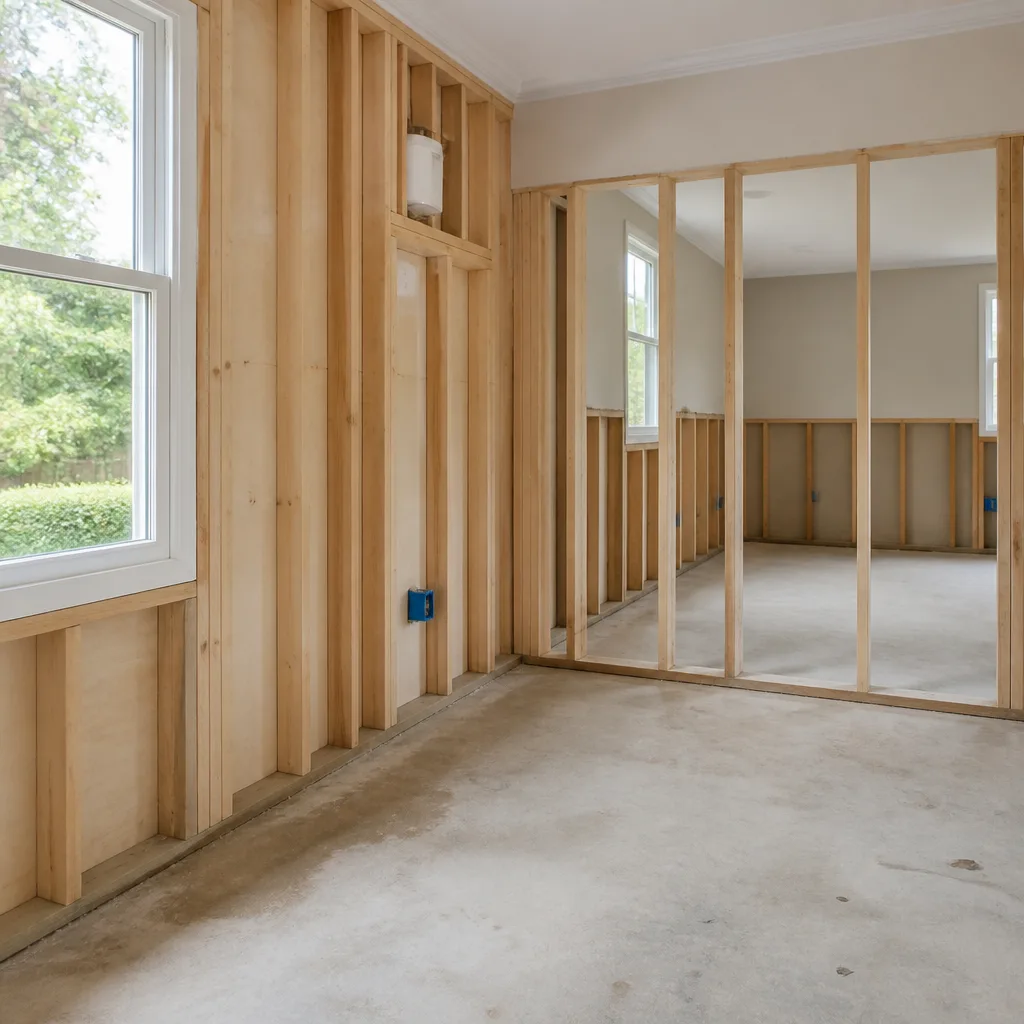
Water doesn’t stay where it lands. In Anaheim’s single-story slab homes, water from a burst supply line runs under walls, follows plumbing chases, and pools in the lowest point of the slab. Extraction starts at the source, then moves to the migration path. Containment goes up before any drywall is opened, because the last thing a 1950s hall closet needs is aerosolized dust from original plaster.
Step two: structural drying and monitoring
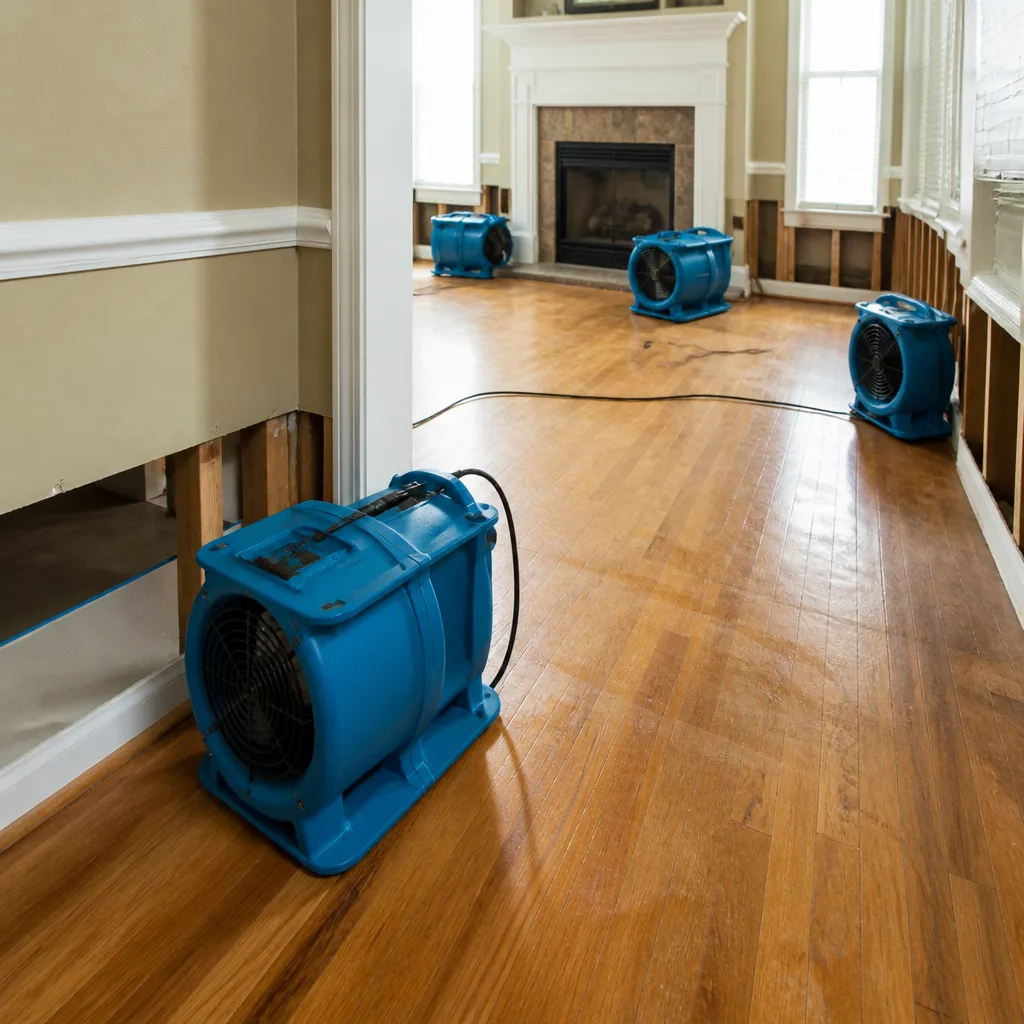
This is where protocols separate a real restoration crew from a generalist with a rented fan. We log daily moisture readings against a drying goal derived from the IICRC standard. Injectidry mats pull moisture from the wall cavity behind original paneling without tearing it out. On Category 1 clean water losses, that can mean the difference between a patch job and a full wall replacement.
Water Damage Cleanup in Anaheim
Water damage cleanup in Anaheim, particularly in the older tracts of 92801 and 92802, is rarely as simple as blotting a carpet. Original slab construction means water that hits the floor has a direct path into the concrete, which then wicks laterally and upward. That’s why our cleanup protocol in Anaheim begins with moisture mapping across the entire room, not just around the visible stain. Cleanup on a Category 1 loss in a single room typically runs $1,200 to $3,800 including extraction, containment, and drying equipment. When contamination is present, the job shifts into remediation territory and pricing changes accordingly.
Moisture mapping before any demolition
We map the slab edge with penetrating and non-penetrating moisture meters before we so much as move a baseboard. On slab homes from the Disneyland era, this is the only way to know whether the water stopped at the wall or is still feeding from underneath. The reading tells us whether we can dry in place or need to open materials.
Documentation that works with your insurer
Every reading, every photo, and every drying log entry gets compiled into a file you can hand to an adjuster. We’ve watched Anaheim homeowners get lowballed on a slab leak claim because nobody documented the pre-loss condition of the flooring. We document everything before it gets touched.
Trusted Brands We Service in Anaheim
Walk into most homes in west Anaheim and you’ll find a mix of original fixtures and decades of handyman repairs. We work around that reality. Our crews carry service parts for common mid-century plumbing and finishing materials, and we maintain local supplier relationships across Orange County so a replacement valve or a matching piece of trim doesn’t stall a drying job. When a 1958 tract home off West Broadway has a supply line failure, the next step is restoration, not waiting on a parts truck from Riverside.
See the difference
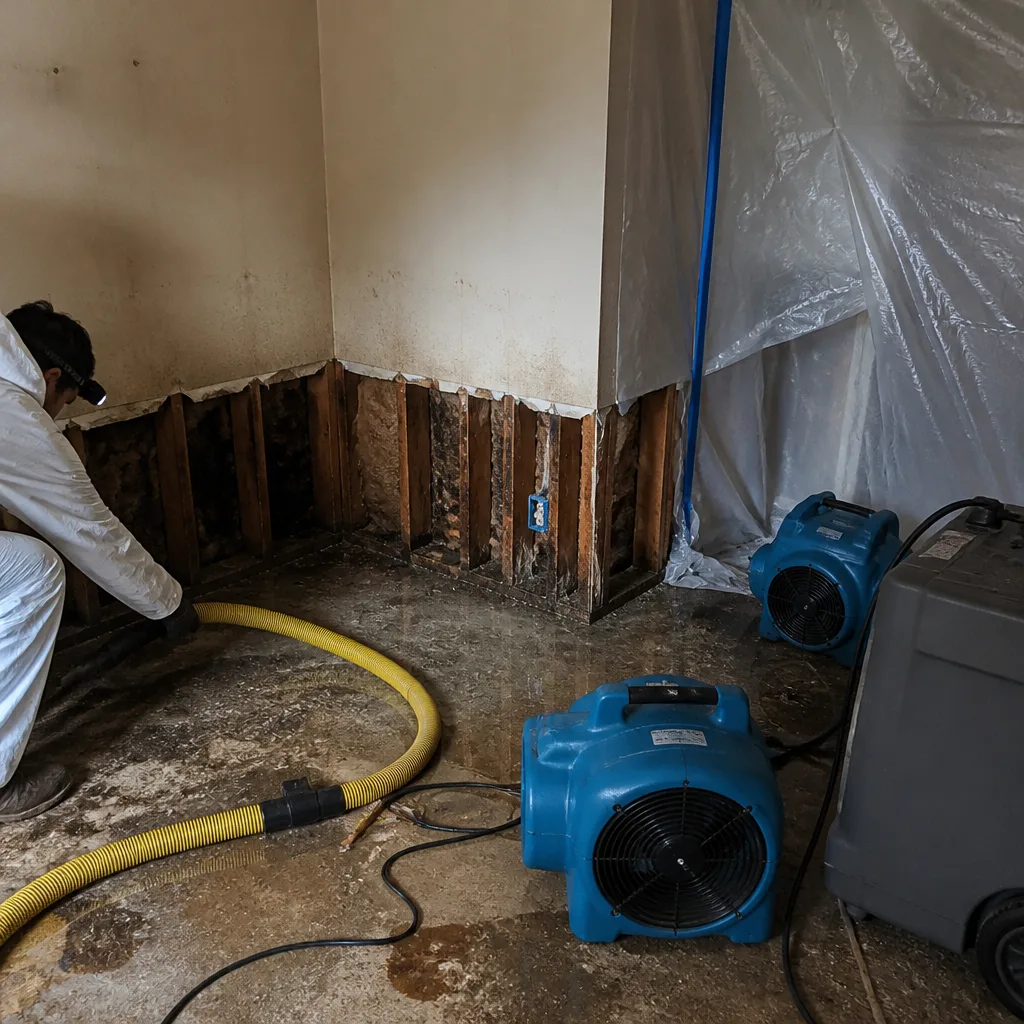 Before
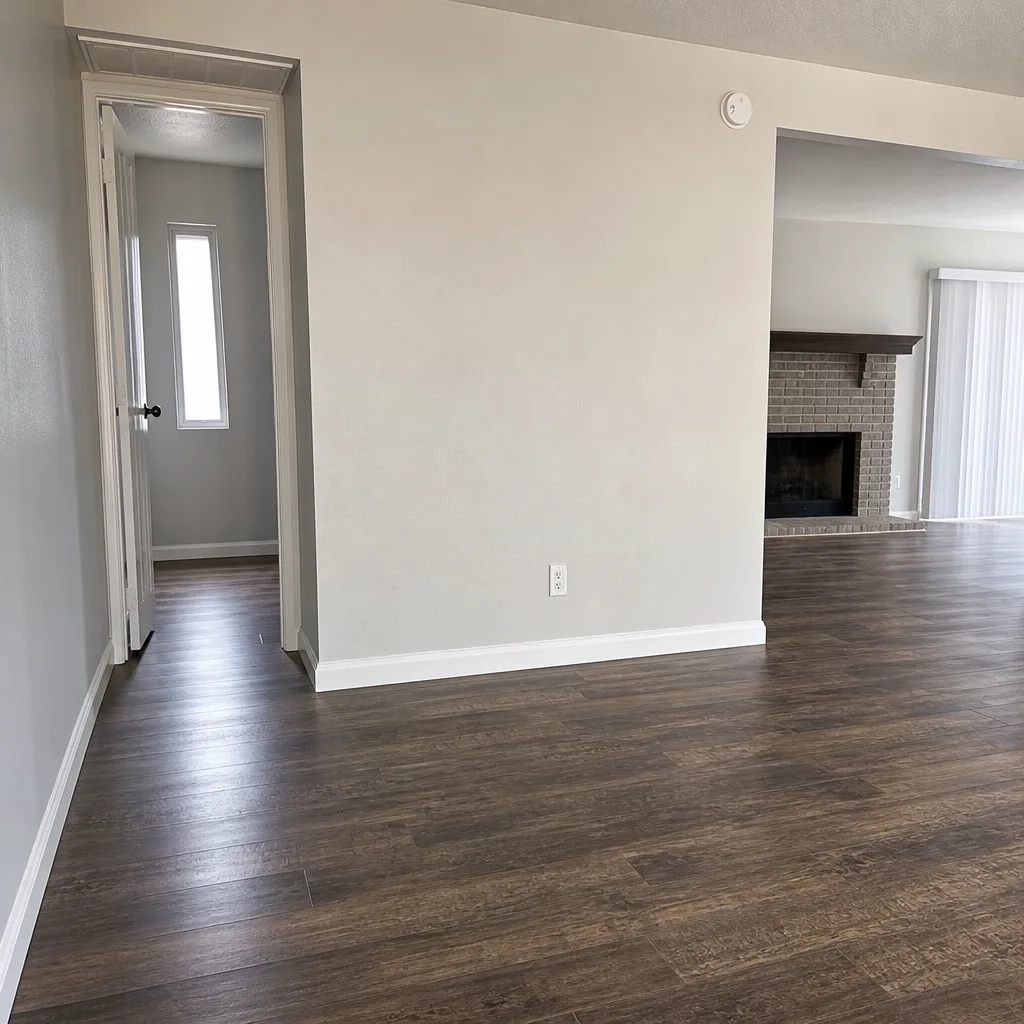 After
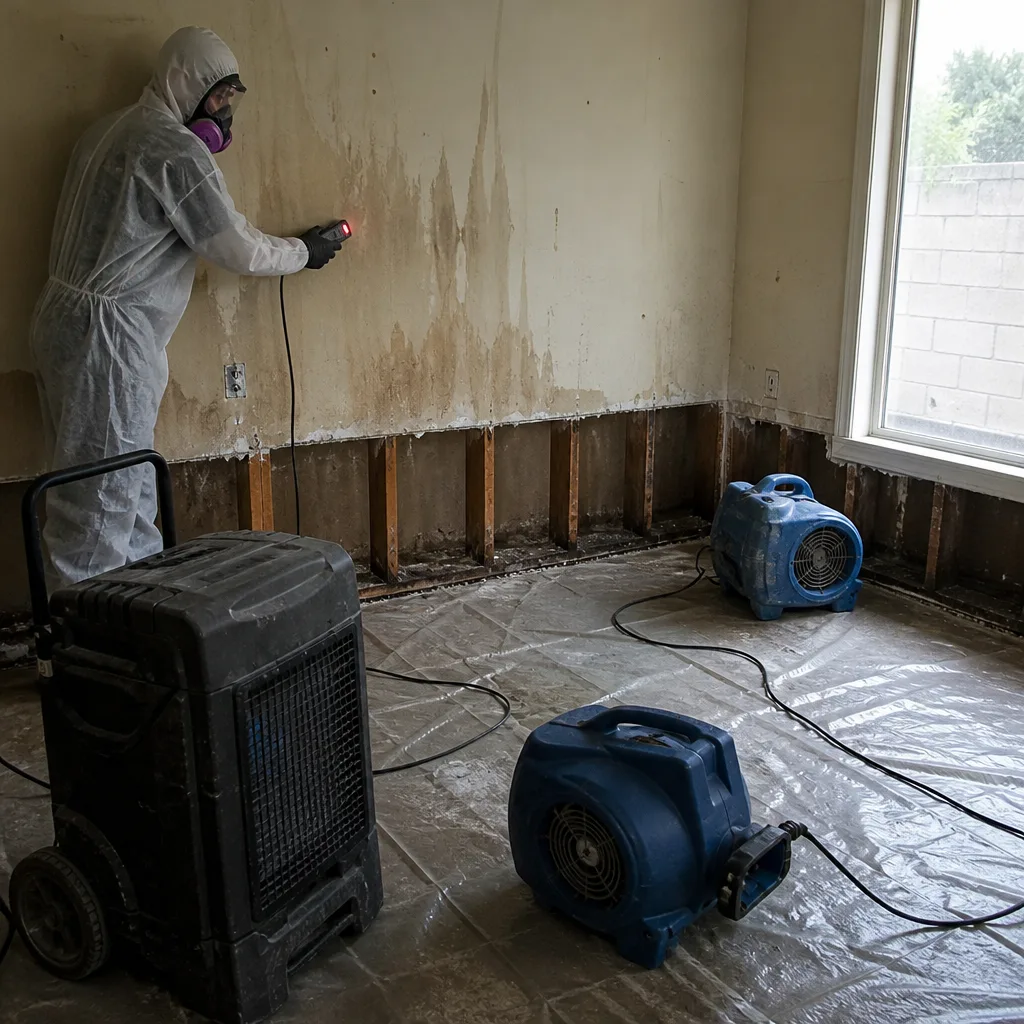 Before
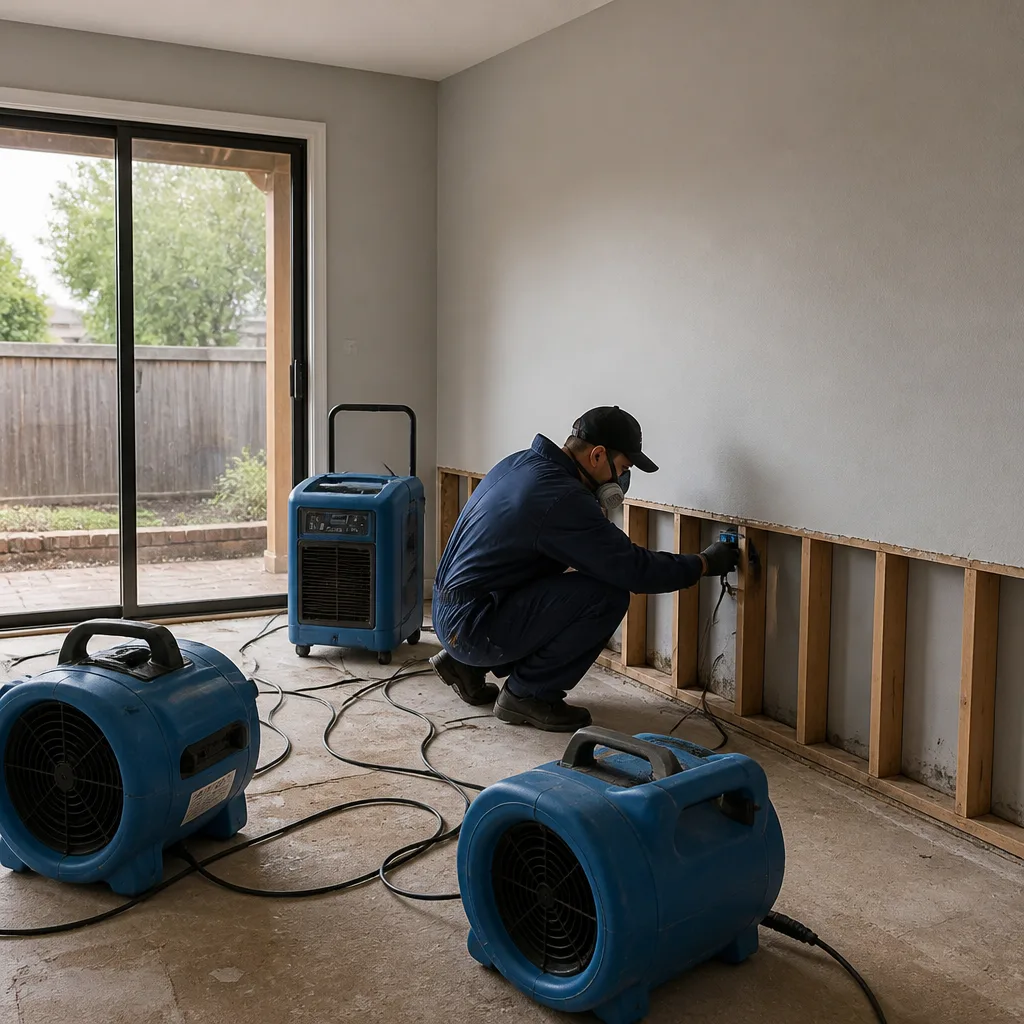 After
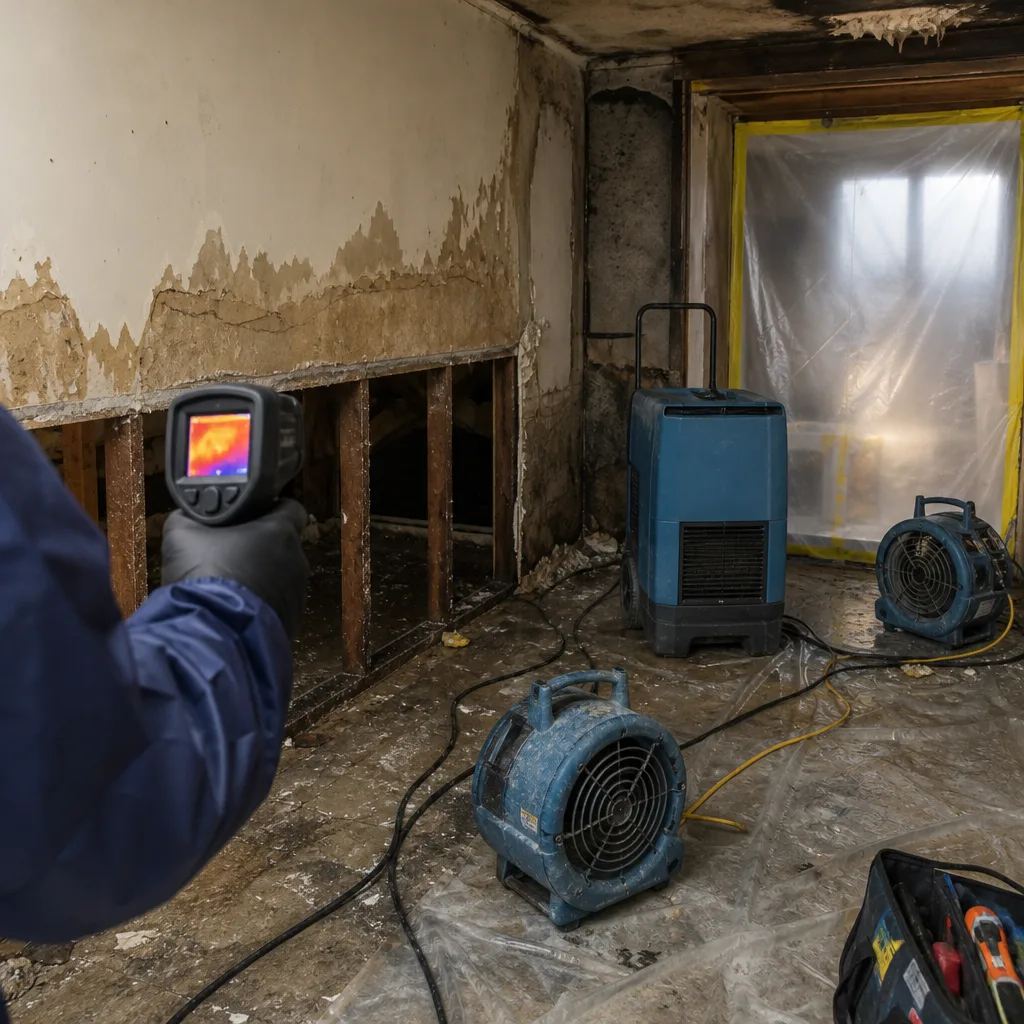 Before
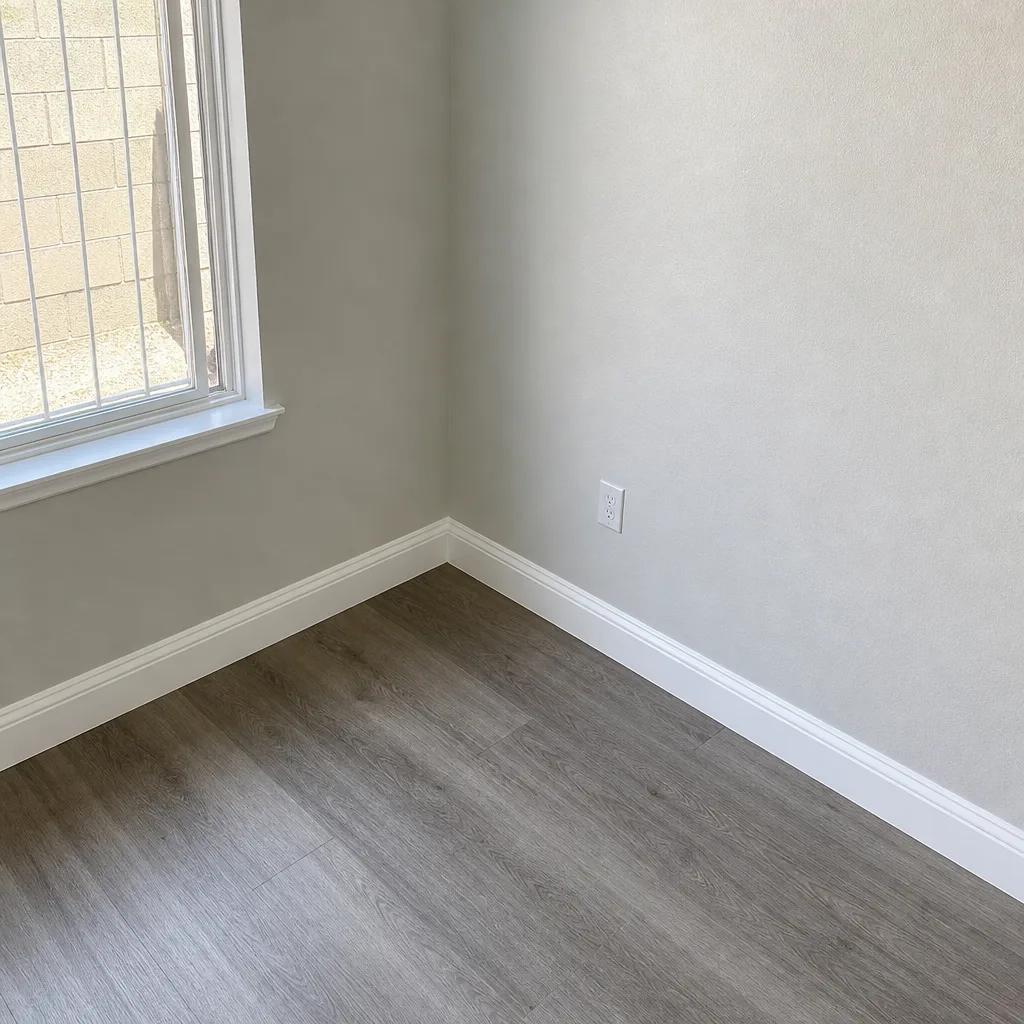 After
Common Water Damage Restoration Problems We See in Anaheim Homes
- Slab leaks misread as surface spills. In west Anaheim’s 1950s tract homes, original galvanized supply lines pinhole-leak silently under the slab. The first sign is often a warm spot or buckled vinyl in a hallway, not a puddle. Homeowners mop it up, and the concrete keeps feeding moisture into the baseboards for weeks.
- Popcorn ceilings and original paneling during demolition. Homes built before the late 1970s in Anaheim frequently contain asbestos-era textured ceilings and lead-based paint on original paneling. Pulling materials without testing turns a water mitigation into a hazardous-material incident, and your insurance company will ask why testing wasn’t done first.
- Category creep after extraction starts. Aging galvanized and early copper lines often introduce rust and sediment into what looks like clean water. A loss that starts as Category 1 can reclassify to Category 2 once extraction begins, which changes the scope, the equipment, and the price. We classify before we cut, not after.
- Santa Ana dust and ash in attic vents. After brush fire season, Anaheim homes collect fine dust and ash in attic spaces. When a roof leak or AC condensate issue wets that material, the water wicks through contaminated insulation. Fire-season air quality changes how we contain and dispose of affected materials.
Pricing for Water Damage Restoration in Anaheim, CA
Anaheim pricing runs different from newer Orange County developments because the housing stock is different. Here are honest ranges based on what we see in 92812, 92814, 92815, and 92816:
- Emergency water extraction for a single room: $900 to $2,200
- Structural drying with monitoring for a slab leak: $2,500 to $6,500
- Full flood damage restoration with wall cavity drying: $4,800 to $11,000
- Injectidry non-invasive wall drying (per cavity): $400 to $1,100
- Popcorn ceiling asbestos testing per sample: $60 to $150
What moves the price: square footage, how far water traveled under the slab, whether original finishes require testing, and whether contamination pushed the loss into Category 2 or 3. Our estimates are free, in writing, and scoped before any work begins. Call (844) 716-1094 and we’ll get a crew dispatched.
We Also Serve Cities Near Anaheim
Flood Guard Water Damage covers Anaheim and the surrounding Orange County communities where the same mid-century housing stock shows the same failure patterns. We serve Fullerton, Placentia, Orange, and Villa Park, and our crews know the slab leak signatures and original finish issues across all of these areas. If you’re in any of these cities and seeing moisture where it shouldn’t be, call us at (844) 716-1094.
Serving Anaheim, CA — Our Local Coverage Area
We’re based in the Anaheim area and know this community well. Use the map below to see our service coverage — if you’re nearby, we can almost certainly help.
FAQs About Water Damage Restoration in Anaheim
That wet hallway is almost certainly a slab leak from an original galvanized supply line that has pinhole-corroded underground. In Anaheim’s 1950s tract homes, the shallow slab lets water wick upward through the flooring before it ever reaches a visible edge, so you feel warm flooring or see buckled vinyl long before a puddle forms. The fix starts with moisture mapping across the slab edge, not just drying the visible stain. Call (844) 716-1094 and we’ll map it before any demo happens.
Yes, on any Anaheim home built before the late 1970s, testing for asbestos in popcorn ceilings and lead in original paneling is standard before demolition. Pulling those materials without testing turns a water mitigation into a hazardous-material problem that your insurer may not cover. We take samples, wait for lab results, and adjust the scope accordingly.
Mold colonization typically begins within 48 to 72 hours on wet gypsum board and organic materials, and Anaheim’s warm interior temperatures during summer accelerate that timeline. In a slab home, moisture trapped under flooring can keep feeding mold growth even after the surface looks dry. That’s why we set containment and begin drying on day one, not day three. Call (844) 716-1094 for an inspection.
Yes, the Santa Ana season complicates two things. First, intense wind events can damage roof vents and flashing, creating new water intrusion points during the rare winter storms. Second, fine dust and ash from brush fires settle in attic spaces, so any subsequent leak means water passes through contaminated insulation. That shifts how we contain and dispose of affected materials.
That depends on what the concrete keeps feeding. If moisture readings at the slab edge stay elevated, no amount of surface drying solves the problem, and flooring or lower drywall removal becomes necessary. But on Category 1 slab leaks caught early, Injectidry equipment can dry wall cavities and under flooring without automatic demolition. We open materials when the science says so, not as a default.
If you’re in Anaheim and dealing with a wet hallway, a buckled floor, or a slab leak you can’t explain, call (844) 716-1094. We’ll send a crew that knows this housing stock, carries the right equipment, and documents everything before a single piece of material gets touched. Estimates are free and in writing.
Written by Noel Ibarra, Owner at Flood Guard Water Damage, serving Anaheim and surrounding Orange County communities.