
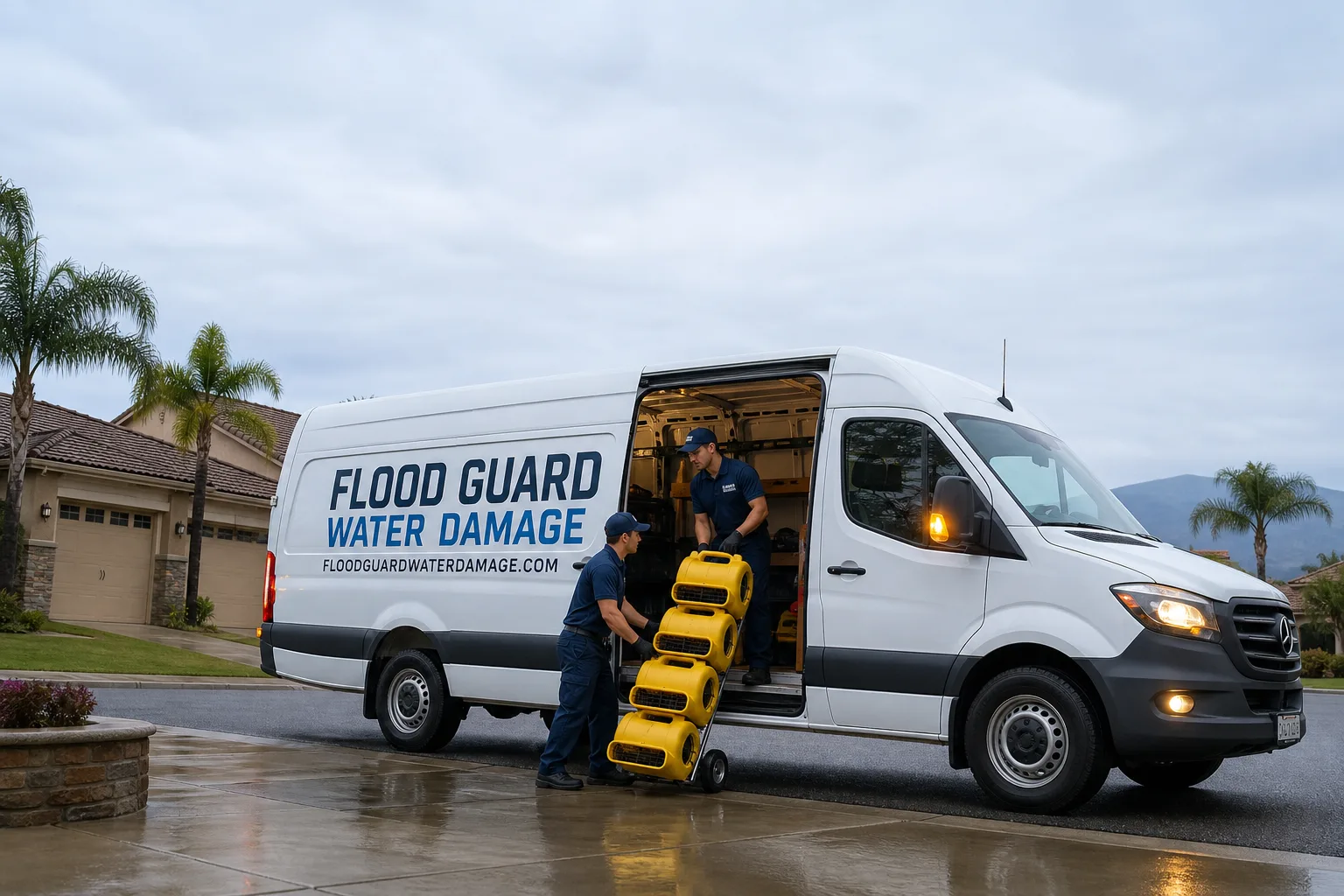
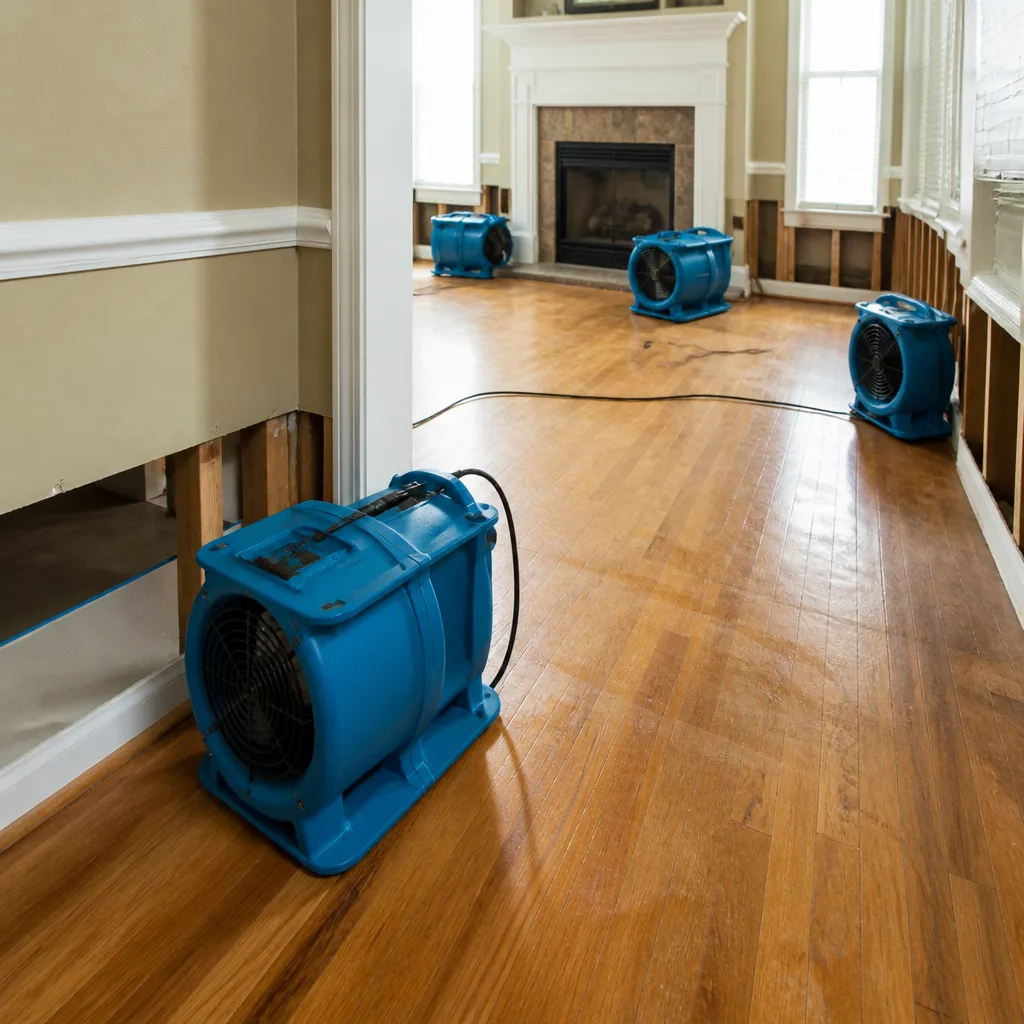
 Water damage drying
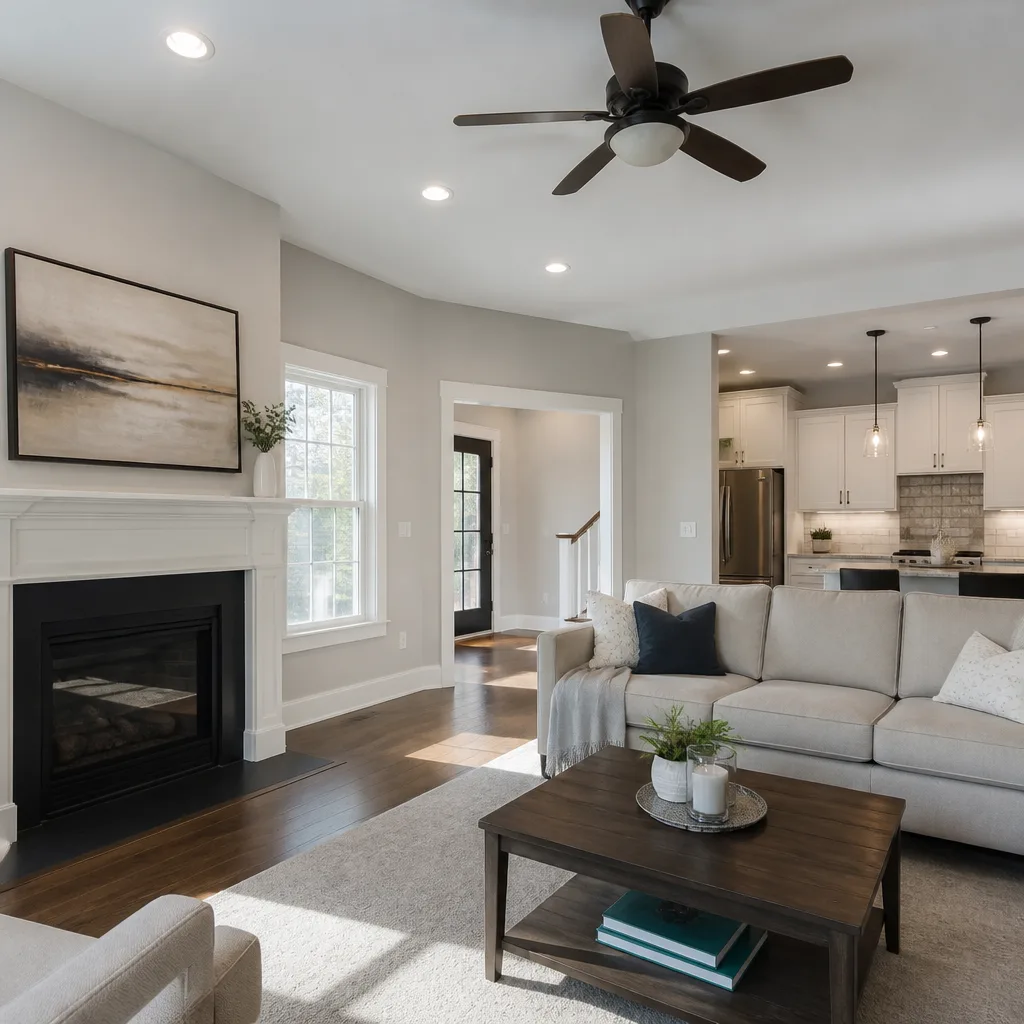 Fire & smoke cleanup
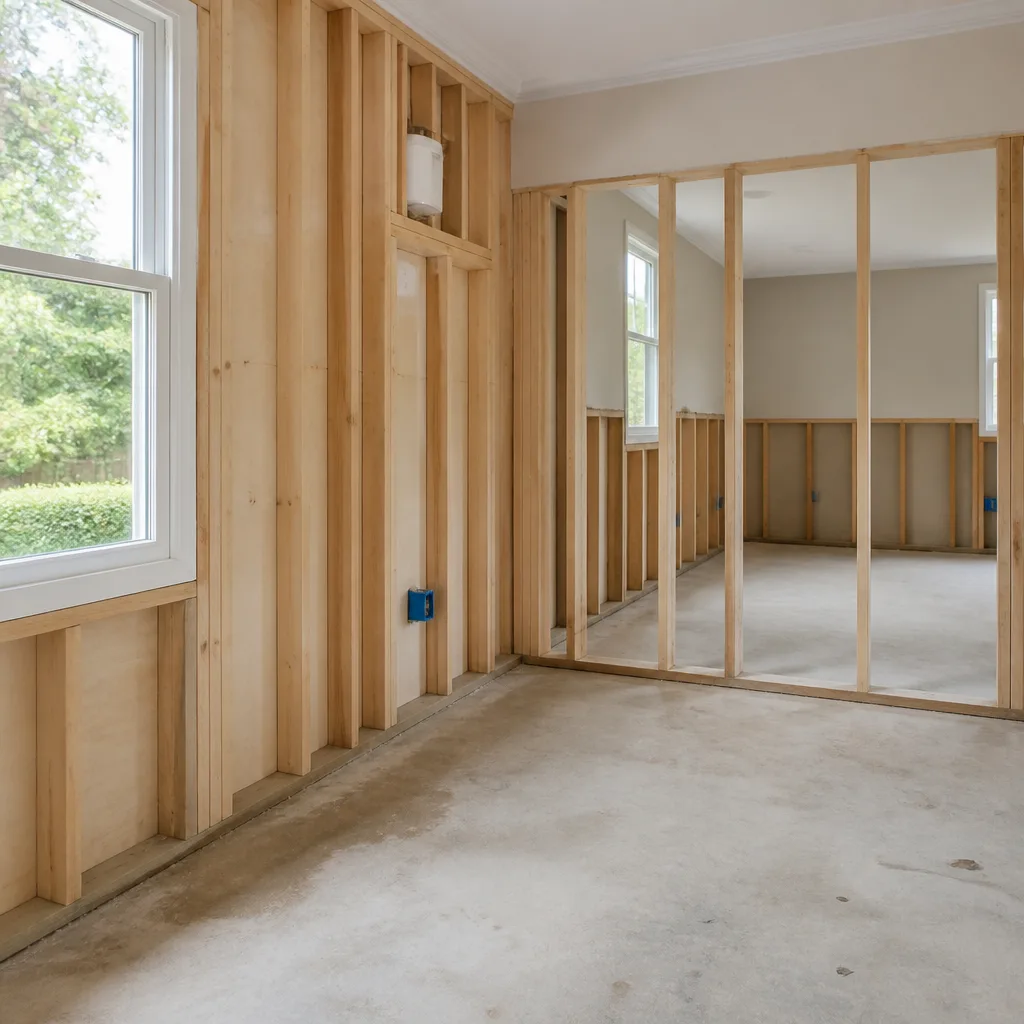 Mold remediation
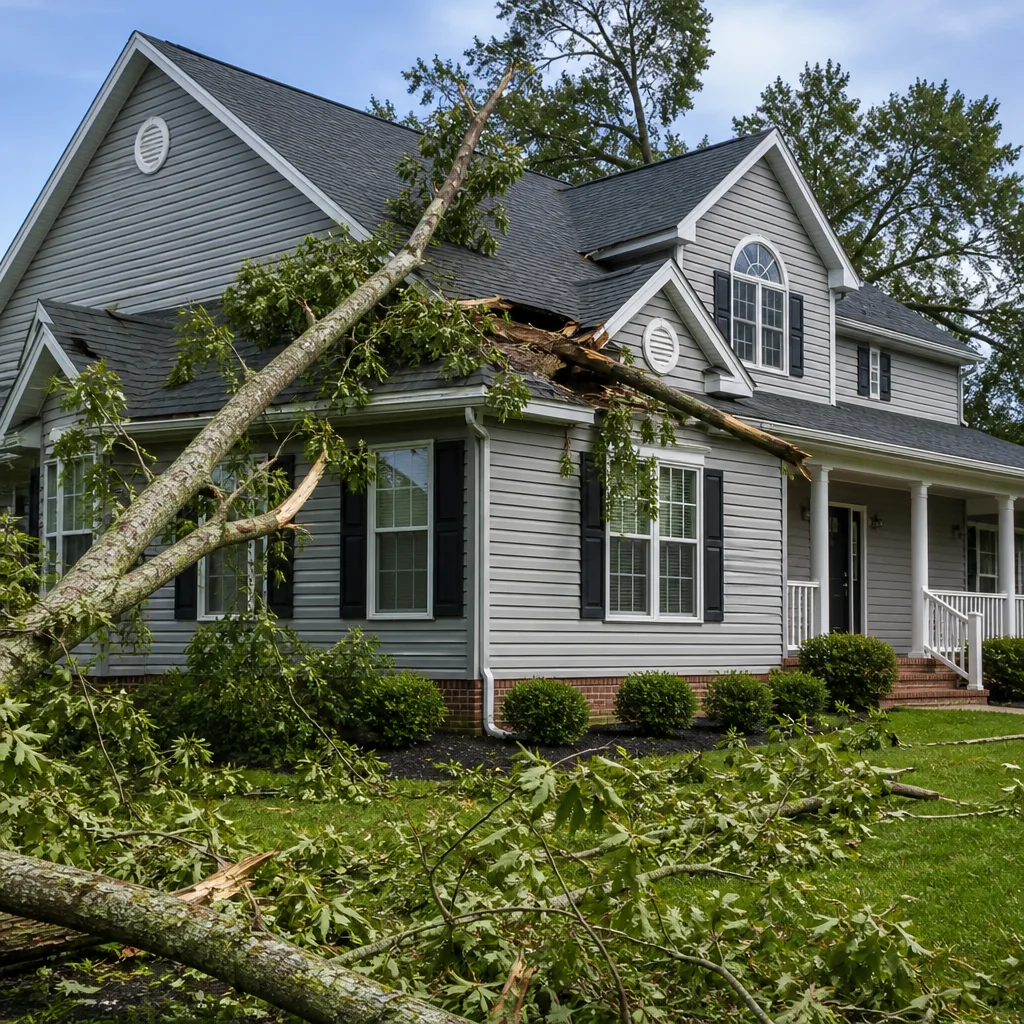 Storm response
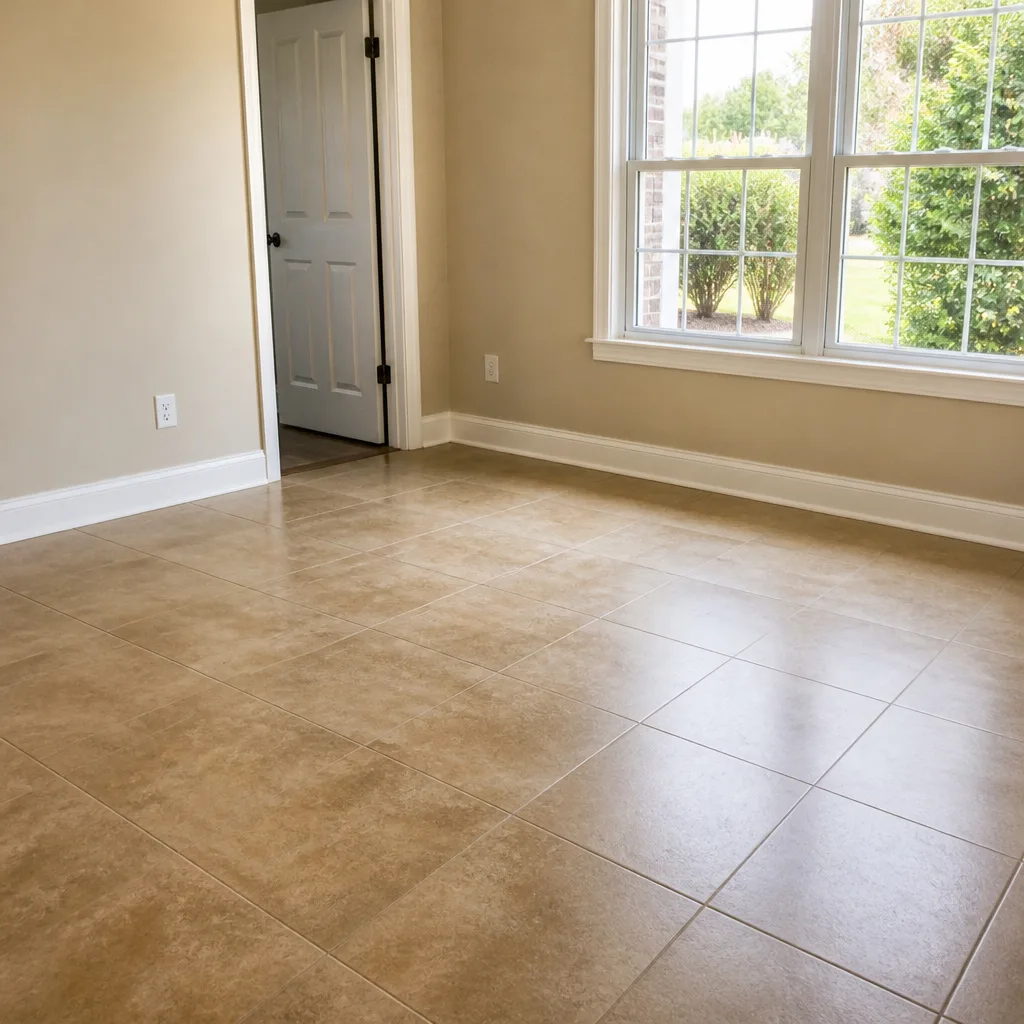 Sewage cleanup
 Reconstruction
Free visual inspection and a written scope of work before any mitigation begins - photos, moisture readings, and drying logs go in your claim file
The scope we write is the scope we bill. Anything new gets shown to you, in writing, before we touch it.
Get your free estimateFast, Reliable Water Damage Restoration Across Desert Edge
Water damage restoration in Desert Edge typically costs between $2,100 and $5,800 depending on how far the water has traveled through wall cavities and slab edges. Most calls we get from Desert Edge start as what looks like a small window or ceiling stain, and by the time we open the assembly, the real story is months of wind-driven sand and rain intrusion that sat untreated behind stucco. Our Water Damage Restoration team runs IICRC-certified drying protocols with commercial-grade gear, not consumer fans, so we dry the structure to a documented moisture standard before any rebuild starts. If you’re seeing warped drywall, a musty smell, or peeling paint near windows or recessed lights, call (844) 716-1094 now. We serve all of the 92240 ZIP and surrounding unincorporated roads alongside Highway 62.
Why Flood Guard Water Damage Is Desert Edge’s Preferred Water Damage Restoration Company
Desert Edge isn’t Palm Springs. We know that because we’ve mapped moisture in enough of these pre-code 1960s through 1980s stucco-and-slab tract homes to recognize the failure pattern on sight. The homes out here were built before modern drainage and sealing codes, so the same Santa Ana event that merely strips a few shingles east of the valley forces fine sand straight through original window seals and unsealed recessed lighting here. That sand packs the cavity, holds the first winter rain like a sponge, and months later you’re looking at a ceiling stain that has nothing to do with any recent storm. Our team’s ability to trace the actual water path – not just dry the visible patch – is why Desert Edge homeowners keep calling us back when the next wind event hits. We’ve handled enough flood cleanup and burst pipe restoration in this area to know exactly which walls to check first.
Every job we run in Desert Edge starts with a written scope, moisture mapping, and photo documentation we can hand directly to an adjuster. That matters out here where insurance carriers routinely push back on wind-driven rain claims because the damage looks old by the time it shows up at the surface. We document the whole loss path clearly, so the claim reflects what actually happened, not just what’s visible on the day we arrive. Noel Ibarra leads our team, and the standard he sets for every tech is simple: if we can’t prove the assembly is dry to the IICRC standard with logged readings, we’re not done.
Restoration work we handle
Water Damage Cleanup in Desert Edge
Water Damage Cleanup in Desert Edge usually starts at $1,200 to $3,400 for a contained Category 2 event like a failed window seal or a low-pitch roof that ponded water and found its way to the living space below. The work involves extracting standing water, removing saturated drywall and insulation where necessary, drying exposed framing and cavities, and finishing with antimicrobial treatment on any surface that took gray water. What makes cleanup different in Desert Edge is the sand. Fine desert sand packs into the same cavities that hold water, which means standard extraction alone doesn’t end the problem. We have to remove the sand, flush the cavity, and then dry the assembly, otherwise even a properly dried wall reabsorbs moisture from the grit packed behind it.
Window and Door Seal Failures
On older Desert Edge homes, original single-pane windows are the most common entry point we see. Wind loads push sand against the failed seal, the sand grinds the seal open further, and the next rain gets driven through by the gusting air pressure difference. If you catch this early, the repair is a few hundred dollars for sealing and drying. If you wait until the drywall below is bubbling, you’re into full cavity remediation.
Roof and Recessed Light Intrusion
Flat and low-pitch roofs scatter light across Desert Edge, and many predate current drain code, so water ponds and finds paths through old flashing and unsealed recessed cans. The water shows up as a stain around the fixture, but by then it has often run down the ceiling joist and wet the top of an interior wall. Our Injectidry system lets us dry those wall cavities from the inside out without tearing out every sheet of rock, which saves the homeowner thousands in unnecessary demo and rebuild.
Emergency Water Damage Restoration in Desert Edge
Emergency Water Damage Restoration in Desert Edge runs $2,800 to $6,500 for a full-scope response where we arrive, extract, contain, dry, and document the entire loss path in one continuous operation. This is the service you need when a Santa Ana event blows a window seal open, or a monsoon outflow sends a wall of water down a dry wash and into your lot faster than the pre-code drainage can handle it. The first 24 to 48 hours are critical because Category 2 water left in a dark wall cavity goes microbial fast in a desert house where the exterior is 110 degrees but the cavity stays humid and warm. We dispatch to Desert Edge the same day, and we arrive with Dri-Eaz and Phoenix air movers, commercial dehumidifiers, and the tools to document moisture levels at every step.
Post-Storm Cavity Drying
After a wind event, the damage is rarely where the homeowner thinks it is. The water line might be at the base of a north wall, but the actual entry was a failed seal 12 feet away that let rain travel through the wall cavity until it found a low point. We map the cavity with moisture meters and thermal imaging, set containment on the wet sections, and dry to a standard, not an estimate. The difference is measurable in the kiln-dried wood readings before and after.
Flash Flood Extraction
When a desert wash overflows and water comes in through the slab edge and doorways, it carries silt, soaked sand, and whatever else was in that wash. This is Category 3 water – not a clean water event. We treat it accordingly: full extraction, removal of contaminated porous materials, and documented remediation of any cavity that took the contaminated water. A consumer-grade shop vac is not the answer here, and we see the damage left behind when that’s what was used before we arrived.
Trusted Brands We Service in Desert Edge
Our desert and restoration work in Desert Edge relies on Dri-Eaz, Phoenix, and XPOWER equipment, the same commercial drying platforms used on large-loss commercial jobs, not what you’d buy off a hardware store shelf. When we set drying chambers in a 1970s stucco home off of Indian Canyon Drive, the equipment has to be able to hold low-humidity conditions in cavities that are hot on one side and cool on the other. Consumer gear can’t do that. Injectidry drying mats let us pull water from inside walls and under flooring without opening every surface by default, which matters when the structure is already fragile from decades of untreated sand intrusion. We keep equipment staged for rapid dispatch to Desert Edge so we don’t lose a drying window waiting for gear to drive up from the valley floor.
Common Water Damage Restoration Problems We See in Desert Edge Homes
- Wind-driven sand packed into wall cavities and attics. The sand holds the first rain like a sponge, so what looks like a fresh leak is actually months of existing intrusion. We remove the sand, not just the water, because leaving it behind guarantees a repeat call.
- Failed single-pane window seals on 1960s and 1970s builds. The seal breaks, sand gets in, and rain follows. If the water reaches the drywall below, you’re past a simple re-caulk and into cavity drying and possible drywall replacement.
- Ponding water on flat and low-pitch roofs with pre-code drainage. Many lots here were graded before modern drainage requirements, so water sits on the roof until it finds a seam or flashing gap. We extract and dry the interior, but the longer-term fix often includes improving the lot grading or adding roof drains.
- Unsealed recessed lighting as a direct water path. Wind gusting across the roof creates pressure differences that pull rain through unsealed cans into the ceiling cavity. The first sign is usually a brown stain around the light at the first winter rain, weeks after the wind event that actually opened the path.
See the difference
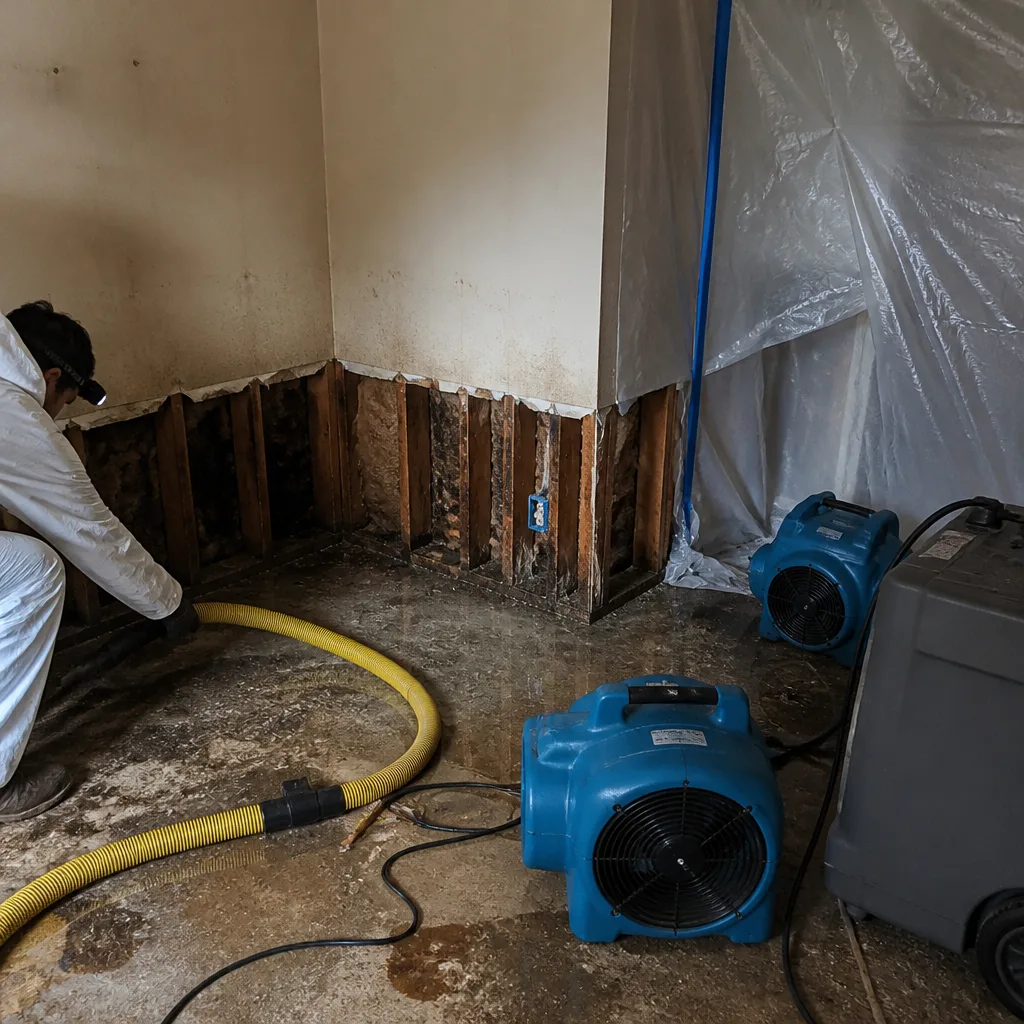 Before
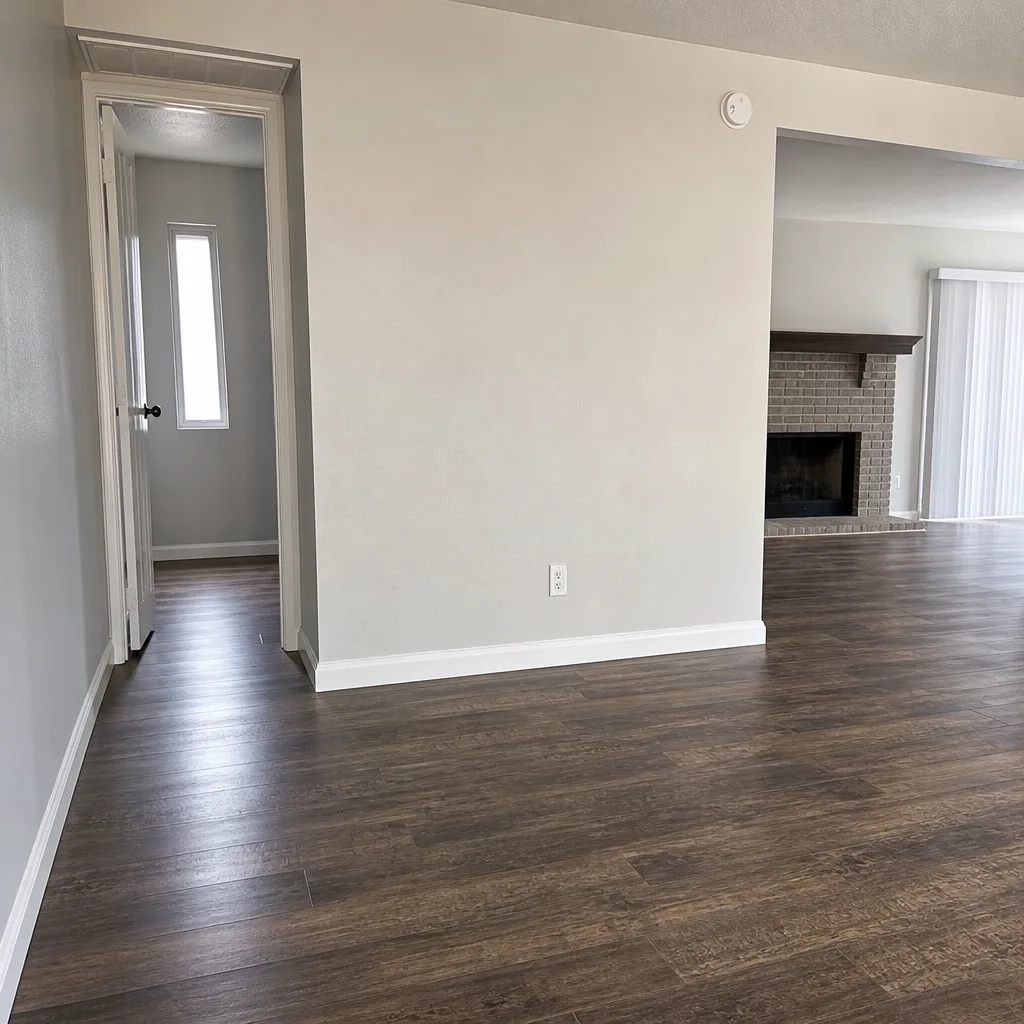 After
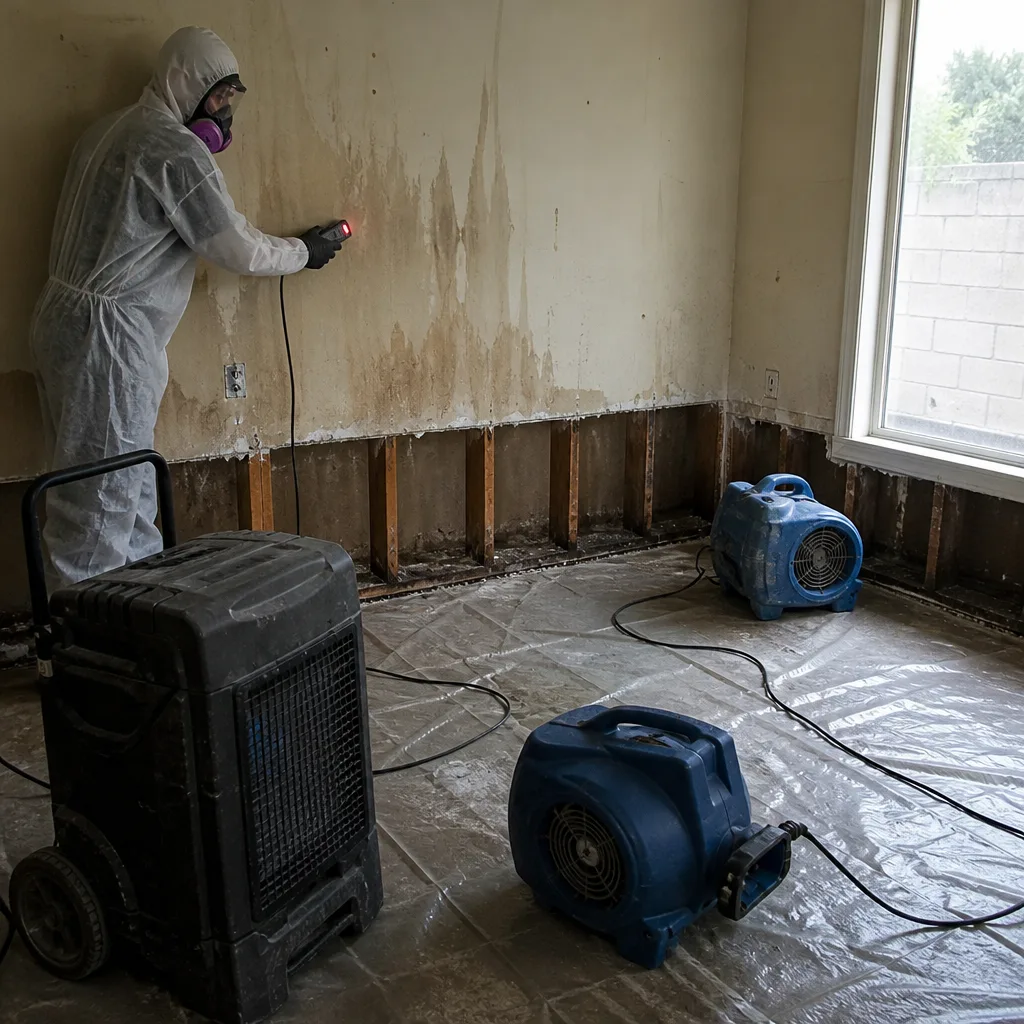 Before
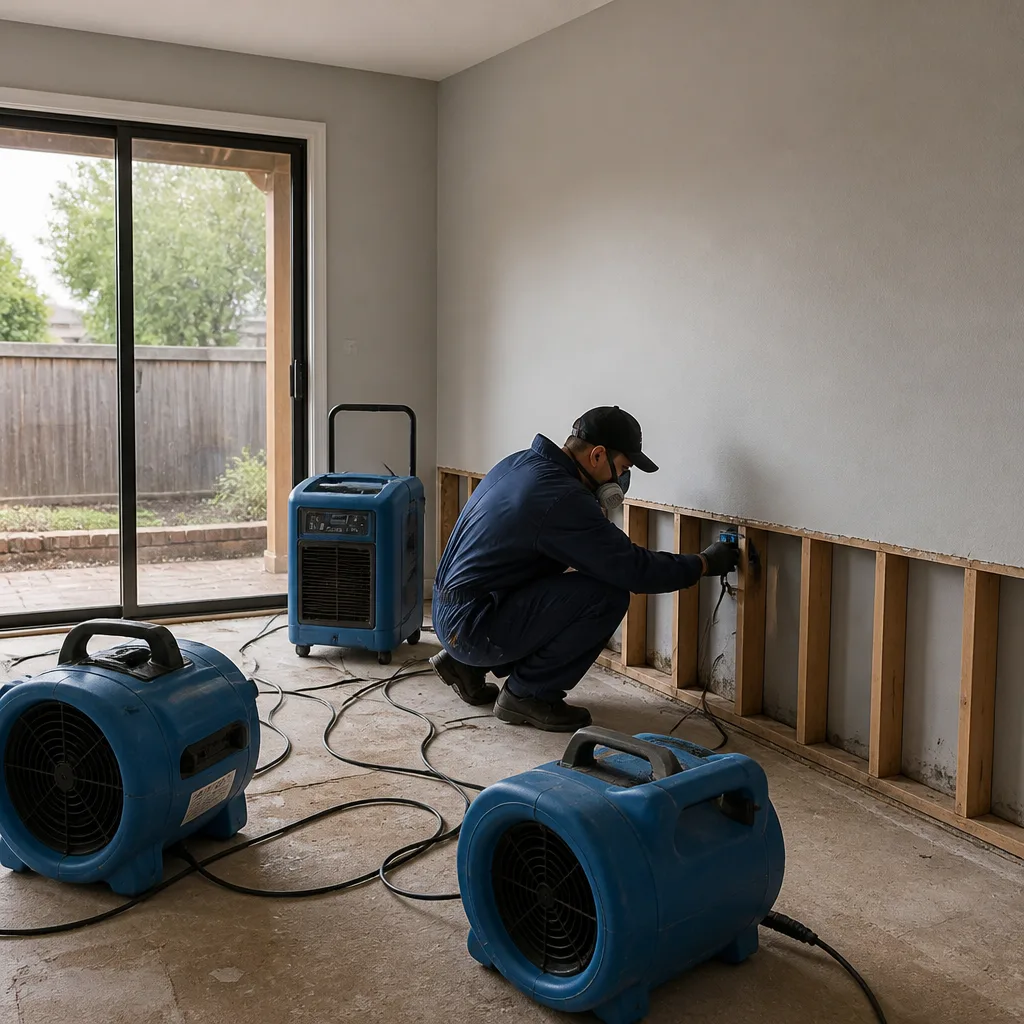 After
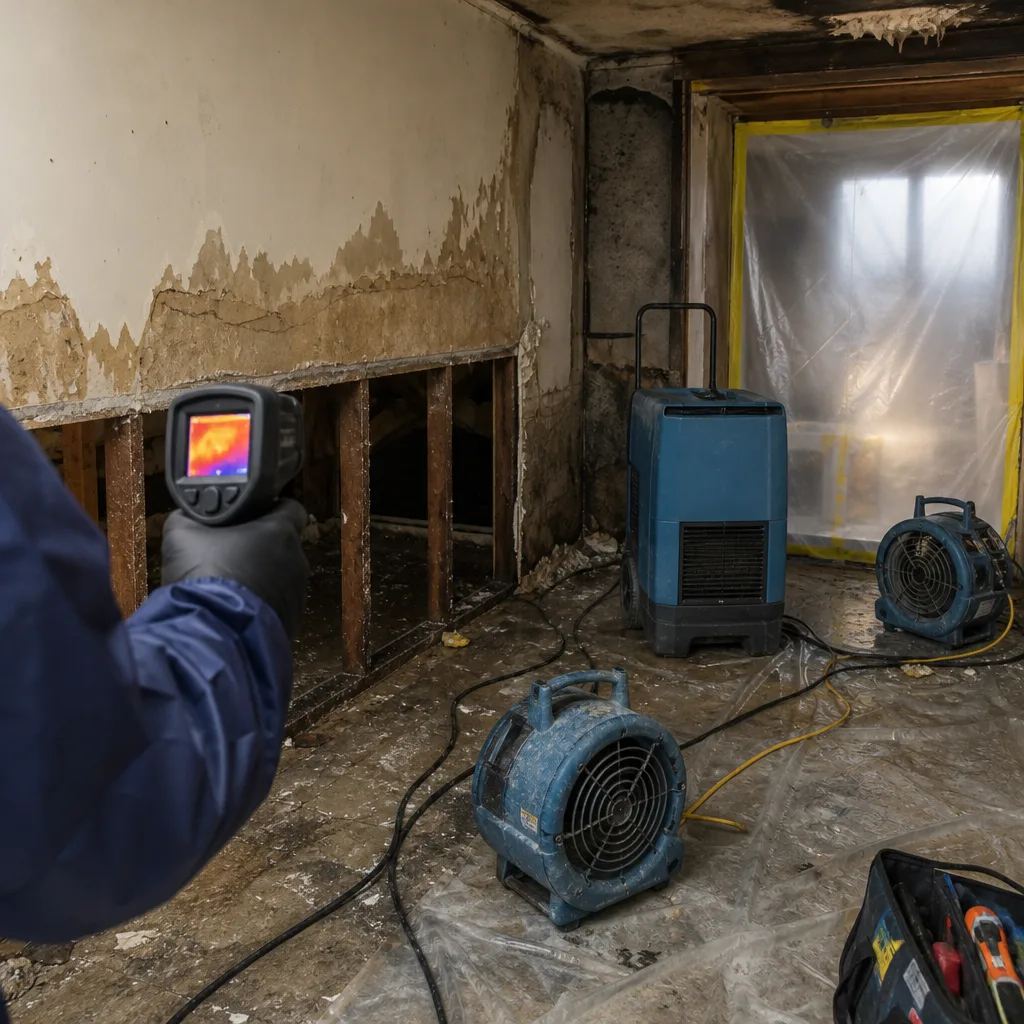 Before
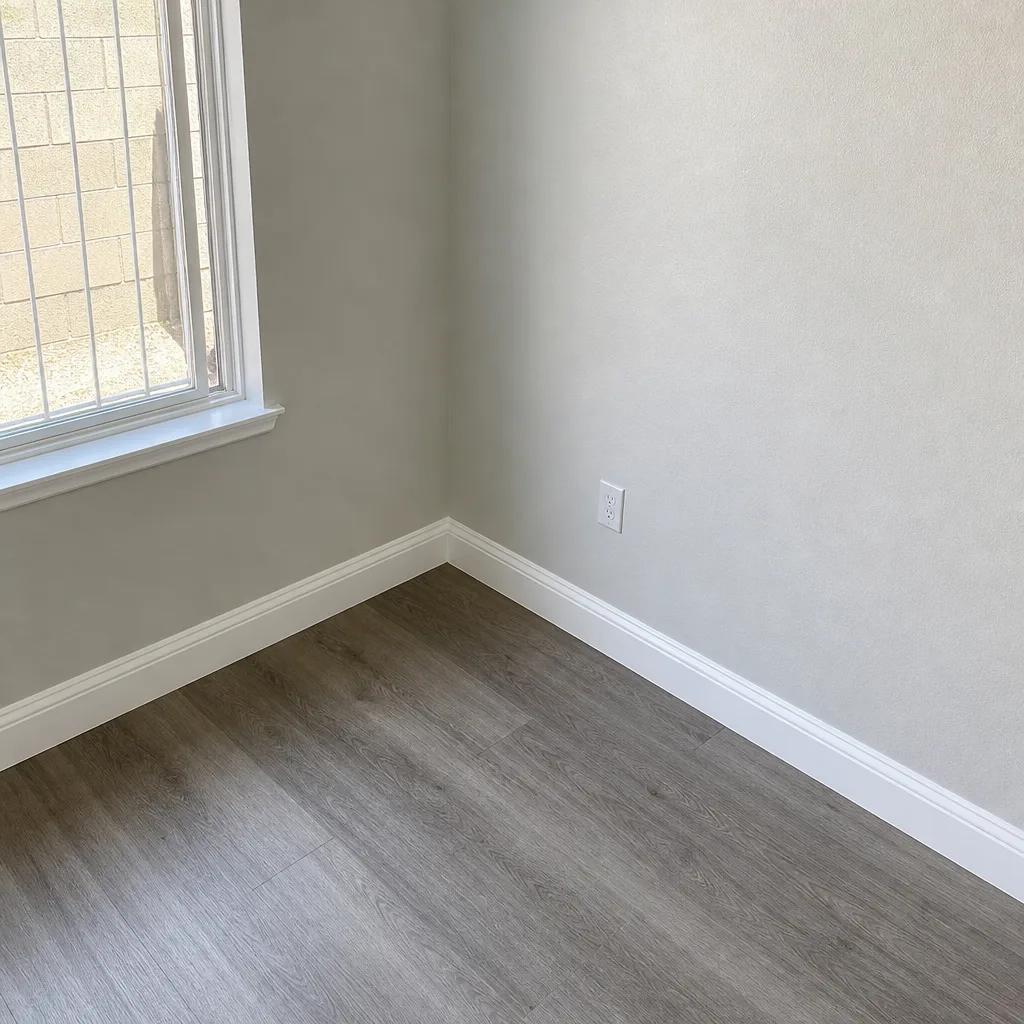 After
Pricing for Water Damage Restoration in Desert Edge, CA
A contained window or door seal leak in Desert Edge with localized cavity drying typically runs $1,200 to $3,400. A full emergency response after a flash flood or wind-driven wall cavity intrusion falls between $2,800 and $6,500, depending on how much contaminated material we remove and how many chambers we set. The biggest cost variable out here is sand: if wind-packed sand has degraded the cavity framing, we have to remove more material and dry longer to hit the IICRC standard. Call (844) 716-1094 for a free estimate. We’ll come out, map the moisture, and give you a written scope before any work starts, not a verbal number that changes after the first wall is open.
We Also Serve Cities Near Desert Edge
Flood Guard Water Damage covers the whole western Coachella Valley. Our Desert Edge response routes also reach homes in Garnet, Desert Hot Springs, Morongo Valley, and Palm Springs when residents there face the same wind-driven and flash flood damage we see every season. If your property sits on the edge of the wash line, we’ve likely dried a neighbor’s wall already.
Serving Desert Edge, CA — Our Local Coverage Area
We’re based in the Desert Edge area and know this community well. Use the map below to see our service coverage — if you’re nearby, we can almost certainly help.
FAQs About Water Damage Restoration in Desert Edge
Desert Edge sits at the wind-scoured western edge of the Coachella Valley, so it catches the full force of Santa Ana winds and monsoon outflow before they weaken moving east. The same wind event that barely shakes a palm in Palm Springs drives fine sand through window seals, recessed lights, and attic vents here. That sand opens the path; the next rain follows it into wall cavities. Most of our Desert Edge calls come days or weeks after a wind storm, not during a rain event, because the water shows up late and looks like a fresh leak when it’s actually ongoing intrusion.
Yes, substantially. A slab-on-grade 1970s build means water that gets into the walls wicks down to the slab edge and spreads laterally through the drywall and base plate, so containment has to extend beyond the visible stain. The flat roof ponds water and feeds the wall from above, so we set drying chambers on both the wall assembly and the ceiling cavity to pull moisture from all directions. The pre-code lot drainage also means water sits against the slab during winter rains, so we check for slab-edge wicking even when the entry point seems to be up high.
It depends on the water source. Clean rain through a failed window seal is technically Category 1, but if that same rain passes through a sand-packed cavity or over a roof that’s been collecting dust and debris, it picks up contaminants and becomes Category 2. If the water is from a flooded wash or sewage backup, it’s Category 3. What matters for drying is that we document the source and lab-grade the water, because the drying protocol and antimicrobial treatment differ for each category. We’ll tell you which one applies at your Desert Edge home before work begins.
Within 24 to 48 hours if the water is Category 2 or if it’s been sitting in a dark wall cavity, because that’s the window where microbial growth begins in a desert house where the interior is warm and the cavity is humid. If the leak is from wind-driven rain that happened days or weeks ago and you only now see the stain, call immediately anyway. The damage has likely been progressing that whole time, and each day of delay adds moisture to framing that’s already been degraded by sand. Dry framing with logged daily readings is the standard we work to, and delayed calls make that harder to hit.
If your home has original single-pane windows or doors that rattle in a strong wind, plan to have them upgraded or at minimum re-sealed and weather-stripped before the next Santa Ana season. The wind pressure here is enough to flex the frame and break old seals, which then pulls sand and rain into the wall cavity. A wind-rated upgrade is significantly cheaper than a full cavity remediation from water damage. We can dry and restore the interior after a failure, but we don’t install windows, so we’ll point you to local contractors who handle wind-rated retrofits correctly, and we’ll coordinate so the drying happens first and the seal work comes after.
Call Flood Guard Water Damage in Desert Edge
If you’re looking at a water stain, musty drywall, or standing water from a Desert Edge wind or rain event, don’t guess at the extent of the damage and don’t wait for it to dry on its own. We’ll come out, map the full moisture path, and give you a written scope with real numbers before any work starts. Noel Ibarra and the rest of our team serve the whole 92240 ZIP and the unincorporated roads off Highway 62. Call (844) 716-1094 for a free estimate. The sooner we get inside the cavity, the less we have to tear out.
Written by Noel Ibarra, Owner at Flood Guard Water Damage, serving Desert Edge and the western Coachella Valley.