
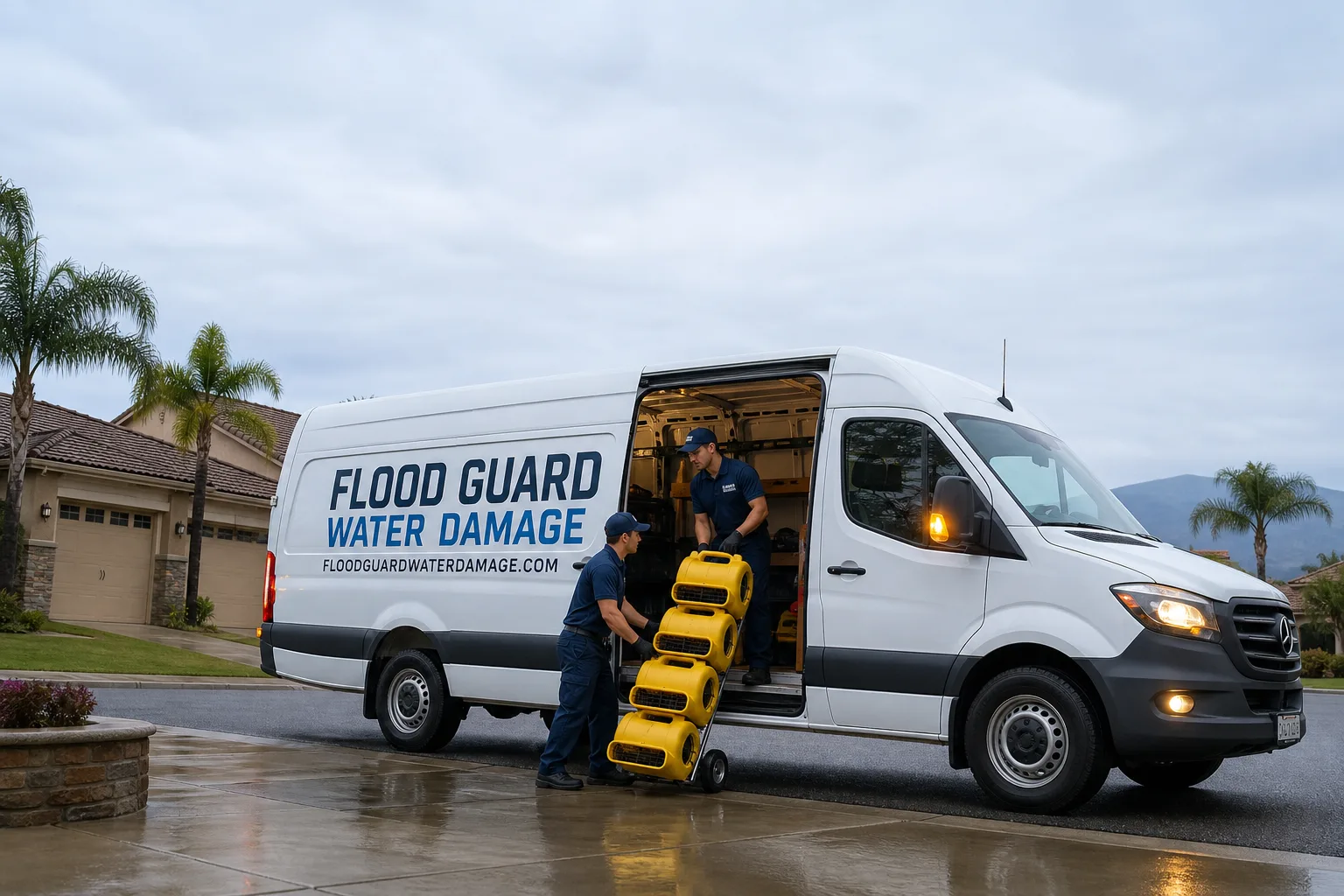
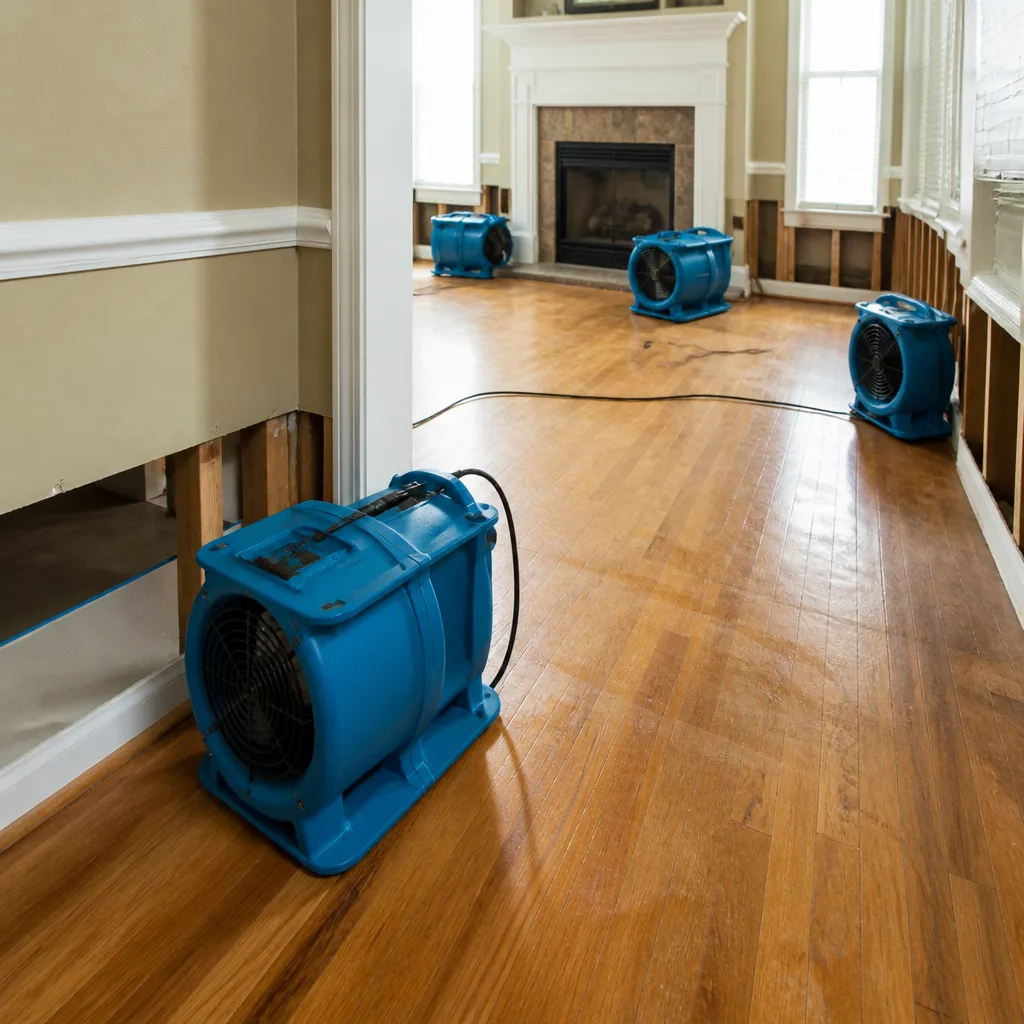
 Water damage drying
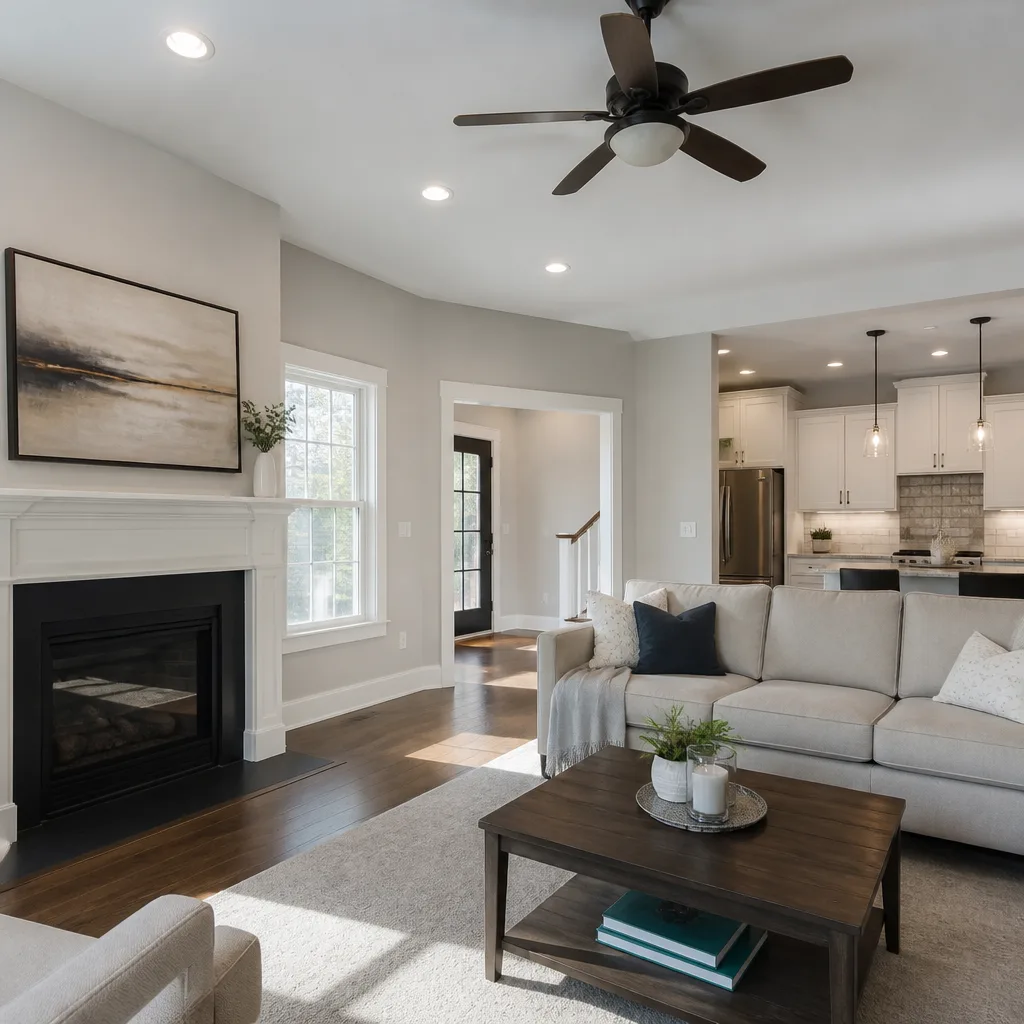 Fire & smoke cleanup
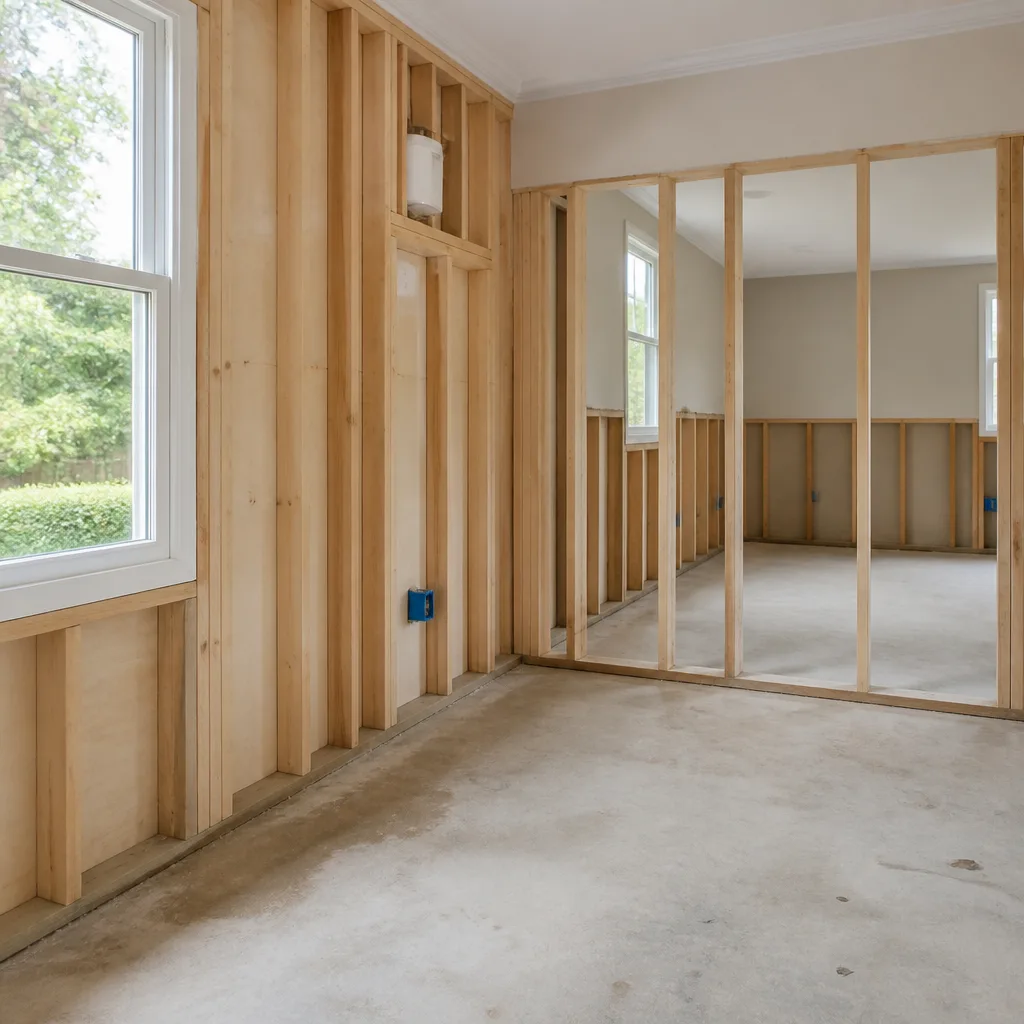 Mold remediation
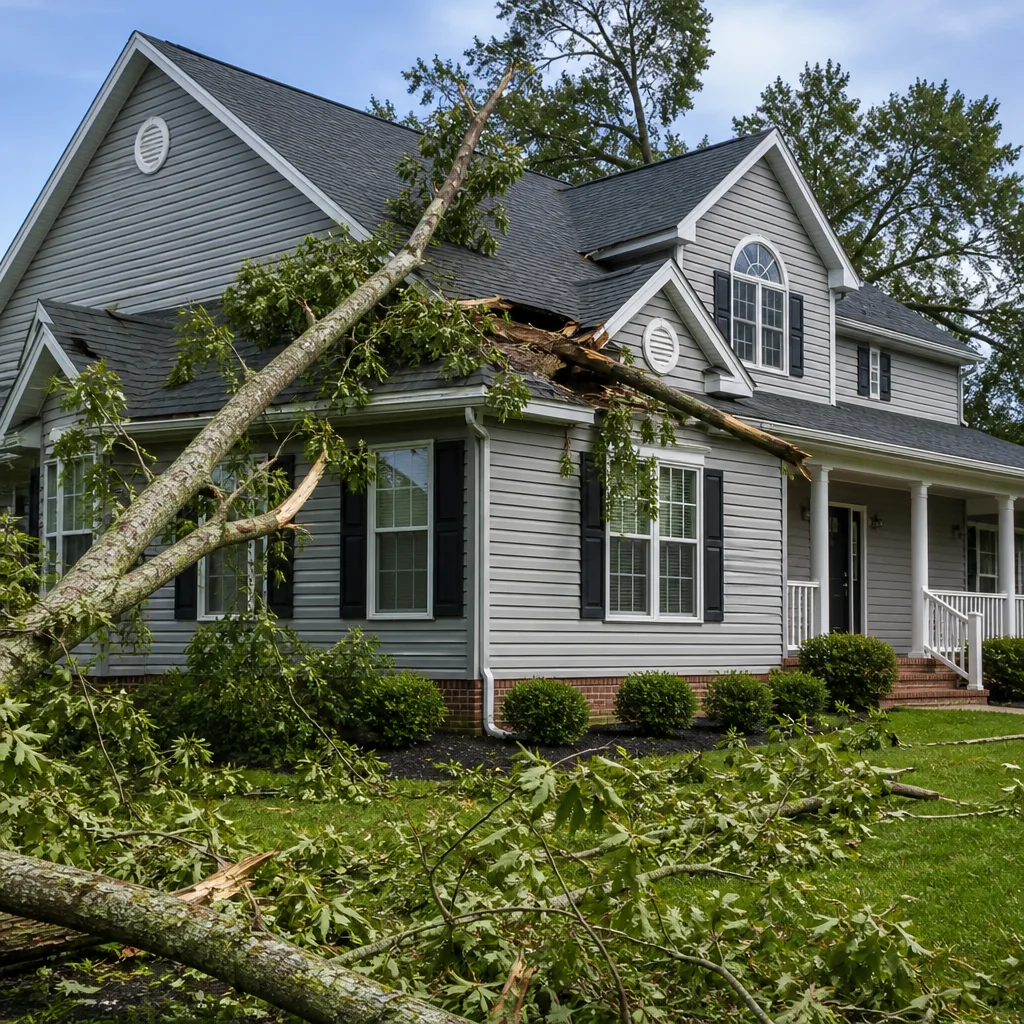 Storm response
 Sewage cleanup
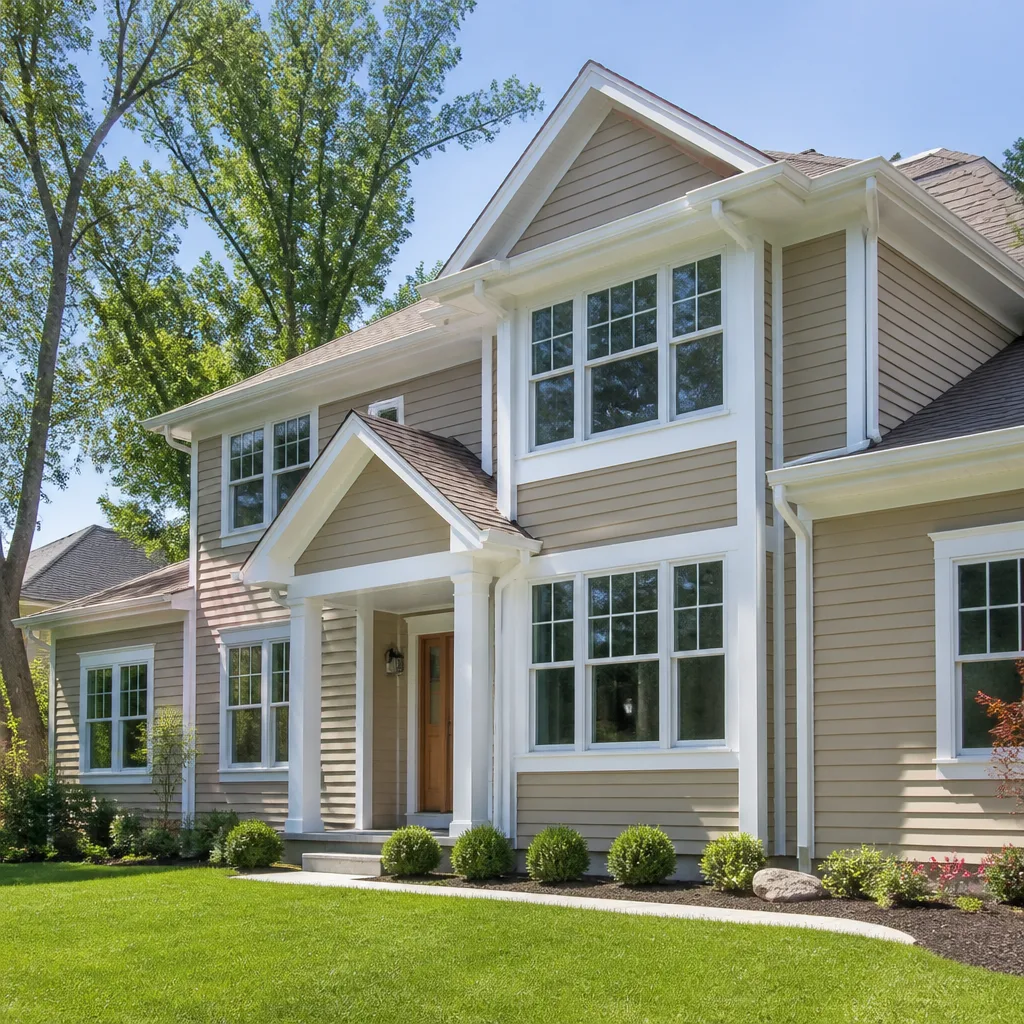 Reconstruction
Free visual inspection and a written scope of work before any mitigation begins - photos, moisture readings, and drying logs go in your claim file
The scope we write is the scope we bill. Anything new gets shown to you, in writing, before we touch it.
Get your free estimateFast, Reliable Water Damage Restoration Across Portola Hills
Water damage restoration in Portola Hills typically runs $1,800 – $4,200 for a standard Category 2 dry-out of a single room, and $4,500 – $9,500 when multiple rooms, the attached garage, or wall cavities are involved. We respond to Portola Hills call-outs the same day, every day. If you’re standing in water right now on a ridge-top street like Saddleback Ranch Road or a canyon-facing slope off Glenn Ranch Road, call (844) 716-1094 and we’ll have a crew rolling toward the 92610 ZIP within the hour.
Portola Hills isn’t a generic Orange County suburb. The streets climb, the canyons funnel wind, and the 1980s Mediterranean tract homes share walls and rooflines that hide moisture in ways a flat-lot home never will. Our Water Damage Restoration team knows what a debris-flow drain blockage looks like on a Portola Hills garage slab, what ash-clogged roof valleys do after a Santa Ana event, and why the HVAC ductwork in these original-condition homes pushes moisture smells into living spaces before anyone sees a stain. That local knowledge changes the drying plan from day one. We serve Portola Hills with equipment and protocol, not guesswork.
Why Flood Guard Water Damage Is Portola Hills’s Preferred Water Damage Restoration Company
Portola Hills homeowners tend to ask the same question after a leak: is this crew going to actually dry the structure, or just vacuum the carpet and leave? We answer that with documentation. Every job we run in the 92610 ZIP follows IICRC-certified drying protocols, which means moisture readings are logged in writing, drying goals are set against the pre-loss condition of the materials, and no one calls the job done until the numbers say done. That matters more on ridge-top lots where original stucco and single-pane windows create hidden pathways for moisture. We dry the structure, not just the surface.
Our standing with the Restoration Industry Association (RIA) and our IFA affiliation mean we’re held to technical and ethical standards that a generalist handyman never faces. The equipment on a Portola Hills job is the same gear you’d see on a large-loss commercial claim: Dri-Eaz dehumidifiers, Phoenix air movers, XPOWER fans, and Injectidry systems for drying inside walls and cavities without automatic demolition. Injectidry means we open walls when necessary, not by default. On a 1980s tract home with a shared garage wall, that often saves the homeowner thousands in rebuild cost.
Noel Ibarra leads our restoration operations with a simple rule: measure first, cut second. When a Portola Hills homeowner calls after shop-vaccing a flooded garage for two hours, we still run full moisture mapping before we touch a wall. That discipline is why neighbors here tend to recommend us to each other after the first rain-on-burn-scar event of the season.
Restoration work we handle
Emergency Water Damage Restoration in Portola Hills
Emergency Water Damage Restoration in Portola Hills is what you need when water is actively pooling inside the home, coming through a ceiling, or seeping up from a blocked drain on a canyon-facing slope. In these jobs, the first 24 hours determine whether you’re looking at a $2,000 dry-out or a $12,000 mold-and-rebuild situation. Our crews respond to Portola Hills call-outs the same day, set up containment and extraction within the hour of arrival, and begin structural drying with commercial-grade air movers and dehumidifiers. A single-room emergency extraction and initial dry-out in Portola Hills typically runs $1,200 – $2,800 depending on how far the water traveled under baseboards and into the attached garage.
Ridge-Top Roof Leak and Debris Flow Response
Portola Hills sits against the Santa Ana Mountains, and when winter rain hits burn scars above the tract, debris flows push mud and water into garage slabs and patio drains on streets like Saddleback Ranch Road and Ridgeline Drive. We extract the standing water, locate where the flow entered, and set up drying on the shared wall between garage and living space. Homeowners often assume the damage stopped at the slab edge. Moisture mapping usually says otherwise.
Burst Pipe and Supply Line Failures
Original copper supply lines in 1980s Portola Hills homes are reaching the age where pinhole leaks and joint failures happen without warning. When a line lets go inside a wall cavity, the water travels down the stud bays and pools at the baseplate, often wicking into the adjacent room before anyone notices. We trace the moisture path with meters, remove water from the cavity with Injectidry or a flood cut when needed, and log daily drying readings until the structure meets the pre-loss moisture baseline.
Water Damage Repair in Portola Hills
Water Damage Repair in Portola Hills picks up where emergency extraction ends. Once the standing water is out and the drying equipment is running, the damaged materials need to be assessed, removed where necessary, and rebuilt. On a typical 1980s Mediterranean tract home, that means cutting drywall to the flood line, removing saturated insulation, treating the framing with antimicrobial, and reinstalling drywall, texture, and paint to match the existing finish. Water damage repair in Portola Hills generally runs $2,000 – $6,000 for a single room and $6,000 – $12,000 when the attached garage, ceiling, and shared walls are involved.
Baseplate and Stucco Cavity Repair
The most common repair we handle in the 92610 ZIP is the bottom 24 inches of drywall in rooms adjacent to an attached garage. Portola Hills homes were built with shared garage walls, and when a garage slab floods, water wicks into the stucco and drywall at the baseplate. Surface drying doesn’t touch it. We remove to the flood cut, dry the cavity, and rebuild with new material.
Ceiling and Roof Valley Repair After Ash-Clogged Drains
After a Santa Ana event, ash and soot settle in the roof valleys on ridge-line homes. When winter rain comes, those valleys drain slowly or not at all, and water backs up under the concrete tile. The first sign is often a stain on the ceiling or a musty smell through the original HVAC vents. We repair the ceiling, address the valley drainage, and make sure the attic and ductwork are dry before we close anything up.
Trusted Brands We Service in Portola Hills
We run our Portola Hills jobs with the equipment brands that commercial restoration teams rely on: Dri-Eaz for refrigerant dehumidification, Phoenix and XPOWER for air movement, and Injectidry for positive-pressure drying inside wall and floor cavities. These aren’t rental-counter machines. They’re the same units we deploy on large-loss commercial claims, and they’re what allow us to dry a 1980s tract home with original single-pane windows without automatically tearing out every wall. When we arrive at a Portola Hills address, the equipment in the truck matches the seriousness of the damage. That’s the standard Noel Ibarra holds every crew to.
See the difference
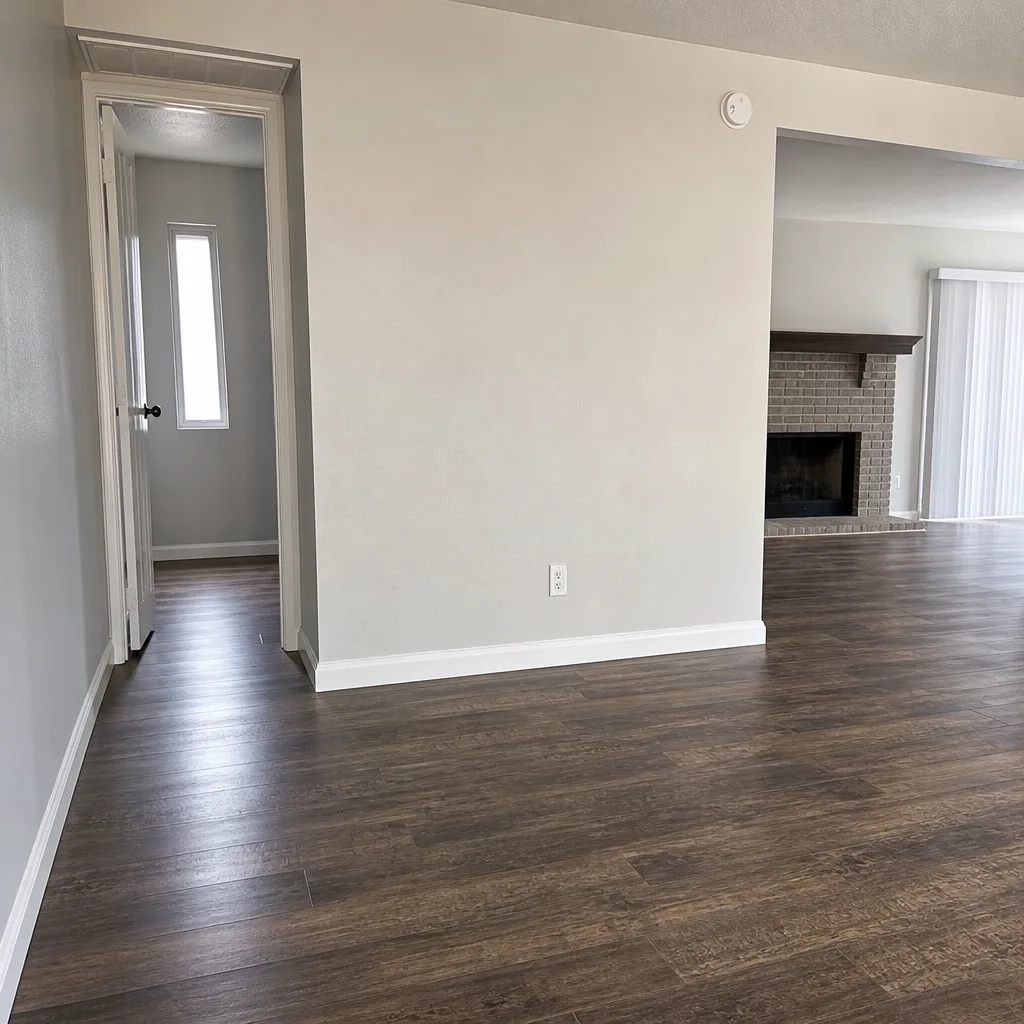
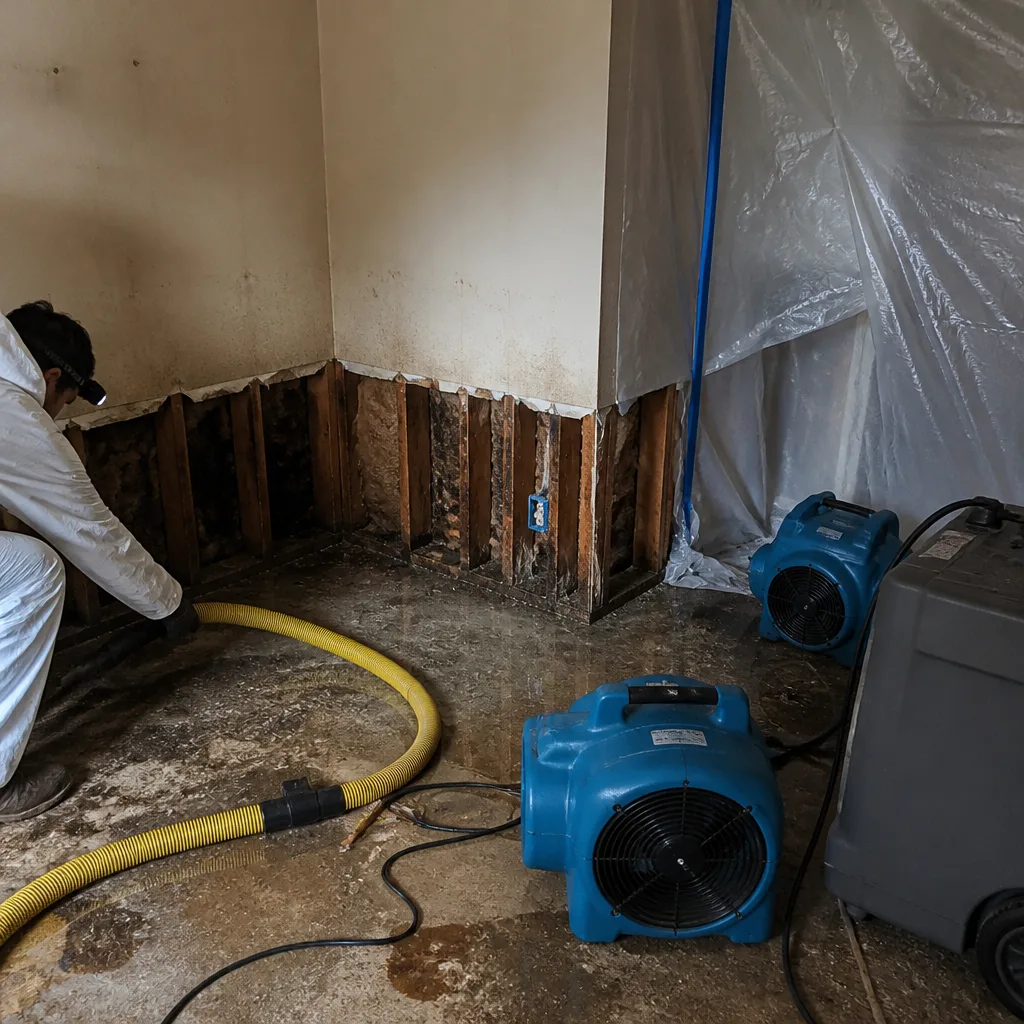 Before
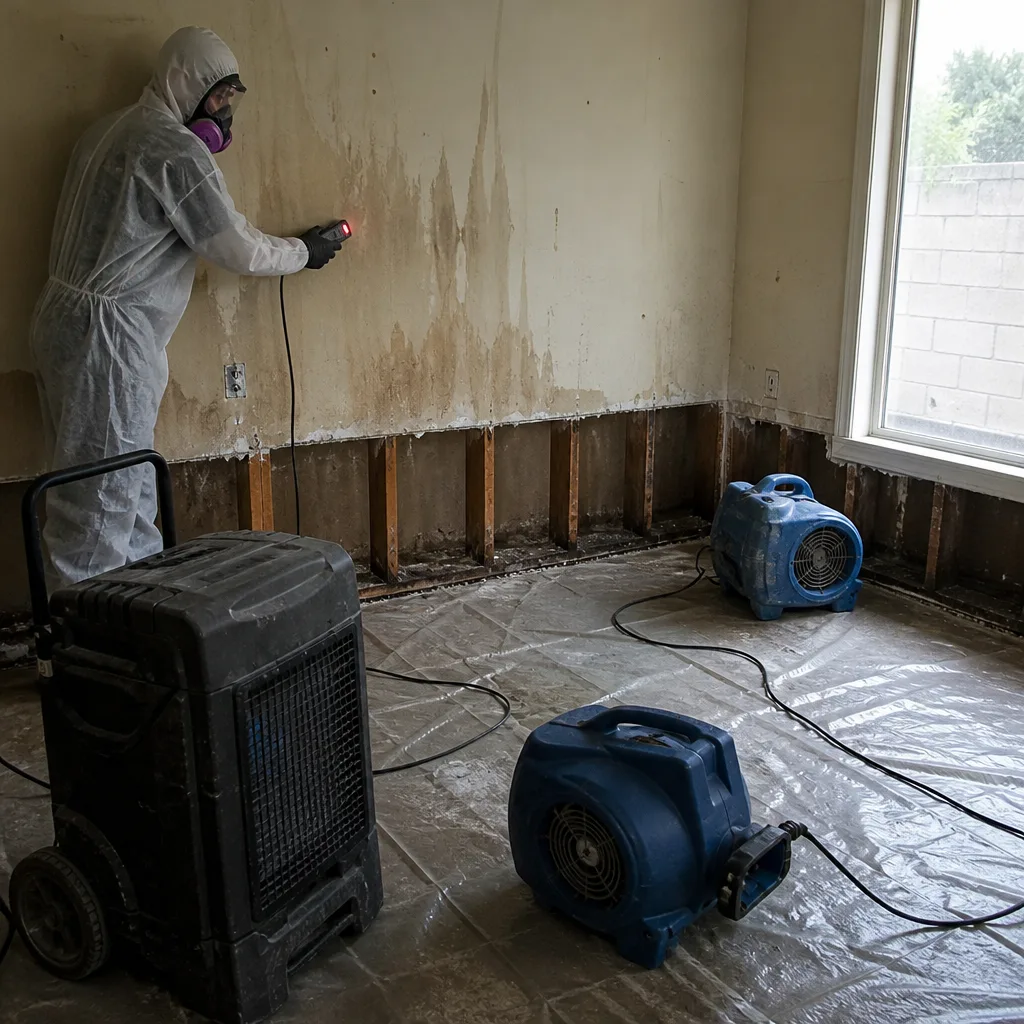
 After
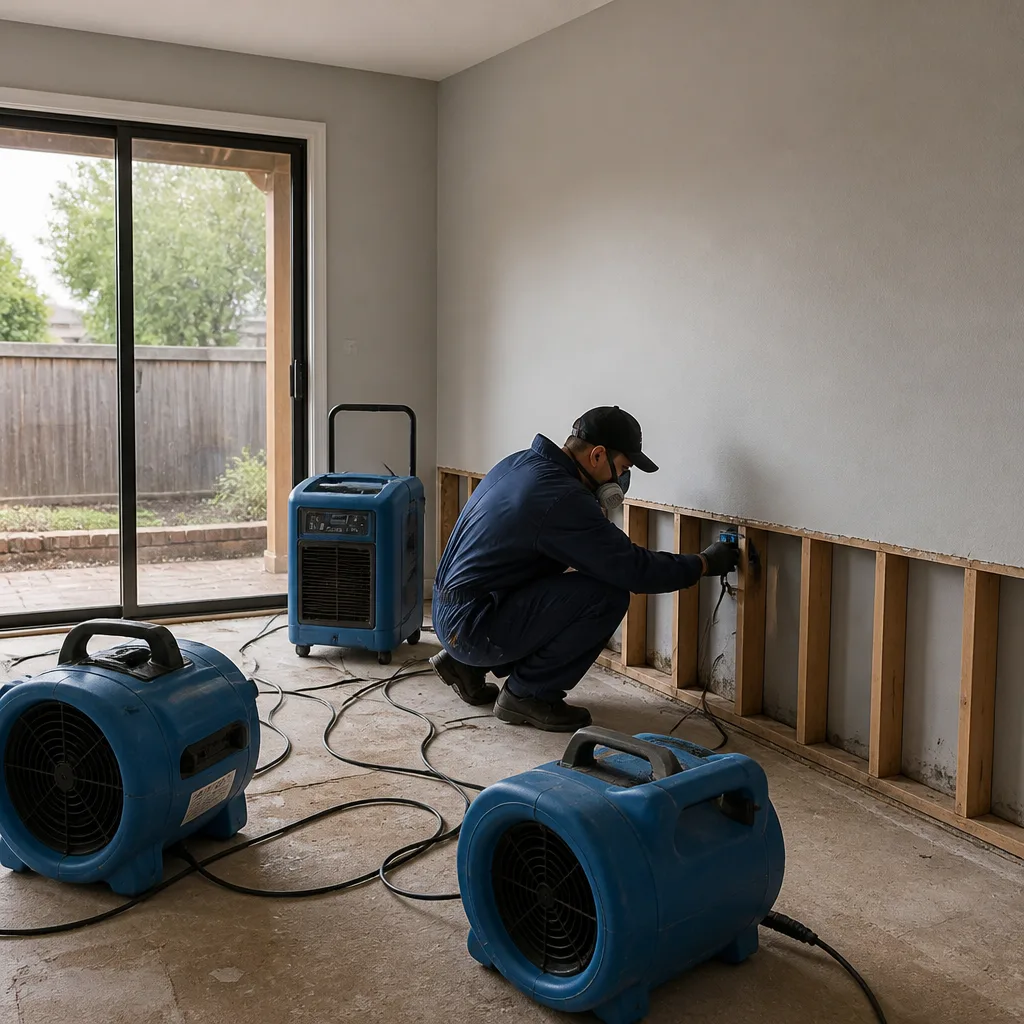
 Before
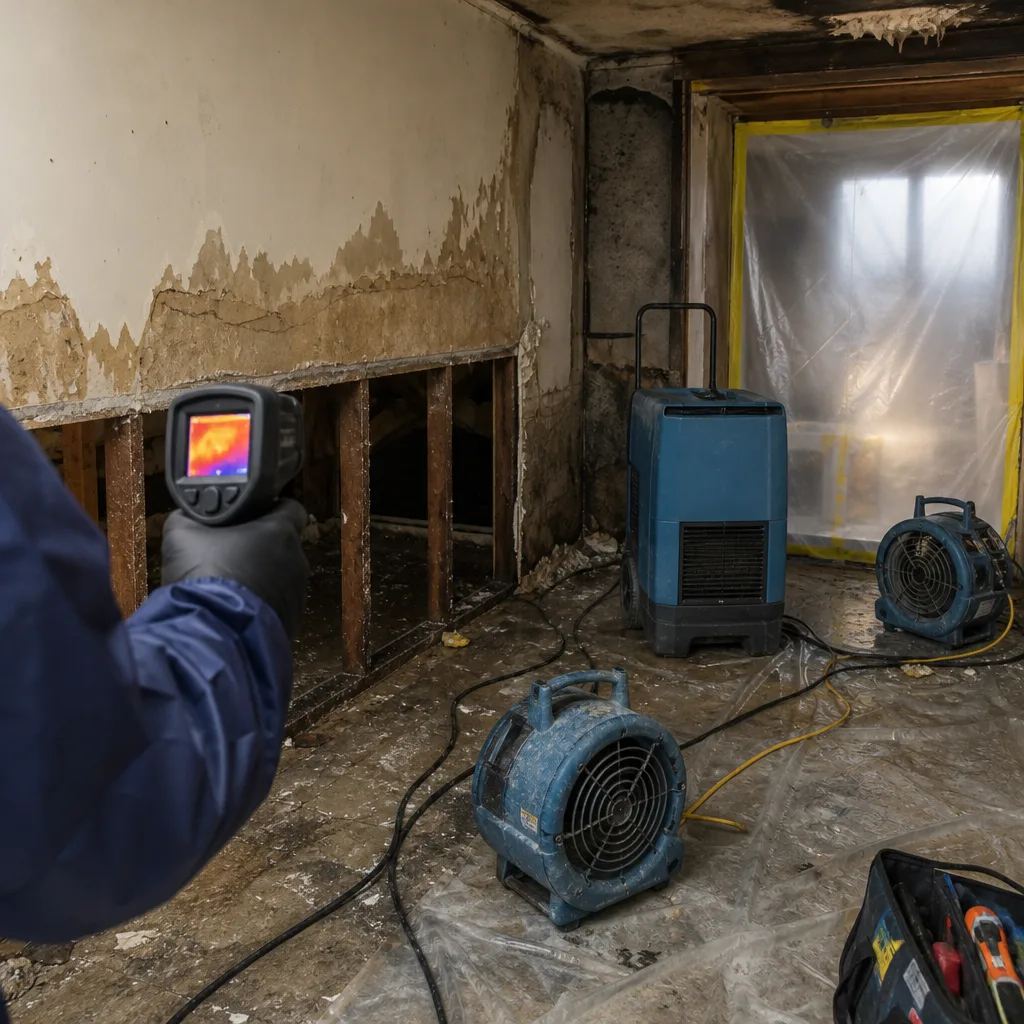
 After
 Before
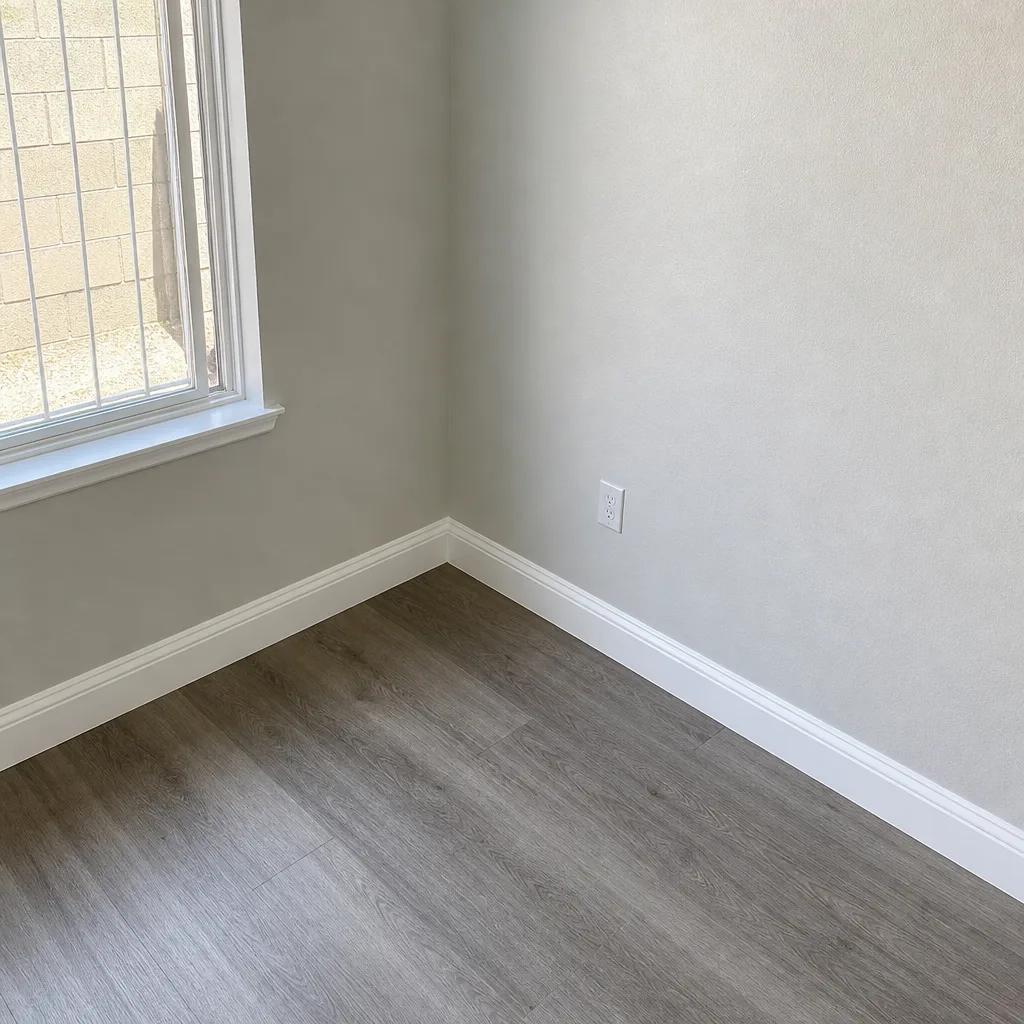 After
Common Water Damage Restoration Problems We See in Portola Hills Homes
- Ash-clogged roof valleys that turn a Santa Ana into a water job: The ember and ash layer that settles on ridge-top roofs each fall gets washed into valleys and downspouts by winter rain. When the drains can’t keep up, water backs up under the tile and into the attic, and the first sign is often a smell through the original HVAC ductwork, not a visible stain.
- Original single-pane windows and old HVAC systems as moisture pathways: These 1980s tract homes weren’t built for the fire-weather cycles Portola Hills now sees. Conditioned air leaks through the gaps, and when moisture gets into the wall cavities, the temperature differences push damp air through the ducts and into living spaces that read dry on the surface.
- Canyon-facing slopes where a small leak travels downhill inside the wall: Homes on the eastern edge of the tract sit against slopes, and water that enters at the uphill side of the house travels down the stud bays and collects at the low-side baseplate. By the time it’s visible on the downhill room, the uphill wall cavity has been wet for days.
- Debris-flow drain blockages during winter rain on burn scars: After a wildfire burns the slopes above Portola Hills, the next rain brings mud and debris into the drainage channels. Garage slab drains on the lower streets clog fast, and the water has nowhere to go but inside. We’ve extracted Category 3 water from garages where the homeowner had already shop-vacced the surface, but the drain was still blocked and the wall was still wicking.
Pricing for Water Damage Restoration in Portola Hills, CA
Here’s what we’ve seen across Portola Hills jobs, based on the scope and the home type:
- Emergency water extraction and initial dry-out, one room: $1,200 – $2,800
- Full Category 2 dry-out with containment and monitoring, two to three rooms plus attached garage: $4,500 – $9,500
- Water damage repair including drywall, insulation, and finish work, one room: $2,000 – $6,000
- Ceiling and roof-valley leak repair with attic drying: $1,800 – $4,800
- Debris-flow garage slab extraction and structural drying: $2,500 – $5,500
What drives the number is how far the water traveled through the original construction, whether the attached garage shares a wet wall with living space, and whether the HVAC and single-pane window gaps extended the drying time. We write a scope of work before we start, with line-item pricing, so you know what you’re paying for before the first piece of equipment comes off the truck. Call (844) 716-1094 for a free estimate, and we’ll have someone out to your Portola Hills address to take real moisture readings, not a visual guess.
We Also Serve Cities Near Portola Hills
Our crews run regular routes through the canyons and foothills around Portola Hills. We serve Water Damage Restoration in Portola Hills and the surrounding communities, including Foothill Ranch, Lake Forest, Mission Viejo, and Trabuco Canyon. Whether it’s a garage flood off Glenn Ranch Road or a ceiling leak in Foothill Ranch, the same IICRC-certified team responds with the same equipment and the same written scope before work starts.
Serving Portola Hills, CA — Our Local Coverage Area
We’re based in the Portola Hills area and know this community well. Use the map below to see our service coverage — if you’re nearby, we can almost certainly help.
FAQs About Water Damage Restoration in Portola Hills
The ash and soot from the last Santa Ana wind event settled into your roof valleys and attic vents, and the rain just turned it into a damp, musty slurry that’s now being pulled through your original HVAC ductwork. On ridge-top streets like Saddleback Ranch Road, that smell is often the first sign of a roof leak that’s been quietly wetting the attic insulation for days. We inspect the valleys, check the attic moisture levels, and dry what’s wet before mold gets a foothold. Call (844) 716-1094 and we’ll send someone up to look.
Mold can begin colonizing in 24 to 48 hours on wet drywall, insulation, and wood, and the original single-pane windows and older HVAC systems in Portola Hills homes create the temperature swings that speed it up. That’s why we don’t wait on water jobs in the 92610 ZIP. The faster the drying starts, the less likely you’ll need a full mold remediation on top of the water repair.
Category 1 is clean water from a supply line or a burst pipe. Category 2 has some contamination, like water from a washing machine overflow or a shower pan leak. Category 3 is grossly contaminated, like debris-flow runoff from a burn scar or sewage, and that’s what we see when a Portola Hills garage slab drain backs up after winter rain. Each category changes the drying protocol, the containment requirements, and the final scope, which is why we document the category in the written estimate before any work starts.
Not usually, and we’d rather avoid it when the furniture and contents can stay in place and be dried, moved, or protected in a contained area. Pack-outs happen when the damage is severe enough that cabinet contents or lower-floor belongings can’t be dried in place without risking more damage. On ridge-top and canyon-facing Portola Hills homes, we work to keep pack-outs to the minimum, because the goal is to dry and restore your home, not to add a moving bill for things that didn’t need to leave. We’ll tell you honestly in the scope.
Because the water doesn’t stop at the room where it entered. On a canyon-facing slope, water that starts at the uphill wall travels down the stud bays and collects at the low-side baseplate, often in the attached garage or the room below. A crew that shows up with a couple of rental fans and dries only the visible floor will leave the downhill walls wet. We bring the moisture meters, the Injectidry system, and the containment on the first trip, because going back a week later to tear out mold means the job just got twice as expensive. Call (844) 716-1094 for a free assessment, and we’ll come out with the full equipment load the first time.
Written by Noel Ibarra, Owner at Flood Guard Water Damage, serving Portola Hills and the surrounding Orange County foothills with IICRC-certified restoration practices.