
 Water damage drying
 Fire & smoke cleanup
 Mold remediation
 Storm response
 Sewage cleanup
 Reconstruction
Free visual inspection and a written scope of work before any mitigation begins - photos, moisture readings, and drying logs go in your claim file
The scope we write is the scope we bill. Anything new gets shown to you, in writing, before we touch it.
Get your free estimateFast, Reliable Water Damage Restoration Across Stanton
A water line bursts in a Stanton apartment on a Tuesday afternoon. Within an hour, water has found the shared wet wall, soaked through the framing, and started dripping into the unit below. That’s the reality of water damage in Stanton’s tightly packed multi-family corridors, and it’s exactly the scenario our team responds to most often. We’re Flood Guard Water Damage, and we’ve been handling water extraction, structural drying, and flood cleanup in the 90680 zip code long enough to know that Stanton jobs are rarely single-unit jobs. Call (844) 716-1094, and we’ll be rolling toward Beach Boulevard or Katella before the second tenant even notices the ceiling stain.
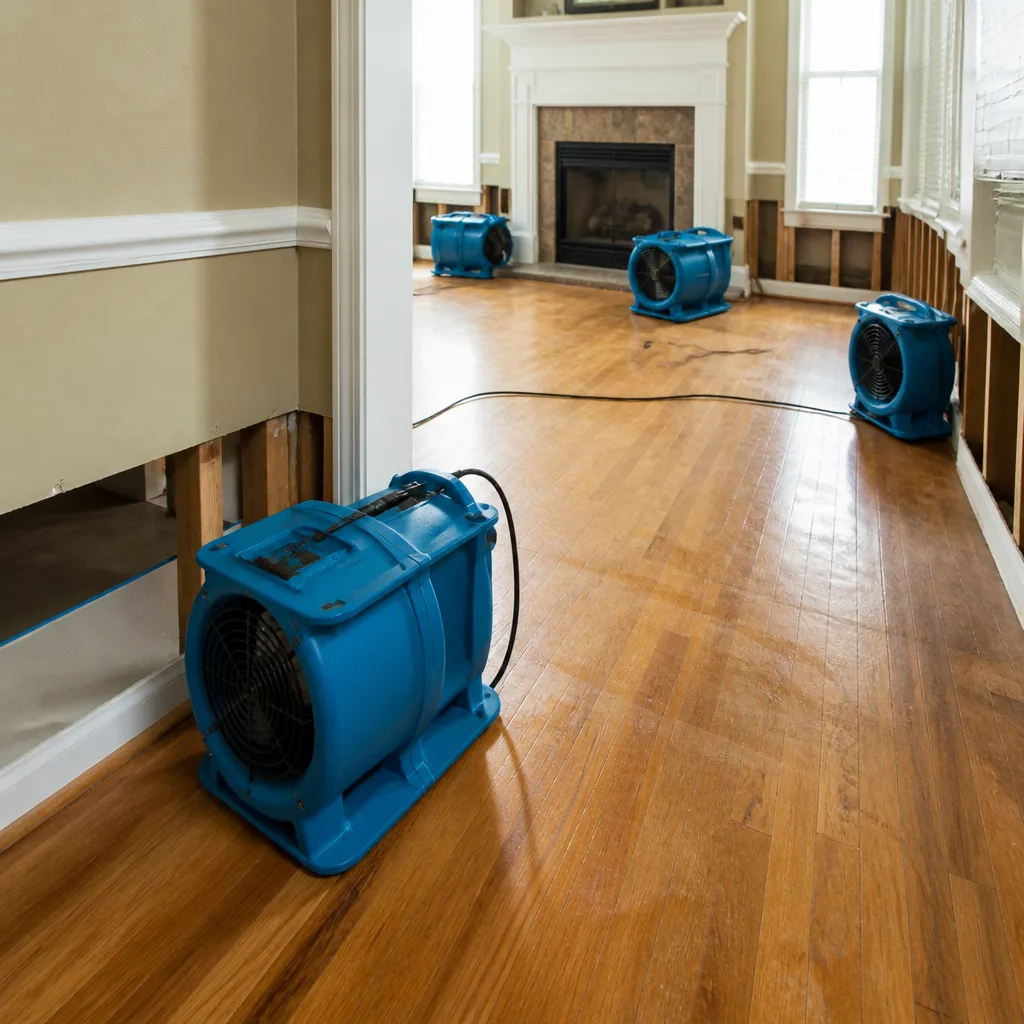
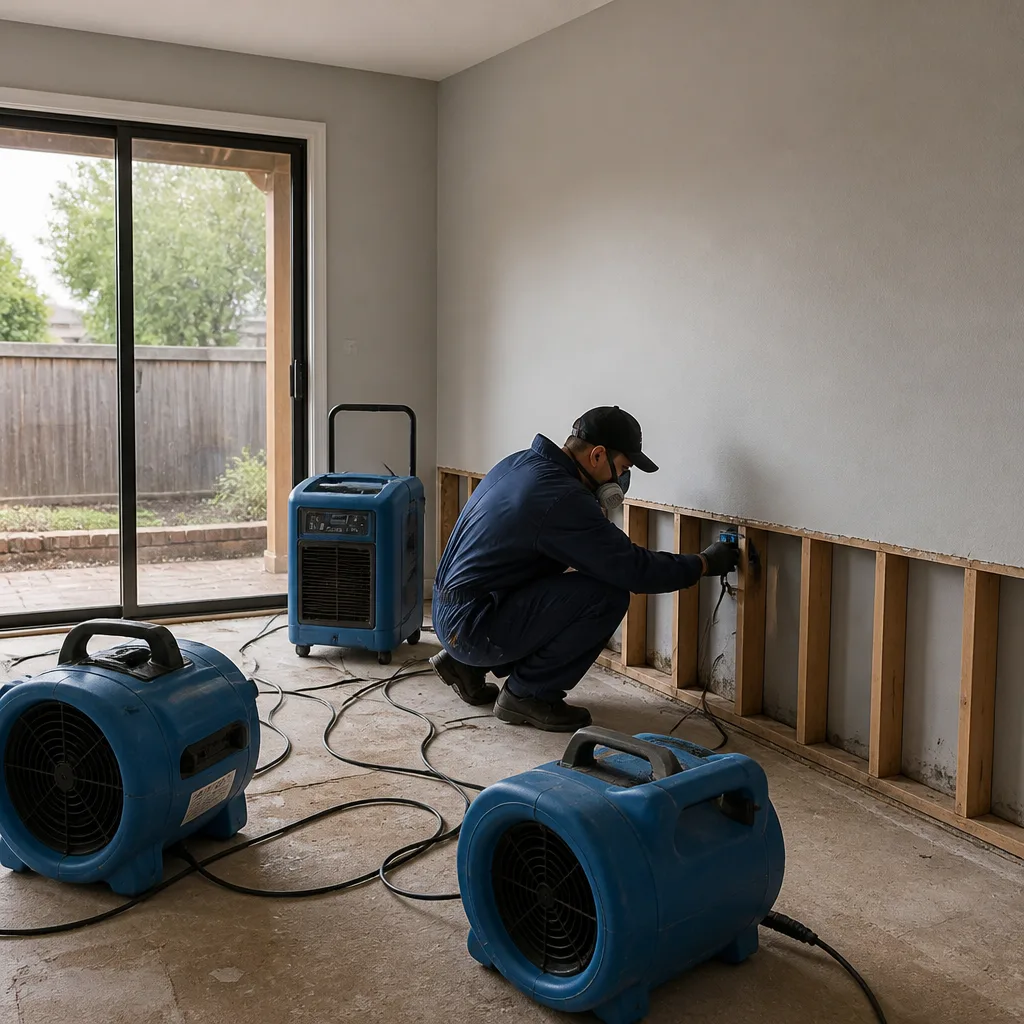
When you’re dealing with water moving through shared framing, every hour matters. Our IICRC-certified teams arrive with commercial-grade drying equipment, not consumer fans from a hardware store. We measure moisture, we document what we find, and we dry the structure, not just the surface. In Stanton, where apartment walls conceal plumbing chases serving multiple units, that distinction is the difference between a two-day drying job and a mold problem that spreads behind baseboards for weeks before anyone smells it.
Why Flood Guard Water Damage Is Stanton’s Preferred Water Damage Restoration Company
Stanton property managers and landlords keep our number on file for one reason: we understand multi-unit drying better than the generalist crews that treat every job like a single-family home slab leak. Our Water Damage Restoration team has spent years tracing water migration through shared wet walls, floor penetrations, and utility chases in buildings along Beach Boulevard, Cerritos Avenue, and the apartment corridors near the 90680 core. That experience changes how we set containment, where we cut inspection holes, and how we document the spread for landlords, tenants, and insurance adjusters.
We run Dri-Eaz and Phoenix equipment on virtually every Stanton job, and we use Injectidry systems when the water has wicked into wall cavities or under flooring where a bigger cut isn’t necessary. The equipment matters because Stanton’s older multi-family stock, much of it built in the post-war decades with original galvanized supply lines, doesn’t forgive slow drying. You can’t guess your way through a wet wall behind a tenant’s closet. You measure it, you map it, and you dry it on a schedule.
Noel Ibarra founded Flood Guard with a simple standard: every job follows IICRC-certified methodology, the restoration industry’s recognized technical benchmark. That means moisture readings before we start, documented drying goals, and a final sign-off that confirms the structure is actually dry, not just “dry enough.” Our active standing with the Restoration Industry Association (RIA) keeps us current on evolving standards, and it shows in the way our techs walk a Stanton apartment building: unit by unit, not door by door.
Restoration work we handle
Water Mitigation in Stanton
Water Mitigation in Stanton means something different than in a single-family suburb, because the water doesn’t stop at the drywall where it started. When a supply line fails in one unit, the water follows the path of least resistance through shared wet walls, under plates, and down floor penetrations into the unit below. Mitigation here is about stopping the spread across property lines that aren’t visible from inside any single apartment. That’s the job: extract what’s standing, map what’s hidden, and dry the whole affected assembly, not just the room where the tenant first called.
Unit-by-Unit Moisture Mapping
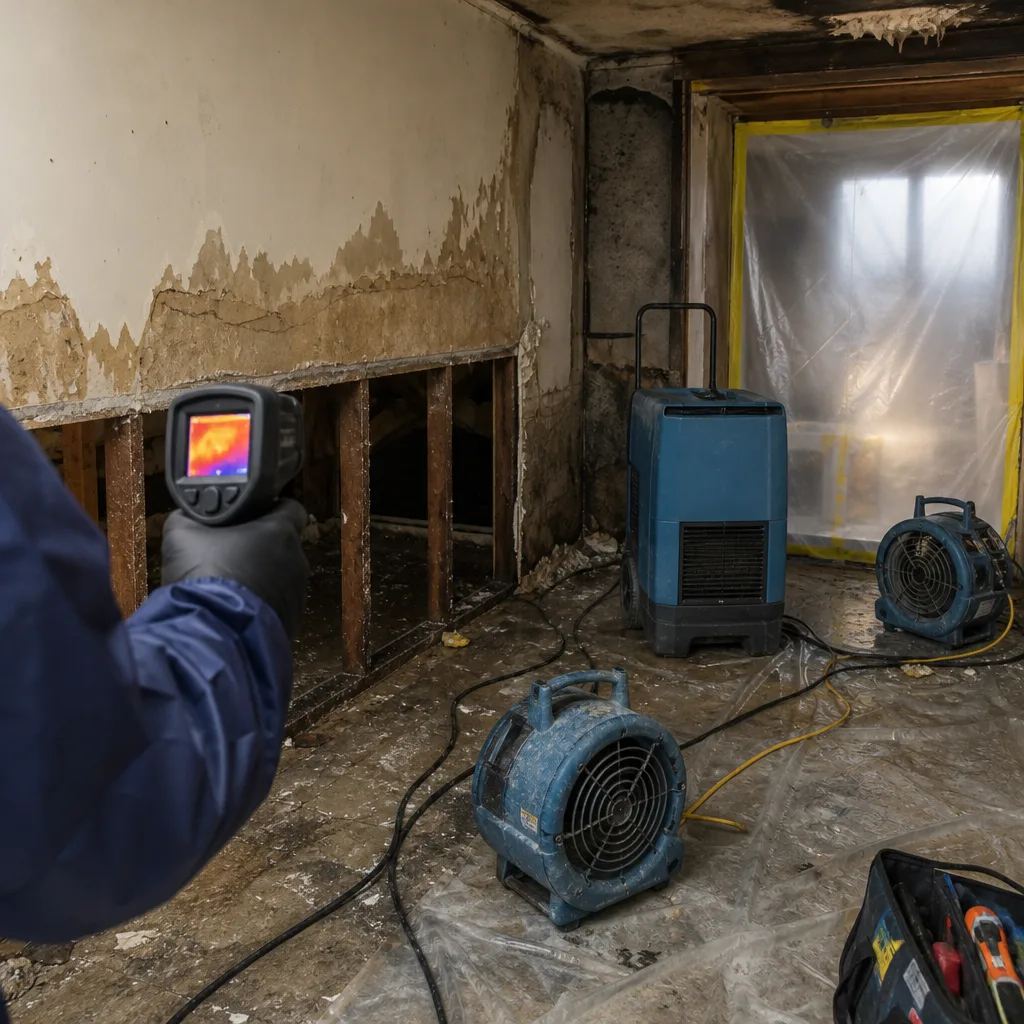
We don’t start mitigation at the front door of the reporting unit. We start by identifying which units share a wet wall or floor assembly with the source. In Stanton’s older apartment stock, that usually means checking the unit directly below, the adjacent unit on the same floor, and sometimes a third unit sharing a corner. We take moisture readings on both sides of the framing. If the numbers are elevated in a neighbor’s closet, we document it and bring the landlord in immediately. That’s how you protect the liability chain and stop mold before it starts. Depending on the extent of wall-cavity and subfloor drying, water mitigation in Stanton typically runs $1,800 to $4,600 for a single-unit source with migration into one or two adjacent units.
When Tenants and Landlords Both Need Answers
The tenant wants to know when their unit will be livable. The landlord wants to know the scope and the cost. The neighbor downstairs wants to know why their ceiling is bubbling. We handle all three conversations with one documented scope. Our techs photo-document the water source, the migration path, and every moisture reading, so the landlord’s insurance claim and the tenant’s contents claim both have a clear record. We coordinate directly with property managers and adjusters. That’s not extra service in Stanton; it’s the core of the job.
Flooded Basement in Stanton
A Flooded Basement in Stanton is less common than in other Orange County cities, but when it happens in the older garden-style apartments and the few single-family tracts with below-grade storage or utility rooms, it’s usually a slow leak that went unnoticed or a drainage failure during one of the region’s rare heavy rain events. Groundwater intrusion through aged foundation walls adds another layer to the problem: the water saturates concrete, wicks up into framing, and creates the kind of persistent humidity that turns a utility closet into a mold incubator. Basement water removal here is about extraction, yes, but also about drying the concrete and the air properly so the problem doesn’t return.
Drying Concrete and Framing Together
Our teams deploy B-Air and XPOWER air movers alongside Phoenix dehumidifiers to create the right drying environment for below-grade spaces. A flooded basement in Stanton usually runs $2,200 to $5,800 for extraction, drying, and any necessary flood cuts along saturated drywall, depending on square footage and how long the water sat. If the water came from a failed sump or a drainage backup, we trace the source and document it. The last thing a Stanton landlord or homeowner wants is to dry a basement and find out the drainage problem behind it was never fixed.
What We Check Before We Call It Done
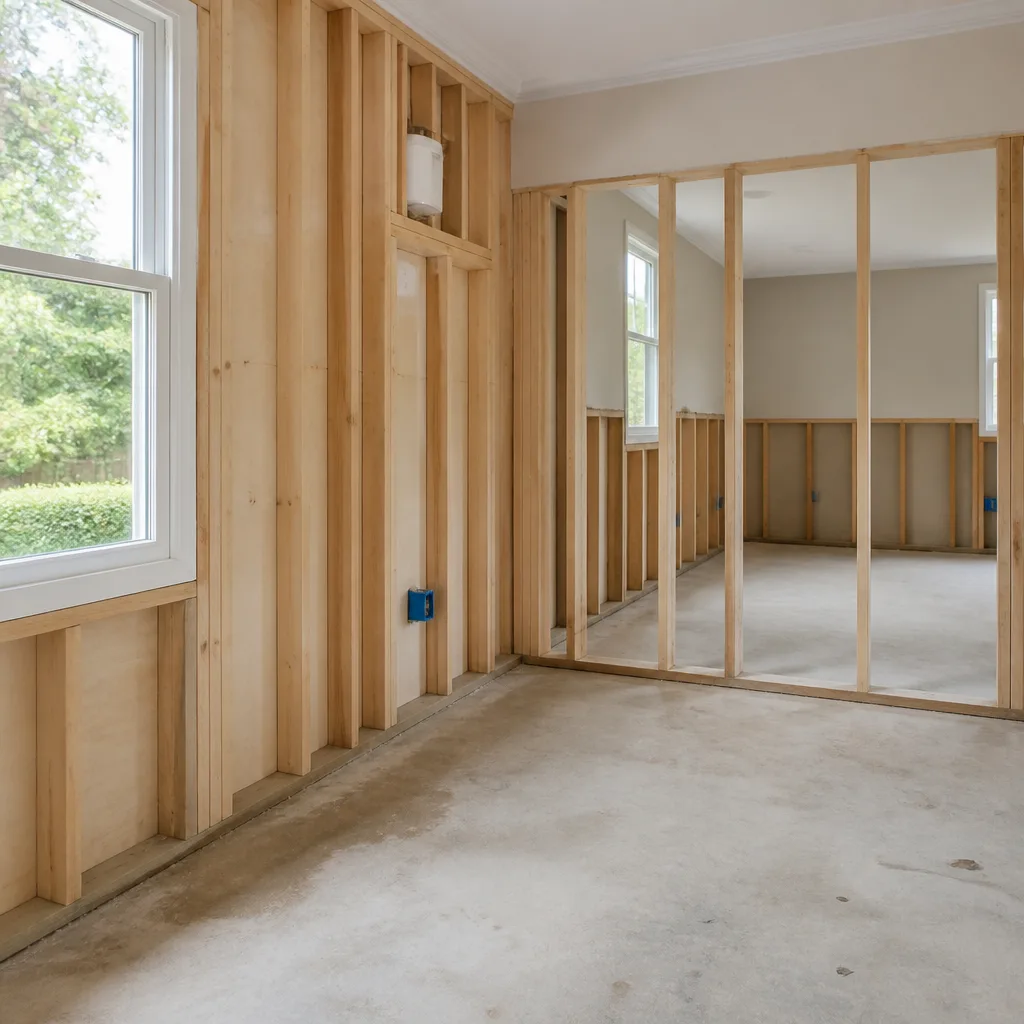
Wood framing against a wet slab doesn’t dry on a timer. We take moisture readings at the bottom plates, in the wall cavities, and in the concrete itself. If the concrete is still releasing moisture into the space, the basement isn’t dry, no matter how the air feels. Injectidry technology lets us dry wall cavities without tearing out every sheet of drywall, which matters when the wet wall is shared between a basement storage room and a finished unit above. We open walls when necessary, not by default.
Trusted Brands We Service in Stanton
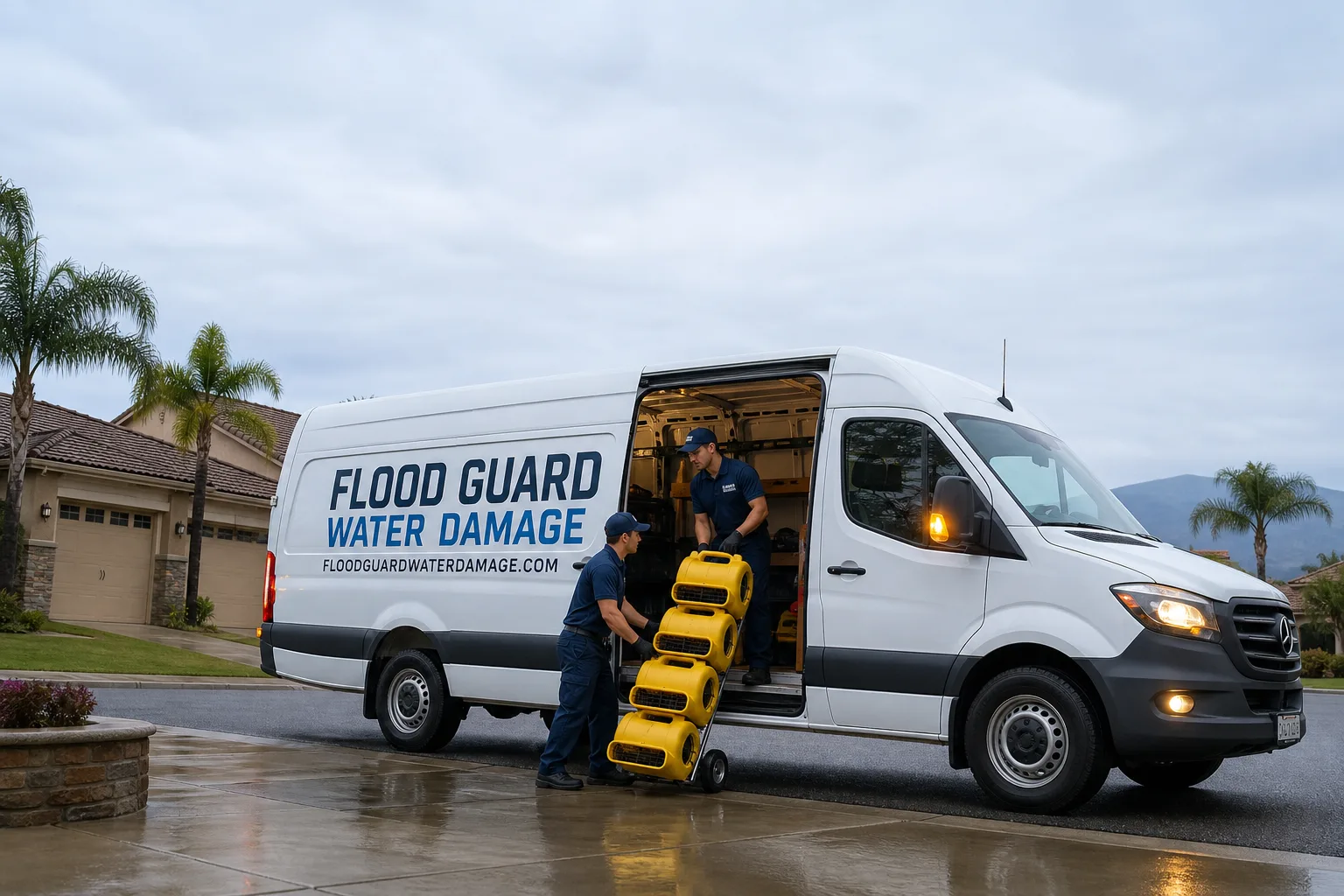
Water damage doesn’t care what brand of water heater failed or which company plumbed the building in 1962. But the equipment we bring to the job does. We run Dri-Eaz, Phoenix, XPOWER, and B-Air drying systems on Stanton jobs, and we keep Injectidry mats and panels ready for wall-cavity and hardwood drying when demolition isn’t the right call. These are the same brands commercial restoration teams use on large-loss jobs, and they’re what a multi-unit building with shared wet walls demands. When a Stanton landlord asks what equipment we’re bringing, the answer is on the side of the air mover: professional-grade, not contractor-grade.
Common Water Damage Restoration Problems We See in Stanton Homes
- Galvanized supply-line failures in shared wet walls. Stanton’s older apartment stock still has plenty of original galvanized piping, and when it fails, the water migrates through framing before anyone sees a puddle. We regularly find moisture in the unit below before the tenant who reported the leak knew it had crossed a wall.
- Water traveling through floor penetrations between levels. Bathroom and kitchen drain penetrations in older multi-family buildings are often unsealed or degraded. A slow leak upstairs becomes a ceiling stain downstairs, then a wet wall, then mold behind baseboards in a unit nobody thought to check.
- Parking and access constraints on dense parcels. Many Stanton apartment buildings have tight alley access or shared parking lots that make equipment staging a real puzzle. We plan our arrival around alley width and distance to the wet wall, because air movers sitting fifty feet from the problem don’t dry anything.
- Landlord-tenant coordination gaps that stall mitigation. The renter reports the leak, but the landlord owns the building, and the adjuster needs documentation from both. When that chain stalls, mold gets a head start in shared framing. We keep documentation moving so the drying doesn’t wait on a phone call.
See the difference
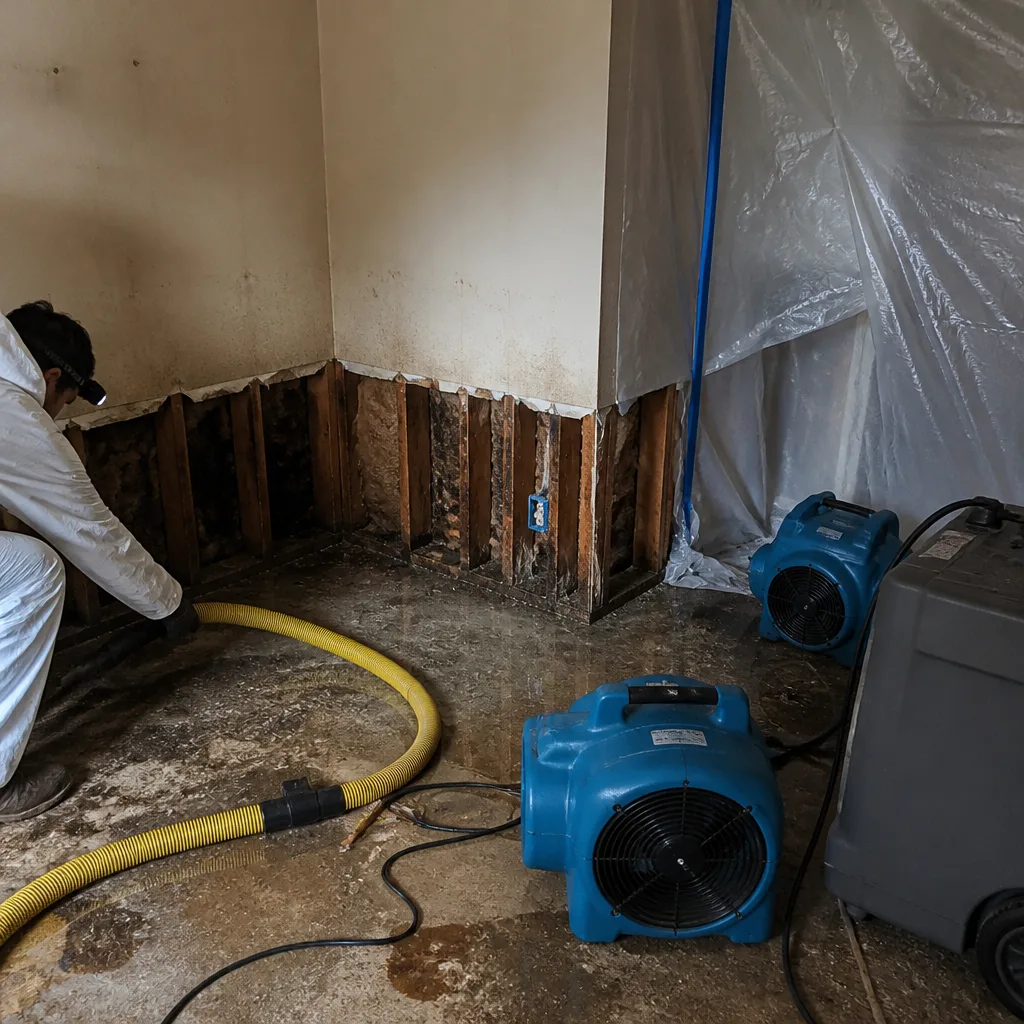 Before
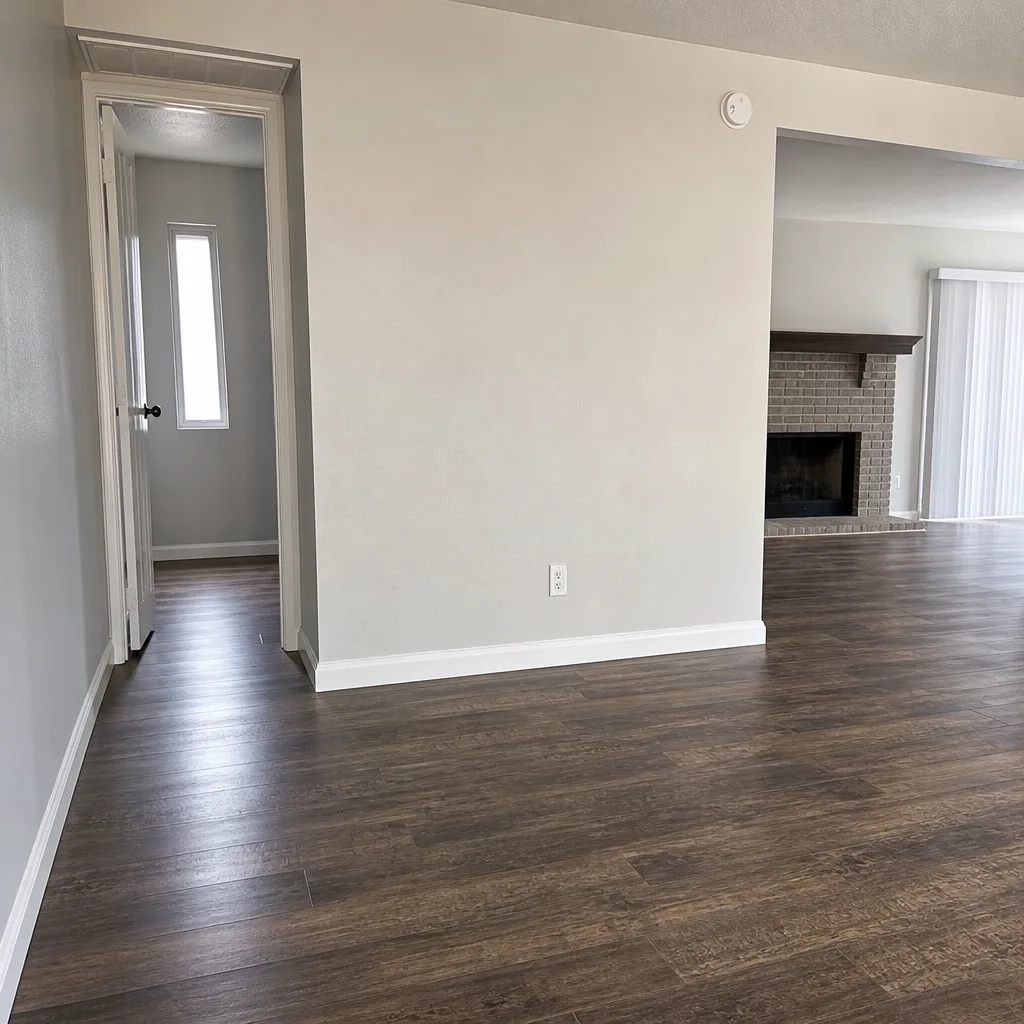 After
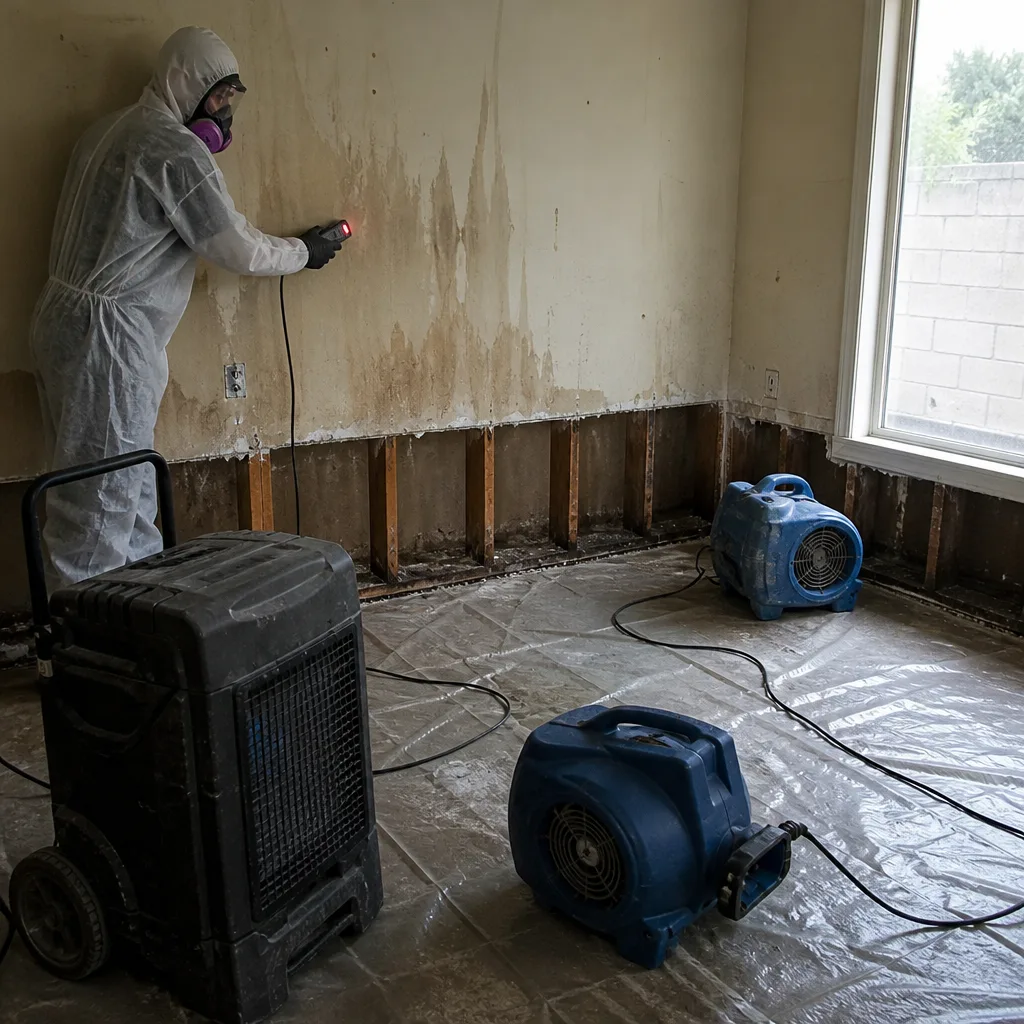 Before
 After
 Before
 After
Pricing for Water Damage Restoration in Stanton, CA
We Also Serve Cities Near Stanton
Flood Guard Water Damage works throughout the Orange County basin. If you’re in Stanton, we’re already in your neighborhood, and we also response to water damage calls in Garden Grove, Cypress, Westminster, and Midway City. The same multi-unit expertise applies in every one of these cities, because the housing stock and the wet-wall construction don’t stop at the city line.
Serving Stanton, CA — Our Local Coverage Area
We’re based in the Stanton area and know this community well. Use the map below to see our service coverage — if you’re nearby, we can almost certainly help.
FAQs About Water Damage Restoration in Stanton
Stanton’s older multi-family buildings share wet walls and floor assemblies between units, so water from a failed supply line travels through the framing into adjacent apartments before anyone sees it in the source unit. We moisture-map every unit sharing a wall or floor with the source, which is why our drying scopes in Stanton routinely include two or three units instead of one. Call (844) 716-1094 and we’ll map the migration before mold gets a foothold in shared framing.
We coordinate with both, separately and together. The tenant needs to know what’s happening to their unit and their belongings; the landlord needs a documented scope for insurance and liability purposes. Our team photo-documents everything, provides moisture readings in writing, and works directly with property managers and adjusters so mitigation doesn’t stall while ownership questions get sorted out. The drying schedule doesn’t wait on a returned phone call.
Mold can begin colonizing wet cellulose materials like drywall and wood framing within 24 to 48 hours, especially in the warm, enclosed cavities common in Stanton’s older apartments. Shared framing between units stays warm and humid, which shortens the window. That’s why we set containment and start drying in the first hours after the call, not the next day. Call (844) 716-1094 as soon as water appears, and we’ll have Dri-Eaz and Phoenix equipment running while the wallpaper is still wet.
Yes, we stage equipment for tight access. Stanton’s dense apartment parcels often have narrow alleys, limited parking, and awkward stair access, and we plan for that before we arrive. Our air movers and dehumidifiers are compact enough to stage close to the wet wall, and our techs know how to work around courtyard layouts and second-floor access without losing drying time. We’ve run full drying operations off a parking stall and a hallway cart before.
Yes. Category 1 clean water from a supply line can often be dried in place if we reach it quickly. Category 2 water, like washing machine overflow or sump drainage, and Category 3 water from sewage backups require removal of affected porous materials like carpet pad and lower drywall, and the framing needs sanitizing before drying. We classify the water on site before we start, and we document that classification for the insurance file. The category changes the scope; ignoring it changes the safety of the building.
Call Flood Guard Water Damage for Immediate Help in Stanton
Water in a shared wall doesn’t wait, and neither should you. If you’re dealing with a burst pipe, a ceiling leak, a flooded apartment, or water spreading through a Stanton multi-family building, call (844) 716-1094 now. We’ll walk you through what you’re looking at, give you a straight answer on next steps, and get a crew rolling to your address in the 90680 zip code. Estimates are free, the scope is written before work begins, and the drying follows IICRC-certified protocol, not guesswork. This is what we do in Stanton, unit by unit, wet wall by wet wall.
Written by Noel Ibarra, Owner at Flood Guard Water Damage, serving Stanton and surrounding Orange County communities.