
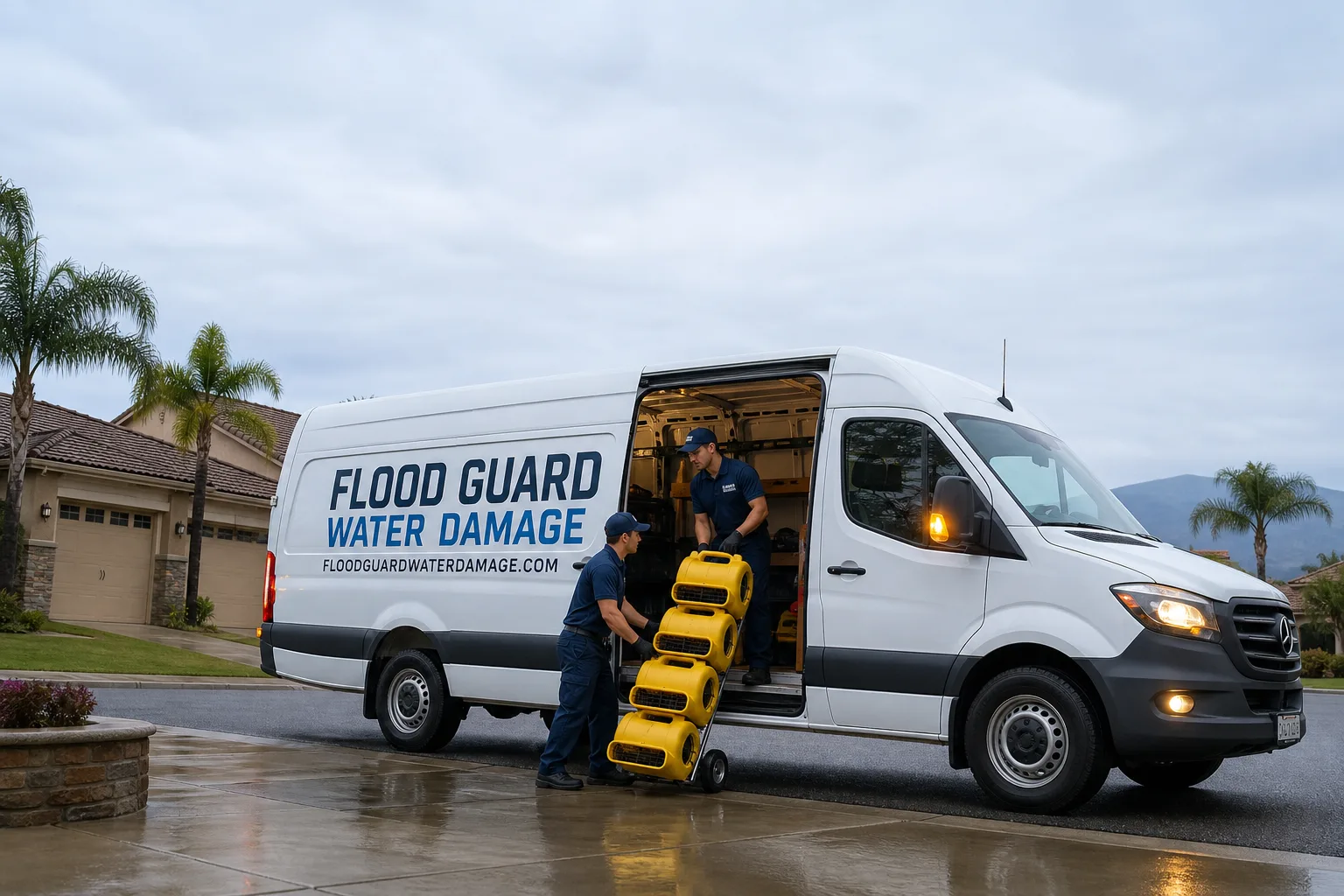
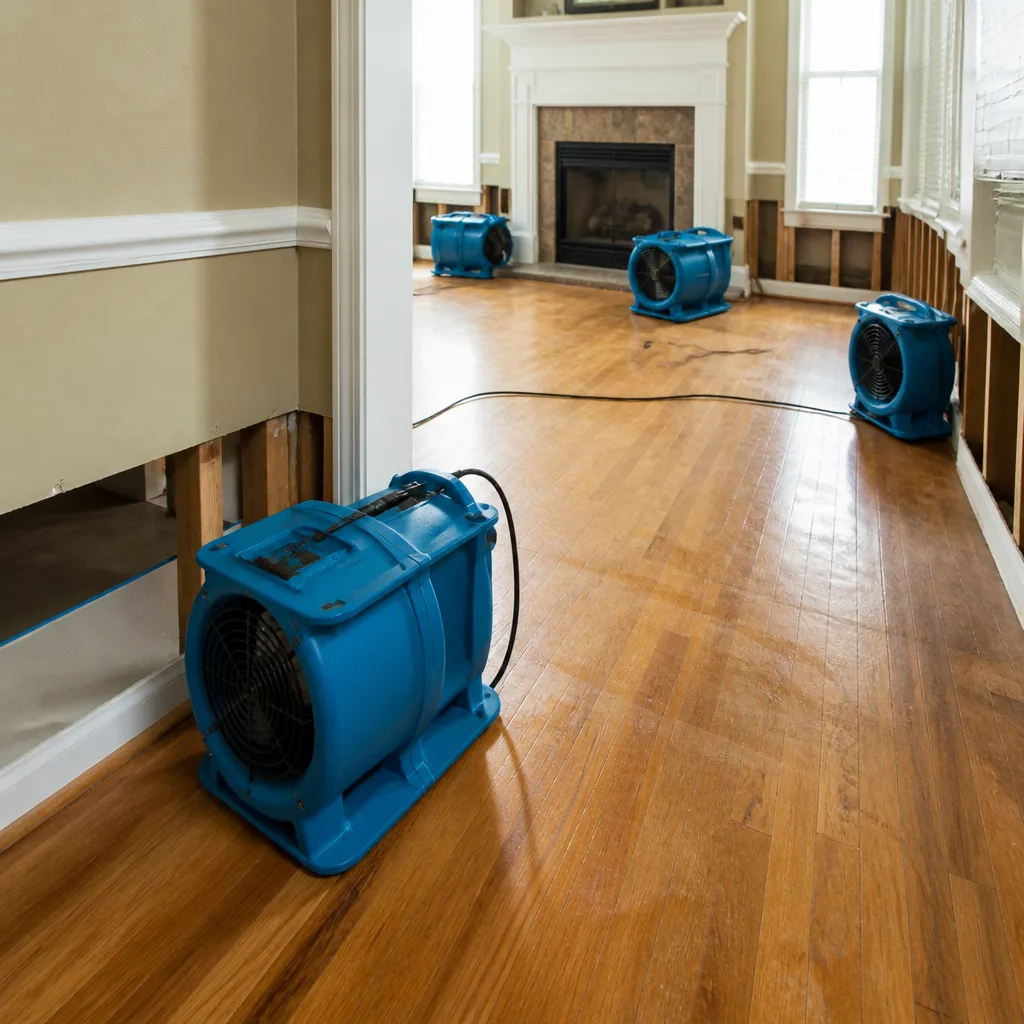
 Water damage drying
 Fire & smoke cleanup
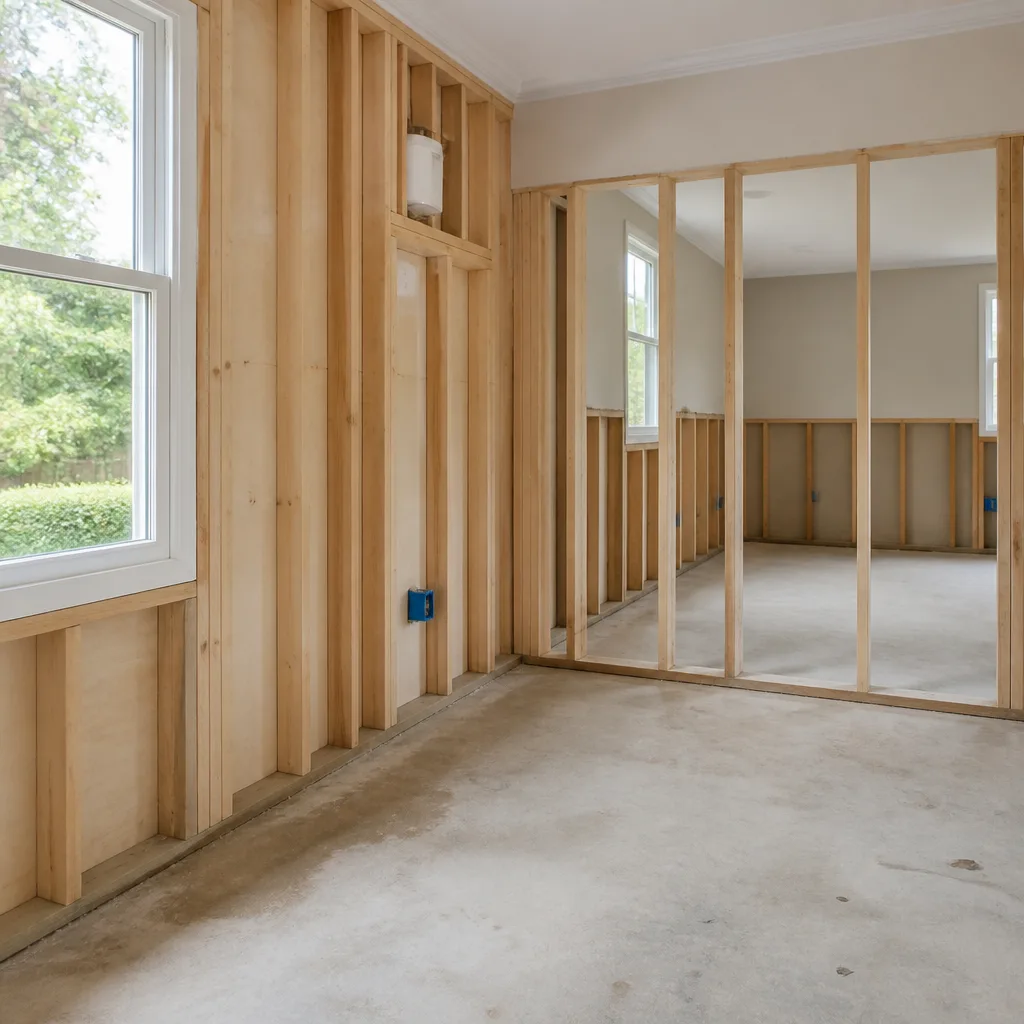 Mold remediation
 Storm response
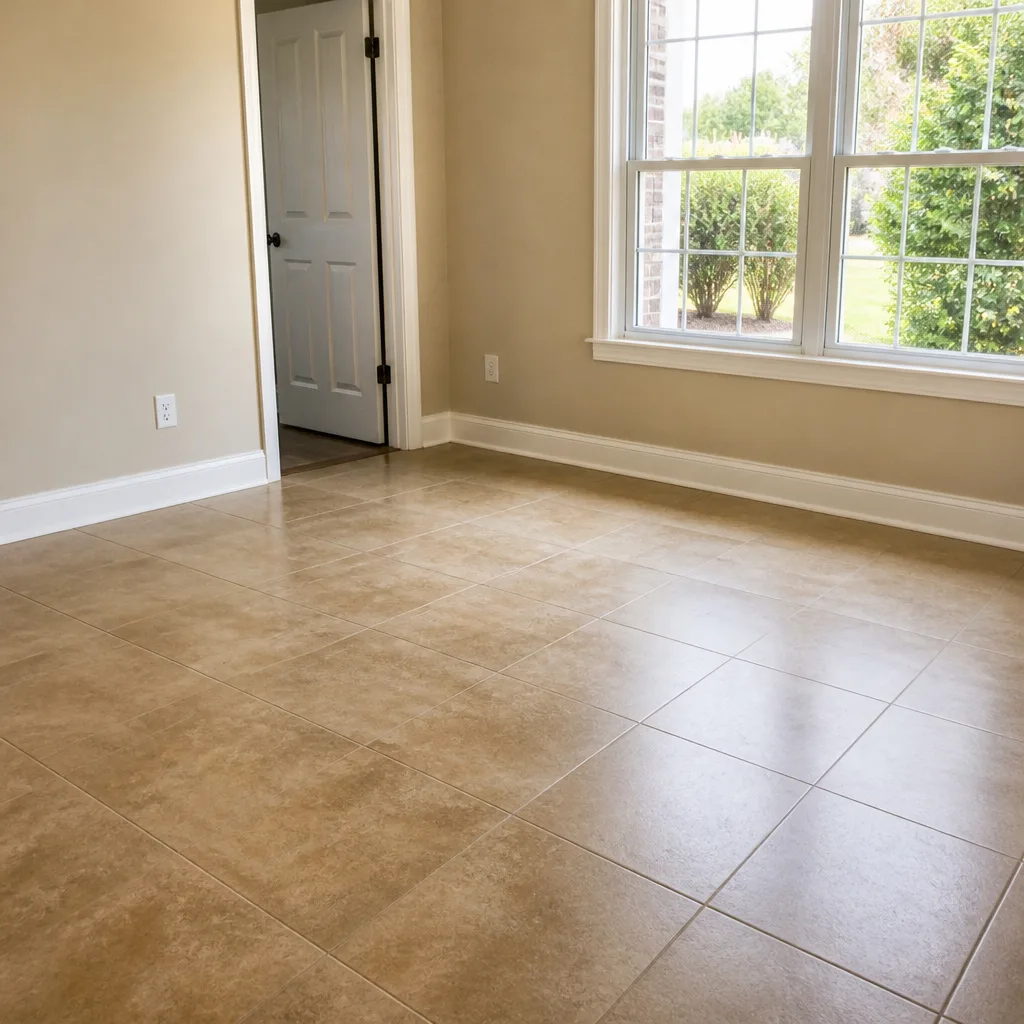 Sewage cleanup
 Reconstruction
Free visual inspection and a written scope of work before any mitigation begins - photos, moisture readings, and drying logs go in your claim file
The scope we write is the scope we bill. Anything new gets shown to you, in writing, before we touch it.
Get your free estimateFast, Reliable Water Damage Restoration Across Temecula
Water damage restoration in Temecula typically runs $1,800 to $4,200 for a standard single-room water loss, with emergency extraction starting around $450 to $900. Most Temecula jobs are completed within 3 to 5 days when drying starts within hours of the leak. Our Water Damage Restoration team responds to Temecula homes throughout 92591, 92592, 92593, and 92589, with a truck rolling from our Rancho Cucamonga dispatch as soon as a homeowner calls. When water is moving through your drywall or pooling on your floor, waiting until tomorrow is never the right call. Call (844) 716-1094 and we’ll have a certified technician walking your property with a moisture meter, not a sales pitch.
Key Takeaways
- Emergency water extraction in Temecula: $450 – $900 for first response and standing water removal
- Full structural drying with commercial equipment: $1,800 – $4,200 depending on affected square footage
- Temecula’s 1990s tract homes in Redhawk and Paloma del Sol have specific flashing failure patterns we check first
- Insurance documentation with photo logs and moisture mapping is standard on every job, no exceptions
Why Flood Guard Water Damage Is Temecula’s Preferred Water Damage Restoration Company
Temecula homeowners face a specific kind of water damage: the kind that hides behind stucco walls and under concrete tile roofs until the drywall starts staining. The master-planned tracts around Redhawk, Paloma del Sol, and the neighborhoods off Rancho California Road were built fast in the 1990s and early 2000s, and the window flashing, weep screeds, and PEX fittings from that era are now hitting their failure window. Our techs know those floor plans. When we walk a water loss in Temecula, we’re not driving through the gate for the first time. We know where the supply lines run, where the builder-grade flashing fails first, and what the HOA standards require before we cut anything open.
Every Temecula job gets IICRC-certified drying protocols, not a tech’s opinion on when it’s dry enough. We use Dri-Eaz dehumidifiers, Phoenix air movers, and Injectidry systems when water is trapped in wall cavities. That’s the same equipment large commercial restoration firms use on hospital and hotel losses. You get that standard on a 2,100-square-foot stucco home off Margarita Road. Noel Ibarra leads the team, and he’s built the company around a simple standard: measure the moisture, document it, dry to the number, and hand the homeowner a drying log they can send straight to their adjuster.
Restoration work we handle
Flooded Basement in Temecula
A flooded basement in Temecula almost always means one of two things: a failed sump pump during a winter storm, or a water heater rupture in the garage-adjacent lower level common in 1990s tract builds. Most Temecula basements are partial basements below the first floor, and they trap humidity in a way Arizona and Nevada basements never do. Standing water in that space needs extraction within hours, not days. We show up with truck-mounted extraction units and floor mat systems that pull water from carpet, pad, and concrete. After extraction, we set containment and run Dri-Eaz LGR dehumidifiers until the concrete slab reads below the moisture threshold on our meters.
A flooded basement in Temecula runs $1,200 to $3,500 depending on whether the water is clean, gray, or sewage-affected. If the water came from a washing machine overflow or water heater failure, that’s category 1 or 2 and the drying gets straightforward. If the sump failed during a storm and backed up with drain water, that’s category 3 and the protocol changes: full containment, antimicrobial application, and disposal of affected materials. In Temecula’s rural edges around 92589 and De Luz, some basements sit below grade with no French drain and poor slope drainage, which makes the same volume of water harder to dry and more likely to recur.
What We Check Before Drying Starts
Before we set a single air mover, we map the moisture through the slab and at the base of the drywall. In Temecula basements we look for water that has wicked up through the sill plate, where the framing meets the concrete. That’s where lingering moisture eventually feeds black mold behind finished walls.
We also test whether the water is traveling under the flooring. Vinyl plank and laminate trap water against the slab and create a false dry on top. A moisture probe tells us the truth under the surface, and we document those readings with photos for your insurance file.
Drying Without Demolition
Injectidry technology lets us dry inside wall and floor cavities without tearing out every wet surface. If the water traveled behind baseboards and into drywall, we can often install injection panels to dry inside the wall. That reduces demolition, shortens the job, and lowers your repair costs.
In Temecula basements with finished walls, this is the difference between tearing out the bottom two feet of drywall versus cutting small injection access points and drying in place. We open walls when necessary, not by default.
Water Extraction in Temecula
Water extraction in Temecula means removing standing water fast enough to stop secondary damage before it spreads through the slab and up the walls. When a supply line ruptures in a second-floor bathroom of a Redhawk home, water moves down through the ceiling cavity into the first floor. Extraction in that scenario starts with removing standing water, then pulling water from carpet pad and subfloor with weighted extraction tools, then setting airflow. Water extraction alone in Temecula runs $450 to $900 for the first response and standing water removal, with most homeowners paying around $650 for a typical room.
The cost depends mostly on the volume of standing water and the surfaces affected. Tile on concrete extracts faster and dries faster than carpet over wood subfloor. A burst pipe behind a wall with no visible standing water still requires extraction from the wall cavity, which changes equipment and time. In Temecula’s summer heat, water left standing even a day grows bacteria fast, and the Southern California humidity spikes after the Santa Ana season make interior drying slower if you wait.
Same-Day Response Across Temecula
We dispatch to Temecula the same day you call. From our Rancho Cucamonga base, we can be in Murrieta Hot Springs in 40 minutes, in central Temecula in 50, and out to Rainbow or De Luz within an hour. The clock matters because water spreads through drywall at roughly half an inch per hour in the first day.
When a homeowner calls at 7 PM on a Saturday, we still respond. Water doesn’t take weekends off, and neither do we. Noel Ibarra has built the schedule so a tech is always on rotation for Temecula calls.
Extraction Before Drying, Always
Some contractors skip straight to blowers and hope the air movement dries standing water. That’s like trying to dry a swimming pool with a fan. Extraction is the first and most important step. Our truck-mounted units pull 500+ inches of water lift, which means we remove water that shop vacs leave behind in the pad and subfloor.
Every extraction job includes a moisture map of the affected area. We mark readings on a diagram you can share with your adjuster, and we photograph everything before any equipment goes in. That documentation is what turns a denied claim into a paid one.
Trusted Brands We Service in Temecula
When water has damaged your home, the last thing you want is to argue with your insurance company about whether the equipment used was sufficient. We deploy Dri-Eaz, Phoenix, and B-Air units on Temecula jobs, the same brands field-proven on commercial losses. Those are not rental-store dehumidifiers. They run on 225 CFM or higher, run continuously, and produce drying logs that hold up in an adjuster’s review. We carry spare filters and sensors on every truck, so a saturated basement in Temecula doesn’t wait while someone runs to a supplier. The equipment matters because the drying curve doesn’t care about excuses.
See the difference
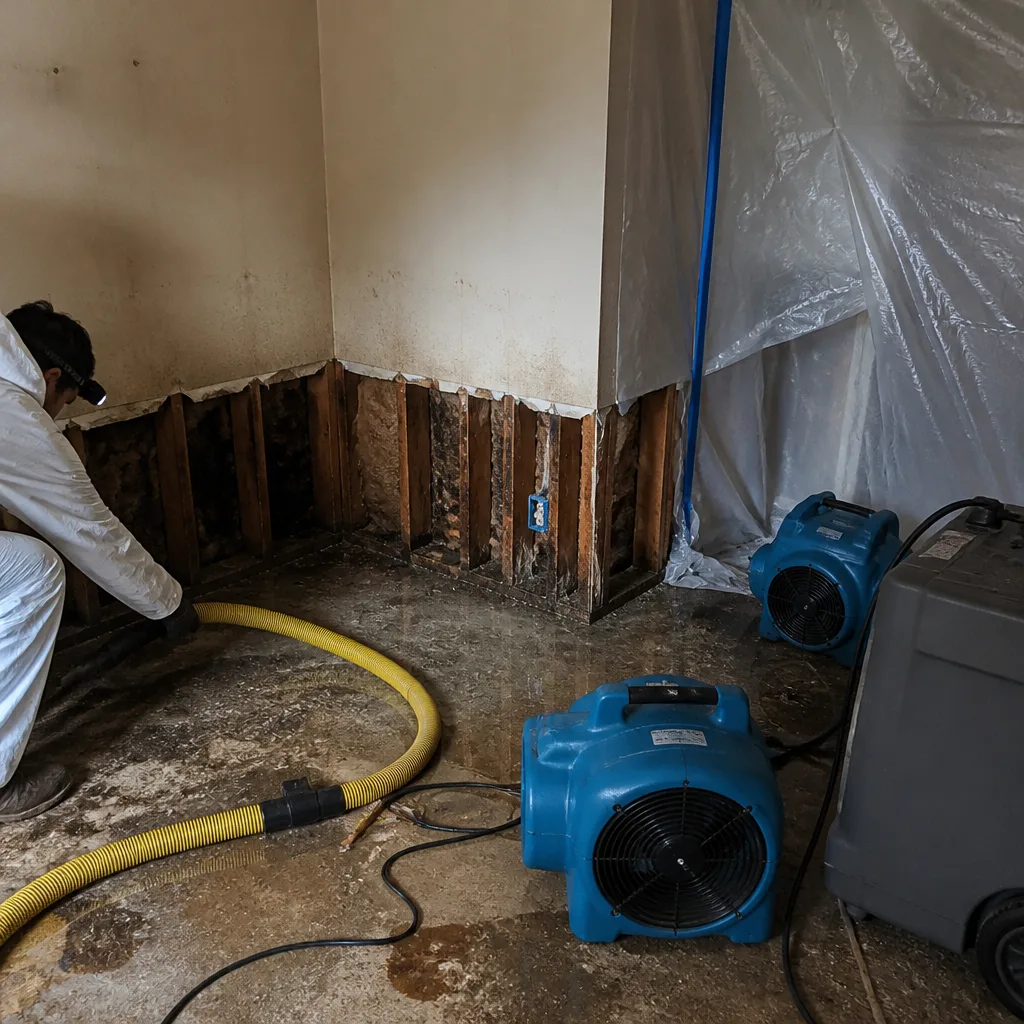 Before
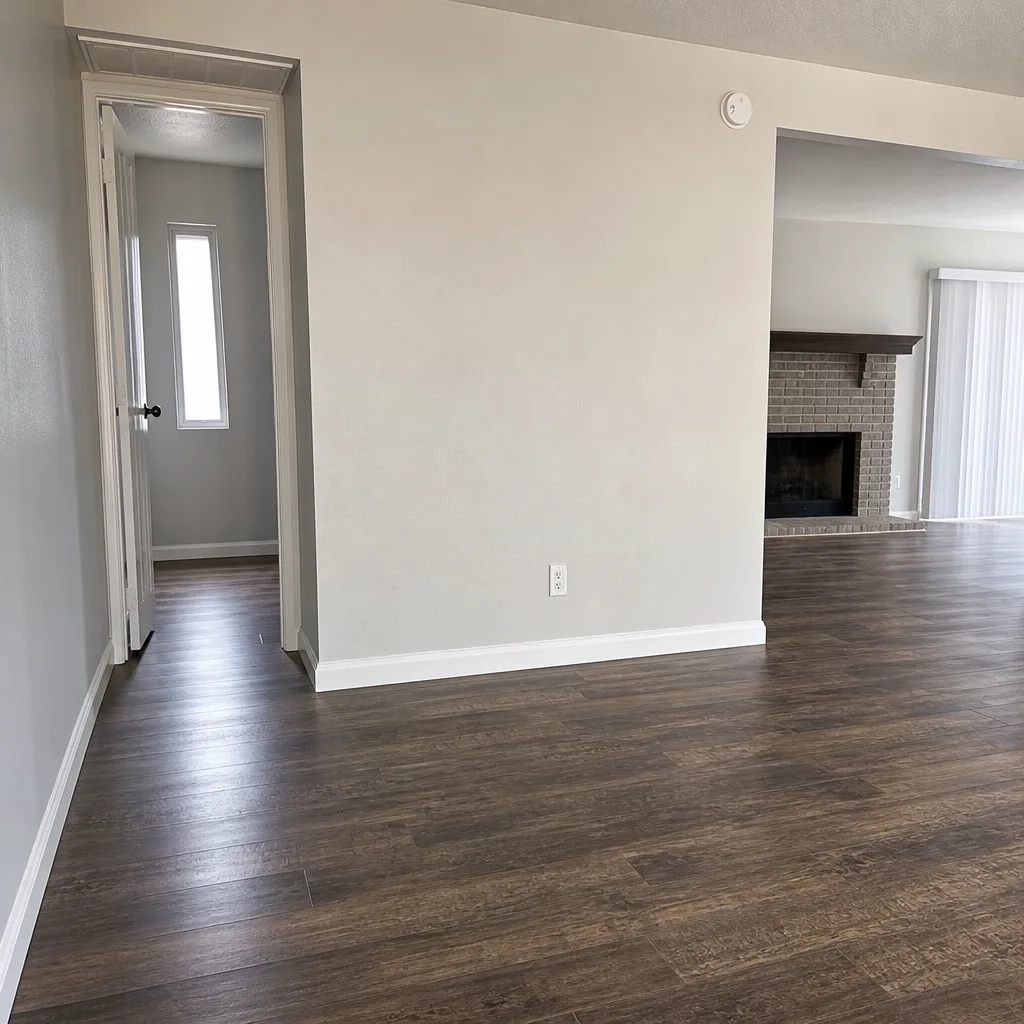 After
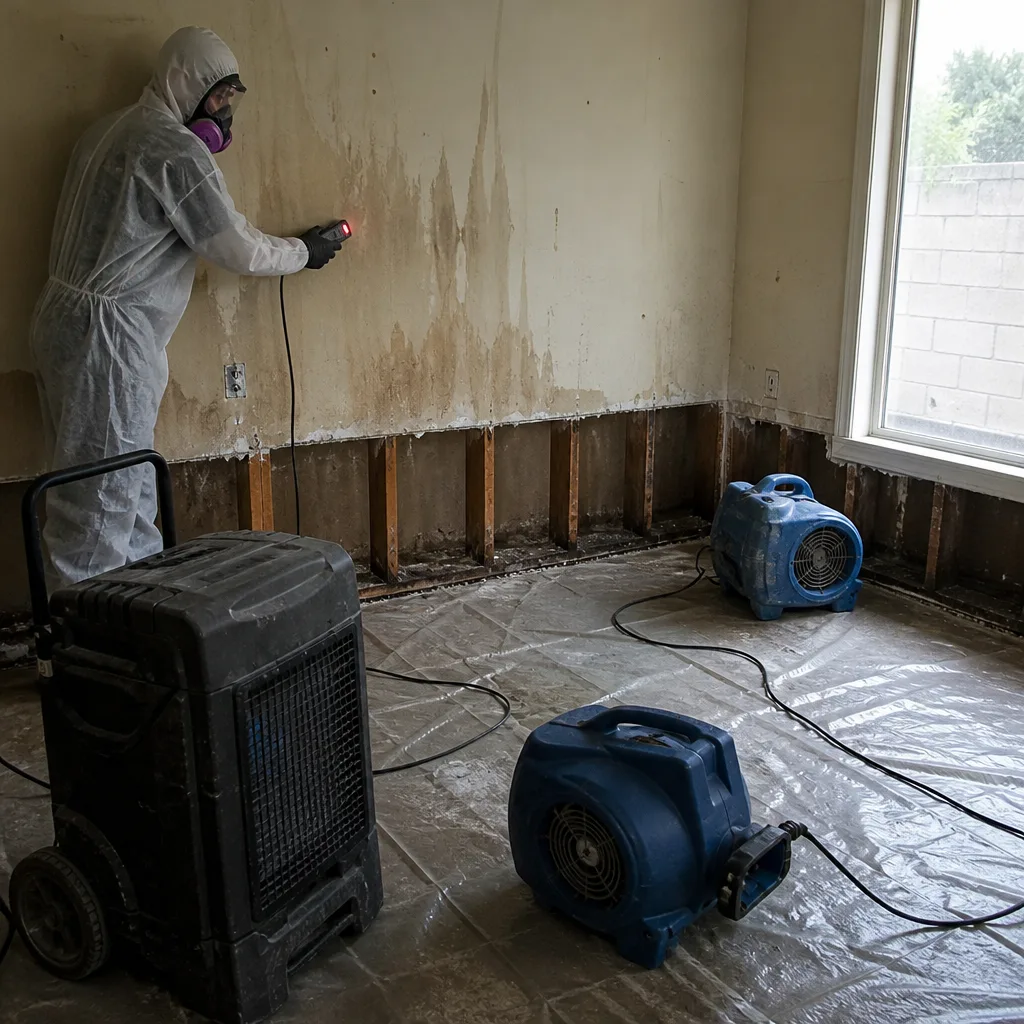 Before
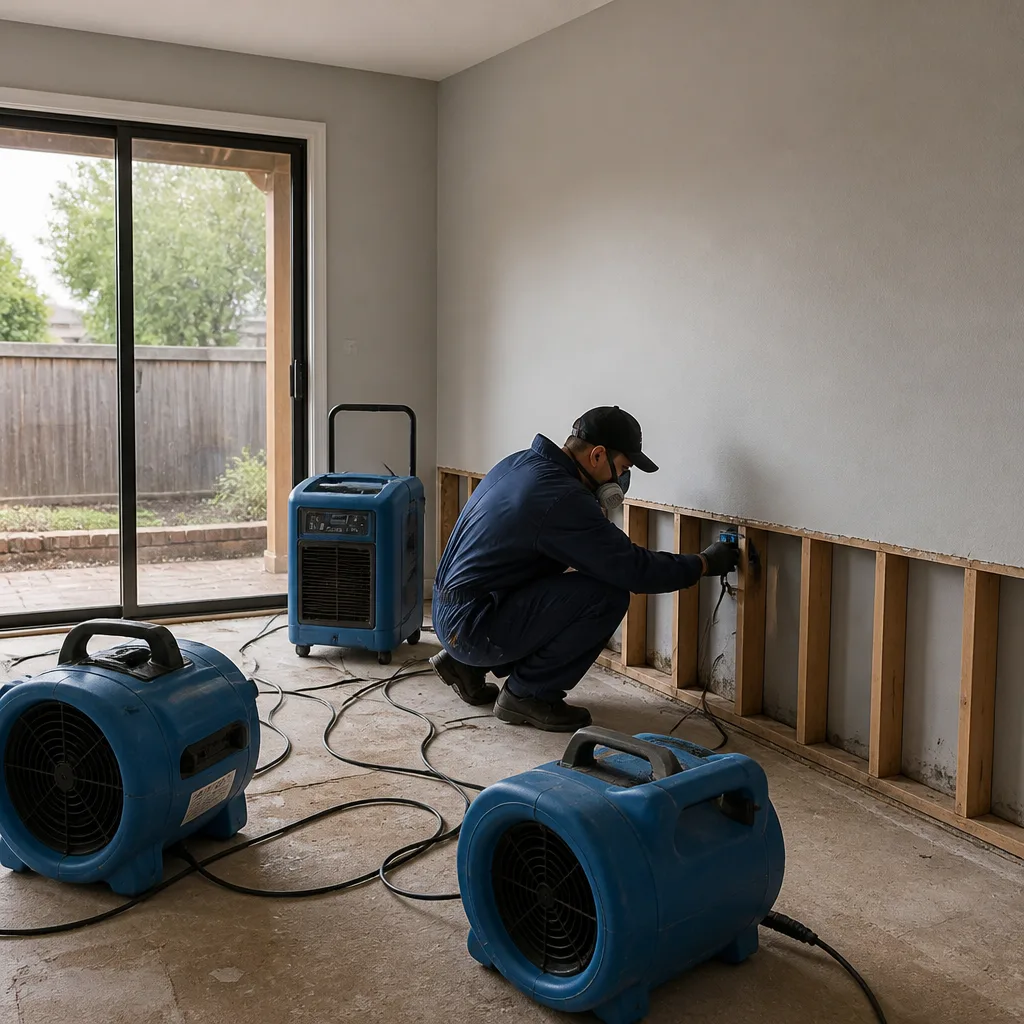 After
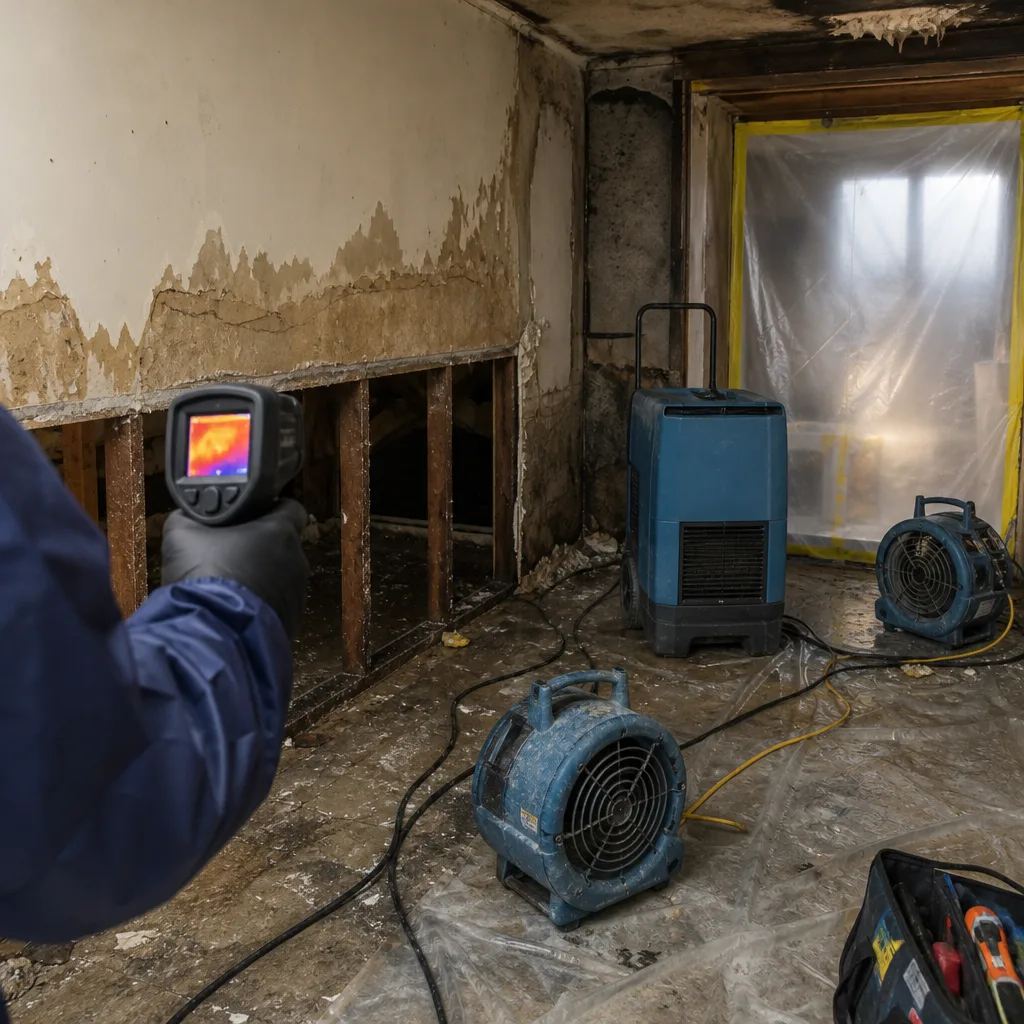 Before
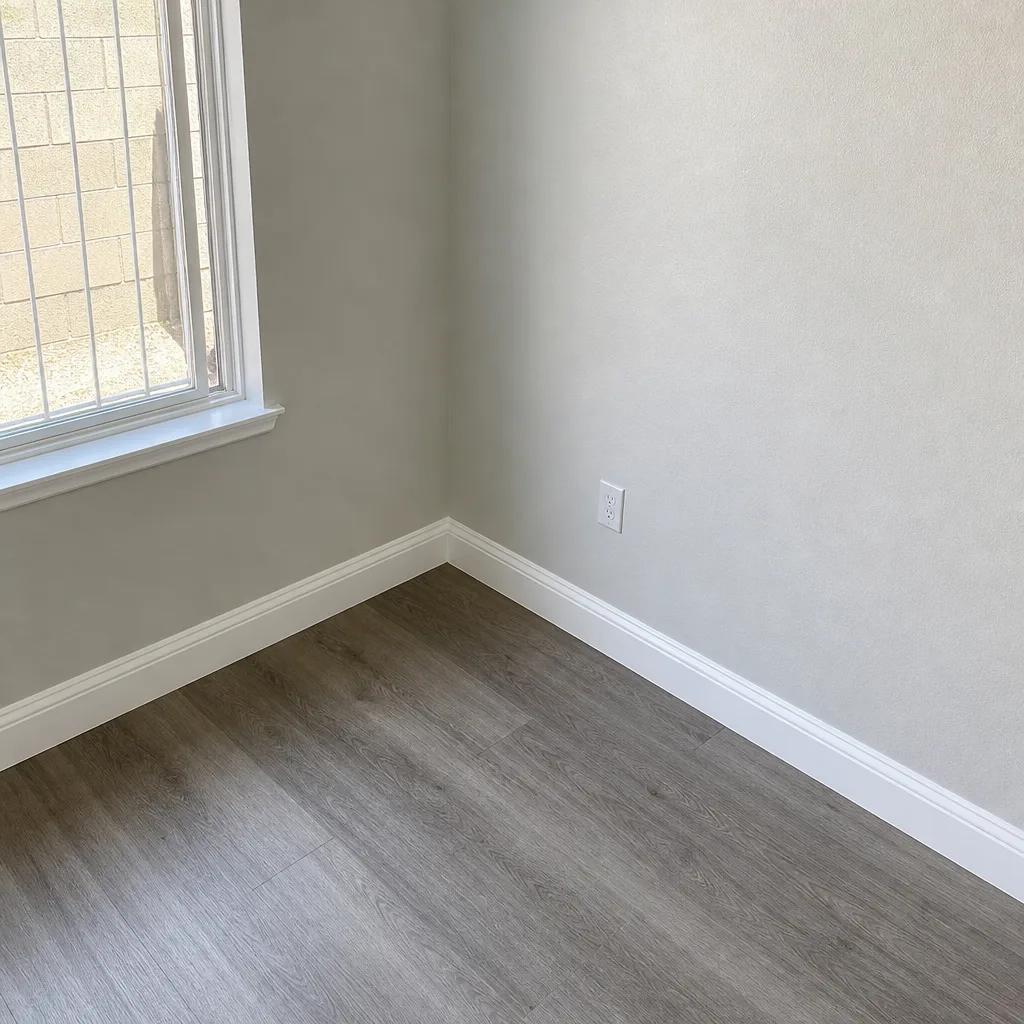 After
Common Water Damage Restoration Problems We See in Temecula Homes
- Failed 1990s window flashing: In Redhawk and Paloma del Sol, the original stucco weep screeds and window flashing fail during the first heavy winter storm, sending water behind the stucco where it migrates into framing and drywall. Homeowners see bubbling paint or a wet spot near a window and assume it’s a small leak when it’s actually been wet for weeks.
- Undetected PEX pinhole leaks: Builders in Temecula’s 1990s and early 2000s tracts often used PEX fittings behind walls without proper pressure testing. Those fittings fail slowly, drip inside the wall cavity, and then the first sign is a drywall stain on the ceiling below, which means the leak has been active for weeks and the framing has been wet long enough for mold to start.
- HOA-driven delays that turn clean water black: Homeowners in master-planned communities sometimes hold off calling a restoration company because they’re unsure whether HOA architectural rules require approval before a contractor cuts walls or removes flooring. A category 1 water loss left two or three days becomes category 3, and the same job doubles in price.
- Rural well and septic water on equestrian properties: Homes off De Luz Road and rural acreage near 92589 overlie well water and septic systems, not the municipal supply. Water from a septic backup is category 3, carries pathogens, and requires testing, containment, and disposal protocols that standard drying checklists miss.
Pricing for Water Damage Restoration in Temecula, CA
A single-room water extraction and structural drying in Temecula runs $1,800 to $3,200. A flooded basement with pad and carpet removal goes $2,500 to $4,200. A category 3 sewage or septic-affected loss runs higher, typically $4,500 to $8,000 because of the containment, antimicrobial, and disposal work. If your loss is a large open floor plan with water traveled across multiple rooms, the range moves to $4,000 to $7,500. Call (844) 716-1094 for a free estimate. We’ll walk the damage, map the moisture, and give you a written scope before any work starts, not after.
We Also Serve Cities Near Temecula
Our Water Damage Restoration teams cover Murrieta Hot Springs, Murrieta, Rainbow, and Wildomar with the same equipment and protocols. If you’re in one of those areas and water is moving through your home, the response time is under an hour. Call (844) 716-1094.
Serving Temecula, CA — Our Local Coverage Area
We’re based in the Temecula area and know this community well. Use the map below to see our service coverage — if you’re nearby, we can almost certainly help.
FAQs About Water Damage Restoration in Temecula
Start extraction within the first 24 hours, and ideally within the first 4 to 6. After 24 hours, category 1 clean water degrades toward category 2, and after 48 to 72 hours, mold spores on building materials become active. In Redhawk homes with 1990s framing and stucco construction, the wall cavities hold moisture longer than open floor plans, so a leak that seems contained near a window is often already running inside the wall. Call (844) 716-1094 and a tech will be on the road to Redhawk within minutes.
Category 1 is clean water from a supply line, water heater, or uncontaminated rainwater. Category 2 is gray water with some contamination, like a washing machine overflow or a sump pump failure. Category 3 is black water, meaning sewage, septic backup, or storm water that has been through the ground. The category dictates everything: what equipment we use, what materials we remove, whether antimicrobial application is required, and whether you and your family should be in the house during drying. It changes the cost significantly.
Yes. Paloma del Sol homes were built with stucco weep screeds and window flashing that have a known failure pattern after 25 to 30 years. When the first winter storm hits, rainwater gets behind the stucco at the window heads and travels down inside the wall. The visible sign is often just a small bubble or stain near the window, but the hidden area behind the wall is soaked. We check those specific failure points on every Paloma del Sol and Redhawk water loss before we assume the drying plan is simple.
We test the water source before any structural drying begins. If the loss is from a septic backup or well contamination, the water is category 3 and gets full containment, antimicrobial, and disposal. Rural homes off De Luz Road and around 92589 often have no municipal sewer access, so a sump failure or septic backflow is a health risk, not just a moisture problem. We run culturable samples when needed and document everything for your adjuster or, if necessary, your local health department.
Yes, and we do it on every single job, whether or not you ask. You get a moisture map, a photo log of every affected area, drying logs showing day-by-day readings, and a written scope of the work completed. When your adjuster asks for proof that the drying was done to standard, we hand you a file that answers the question. If your insurance company pushes back, we coordinate directly with the adjuster and provide the documentation they need. Call (844) 716-1094 for an exact quote on your Temecula loss, estimates are free.
Written by Noel Ibarra, Owner at Flood Guard Water Damage, serving Temecula since our first dispatch out of Rancho Cucamonga.