
Water Damage Restoration What It Really Costs: What Rancho Cucamonga Homeowners Pay in 2026
Water damage restoration in Rancho Cucamonga runs between $1,800 and $7,500 for most single-room incidents in 2026, with whole-home category 3 events climbing past $30,000. The spread exists because restoration pricing follows IICRC classification logic and Xactimate line items, not contractor guessing. If you’re staring at a wet carpet right now and don’t want to sort through the math, call (844) 716-1094 for a free assessment.
The cheapest bid is rarely cheap. We’ve seen homeowners in Etiwanda and Alta Loma save $600 on extraction only to spend $4,800 on mold remediation sixty days later. The reason is simple: moisture hides. If a contractor pulls water and fans the floor but never checks inside walls or under baseboards, the invoice looks lean and the damage keeps compounding. This article walks through what legitimate restoration actually costs in Rancho Cucamonga in 2026, line by line, so you can read a contractor’s estimate and know what you’re buying.
IICRC Water Categories: Why Classification Controls Your Bill
The single biggest pricing variable in Rancho Cucamonga restoration work is the IICRC water category assigned to the loss. Category matters more than square footage because it dictates extraction method, drying equipment, and how much material gets removed rather than dried in place.
Category 1 is clean water from a supply line, a failed water heater, or an overflowing bathtub. Drying is straightforward, and most porous materials like drywall can often be saved with proper air movement. Expect to pay between $850 and $2,200 for a small category 1 loss in a Rancho Cucamonga home, particularly in older neighborhoods like Caryn or Terra Vista where homes were built tight and drywall is abundant.
Category 2 carries contaminants. Washing machine discharge, dishwasher overflow, and aquarium leaks fall here. The water touches cleaning chemicals or organic material, so affected drywall below the water line gets cut, and the remaining structure receives antimicrobial treatment before drying begins. Costs run $2,500 to $6,000 for a standard room in our experience.
Category 3 is grossly contaminated: sewage backups, toilet overflows reaching beyond the bowl, floodwater from outside. Everything porous that water touched gets removed, no exceptions, because IICRC protocol treats category 3 as a biohazard. Labor hours climb, PPE becomes mandatory, and disposal fees add up fast. Category 3 restoration in Rancho Cucamonga routinely exceeds $8,000 for a single bathroom and can hit $20,000 when slab-on-grade construction pushes sewage through carpet and padding in multiple rooms. We’ve seen one home near Victoria Gardens where a mainline backup spread category 3 water through 900 square feet on a single floor. The demolition alone took two crew days.
Lowball bids often pretend category 3 is category 2, or category 2 is category 1. The estimate looks better. The drying fails. The mold arrives.
What Legitimate Equipment Costs Look Like on a Real Invoice
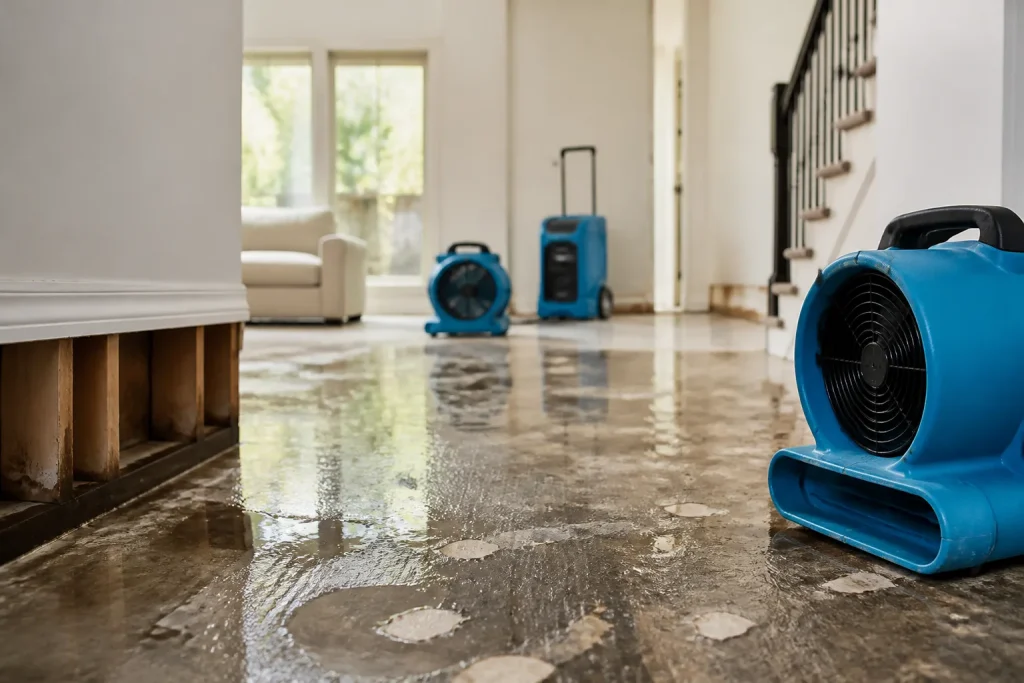
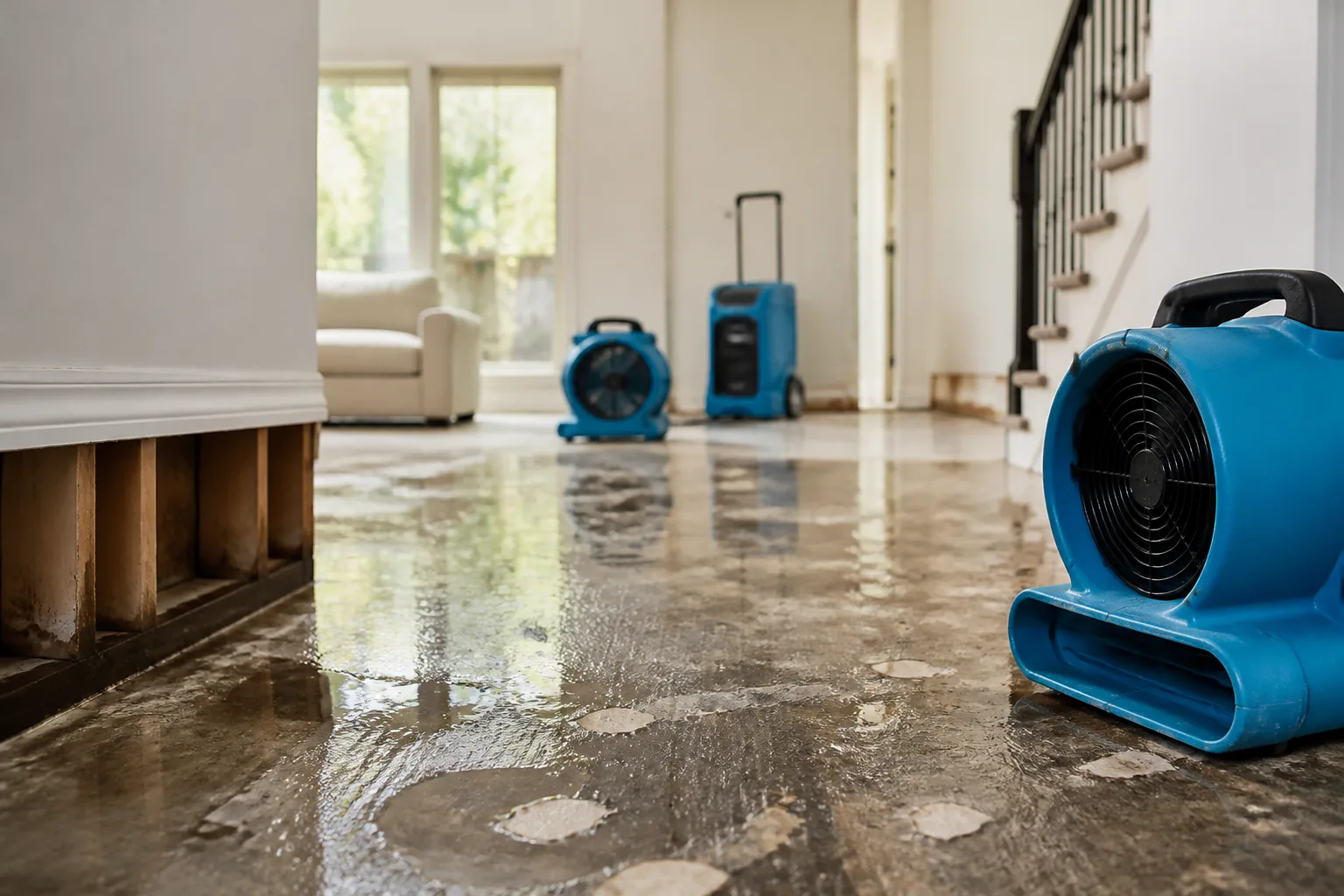
Restoration invoices list equipment as daily rental line items. The equipment itself should be commercial-grade: LGR dehumidifiers, high-velocity air movers, HEPA air scrubbers, and thermal imaging for verification. If you see a contractor claiming restoration with two box fans from a hardware store, you are watching a category 1 job turn into a category 2 problem.
A legitimate drying setup in Rancho Cucamonga includes:
- LGR dehumidifier: $55 to $85 per day per unit. Low-grain refrigerant dehumidifiers pull water vapor from the air even in cooler conditions, which matters during Rancho Cucamonga’s drier autumn months when evaporation still happens but standard dehus struggle.
- Air mover: $25 to $40 per day per unit. Most rooms need two to three movers positioned to create turbulence across wet surfaces.
- HEPA air scrubber: $60 to $110 per day. Required on category 2 and 3 jobs to keep airborne contaminants from spreading during demolition.
- Thermal imaging and moisture meter documentation: $150 to $400 as a flat line item. This is non-negotiable on any job where a wall cavity might be wet.
Brands tell you a lot. We run Dri-Eaz and Phoenix dehumidifiers, and XPOWER air movers, because those are the brands commercial restoration teams use on large-loss hospital and school jobs. They hold up under continuous operation for the five to seven days a typical Rancho Cucamonga drying cycle takes. Consumer-grade equipment fails under that load, and failed equipment means extended drying time and secondary damage.
Injectidry systems deserve specific mention because they change the cost equation. When water wicks into walls or under tile, the old-school approach was demolition: cut the drywall, pull the flooring, replace both. Injectidry panels attach directly to wet surfaces and pull moisture through without opening everything. That means a category 1 supply-line break behind a Rancho Cucamonga kitchen cabinet might be a $1,900 drying job instead of a $6,500 demo-and-rebuild. Ask any contractor you’re considering whether they have Injectidry capability. If they don’t know what it is, get another bid.
Xactimate and How Insurance Actually Prices Your Claim
Rancho Cucamonga insurance claims for water damage are almost always priced in Xactimate, the software platform insurance carriers and restoration contractors both use. Xactimate assigns every restoration task a standardized code and regional price, from extraction labor to air mover rental to baseboard removal and replacement. The system exists so an adjuster in Ontario and a contractor in Rancho Cucamonga are working from the same pricing structure.
When we submit a claim, each line item references a Xactimate code. Structural drying, antimicrobial application, containment setup, and disposal are all codified. Here’s what that means for you as a homeowner:
You have the right to see the adjuster’s scope. You have the right to compare it line by line against your contractor’s scope. If the adjuster allows three days of drying and the contractor documents that the structure needed seven, that documentation supports a supplement. If the adjuster omits HEPA air scrubbing on a category 2 loss and the IICRC classification supports it, that’s a supplementable line item too.
The disputes happen where documentation is missing. A contractor who says “trust me, we dried it” but never logged daily moisture readings has no basis for a supplement. A contractor who photographs every moisture map and logs daily humidity readings has the paper trail to justify charges. When you hire in Rancho Cucamonga, ask how the contractor documents drying progress. The answer tells you whether your insurance payout and the actual scope will match.
One related note: slab-on-grade construction changes drying math. Many Rancho Cucamonga homes sit on concrete slabs, which means water in a ground-floor living room has nowhere to drain downward. It wicks sideways, into baseboards, wall cavities, and adjacent rooms. Xactimate pricing accounts for this only if the contractor documents the additional affected area. If the adjuster’s scope says “living room only” and the contractor’s moisture map shows migration into the adjoining hallway, that’s a supplement with documentation to back it.
Rancho Cucamonga Cost Factors Most Websites Never Mention
Anyone who tells you water damage restoration costs the same in Rancho Cucamonga as in Redlands or Fontana isn’t paying attention to the housing stock. Specific local factors move pricing in this city.
First, square footage. Rancho Cucamonga has a high proportion of large-footprint single-family homes compared to older IE cities. More square footage means more affected material when water spreads, and containment is physically larger, which is a real equipment line item. A category 2 loss in a 2,800-square-foot home off Haven Avenue costs more simply because the drying chamber is bigger.
Second, construction type. Slab-on-grade is the dominant foundation in Rancho Cucamonga. That affects where water goes and how long drying takes. In a raised-foundation home, water drains through the subfloor to the soil below. On a slab, water sits, wicks into the bottom plate of every wall it touches, and migrates laterally. Proper drying on slab construction means opening wall cavities more often and running equipment longer. The time and the line items both increase.
Third, permits. Rancho Cucamonga building codes require permits for structural drying in certain scenarios, particularly when category 3 water affects load-bearing framing or when rebuild work moves beyond like-for-like replacement. Permit fees add $300 to $900 to a job and add processing time. Legitimate contractors factor this in. Contractors who skip permits leave you with code enforcement exposure if the work is inspected later.
Related Services in Rancho Cucamonga
Water damage is rarely a one-and-done event. If you’ve had a category 2 or 3 loss, or if moisture went unremediated for more than 48 hours, you should have a mold assessment from a specialist. The timeline matters because mold colonization starts quickly in IE heat, and drying alone won’t address spores that have already established. If your water event involved appliance wiring or electrical systems, you may also need to understand how fire damage restoration protocols overlap with water restoration, particularly where smoke from a failed water heater or electrical fire left residues that interact with moisture. And if you want to understand the full scope of what structural drying involves, our guide to water damage restoration in Rancho Cucamonga covers the process from first call to final walkthrough.
What happens when you call
- 1
A real person answersNo phone trees — you reach a local pro.
- 2
You get an upfront price rangeHonest numbers before anyone is dispatched.
- 3
A background-checked tech heads outLicensed & insured, dispatched right away.
- 4
You approve before work beginsNothing starts until you say go.
How to Read a Restoration Estimate Without Getting Fooled
When you get a bid, look for these specific things. If they’re missing, ask why.
- IICRC category and class stated in writing. The estimate should say “category 2, class 2” or similar. Class refers to the level of saturation and absorption. Class 4 means deep saturation in dense materials like hardwood and concrete, which is a much bigger drying job than class 1 surface water on tile. If the estimate doesn’t classify the loss, the contractor hasn’t done the inspection properly.
- Daily equipment line items, not lump-sum drying. You should see dehumidifier count, air mover count, and days of expected rental. Lump sums hide either overcharging or under-specification.
- Moisture documentation plan. Ask what they’ll show you at the end: daily logs, photographs, thermal imaging frames. If the answer is vague, you’re about to pay for drying you can’t verify.
- Containment and PPE for category 2 and 3. Those jobs require plastic containment barriers and protective equipment for technicians. If those line items are absent, the job is being done wrong.
We pulled a job out of a garage on Sapphire Street in Rancho Cucamonga last month where the previous contractor had left a category 2 dryout running with one consumer dehumidifier and no containment. The homeowner’s estimate showed $1,400. The actual drying cost, once our team scoped it properly with thermal imaging and proper equipment, was $4,200. The original $1,400 became a lost cause the moment mold columns appeared behind the drywall.
The Bottom Line
Water damage restoration in Rancho Cucamonga costs what it costs for reasons: IICRC classification, equipment quality, construction type, and documentation standards. You can compare bids intelligently once you understand those variables. The goal isn’t to spend the most; it’s to spend once and have the structure actually dry.
If you’re in Rancho Cucamonga and need a real assessment, Flood Guard Water Damage offers free estimates. Call (844) 716-1094 and we’ll scope the loss with the same documentation standards we’ve described here: moisture maps, thermal imaging, and a written classification you can compare against any other bid. And if you’d rather skip the phone, you can read more on our Flood Guard Water Damage home page for service details and coverage areas.
Frequently Asked Questions
Most single-room water damage restoration jobs in Rancho Cucamonga run $1,800 to $7,500 depending on water category and saturation class. Category 1 clean water in a small area might total $900 to $2,200, while category 3 sewage water through multiple rooms commonly exceeds $8,000. The exact figure depends on equipment days, demolition scope, and whether slab-on-grade construction extended the drying area. Call (844) 716-1094 for a free, line-itemed estimate based on your actual loss.
Insurance typically covers sudden and accidental water events like a burst supply line or water heater failure, but not gradual leaks or floodwater from outside. If your claim is covered, the adjuster will write a scope in Xactimate and your contractor will bill against that scope. Documentation determines how much gets approved. If your contractor can’t show moisture maps and daily logs, you’ll likely get less than the job actually requires.
Most structural drying takes four to seven days for a standard single-room loss in Rancho Cucamonga. Larger category 3 events or slab-on-grade homes with significant wicking can run two weeks or longer before the space is ready for rebuild. The variable is moisture: the structure gets released when daily moisture readings show drying goals met, not when the calendar says so.
You can handle a small, clean category 1 spill if you catch it immediately, but anything that saturated drywall, baseboards, or flooring needs commercial equipment and moisture verification. Consumer fans and shop vacs can’t extract water from wall cavities or under flooring. If water sat for more than 24 hours in Rancho Cucamonga’s heat, assume mold is already starting and get a professional assessment. Call (844) 716-1094 and we’ll tell you honestly whether it’s a DIY situation or needs professional drying.
Written by the team at Flood Guard Water Damage, serving Rancho Cucamonga since 2018.
Need Damage Restoration Help?
Call Flood Guard Water Damage — licensed & insured, here with fast after-hours help in Rancho Cucamonga.
(844) 716-1094