Emergency Water Damage Restoration Near Me: What Rancho Cucamonga Homeowners Should Do First
If you’ve just found standing water in your Rancho Cucamonga home, the first 60 minutes matter more than the next 60 hours. Mold can begin colonizing wet drywall within 24 to 48 hours, but the decisions you make before any restoration crew arrives will determine how much of your home gets saved versus torn out. Here’s the sequence that actually protects your property: stop the water at its source, cut power to affected areas, and photograph everything before you move a single item. If you’d rather not handle this alone, call (844) 716-1094 and we’ll walk you through it while a crew heads your way.
This isn’t the time to debate whether to file a claim or which company to hire. Those decisions come later. Right now, you need a timed protocol. In our experience responding to water damage across Rancho Cucamonga, from Alta Loma down to the Victoria Gardens area, homeowners who follow this sequence end up with smaller repairs and cleaner claims. Those who don’t end up fighting mold behind baseboards three weeks later.
Step 1: Find the Source and Stop the Water
The first question we ask every Rancho Cucamonga homeowner on an emergency call is the same: do you know where the water is coming from? Because until that’s answered, anything else is just moving buckets around a leak.
For most homes in Rancho Cucamonga, water intrusion falls into one of a few categories. A supply line failure under a sink or behind a refrigerator. A hot water heater that let go in the garage. A slab leak in the copper piping that runs under most IE tract homes built between the 1970s and early 2000s. Or the seasonal one we see every winter: storm water pushing in through stucco cracks or foundation gaps on the older homes near Foothill Boulevard.
Here’s the order of operations:
- If it’s a supply line: Shut off the fixture valve first. If that’s not working or you can’t find it, move to the main shutoff at the street or where the line enters the garage. In Rancho Cucamonga, most main shutoffs are near the water heater or along the front exterior wall.
- If it’s a water heater: The supply valve sits directly above the unit. Turn it clockwise and watch for the water to stop. If the tank itself ruptured, you’ll also need to kill the power or gas to the unit before the water spreads further.
- If it’s a slab leak: You may not see the source at all. Water bubbling up through flooring or warm spots on concrete usually means a pinhole leak in buried copper. Shut off the main and call a plumber immediately, but start the drying protocol in step two right away.
- If it’s storm water: Rancho Cucamonga’s dry heat usually means this is less about rising water and more about saturated ground pushing through cracks after a heavy rain. Moving furniture and rolling up area rugs matters here more than anything else.
The main shutoff is arguably the most important thing to locate before an emergency happens, not during one. If you live in Rancho Cucamonga and you don’t know where yours is, spend five minutes finding it this weekend. It’s the cheapest insurance policy you’ll ever buy.
Step 2: Electrical Safety Before You Step In
Standing water and live outlets don’t mix. In Rancho Cucamonga’s tract home layouts, the electrical panel is usually in the garage, on an exterior side wall, or occasionally in a hallway closet. Before you wade into any flooded room, get to that panel.
We’re not talking about turning off the entire house. We’re talking about finding the breaker for the affected rooms and killing it. Kitchens and bathrooms sometimes share circuits, so if you’re not sure which breaker controls what, cut the main. A dark house is inconvenient. Standing in water that’s touching a live circuit is something else entirely.
Here’s what to do while you’re at the panel:
- Wear rubber-soled shoes. Not flip-flops, not bare feet.
- Use a dry hand to flip breakers. Keep the other hand in your pocket.
- If water is already touching the panel or the wall behind it, do not touch the panel. Call an electrician or wait for a restoration crew that carries proper electrical testing equipment.
- If you smell anything acrid or see scorch marks near outlets, that’s not water damage anymore. That’s a potential fire hazard and you need to shut off power at the main immediately.
A certified restoration team arriving at a flooded Rancho Cucamonga home will do this safety check before they touch equipment. We do. And if the company you call doesn’t ask about your electrical panel in the first phone conversation, consider that a warning sign.
Step 3: Photograph Everything Before You Move Anything
This is the step homeowners skip and regret later. The instinct to start grabbing wet towels, hauling furniture out, and mopping up is strong. But your phone camera is the most valuable piece of restoration equipment you own in that first hour.
Here’s why: insurance adjusters are reasonable people working with incomplete information. They’ll arrive days later to a home that’s been partially dried, partially moved, and partially cleaned. Before any of that happens, you have the only accurate record of what actually got wet. Document it.
What to photograph in the first hour:
- Wide shots of every affected room from multiple angles, standing in the doorway if possible.
- The water source itself, if visible: the burst line, the leaking appliance, the cracked fitting.
- Water lines on drywall or baseboards. This shows the water’s highest point, which determines how high the technicians should cut for drying access.
- Wet contents: furniture, rugs, electronics, anything that got hit.
- Any visible damage to flooring, especially if you have laminate or engineered wood, which often swells and delaminates within hours.
- The serial number or model plate on any affected appliance. Your adjuster will need this if the appliance caused the loss.
Then, and only then, start moving things. Lift furniture onto blocks or foil, remove small rugs if you can do it safely, and separate wet items from dry items. But don’t start any DIY extraction with a shop vac yet. There’s a reason for the next section.
What to Do While You Wait for the Crew: The Rancho Cucamonga-Specific Playbook
You’ve shut off the water, killed the power to the affected rooms, and taken your photos. Now you’re waiting for a restoration crew to arrive. These minutes matter, and there’s a right way and a wrong way to use them.
Open windows, not the HVAC. Rancho Cucamonga has a dry climate most of the year, and that’s your ally. Outdoor air here usually carries less moisture than the air inside a waterlogged room. Opening windows on opposite sides of the house creates a cross-breeze that starts passive drying. But running your HVAC system during active water damage is a mistake. Air handlers pull moist air through ductwork and distribute it to every room, including rooms that were never wet. That’s how you turn a one-room water loss into a whole-house mold problem.
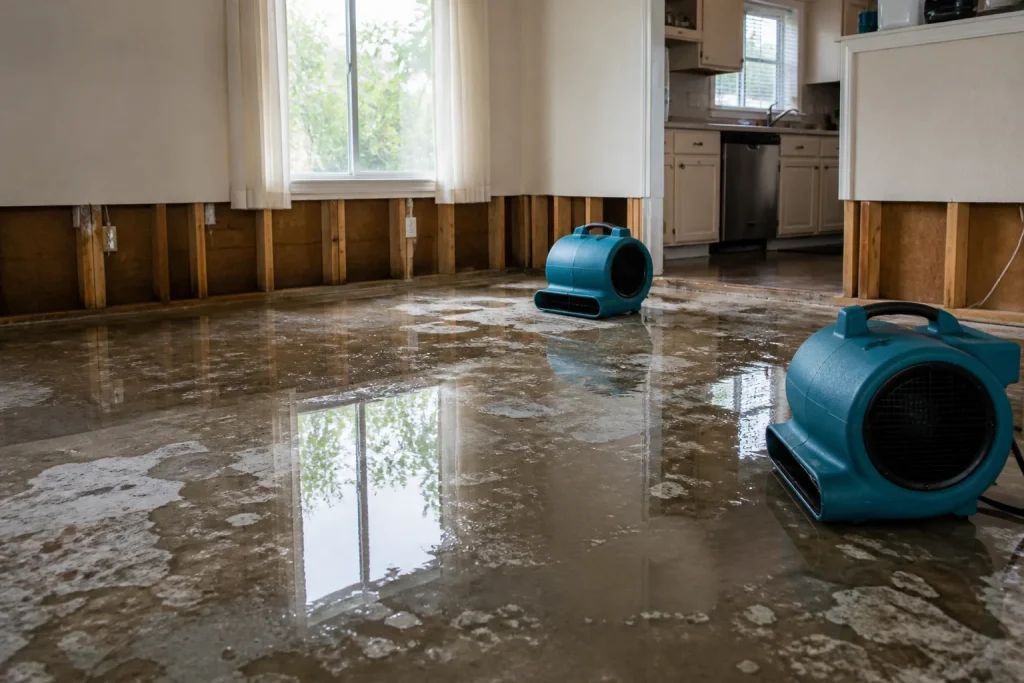
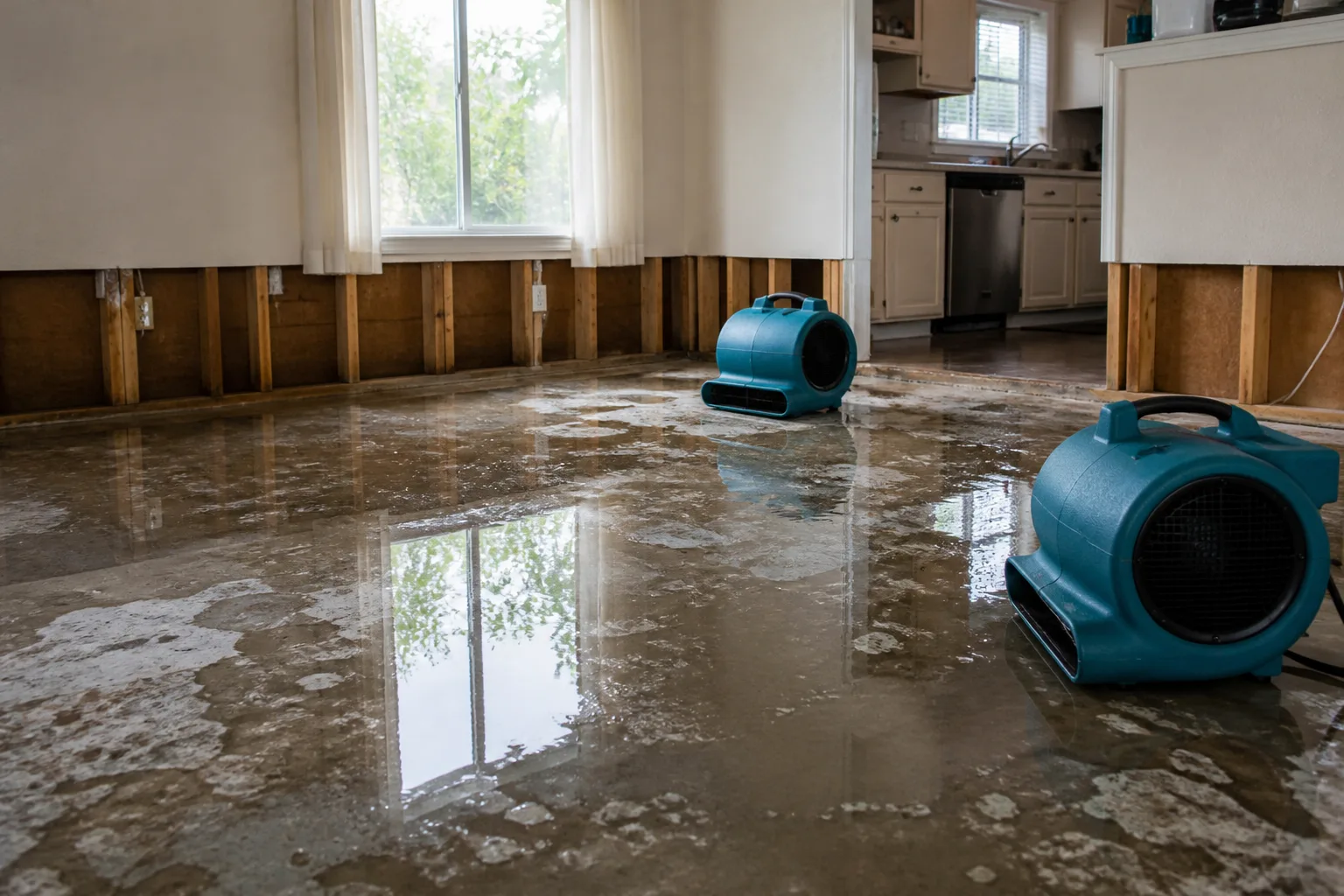
Do not wet-vacuum without extraction equipment. A shop vac pulls surface water and gives you the feeling of progress, but it leaves the water that’s already wicked into drywall, subfloor, and insulation. That hidden moisture is where structural damage and mold colony formation actually happen. Worse, every minute you spend vacuuming is a minute the water keeps migrating into materials you can’t see. Professional extraction uses truck-mounted or portable systems that pull water from the material itself, not just the surface. The equipment on our first-response trucks, including XPOWER air movers and B-Air filtration, exists to handle what your vacuum can’t reach.
Leave furniture in place, mostly. Here’s the uncomfortable truth: moving a saturated sofa across a wet room grinds water deeper into the flooring and spreads contamination. Unless furniture is in active standing water or it’s small enough to lift without dragging, leave it. We’ll handle contents during the mitigation process with proper equipment. We dry the structure, not just the surface.
Stay out of the water if you don’t know what’s in it. Rancho Cucamonga is a city with a lot of older plumbing, so unless you know the water came from a clean supply line, treat it as potentially contaminated. That means no bare skin contact, no kids or pets in the area, and no DIY extraction of gray or black water. This is the point where waiting for trained help stops being optional.
What a Legitimate Emergency Response Actually Looks Like
When the truck pulls up to your Rancho Cucamonga home, you should be able to tell within ten minutes whether you hired a professional restoration company or a generalist with a mop. This matters because the first crew on site determines the trajectory of your entire loss.
A professional first-response truck carries more than fans. We’re talking about:
- Extraction equipment: Not a wet-dry vac. A professional system pulls water at volumes measured in gallons per minute, not pints.
- Moisture meters and thermal imaging: Before any drying equipment gets placed, a real technician takes baseline readings across the affected area. This is the IICRC-certified approach: measure, document, then dry to a documented target, not a guess.
- Air movers and dehumidifiers: Specifically sized to the cubic footage of the affected space. The number of fans isn’t a sales tactic. It’s a calculation based on how much moisture is in the air and materials.
- Air filtration devices: HEPA-based units that capture airborne contaminants, especially important if water sat for more than 24 hours before discovery.
- Personal protective equipment: Gloves, respirators, and boots for the crew. If the technicians walk in wearing sneakers and no gloves, that’s not a team trained for contaminated water exposure.
Before any equipment goes on, ask these questions. A legitimate company will answer all of them without hesitation:
- “What are the moisture readings right now and what’s your target for completion?”
- “Can I see the drying plan in writing before you start?”
- “How will you determine when the structure is actually dry, not just when the carpet feels dry?”
- “What happens if mold is already present?”
If you get vague answers or pressure to sign immediately without a scope of work, that’s not a measurement-based restoration company. That’s a cleanup crew. The difference shows up in whether your home dries in three days or develops a musty smell you can’t find the source of in three months. We’ve handled mold remediation in Rancho Cucamonga homes where the original water mitigation was handled by someone who never took a single moisture reading between day one and day 14.
Claim Notification: When to Call Your Insurer and How to Avoid a Lowball Scope
There’s a right time to call your insurance company, and it’s not necessarily in the first hour. Calling before you understand what happened means you’ll be describing a loss you haven’t documented. Calling after a restoration company has mapped the full scope means you’ll be reporting facts, not guesses.
Here’s our recommended timeline for Rancho Cucamonga homeowners:
- Within the first hour: Document everything, shut off the water, kill the power. Do not call your insurer yet unless the loss is obviously catastrophic.
- Within 2-4 hours: Have a restoration company on site for a professional assessment. Their moisture readings and scope documentation become the foundation of your claim.
- Within 24 hours: Now call your insurer. You’ll have photos, a professional assessment, and a clear understanding of what happened. The claim conversation will be specific and productive.
- Before the adjuster arrives: Have your restoration documentation on hand. If the adjuster’s initial estimate seems low, ask for a reinspection with your restoration company’s moisture data present. Documented readings are hard to argue with.
One thing to understand about the adjuster process: adjusters are trained to write a scope based on what they can see. The problem is that water damage hides. The moisture wicking up inside a wall cavity in your Rancho Cucamonga home won’t show up in a visual inspection. That’s why independent moisture documentation matters. A restoration company using IICRC-certified methodology will have readings that show the full extent of the damage before the adjuster shows up, and those numbers tend to keep the initial scope honest.
When to call a pro: If the water is from anything other than a clean supply line, if it’s been sitting for more than a few hours, if it’s wicked into drywall or flooring, or if you can smell anything musty, this is no longer a DIY situation. The equipment required to dry inside wall cavities and under flooring is professional-grade for a reason. Injectidry technology, for example, pulls moisture from inside wall and floor cavities without cutting them open first, which means less demolition and a faster return to normal. That’s not something you can replicate with fans from Home Depot.
The Insurance Contract Trap: What to Check Before You Sign Anything
When the mitigation crew arrives, you’ll likely be handed a contract or an authorization form. Read it. Every word. Here’s what to look for in the first hour, because once you sign, some of these clauses are binding.
Assignment of Benefits (AOB): This is the big one. An AOB clause transfers your insurance claim rights to the restoration company. Once signed, the company can bill your insurer directly, negotiate directly, and pursue payment without your involvement. In some cases, that’s exactly what you want. In others, it means you’ve surrendered control over a claim you don’t fully understand yet. You have the right to decline an AOB and keep the claim in your own name. A legitimate company will explain the clause and let you decide. A company that pressures you to sign it without explanation should make you nervous.
Equipment placement authorization: You should know what equipment is being placed, where it will go, and for how long. If the contract authorizes “equipment placement as needed” without a specified duration or a clear end condition, ask for specifics. You don’t want a dozen air movers running in your house for three weeks while daily charges accumulate without your knowledge.
Scope of work: The contract should describe the work in terms of mitigation: extraction, drying, documentation. It should not commit you to reconstruction, rebuild, or cosmetic repairs you haven’t discussed. If there’s a blank line for scope or a vague “restoration services as needed” clause, ask for a written scope before you sign.
The companies worth trusting will walk you through the document line by line and answer your questions without defensiveness. The ones who want you to sign while standing in a flooded hallway with the contract balanced on their clipboard are telling you something about how they operate.
Why the First 60 Minutes Matter More Than the Company You Pick
Most Rancho Cucamonga homeowners spend the first hour of a water emergency researching restoration companies, reading reviews, and comparing prices. That’s understandable, but it’s misplaced. The first hour should be spent doing the three things we outlined above: stop the water, kill the power, document the damage.
The company you pick matters, yes. But even the best restoration company in Southern California can’t undo the damage caused by letting water sit for hours while you comparison shop. Water migration is relentless. It moves through drywall, travels under baseboards, wicks into wood framing, and pools in cavities you can’t see. Every hour it moves, the affected area grows, and the cost to dry and repair that area grows with it.
We pulled one out of a garage over in the Vineyard area last month where the homeowner had found water at 11 PM, decided to sleep on it, and called us at noon the next day. By the time we arrived, what had been a water heater leak was now a full perimeter wall saturation plus early-stage microbial growth in the bottom plate. The first hour would have been a one-day extraction and a three-day dry. The thirteenth hour became a week-long job and a mold remediation add-on. If you’re reading this and water is actively spreading in your Rancho Cucamonga home, stop reading and start the protocol.
Related services in Rancho Cucamonga: Water Damage Restoration in Rancho Cucamonga covers our full emergency response and structural drying process. If water has been present for more than 48 hours, you may also need Mold Remediation in Rancho Cucamonga. And if the water loss came from a fire suppression event, Fire Damage Restoration in Rancho Cucamonga handles the full damage chain.
The Bottom Line
Water damage in Rancho Cucamonga doesn’t wait for business hours, and neither should your response. The first 60 minutes are about stopping the source, cutting electrical risk, and documenting what happened. The next few hours are about getting professional moisture measurements before you commit to any course of action. The days after that are about holding the restoration company to measurable drying standards, keeping your insurance claim documented, and making sure nobody cuts corners while your house is open.
If you’re in Rancho Cucamonga and dealing with water damage right now, Flood Guard Water Damage offers free estimates and IICRC-certified restoration practices. We carry commercial-grade drying equipment from Dri-Eaz, Phoenix, XPOWER, B-Air, and Injectidry, and we document every moisture reading from start to finish. Call (844) 716-1094 and we’ll get a crew moving toward your home today.
Frequently Asked Questions
How quickly can a restoration crew actually get to my Rancho Cucamonga home?
In most cases, a professional emergency response team can be on site within one to two hours for water damage in Rancho Cucamonga. The first priority is stopping the source and stabilizing the structure, so the earliest availability usually goes to active water intrusion rather than pre-scheduled assessments. Call (844) 716-1094 and we’ll give you an honest arrival window based on current call volume.
Will my homeowners insurance cover water damage restoration?
Most standard homeowners policies in California cover sudden and accidental water damage, such as a burst pipe or appliance failure. Flooding from external sources like street runoff is typically excluded unless you carry a separate flood policy. What matters most for your claim is documentation: photos taken before anything is moved, moisture readings from a professional assessment, and a written scope of work. Those three things keep your claim grounded in facts rather than adjuster guesswork.
Do I really need professional restoration, or can I just dry it out with fans?
If the water was clean, caught within the first hour, and only touched non-porous surfaces like tile or concrete, fans might be enough. But water that’s wicked into drywall, carpet padding, wood flooring, or insulation requires professional extraction and dehumidification to reach moisture targets that prevent mold. What looks dry on the surface is usually still wet inside the wall cavity. That hidden moisture is where mold takes hold within 24 to 48 hours. The cost of professional drying is almost always less than the cost of mold remediation later.
What’s the biggest mistake homeowners make in the first hour of water damage?
The most expensive mistake is moving belongings and starting to clean before documenting the full extent of the damage. Once you’ve shifted furniture, mopped floors, and pulled wet items off walls, the insurance adjuster has no way to see what actually got wet. Your claim value shrinks, and the restoration company has to guess at the scope. Photos first, always. The second biggest mistake is running the HVAC system, which spreads moisture through the entire duct network and multiplies the affected area. Open windows instead. If you need help, call (844) 716-1094.
Written by the team at Flood Guard Water Damage, serving Rancho Cucamonga since 2018.
Need Damage Restoration Help?
Call Flood Guard Water Damage — licensed & insured, here with fast after-hours help in Rancho Cucamonga.
(844) 716-1094