Last updated October 30, 2026
 Water damage drying
 Fire & smoke cleanup
 Mold remediation
 Storm response
 Sewage cleanup
 Reconstruction
Free visual inspection and a written scope of work before any mitigation begins - photos, moisture readings, and drying logs go in your claim file
The scope we write is the scope we bill. Anything new gets shown to you, in writing, before we touch it.
Get your free estimateHow to Hire a Damage Restoration Contractor in Rancho Cucamonga: A Step-by-Step Guide
California has no state license specific to water damage restoration. A general contractor’s license is all anyone needs to legally market “restoration services” in Rancho Cucamonga. The credential that actually separates trained specialists from generalists is IICRC certification, and fewer than half of the companies advertising locally hold it. This guide and our Water Damage Restoration Troubleshooting: Common Problems and How to Fix Them walk through the exact vetting steps: what certifications to check, what equipment a serious crew should arrive with, how to verify their documentation process, and how to read their estimate without getting burned. You’ll learn the questions that reveal whether you’re hiring a restoration specialist or a general contractor with a wet-vac.
Quick Answer
To hire a damage restoration contractor in Rancho Cucamonga, verify the company holds IICRC-certified technicians (specifically WRT and ASD certifications), confirm they use commercial-grade drying equipment brands like Dri-Eaz or Phoenix rather than box fans, require a written scope of work with moisture maps and drying logs before signing, and ask directly who performs the labor – employees or subcontractors. A legitimate restoration company documents everything for your insurance claim from the first visit.
Restoration work we handle
Table of Contents
- Why Certifications Matter More Than Licenses
- What Equipment a Legitimate Restoration Company Should Arrive With
- How to Evaluate Documentation: Drying Logs, Moisture Maps, and Photo Records
- The Subcontracting Questions That Expose Franchise Gaps
- How to Read a Scope of Work Estimate
- Step-by-Step Hiring Process
- Insurance Coordination: What Actually Gets Claims Paid
- Rancho Cucamonga-Specific Considerations
Why Certifications Matter More Than Licenses
Here’s what most homeowners in Rancho Cucamonga don’t realize: a California contractor’s license proves someone can run a business. It doesn’t prove they know how to dry a structure properly. The restoration industry’s actual technical standard is the IICRC (Institute of Inspection, Cleaning and Restoration Certification). This is the body that writes the drying science protocols every serious restoration company follows.
When you’re comparing contractors, there are two specific IICRC certifications you should ask about:
- WRT (Water Damage Restoration Technician) – This certification covers the fundamentals of water damage: extraction, drying science, antimicrobial application, and the physics of how moisture moves through building materials. A technician with WRT training understands that drying a wall cavity is different from drying a carpet.
- ASD (Applied Structural Drying) – This is the advanced certification. ASD technicians are trained to calculate drying chamber requirements, use psychrometrics (the science of air moisture relationships) to set drying goals, and monitor structural materials until they reach documented dry standards. Without ASD training, a crew is guessing at drying times.
One critical distinction: these certifications are held by individuals, not companies. A company can claim “IICRC-certified practices” while employing technicians who hold no individual certifications at all. Ask directly: “Which technicians will be on my job, and what IICRC certifications do they personally hold?” We’ve walked into homes in Rancho Cucamonga where a previous contractor had removed baseboards but left wall cavities at 80% moisture content because no one on the crew had ASD training to calculate the required drying capacity.
Beyond IICRC, look for RIA (Restoration Industry Association) membership. RIA holds member companies to ethical and technical standards that go beyond baseline licensing. It signals that the company participates in ongoing professional development rather than operating on whatever they learned a decade ago. For a deeper look at how certified restoration work gets done in Rancho Cucamonga, see our Water Damage Restoration in Rancho Cucamonga page.
What Equipment a Legitimate Restoration Company Should Arrive With
The quickest way to assess a restoration company’s seriousness is to watch what comes out of the truck on the first visit. In our experience on Rancho Cucamonga water damage jobs, equipment quality predicts outcome quality more reliably than any online review.
Here’s what a professional restoration crew should have on site for a typical water damage event:
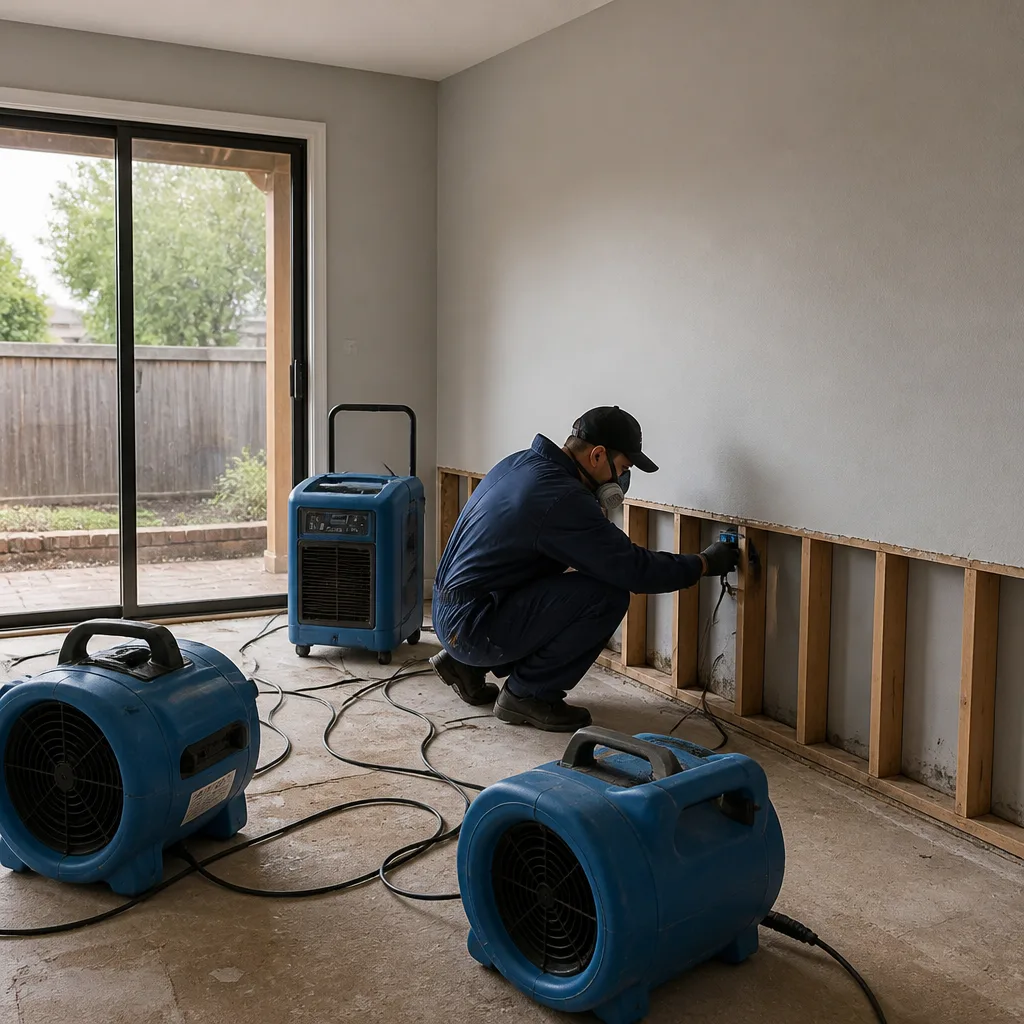
- Low-grain refrigerant dehumidifiers – Commercial units from Dri-Eaz or Phoenix, not a rental dehumidifier from a hardware store. Commercial units pull 70 – 130 pints per day. Consumer-grade units pull 20 – 30 pints and will not achieve the dry standard insurance adjusters require.
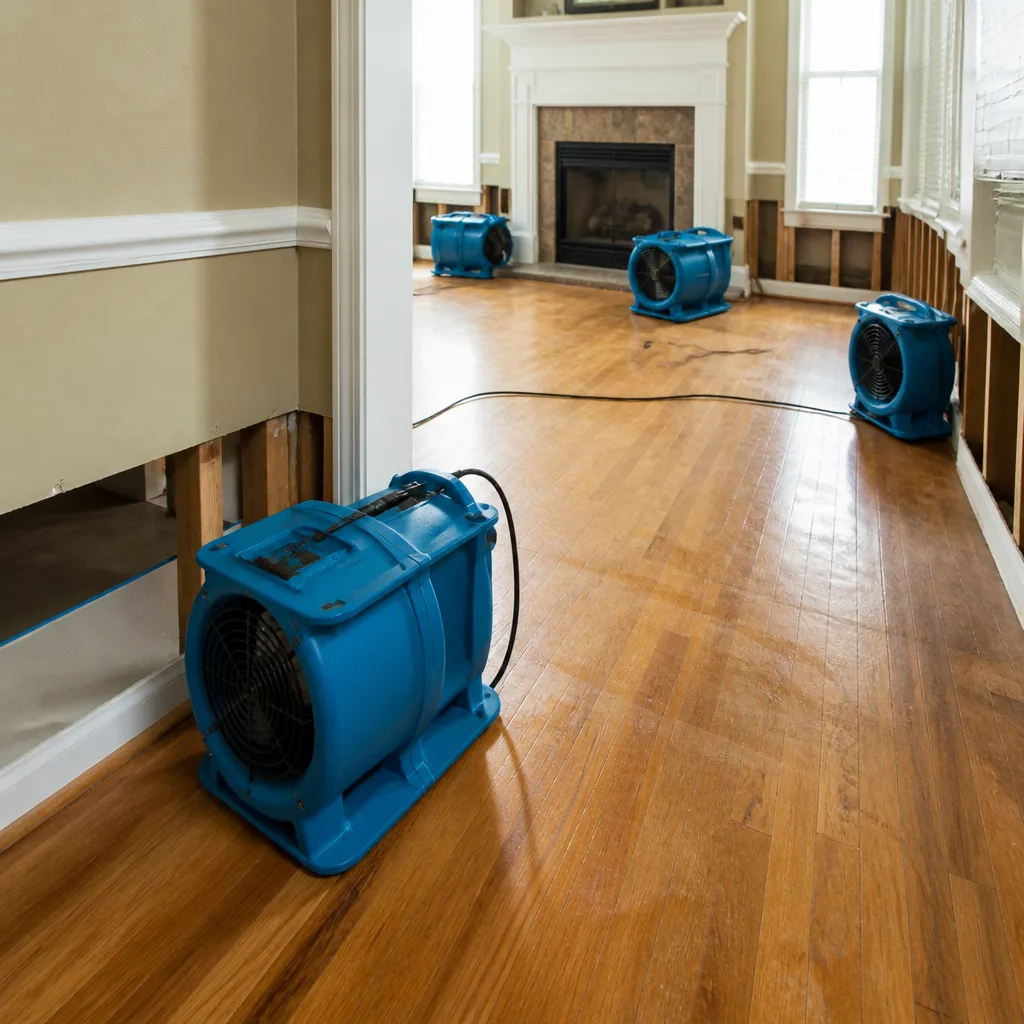
- High-velocity air movers – Brands like XPOWER or B-Air. These create the airflow that drives evaporation from structural materials. Box fans are not air movers. If a crew sets up box fans, they do not understand structural drying.
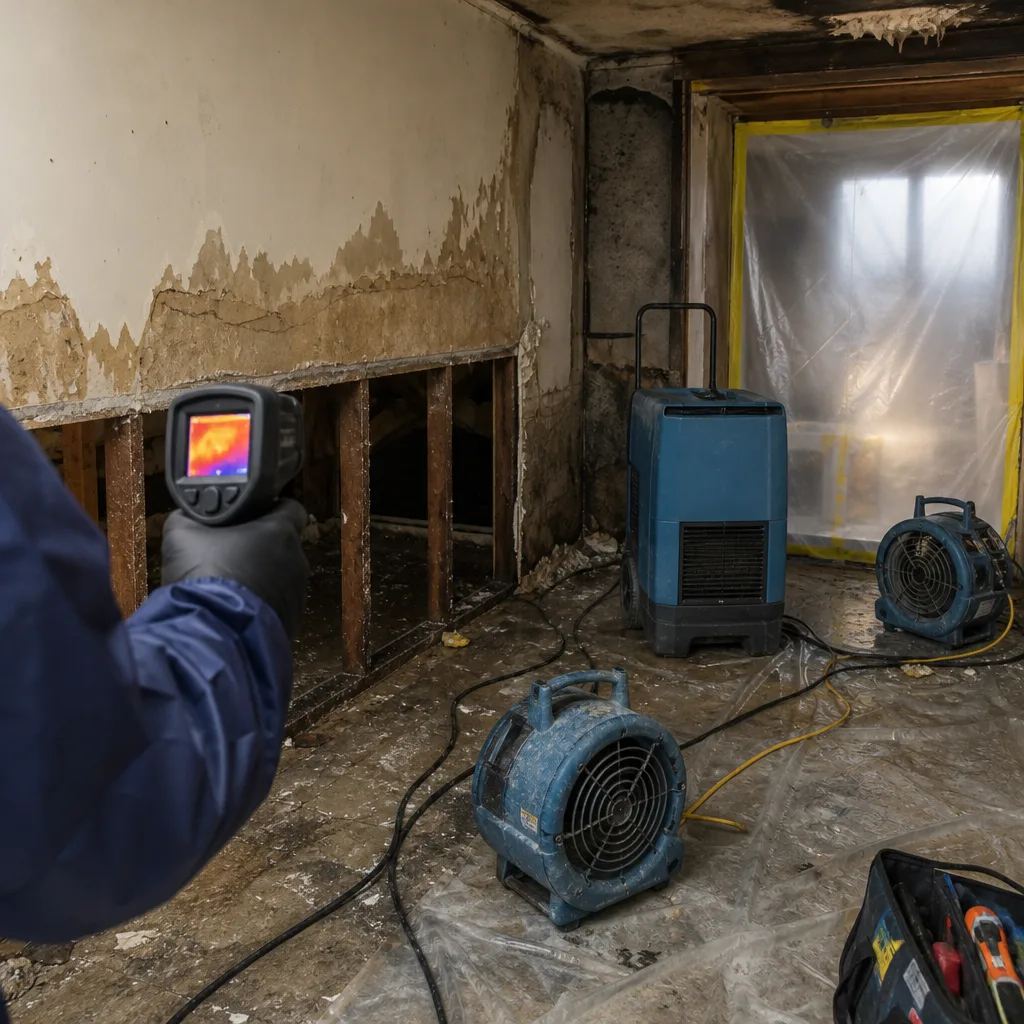
- Moisture meters – A penetrating meter and a non-invasive meter. These measure moisture content inside walls, subfloors, and structural lumber. Without them, no one can document that drying goals were met.
- Thermal imaging camera or hygrometer – Used to map moisture migration and establish ambient humidity baselines. This is part of the measurement process, not an optional add-on.
- Extraction equipment – Truck-mounted or portable extraction units capable of removing standing water from carpet, padding, and hard surfaces. A wet-vac from a home center is not restoration equipment.
One piece of equipment worth asking about specifically is the Injectidry system. This technology allows drying inside wall and floor cavities without tearing out drywall or flooring. Non-invasive drying reduces demolition, shortens the overall restoration timeline, and typically lowers the final repair bill. Not every company has this capability, but when you’re comparing quotes in Rancho Cucamonga, the company that can dry without demolishing is positioned to save you money on reconstruction. Equipment brands matter because they reflect a company’s investment in outcomes. A crew that shows up with rental-store gear is telling you something about what they’re willing to spend to protect your home.
How to Evaluate Documentation: Drying Logs, Moisture Maps, and Photo Records
Insurance adjusters do not pay claims based on a contractor’s verbal assurances. They pay based on documentation that demonstrates the loss occurred, the extent of damage, and the restoration work performed. This is why the documentation process is the single best predictor of whether your claim will be handled smoothly.
A legitimate restoration company in Rancho Cucamonga will produce three types of records without being asked:
- Drying logs – Daily readings of moisture content from affected materials, ambient temperature, and relative humidity. These logs prove the structure reached the “dry standard” (the moisture level appropriate for the material and region). A company that can’t show drying logs has not followed IICRC-certified drying protocols. They’ve dried surfaces, not structures.
- Moisture maps – Diagrams showing where moisture was detected, where drying equipment was placed, and how moisture levels changed over time. These maps tell a story that explains why specific areas were treated and others were not.
- Photo records – Photos from before work begins, during the drying process, and after drying is complete. The best companies photographically document every step, including removed materials, affected structural components, and evidence of secondary damage like mold growth.
Here’s the vetting question that matters: “Can you show me a sample drying log and moisture map from a recent job?” A company that hesitates, or says they’ll provide it later, is not operating at the professional standard. We provide documentation as a standard part of every job, because we know the adjuster will require it. Insurance companies in California have become increasingly strict about restoration documentation, especially in markets like Rancho Cucamonga where a high volume of claims has led to tighter scrutiny.
The Subcontracting Questions That Expose Franchise Gaps
Many franchise restoration operations that advertise heavily in Rancho Cucamonga don’t perform their own drying work. They sell the job, then subcontract the actual labor to local crews. Some of those crews are excellent. Many are not – and some employ workers with no restoration training at all.
The problem is not subcontracting in principle. The problem is what gets lost in the handoff. When a company subcontracts drying work, the subcontractor’s incentive is to finish quickly and move to the next job. The selling company’s incentive is to protect its brand. Neither has the same incentive structure as a company that employs its own certified technicians and is accountable for the entire scope of restoration work from water extraction to final structural drying.
Ask these three questions directly:
- “Will the technicians who show up be your employees or subcontractors?”
- “If subcontractors are used, what IICRC certifications do they hold?”
- “Who is responsible if the drying process fails and secondary damage occurs – you or your subcontractor?”
A company that hesitates on any of these questions is telling you something about accountability. The best-case scenario for a homeowner is a single accountable team handling the full damage chain: water damage, potential mold growth, and any fire damage that accompanies the event. Handoffs create gaps where secondary damage like mold gets missed. A company like Flood Guard Water Damage handles water, mold, and fire restoration under one roof precisely because the damage chain doesn’t respect service boundaries. When you call one company for water mitigation and a different company for mold remediation, the mold specialist often has to redo work the water crew left incomplete. For more on how mold develops after water events, see our Mold Remediation in Rancho Cucamonga page.
How to Read a Scope of Work Estimate
A restoration estimate is not like a remodeling quote. It’s a scope of work document that should line up with the insurance claim process. Reading it correctly means knowing which line items represent legitimate restoration steps and which represent padding.
Here’s what a legitimate scope of work typically includes:
- Emergency mitigation – Water extraction, removal of unsalvageable materials (carpet, padding, damaged drywall), and antimicrobial application. These are the immediate steps that stop further damage.
- Structural drying – Equipment rental days, daily monitoring, and labor for moving equipment as drying progresses. This is typically charged per day.
- Content manipulation – Moving furniture and contents to access wet areas, potentially pack-out and off-site storage for severe jobs.
- Demolition and debris removal – Removal of materials that cannot be dried, bagged and hauled in compliance with local disposal rules.
- Reconstruction or repair – Only if the restoration company is also rebuilding what was removed. Many restoration companies in Rancho Cucamonga handle reconstruction; some do not.
Padding shows up as line items that don’t correspond to a specific action the technician can describe. “Environmental fee,” “project management fee” layered on top of the scope, or vague “miscellaneous materials” charges. Legitimate restoration companies will explain any line item when asked. If the estimator can’t tell you what a fee actually covers, that’s a signal. Some companies also pad by overestimating equipment days. A standard water damage job in a Rancho Cucamonga home might require structural drying for 3 – 5 days. If a quote includes 10 equipment days up front, ask why. The best approach is to get itemized scopes from at least two companies and compare line items side by side. For fire damage specifically, the scope language changes significantly – see our Fire Damage Restoration in Rancho Cucamonga page for what fire restoration scopes typically include.
Step-by-Step Hiring Process
Use this sequence when you need to hire a restoration contractor in Rancho Cucamonga. It’s ordered to protect you from the most common failure modes.
- Stop the bleeding first. If water is still flowing, shut off the source. If there’s active fire danger, evacuate. The extent of the damage determines how much leverage you have in the hiring process. In Rancho Cucamonga, a home with a slab leak causing continuous water intrusion needs mitigation within hours, not days.
- Document everything yourself. Photos of every affected area before any contractor arrives. Your phone photos establish a baseline that no one can argue with later.
- Call your insurance company. Report the loss immediately. Ask what your policy covers for mitigation, and whether the insurer has preferred restoration vendors. You are not required to use a preferred vendor – California law gives you the right to choose your own restoration contractor.
- Request verification before any work begins. Ask for the WRT and ASD certifications of the technicians who will perform the work. Ask for proof of insurance (general liability and workers’ compensation). Ask for a written scope of work with pricing.
- Get a second quote if time and scope allow. For non-emergency restoration, compare two or three scopes. For emergency water damage in Rancho Cucamonga, time is a factor – a delay of 24 hours can turn salvageable materials into demolition. In those cases, prioritize certification and equipment over price comparison.
- Require a written contract before any work. The contract should include: scope of work, price, payment schedule, timeline, and the name of the project manager responsible for your job.
- Review documentation during the process. Ask to see drying logs every few days. A professional company will provide them proactively.
This process works for water, mold, and fire damage events. The stakes differ, but the fundamental vetting framework is the same: certifications, equipment, documentation, accountability.
Insurance Coordination: What Actually Gets Claims Paid
The restoration contractor you hire will effectively serve as your insurance liaison during the damage assessment and restoration process. A contractor who understands how California insurance adjusters evaluate claims is an asset. A contractor who treats insurance as an afterthought will cost you money.
Here’s what effective insurance coordination looks like:
- Direct adjuster communication – Your restoration company should be willing to communicate directly with the insurance adjuster about the scope of damage, the drying plan, and the documentation being gathered. Many homeowners in Rancho Cucamonga find themselves caught between their contractor and their adjuster because the contractor won’t talk to the insurer directly.
- Photo documentation that matches claim requirements – Adjusters require photos that show the damage clearly, with date stamps. A restoration company that provides organized, timestamped photo records dramatically speeds up claim processing.
- Written scope before work begins – Insurance companies want to see a written scope of work with pricing before they approve anything beyond mitigation. The best restoration companies in Rancho Cucamonga provide this as standard practice.
The single most important thing to understand is that documentation protects you. A restoration company that measures moisture content, maps it, and logs daily drying data is building the paper trail that gets your claim approved. A company that extracts water, sets up fans, and tells you everything will be fine is leaving you exposed if the drying process fails and an adjuster audits the claim. We’ve seen claims in Rancho Cucamonga delayed or denied because a previous contractor provided no drying logs, and the insurance company had no evidence that the structure actually reached its dry standard. The documentation is not bureaucratic overhead. It’s the difference between a paid claim and a disputed one.
Rancho Cucamonga-Specific Considerations
Rancho Cucamonga’s climate and building stock create restoration conditions you won’t find in coastal or desert California markets, which is why Seasonal Damage Restoration Care for Rancho Cucamonga: Year-Round Homeowner’s Guide matters for local homeowners. The city sits in the inland valley, where summer temperatures routinely exceed 100°F and winter nights can dip into the 30s. Those swings affect drying conditions and the timelines restoration crews work with.
During the hot months, ambient humidity in Rancho Cucamonga is typically low, which can speed evaporation – but it also means unmanaged drying can cause materials to dry too quickly at the surface while moisture stays trapped deeper inside, a condition called case hardening. That’s why proper equipment, particularly dehumidifiers sized to the space, matters more here than in more humid coastal zones. A company that understands dry-climate drying dynamics will set up drying chambers differently than a company that treats every job the same regardless of ZIP code.
Rancho Cucamonga is also a city with significant variation in housing vintage. Homes in the older central neighborhoods near Archibald Avenue and Baseline Road often have different slab and subfloor construction than the newer developments north of the 210 Freeway. Older homes in the Alta Loma and Etiwanda foothill areas can present different structural drying challenges than tract homes built in the last decade near Victoria Gardens. A restoration company with local experience has seen these homes and understands what’s behind the walls. For the full scope of what water damage restoration entails in this market, our Water Damage Restoration in Rancho Cucamonga page covers what homeowners should expect by neighborhood type.
Finally, local permitting and code compliance matters when restoration work extends beyond mitigation into reconstruction. Rancho Cucamonga building codes govern what reconstruction work requires permits, and a restoration company that understands local code won’t put you in a position where completed work fails an inspection. This is one more argument for hiring a restoration specialist with local experience rather than a general contractor who happens to market restoration services.
Common Mistakes to Avoid
- Hiring based on the lowest quote without comparing scopes. In restoration, two quotes are rarely for the same work. One contractor quotes equipment and time per IICRC-certified drying protocols; another quotes a box fan and a prayer. Compare line items, not totals. If a quote is dramatically lower, something in the scope is missing.
- Accepting “all-in-one” pricing without a written scope. Any restoration contractor in Rancho Cucamonga that gives you a single number with no line items is asking you to trust the process without documentation. Insist on an itemized scope before work begins.
- Assuming your insurance company’s preferred vendor is the best option. Insurers prefer vendors who keep costs low, which can align with or conflict with your interest in thorough restoration. You have the legal right under California law to choose your own contractor. Exercise that right deliberately.
- Delaying mitigation while you shop for the perfect contractor. Water damage worsens by the hour in a Rancho Cucamonga summer. Mold can begin growing within 24 – 48 hours on wet organic materials. Get a certified professional on site quickly, even if you keep evaluating during the mitigation phase.
- Not verifying technician certifications before work starts. A company can have IICRC-certified methodology and still send uncertified technicians to your job. Ask who’s coming and what they hold.
- Skipping the written contract because of urgency. Emergency situations are exactly when written agreements matter most. The contract protects both parties and establishes the scope before the tear-out begins.
- Ignoring documentation after the job is done. Keep copies of drying logs, photos, and the final scope. If disputes arise with your insurance company months later, that documentation is your defense.
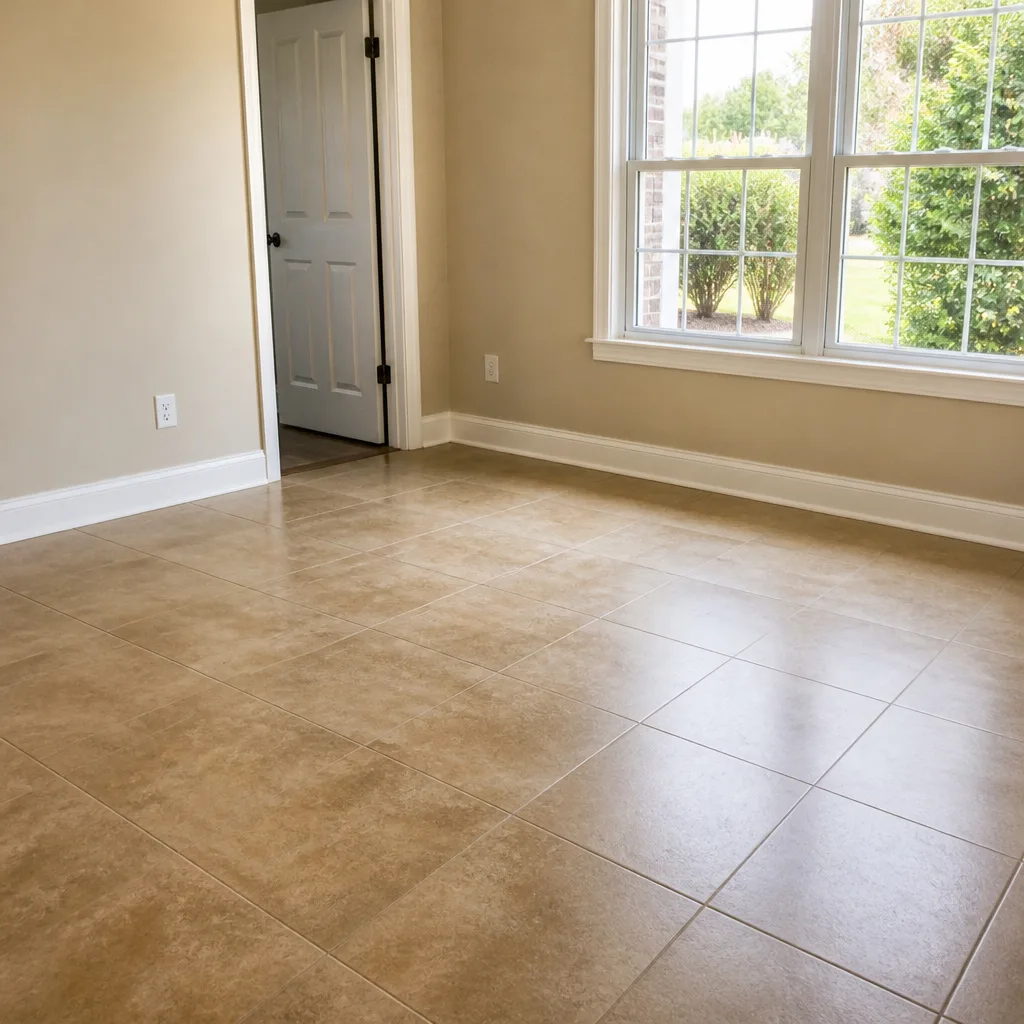
See the difference
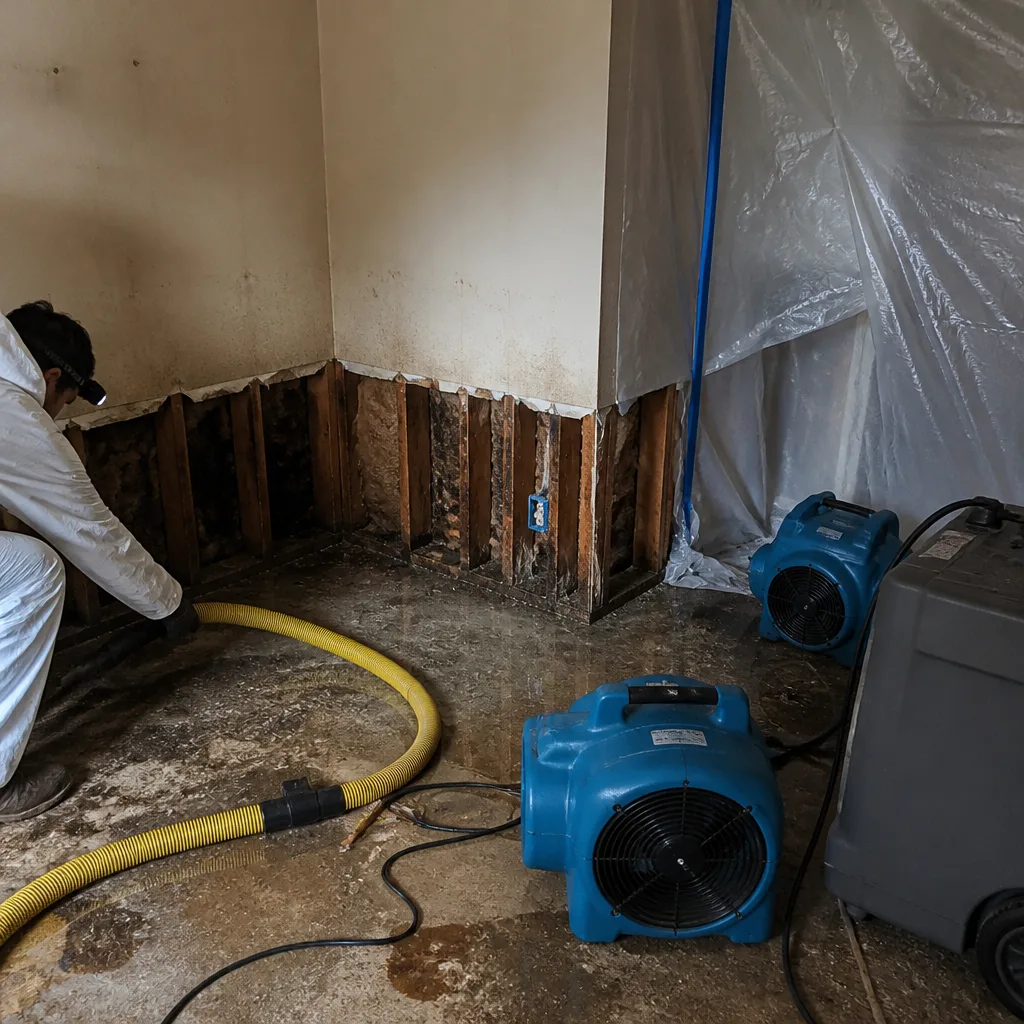 Before
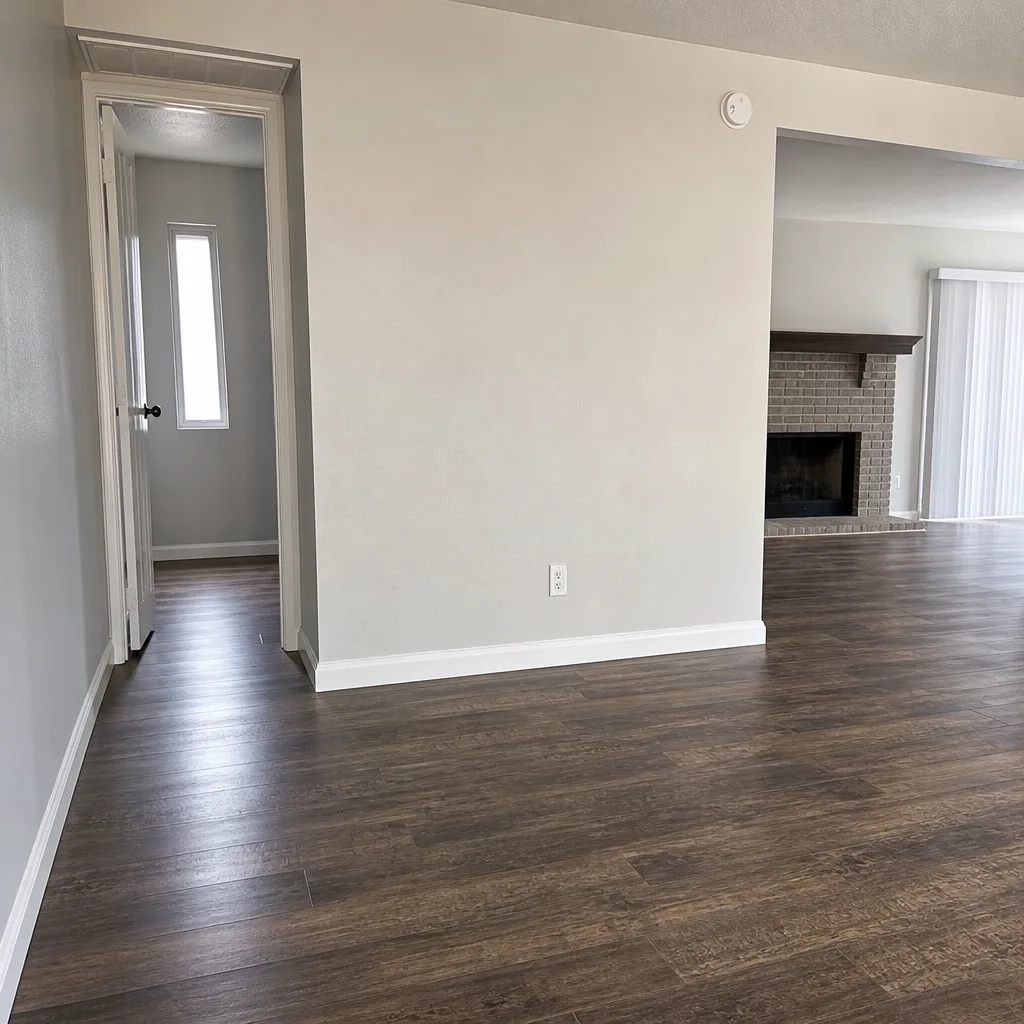 After
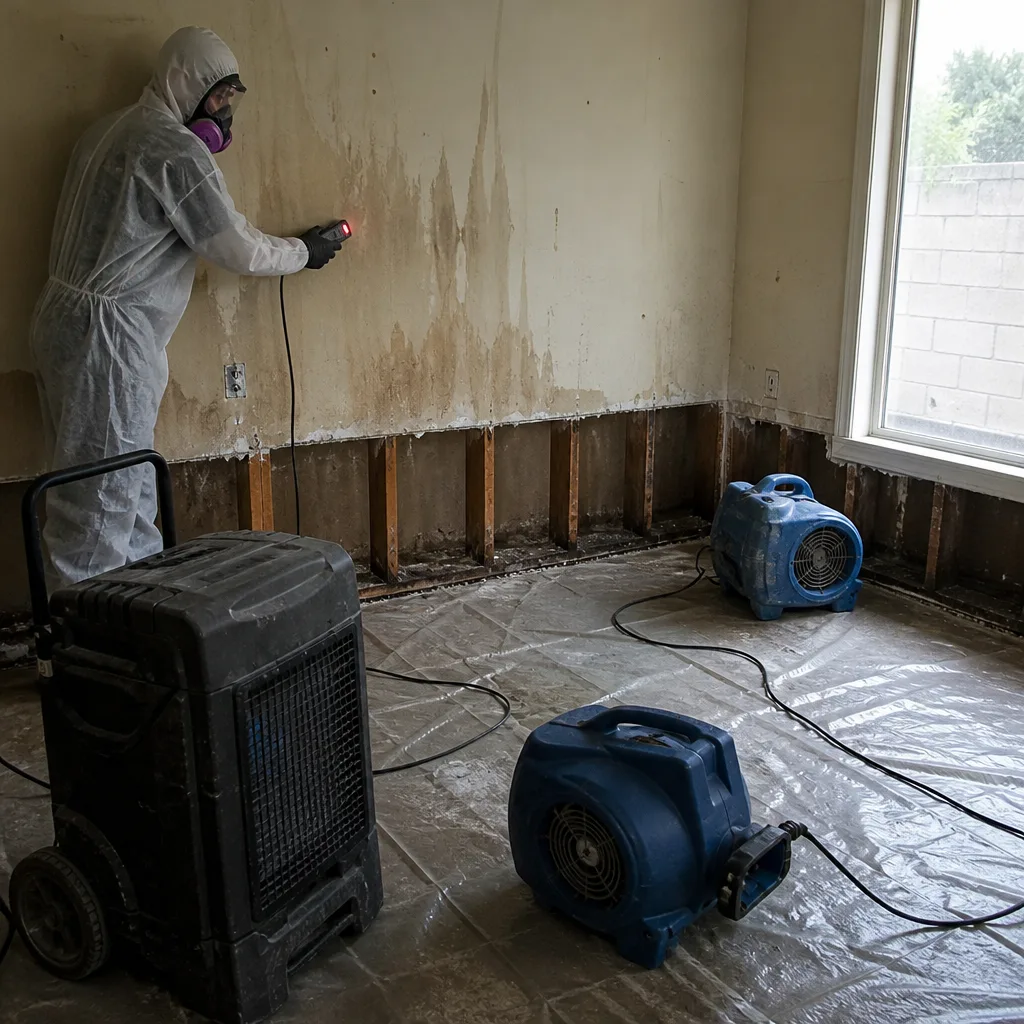 Before
 After
 Before
 After
When to Call a Professional
Some restoration situations are unambiguous. If water has been sitting in your home for more than 24 hours, call a professional – mold growth risk accelerates sharply after that point. If you see water damage that extends into walls, under cabinets, or into the subfloor, call a professional – consumer-grade tools cannot dry these spaces. If you smell musty odors that return after cleaning, call a professional – that odor often indicates hidden mold behind surfaces. If you’ve had a fire, even a small one, call a professional – smoke and soot particles penetrate surfaces you can’t see and require specialized cleaning. If your insurance company is asking for documentation you don’t have, call a professional – a restoration company that documents from the first visit can supply what the adjuster needs. Flood Guard Water Damage offers free estimates in Rancho Cucamonga – call (844) 716-1094 if any of these conditions apply.
Frequently Asked Questions
Ask for the individual technician’s WRT or ASD certification number and verify it through the IICRC’s public registry. A company’s claim of “IICRC-certified practices” doesn’t tell you whether the technicians who will work in your home hold individual certifications. In Rancho Cucamonga, ask for this before you sign anything.
Mitigation is the emergency phase: stopping the source, extracting standing water, and beginning structural drying. Restoration is returning the property to its pre-damage condition, which can include reconstruction. In Rancho Cucamonga, most water damage events require both phases, and hiring one company that handles the full chain avoids gaps between mitigation and restoration.
For anything beyond a small, contained spill that you caught immediately, professional structural drying is warranted. Homeowner-grade fans and rental dehumidifiers rarely achieve the dry standard insurance adjusters require, and undried structural cavities in Rancho Cucamonga homes are where mold problems begin. If water has reached walls, floors, or the subfloor, the professional equipment pays for itself in avoided reconstruction costs.
For active water damage, a legitimate restoration company in Rancho Cucamonga should be able to respond within hours, not days. Emergency mitigation is time-sensitive work. If a company can’t get a crew to your home within 24 hours of a water event, you’re likely better off calling someone else. Mold growth accelerates after that window, especially during warm weather months.
Insurance coverage for mold remediation depends on your policy and the cause of the water damage. If mold results from a covered water event, remediation often falls within the claim. If mold predates the event or results from long-term neglect, coverage may be denied. Your restoration company’s documentation can make a meaningful difference in whether mold remediation gets covered. A company that documents mold growth as a result of the water event, with photographic evidence and moisture readings, strengthens your claim.
Shut off the water source if you can do so safely. Move valuables and electronics out of affected areas. Take extensive photos and video of all damage before anyone touches anything. Do not attempt to remove building materials like drywall or baseboards yourself – doing so can complicate your claim and expose you to hazards like mold spores or damaged electrical wiring. In Rancho Cucamonga, a professional crew will document baseline conditions before any work begins.
The Bottom Line
Hiring a damage restoration contractor in Rancho Cucamonga is a vetting exercise, not a price comparison, and our more guides & resources can help you through the process. The contractors who advertise the most are not necessarily the ones who dry the structure properly. The framework that matters is simple: IICRC-certified technicians with WRT and ASD credentials, commercial-grade equipment from brands like Dri-Eaz and Phoenix, written documentation including drying logs and moisture maps, and one accountable team handling the full restoration chain. Ask the hard questions before you sign anything. Get a written scope of work. Verify certifications by name. If a contractor can’t answer questions about their drying process in detail, they’re likely not running a process you want operating inside your walls.
Written by the team at Flood Guard Water Damage, serving Rancho Cucamonga since 2018.