
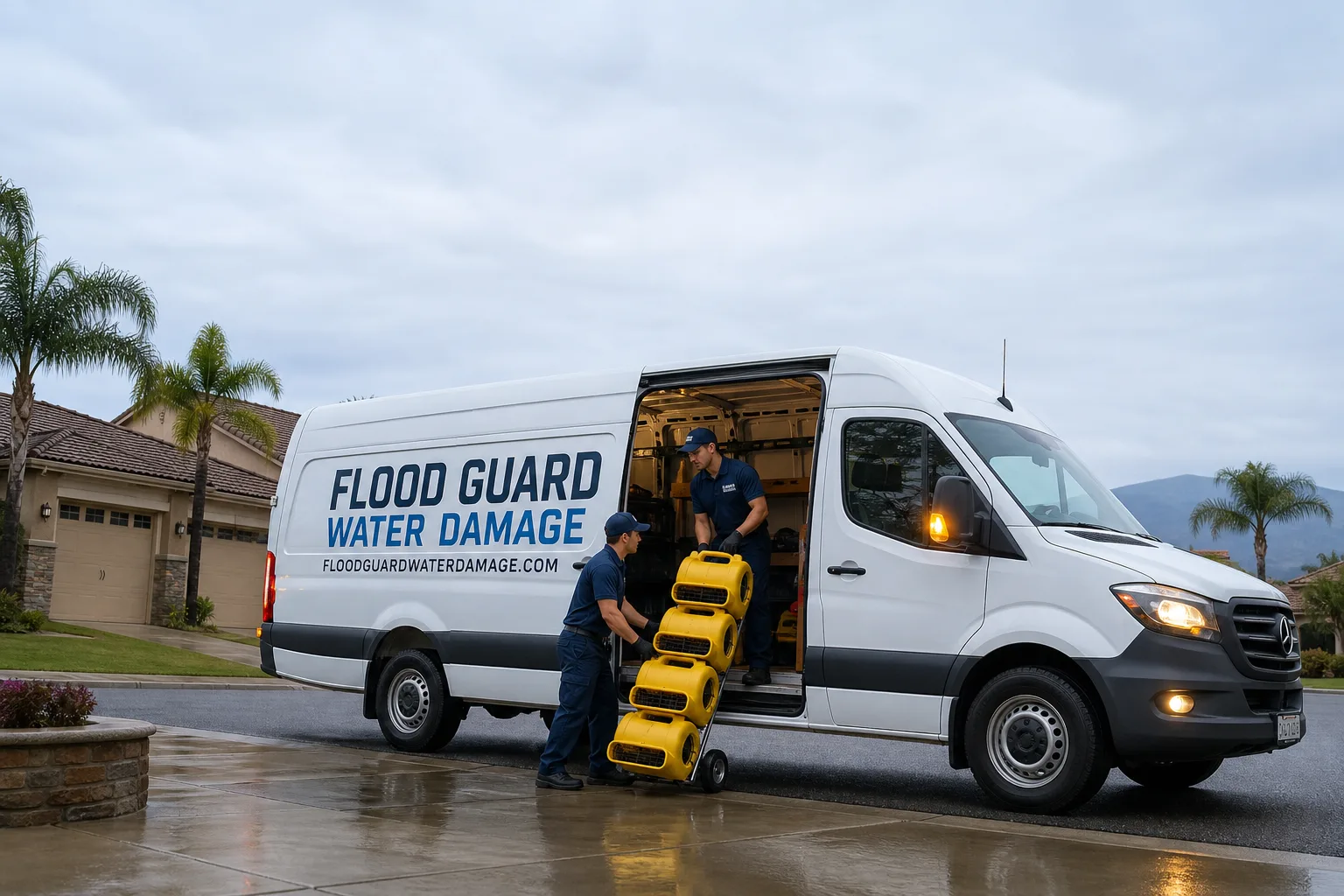
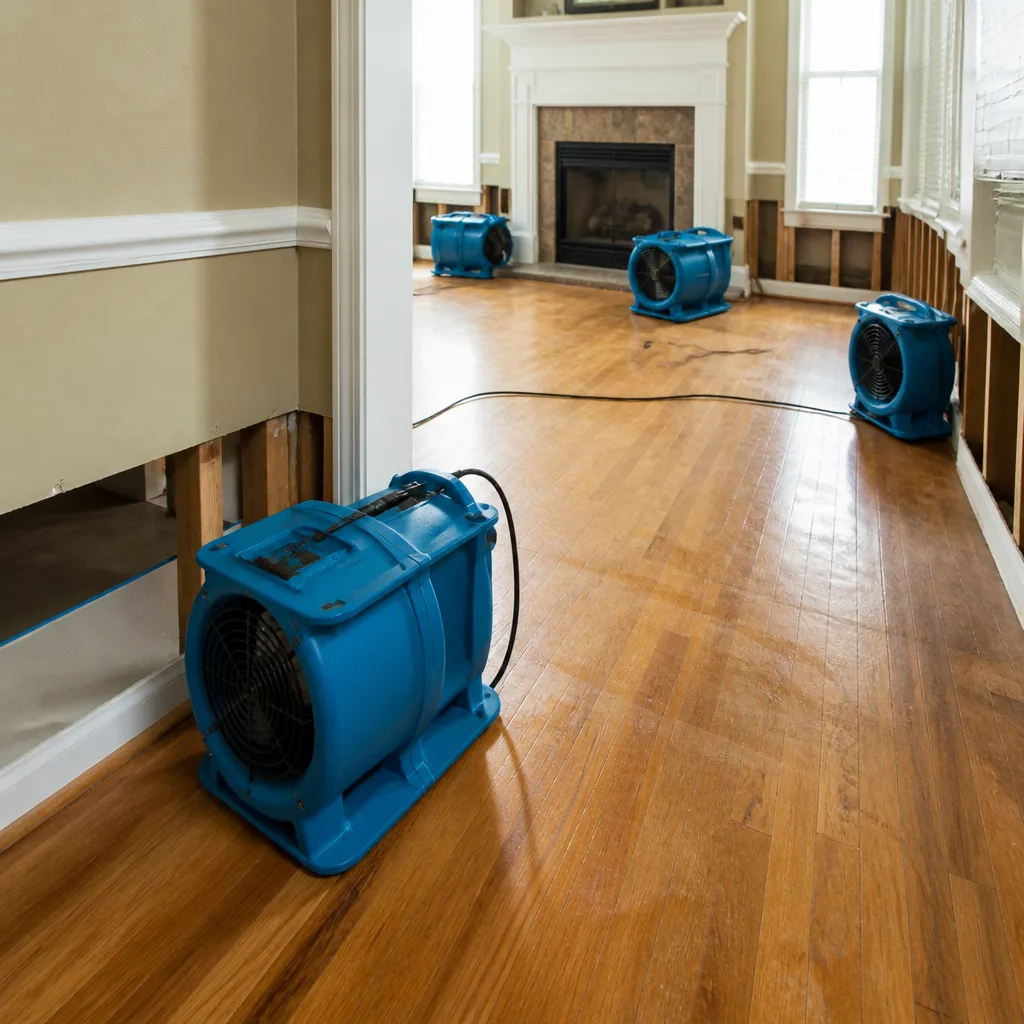
 Water damage drying
 Fire & smoke cleanup
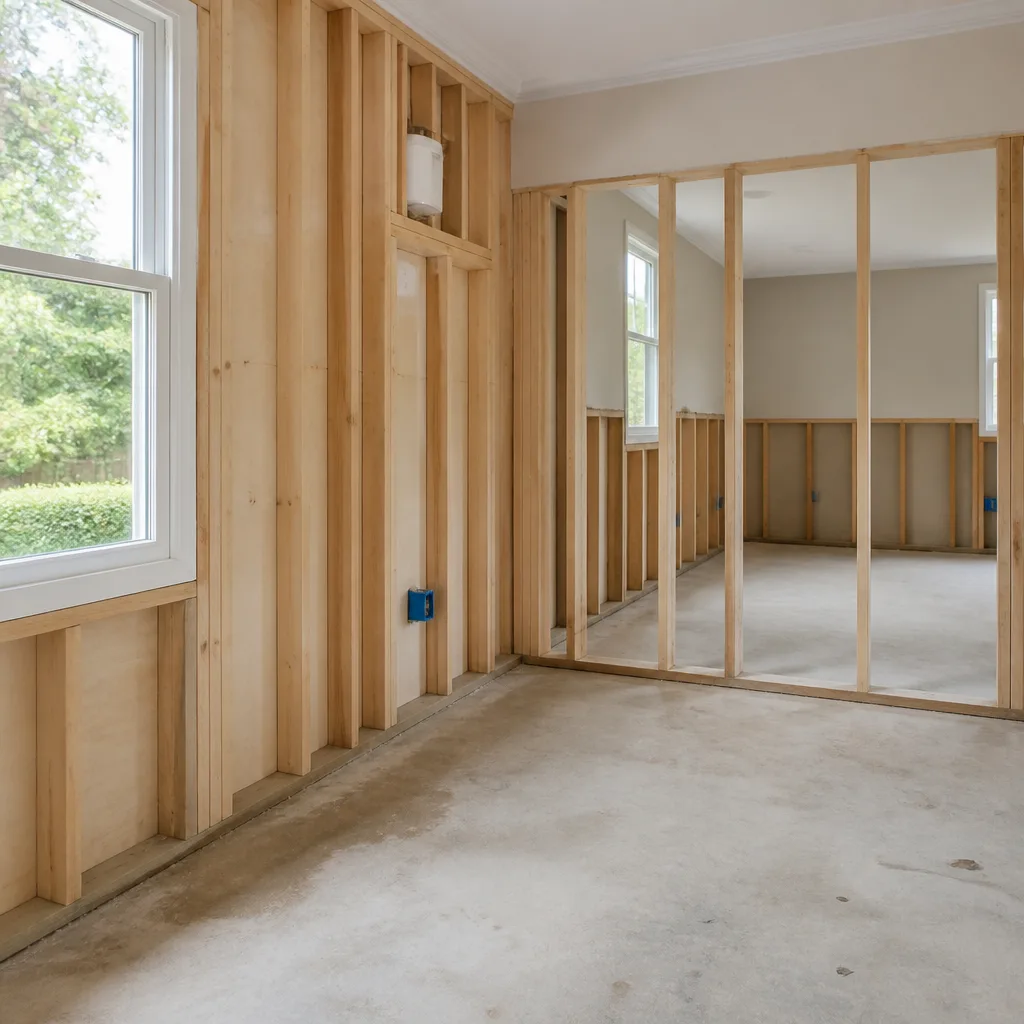 Mold remediation
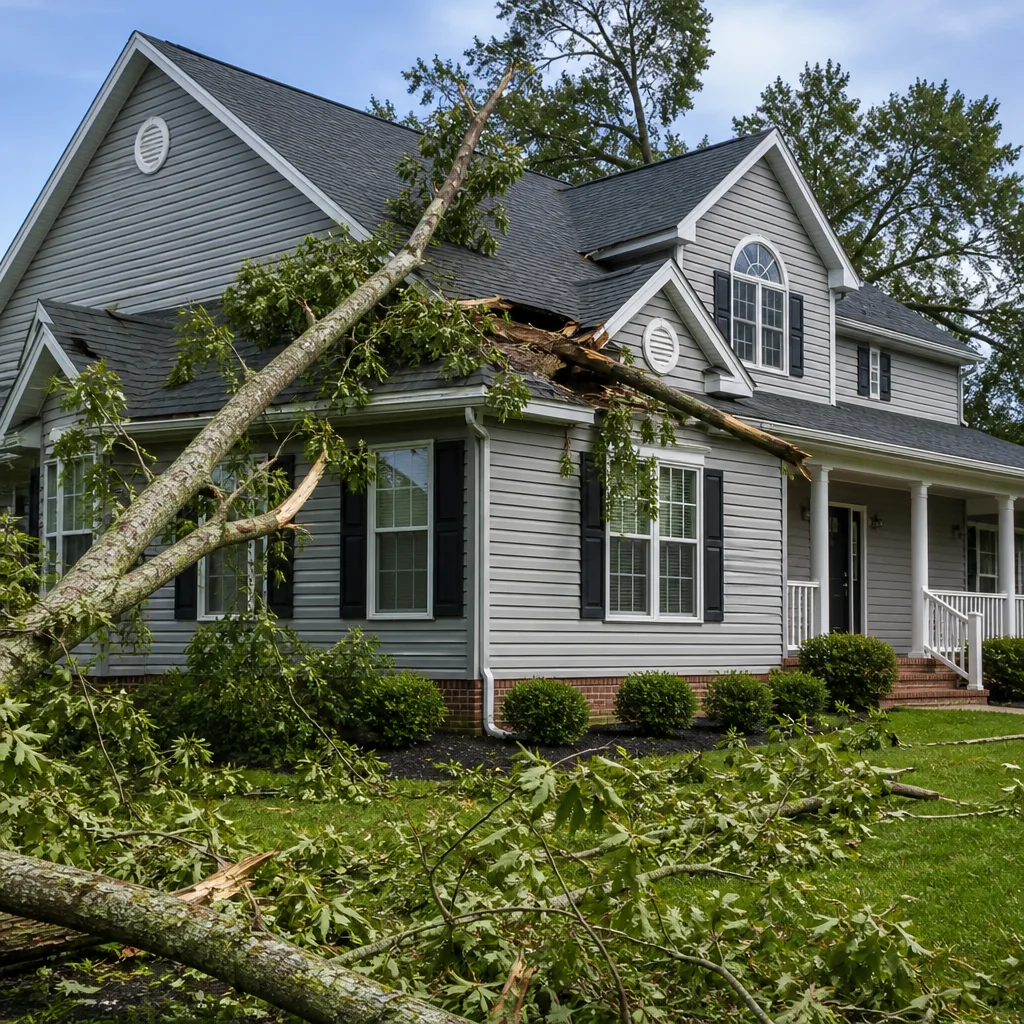 Storm response
 Sewage cleanup
 Reconstruction
Free visual inspection and a written scope of work before any mitigation begins - photos, moisture readings, and drying logs go in your claim file
The scope we write is the scope we bill. Anything new gets shown to you, in writing, before we touch it.
Get your free estimateFast, Reliable Mold Remediation Across Corona
Mold remediation in Corona typically costs $1,800 – $6,400 depending on containment requirements, affected square footage, and whether wall cavities or crawl spaces are involved. Most Corona homes we assess are back to safe occupancy in 3 – 7 days. If you’re seeing dark staining along baseboards in a 92879 tract home or smelling musty air in a canyon-adjacent neighborhood off the 91, call (844) 716-1094. We’re based in Rancho Cucamonga and run crews into Corona daily, including 92877, 92878, 92879, and 92880.
Corona’s position in the Santa Ana wind corridor creates mold problems that don’t match the typical leak-under-the-sink scenario. Fine ash forced through attic vents during wind events settles into insulation and wall cavities. Then winter atmospheric river storms push moisture into those same cavities. The result is mold growth that starts without a visible water source, which is why our approach here always begins with moisture mapping and air sampling, not a visual guess.
Why Flood Guard Water Damage Is Corona’s Preferred Mold Remediation Company
We’ve worked enough Corona homes to know the difference between a 1970s slab-foundation rancher in 92879 and a 2000s two-story off Green River Road. That local knowledge changes how we set containment, where we probe for hidden moisture, and how we scope the work. The older stucco-on-wood-frame homes in the core of Corona hold moisture differently than the newer hill developments, and our drying protocols account for that.
Flood Guard Water Damage runs IICRC-certified methodology on every job. That’s the restoration industry’s technical standard, and it means every mold remediation follows a documented, science-based protocol rather than a technician’s instinct. We deploy commercial-grade equipment from Dri-Eaz and Phoenix, the same brands used on large-loss commercial restoration projects, not the consumer units you’d rent from a hardware store.
Noel Ibarra leads our crews, and the standard he holds is simple: measure everything, document everything, and don’t open a wall unless the moisture readings justify it. That last point matters in Corona, where homeowners are often dealing with ash intrusion and mold simultaneously. We separate those problems in the scope of work so you’re not paying for remediation measures that don’t apply.
Restoration work we handle
Black Mold Removal in Corona
Black mold removal in Corona addresses Stachybotrys and other toxigenic mold species that thrive in the city’s older housing stock after Santa Ana-driven ash intrusion meets winter storm moisture. Homeowners in the 92882 ZIP and surrounding canyon-adjacent areas call us when dark green-black colonies appear on drywall, baseboards, or subflooring, often months after a wind event pushed fine particulate into the wall system.
The job involves full containment with negative air pressure, HEPA air scrubbing, removal of affected materials, antimicrobial application, and post-remediation clearance testing. We don’t paint over the mold or spray a fungicide and call it done. In Corona homes, black mold frequently hides behind stucco exteriors where surface walls feel dry but cavity readings show 25 – 35% moisture content. That’s why our team cuts access points and probes before writing the scope.
Containment and Air Scrubbers
We set up a sealed containment chamber with a negative-pressure HEPA air scrubber running continuously. For larger Corona homes with open floor plans, we may install multiple air scrubbers to maintain air changes per hour within the affected zone. This prevents airborne spores from migrating into clean areas during removal.
Material Removal and Clearance
Affected drywall, insulation, and trim come out under containment, bagged and sealed before transport. We then apply an IICRC-approved antimicrobial to remaining structural members and run a final clearance air sample. You get the lab report, not just a verbal assurance that the air is clean.
Mold Removal Contractor in Corona
A mold removal contractor in Corona should understand this city’s unique fire-scarred flood channel pattern: ash intrusion through attic vents followed by trapped moisture in wall cavities. Flood Guard handles that sequence as a single, cohesive job, not as two separate call-outs. When a Santa Ana event pushed ash through the HVAC system of a 1978 Corona home, then a winter storm drove water under the slab, our crew used moisture mapping to trace dampness through wall cavities before recommending any demolition.
We hold active standing with the Restoration Industry Association and the International Franchise Association, which means our processes get reviewed against evolving industry standards. For Corona homeowners, that’s a signal we’re not a pickup-truck operation guessing at mold with a moisture meter from a big-box store. We document every reading, every drying log entry, and every clearance sample.
Moisture Mapping Before Demolition
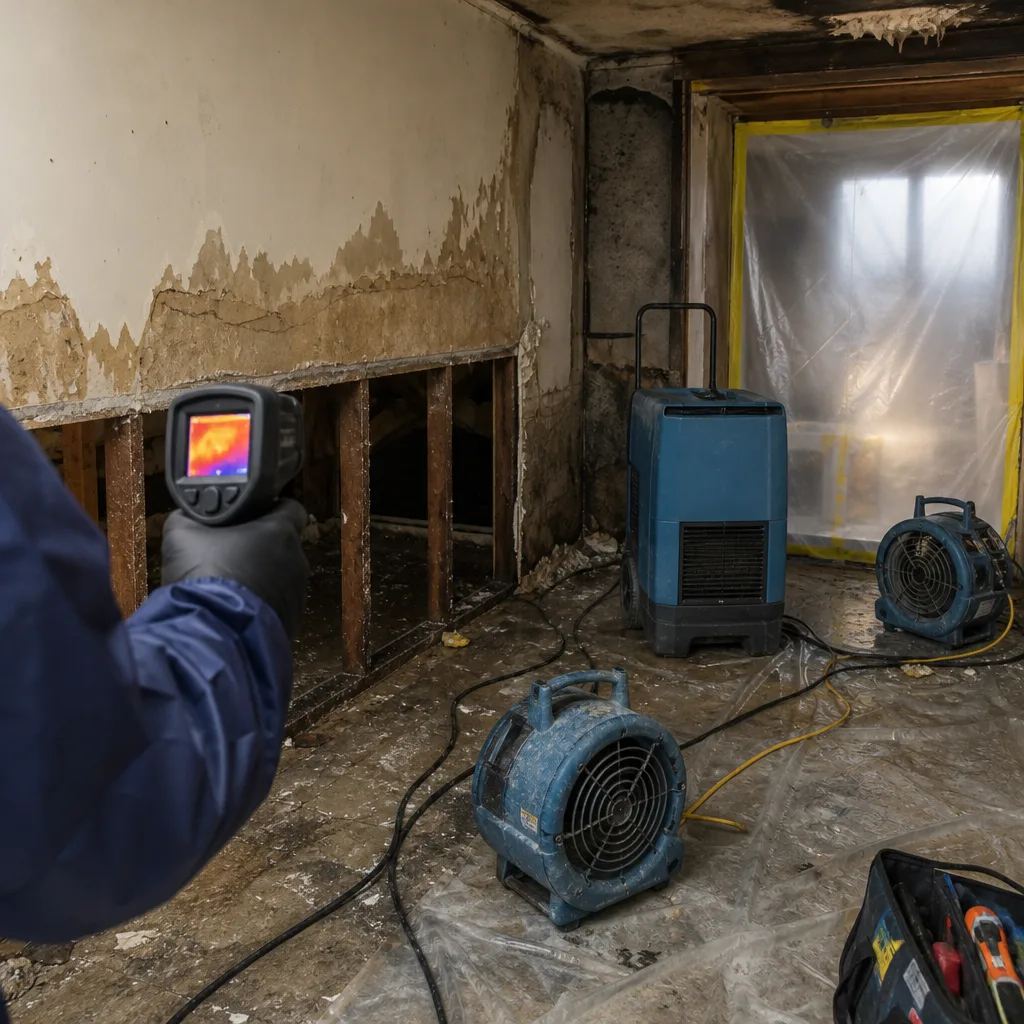
Our first step in any Corona mold removal is invasive and non-invasive moisture mapping. We use probing moisture meters and thermal imaging to identify exactly where the moisture boundary ends. In older slab-foundation homes, that often means finding vapor intrusion through slab cracks that no one would catch from a surface inspection.
Injectidry for Wall Cavity Drying
Where structure is salvageable, we deploy Injectidry systems to dry inside wall and floor cavities without opening them. This non-invasive approach reduces repair costs and disruption for Corona homeowners. If readings confirm the cavity can be dried, we don’t tear out good drywall just because it’s faster.
Trusted Brands We Service in Corona
Flood Guard Water Damage services all residential and commercial mold remediation jobs in Corona 92877, 92878, 92879, and 92880. Our equipment platforms include Dri-Eaz dehumidifiers and air movers, plus Phoenix axial fans for large open spaces. Because we’re a full-spectrum restoration company, not a mold-only subcontractor, we also stock containment materials and HEPA equipment on our trucks for same-week deployment into Corona. One team from extraction to clearance means no hand-off gaps where secondary mold growth takes hold.
Common Mold Remediation Problems We See in Corona Homes
- Ash-driven attic mold without a leak. Santa Ana winds push fine particulate through attic vents into insulation. When winter storms add moisture, mold colonizes in the attic decking even though no pipe ever leaked. This pattern is specific to Corona’s wind corridor and doesn’t show up in valley cities to the south.
- Hidden wall-cavity growth behind stucco. Dry air and temperature swings accelerate moisture migration. The surface of a stucco wall feels bone dry while the cavity behind it reads 30% moisture, so mold grows for weeks before visible staining appears. Skipping invasive moisture readings lets this problem compound.
- Slab vapor intrusion in older tract homes. Homes built in the 1970s across 92879 and 92882 sit on slab foundations with older vapor barriers. After heavy winter rain on burn-scarred foothills, groundwater pressure rises and moisture moves through slab cracks, creating mold conditions under flooring that no one sees until odor appears.
- Cross-contamination from wrong water category assumptions. Mudflows from canyon-adjacent neighborhoods off the 91 carry Category 3 water, meaning sewage and soil bacteria. Reusing the same containment for a Category 1 job cross-contaminates clean areas and spreads mold spores. Each job needs its own containment plan.
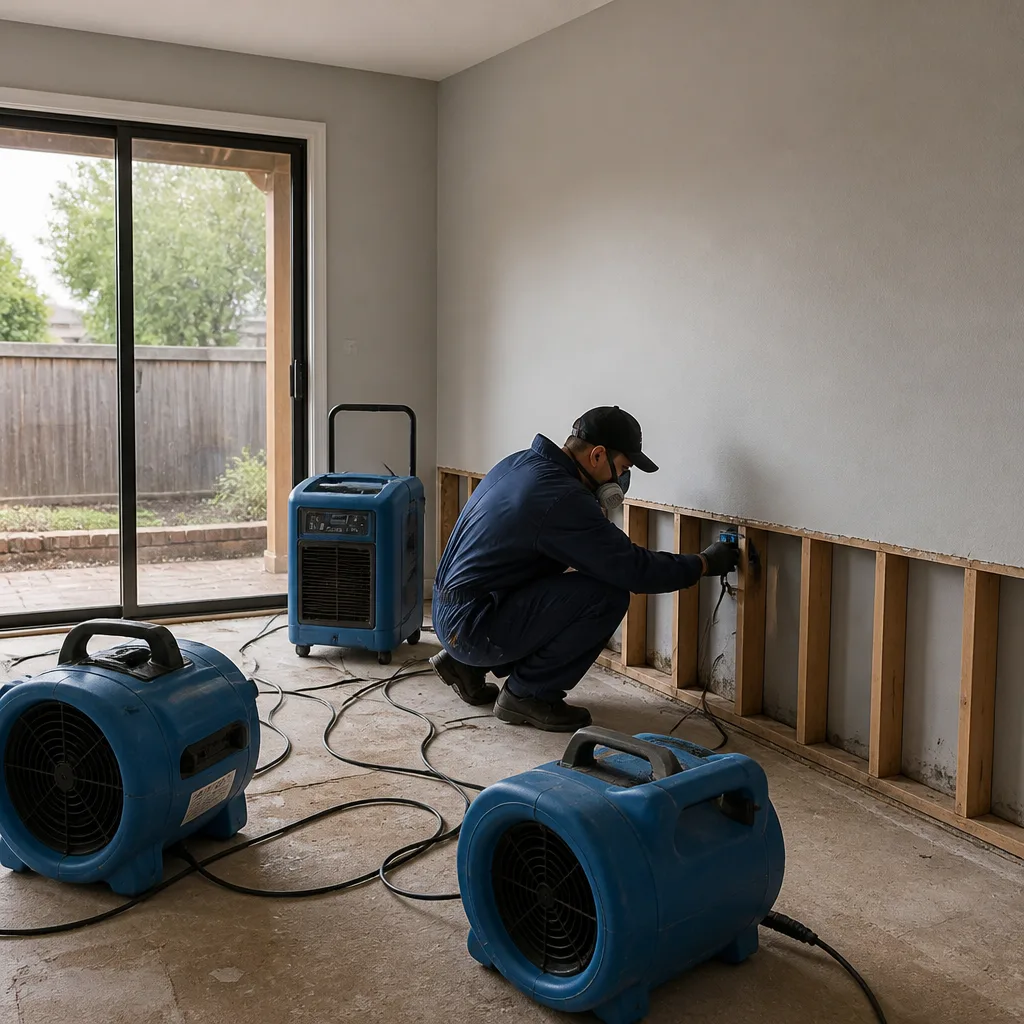
See the difference
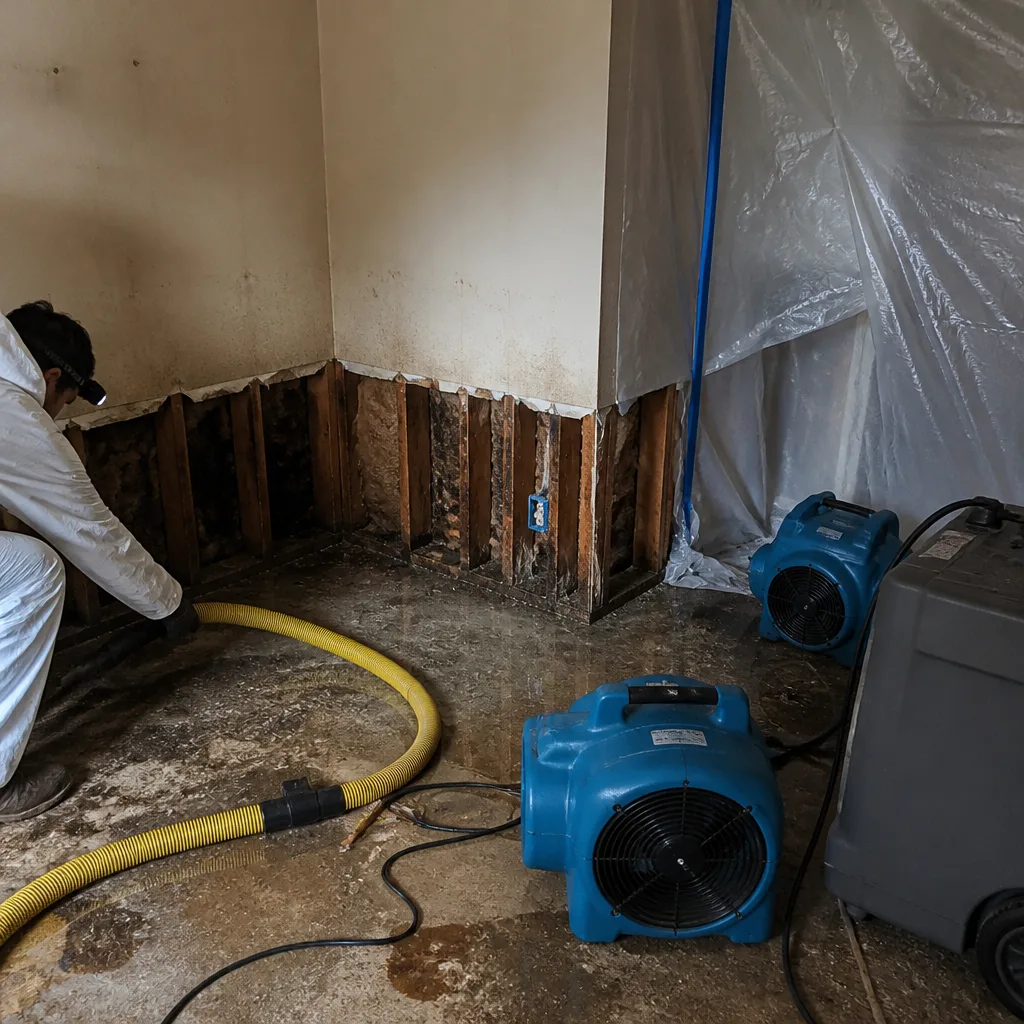 Before
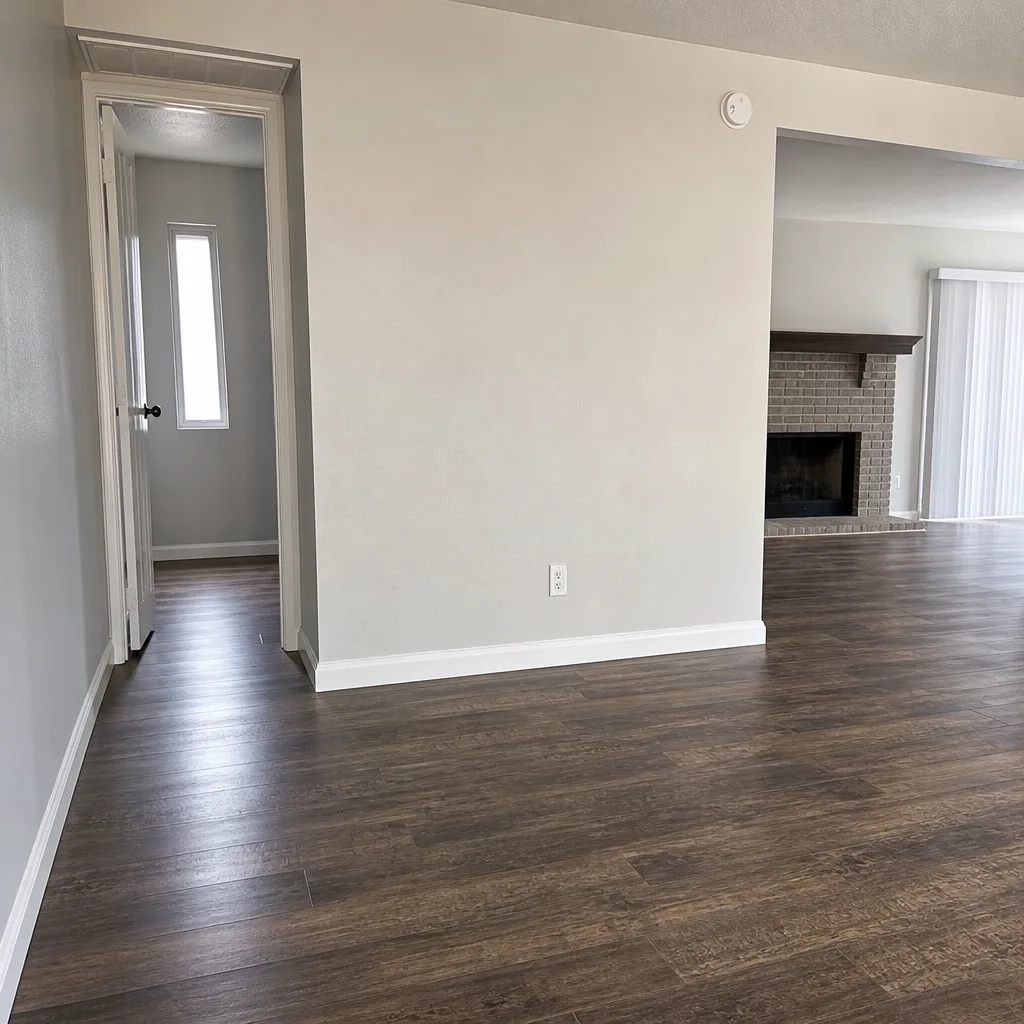 After
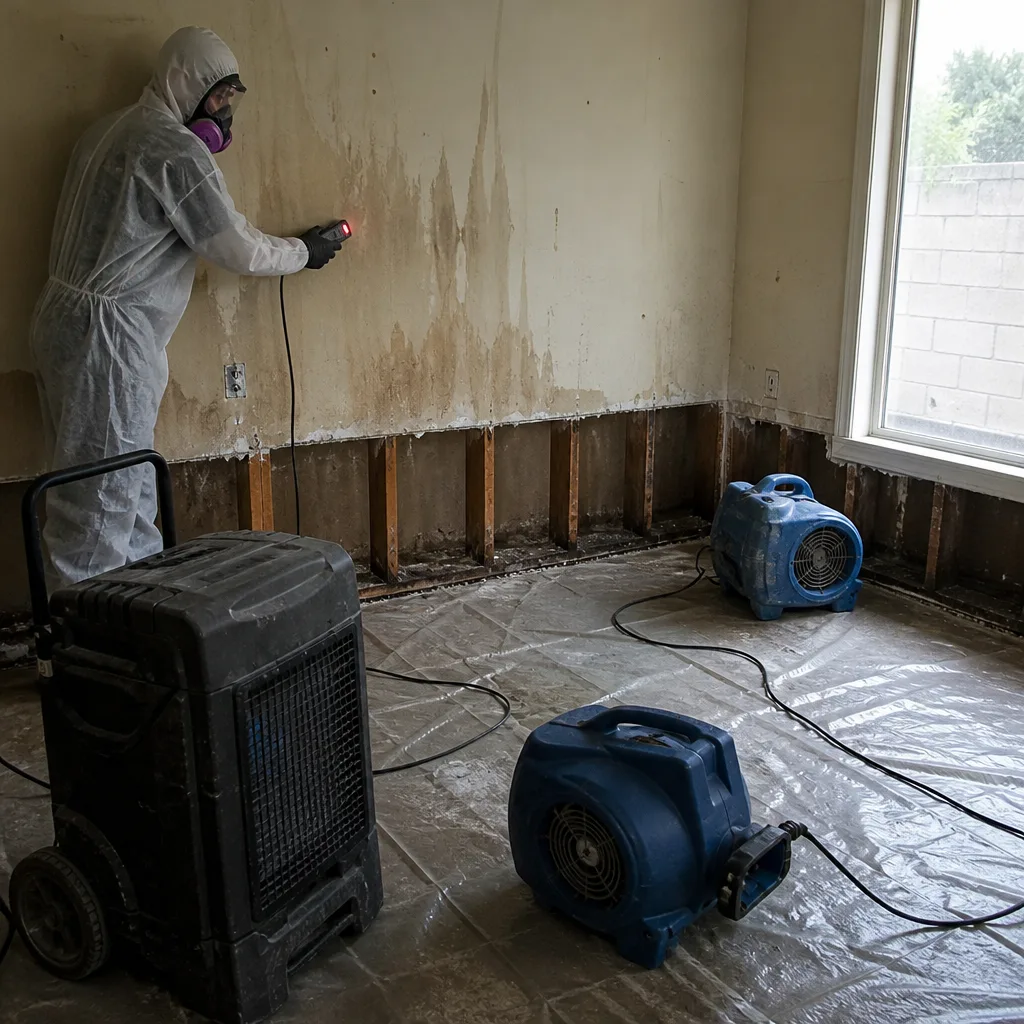 Before
 After
 Before
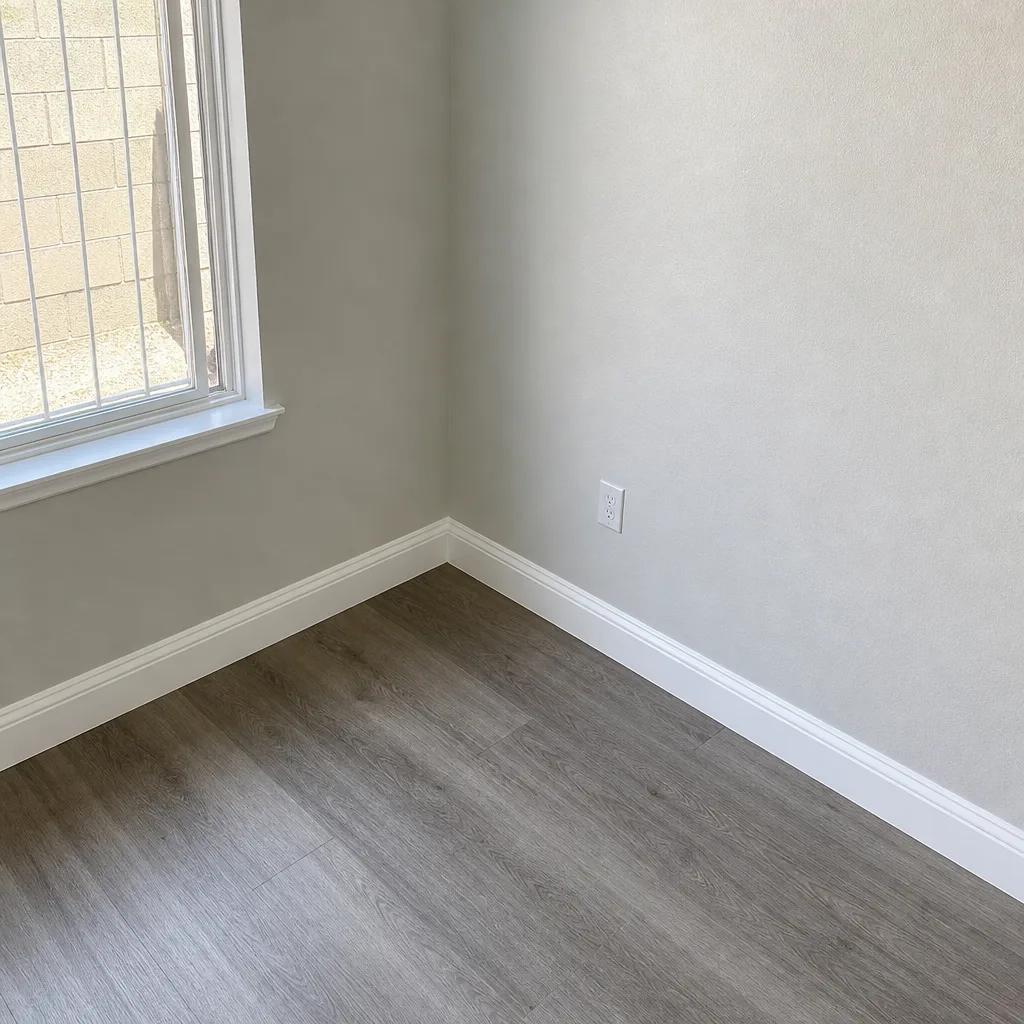 After
Pricing for Mold Remediation in Corona, CA
Corona mold remediation costs track with the job’s containment complexity and square footage. A basic 20 – 40 square foot removal in a single room runs $1,800 – $3,200, including containment, HEPA scrubbing, and clearance testing. A whole-attic job after ash intrusion runs $3,500 – $6,400, and a crawl space treatment in an older 92879 home runs $2,400 – $4,800 depending on access and vapor barrier replacement. Larger jobs involving Injectidry drying inside wall cavities or multiple containment zones in two-story houses run toward the upper range. We write a scope of work before starting so you see the line items. Call (844) 716-1094 for a free estimate and a site walk in Corona.
We Also Serve Cities Near Corona
Flood Guard Water Damage runs crews into all of Corona plus Home Gardens, El Cerrito Corona, Eastvale, and Norco. If you’re on the border or just over the city line, the same team covers your job. Our Mold Remediation services extend across the Inland Empire with IICRC-certified protocols on every project.
Serving Corona, CA — Our Local Coverage Area
We’re based in the Corona area and know this community well. Use the map below to see our service coverage — if you’re nearby, we can almost certainly help.
FAQs About Mold Remediation in Corona
Corona’s Santa Ana wind pattern forces ash and fine particulate through attic vents and into HVAC intakes, where it settles in wall cavities and insulation. Winter atmospheric river storms then supply the moisture, and mold colonizes even though visible plumbing never failed. That’s why our mold inspections here begin with attic and cavity inspection, not just looking for wet spots under sinks.
If you’ve noticed recurring odor with no visible leak, call (844) 716-1094. We’ll trace the moisture and the source of the organic material feeding the mold.
Mold remediation should start within 24 – 48 hours of water removal in canyon-adjacent Corona neighborhoods, because the mudflow water is Category 3, carrying soil bacteria and organic matter that accelerates mold growth. If we can get crews out within that window, we often limit the job to targeted drying and material removal rather than a full gut.
Category 2 water contains significant contamination, such as roof runoff that picked up ash and debris on its way in. Category 3 water is grossly contaminated with sewage, soil, or floodwater. Older Corona tract homes in 92879 and 92882 that take on mudflow water from foothill runoff are always Category 3. The difference matters because Category 3 requires more extensive removal, disinfection, and containment than Category 2, and it changes the scope of mold remediation work.
Yes, we provide full documentation for every Corona job, including daily drying logs, moisture content readings from structural materials, and post-remediation clearance air samples from an independent lab. This documentation matters for property managers, for any insurance claim, and for protecting resale value when you disclose past mold issues.
Yes, in many 2000s-era Corona two-story homes, we can limit work to the affected floor or zone using a combination of containment, negative air pressure, and Injectidry cavity drying. A full pack-out is only needed when the contamination spans multiple rooms and air samples show elevated spore counts outside the primary containment area. We’ll tell you if you genuinely need it, and we’ll show you the readings that justify the recommendation.
Call Flood Guard Water Damage for Mold Remediation in Corona
If you’re seeing mold, smelling it, or living with post-storm moisture you can’t explain, call (844) 716-1094. We’ll schedule a Corona site walk, run the moisture and air readings that tell us what’s actually happening, and write a scope of work before any demolition starts. We dry the structure, not just the surface. One team from extraction to clearance, no hand-offs, no gaps.
Written by Noel Ibarra, Owner at Flood Guard Water Damage, serving Corona and the Inland Empire with IICRC-certified restoration.