 Water damage drying
 Fire & smoke cleanup
 Mold remediation
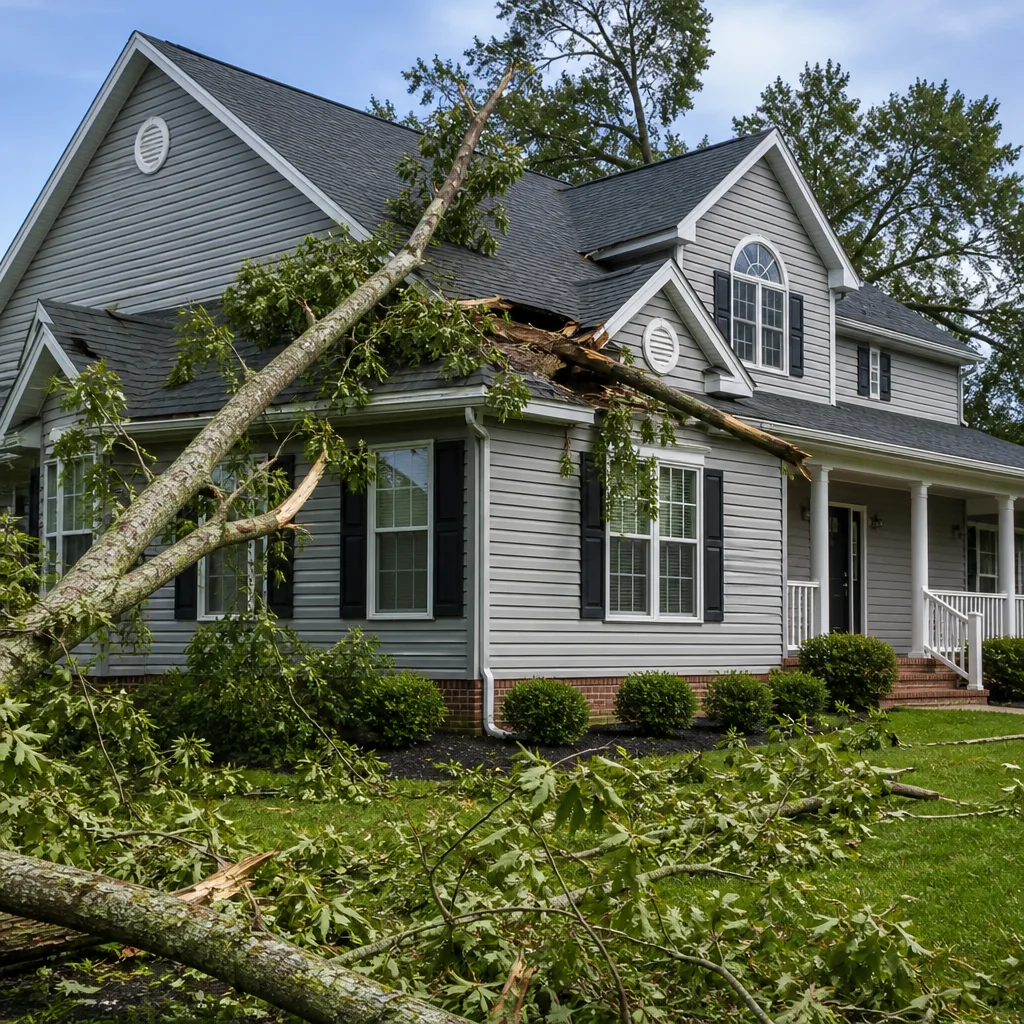 Storm response
 Sewage cleanup
 Reconstruction
Free visual inspection and a written scope of work before any mitigation begins - photos, moisture readings, and drying logs go in your claim file
The scope we write is the scope we bill. Anything new gets shown to you, in writing, before we touch it.
Get your free estimateFast, Reliable Water Damage Restoration Across Corona
Water damage restoration in Corona rarely looks like a simple pipe leak. Between the Santa Ana wind corridor pushing ash and smoke through attic vents in the hill neighborhoods off the 91, and winter atmospheric rivers sending muddy debris flows down the burn-scarred Cleveland National Forest foothills, homes here take hits that valley cities never see. A typical emergency water removal call in Corona runs $450 – $1,200 for the initial extraction and setup, while full structural drying after flood damage often lands between $2,800 and $7,500 depending on square footage and category of water. Call (844) 716-1094 and we’ll have a crew heading toward your neighborhood within the hour.
Why Flood Guard Water Damage Is Corona’s Preferred Water Damage Restoration Company
Corona homeowners call us because the damage they’re looking at doesn’t match the “water in the living room” photos on a generic restoration website. Our teams have worked homes along Hidden Valley Parkway, up through the Sierra Del Oro ridgelines, and down into the older tract pockets off Main Street in 92879. That matters when a winter storm pushes category 3 water and mud into a canyon-adjacent home and the crew needs to know where the runoff channels actually run.
Noel Ibarra built Flood Guard Water Damage around a simple standard: measure, don’t guess. Every job follows IICRC-certified drying protocols with moisture mapping before and during the dry-down. We run Dri-Eaz dehumidifiers, XPOWER air movers, and Injectidry systems for in-wall drying. We’re active in the Restoration Industry Association and IFA, which means our documentation and accountability standards are externally audited, not self-declared. Corona customers don’t need a franchise sales pitch. They need a crew that arrives with commercial-grade gear and a written scope before equipment gets placed.
Restoration work we handle
Emergency Water Removal in Corona
Emergency Water Removal in Corona starts with the reality that water here often isn’t clean. When a winter atmospheric river sends runoff down from the Cleveland National Forest burn scars, the water entering canyon-adjacent homes in 92880 and 92882 carries silt, ash, and debris. That’s category 3 water, and treating it like a clean supply line failure is a mistake. Our first hour on site involves extraction, containment, and a determination of what the water touched so we can set the right drying and antimicrobial protocol from the start.
Category 3 Water Containment
Muddy runoff and sewage-adjacent flood water demand containment before structural drying begins. We set physical barriers and negative air pressure where needed, then document the pre-loss condition before moving contents to dry storage. Corona homes off the 91 in hill developments regularly see this scenario during winter storm cycles, and the difference between a one-room dry-out and a whole-home gut job often comes down to whether the first crew recognized the water category.
Extraction and Initial Moisture Mapping
After extraction, we map moisture across every affected surface: slab, stucco, drywall, baseboards. Corona’s hot, dry air can make materials feel dry on the surface while the wood frame behind stucco still holds 20% moisture. That hidden moisture is what leads to warped framing and mold six months later. We don’t stop at “feels dry.” We measure until numbers tell us the structure is actually dry.
Flood Damage Restoration in Corona
Flood Damage Restoration in Corona means dealing with what the canyons send down, not just what falls from the sky. Winter atmospheric river events produce rapid mud and debris flows into neighborhoods where the foothills meet the streets, and that water moves fast and dirty. A typical flood damage restoration scope in Corona runs $3,200 – $8,500 for a single-story affected area, with two-story homes in 92883 hill developments sometimes pushing higher because water travels down through multiple levels before anyone notices.
Mudflow and Debris Intrusion Response
When mud comes through a door or window well, the job is extraction plus decontamination. We remove the mud, contain the affected zones, apply antimicrobial treatment where organic material wicked into porous surfaces, and run drying logs that document moisture reduction day over day. The homeowners in Sierra Del Oro and the hills near Eagle Glen know this pattern. One winter storm can fill a lower-level family room with six inches of silty water in under an hour.
Structural Drying After Flood Events
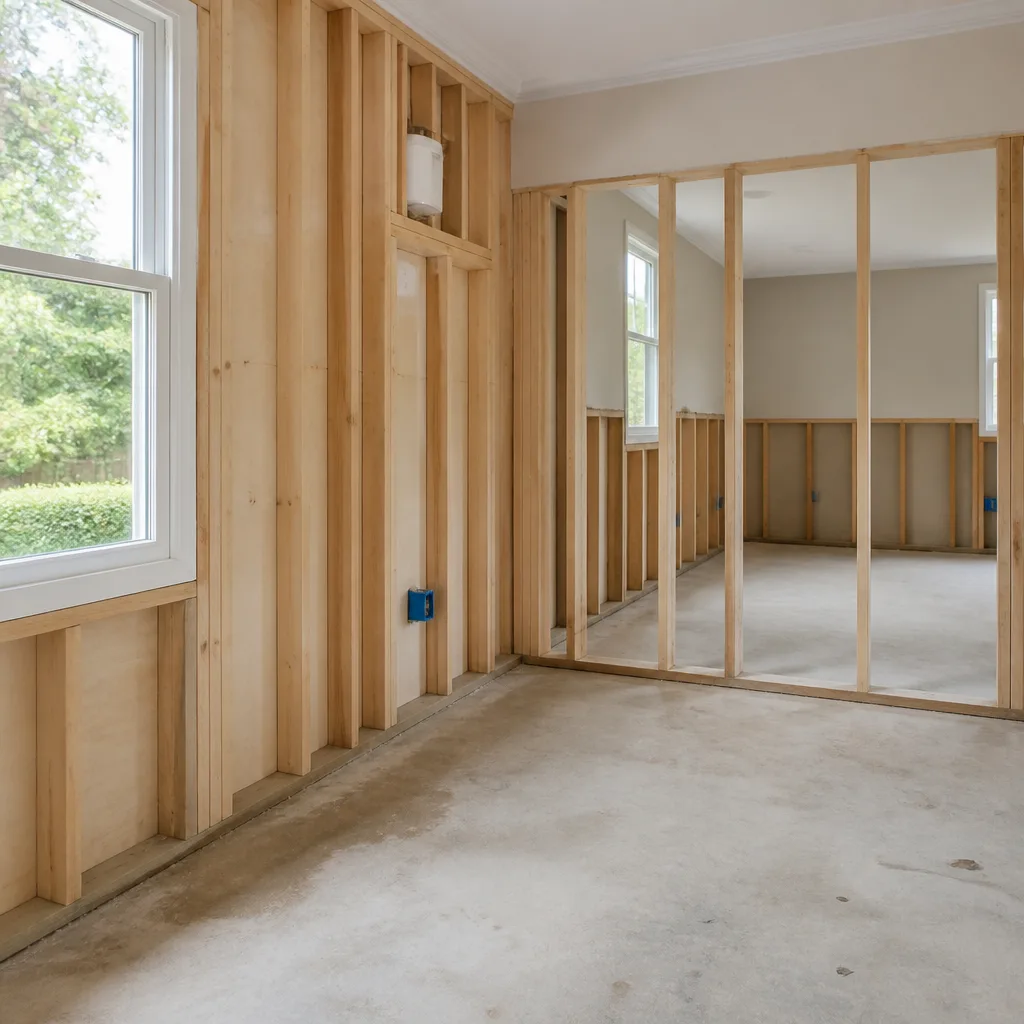
Flood water saturates materials that aren’t visible: the interior of walls, the space under cabinetry, the channels inside slab foundations. We deploy Injectidry systems to dry inside wall cavities without opening them when the framing is sound. That saves Corona homeowners thousands in unnecessary drywall replacement. When walls do need to open, we open them with a documented reason, not as a default.
Trusted Brands We Service in Corona
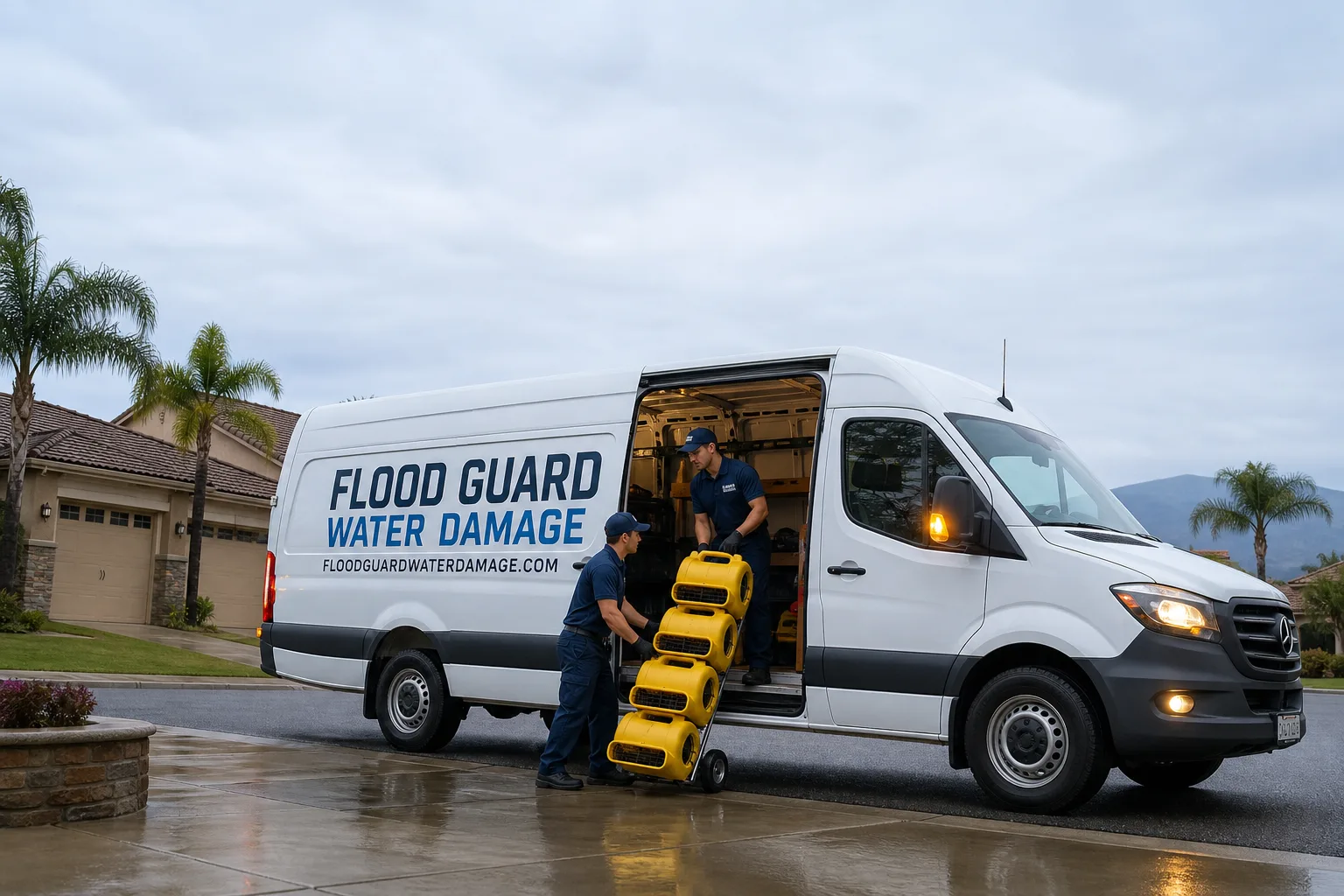
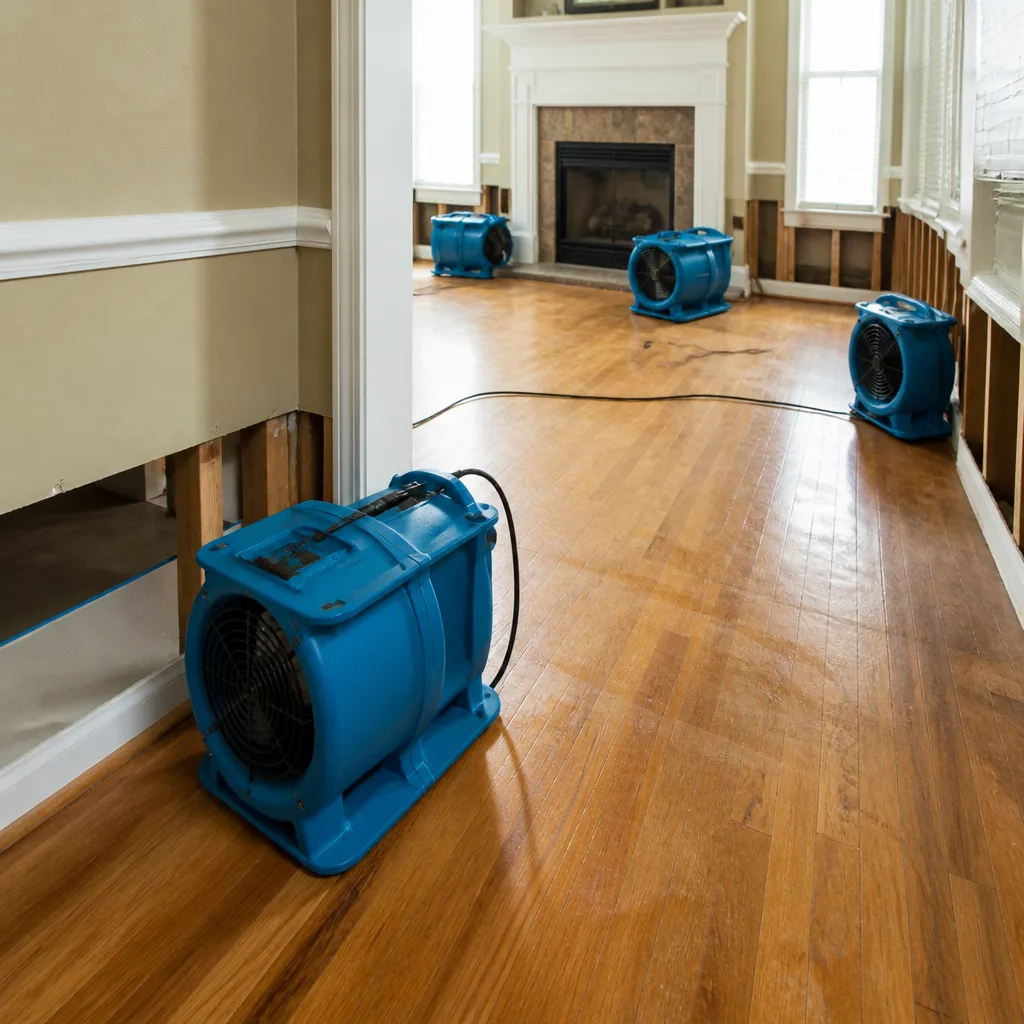
The equipment we run in Corona homes is the same gear large commercial restoration teams use on hospital and school losses. Dri-Eaz dehumidifiers pull moisture at volumes consumer units can’t approach. Phoenix axial air movers create the airflow needed to drive evaporation across large wall and floor surfaces. Injectidry systems dry inside cavities without demolition. For Corona homeowners, that means a faster dry-down and less time displaced from the home. We keep a full inventory staged for rapid deployment to 92877 through 92880, so there’s no waiting on a regional warehouse when your slab is wet.
See the difference
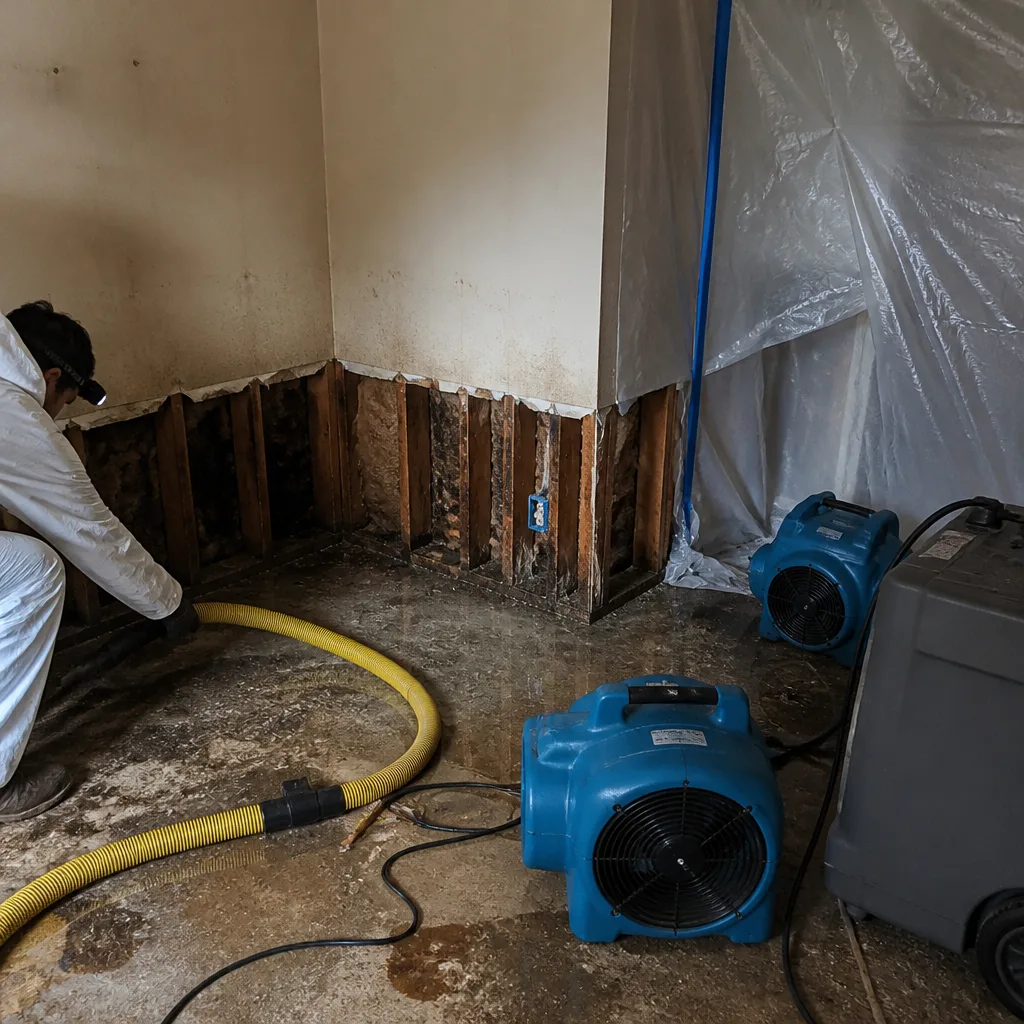 Before
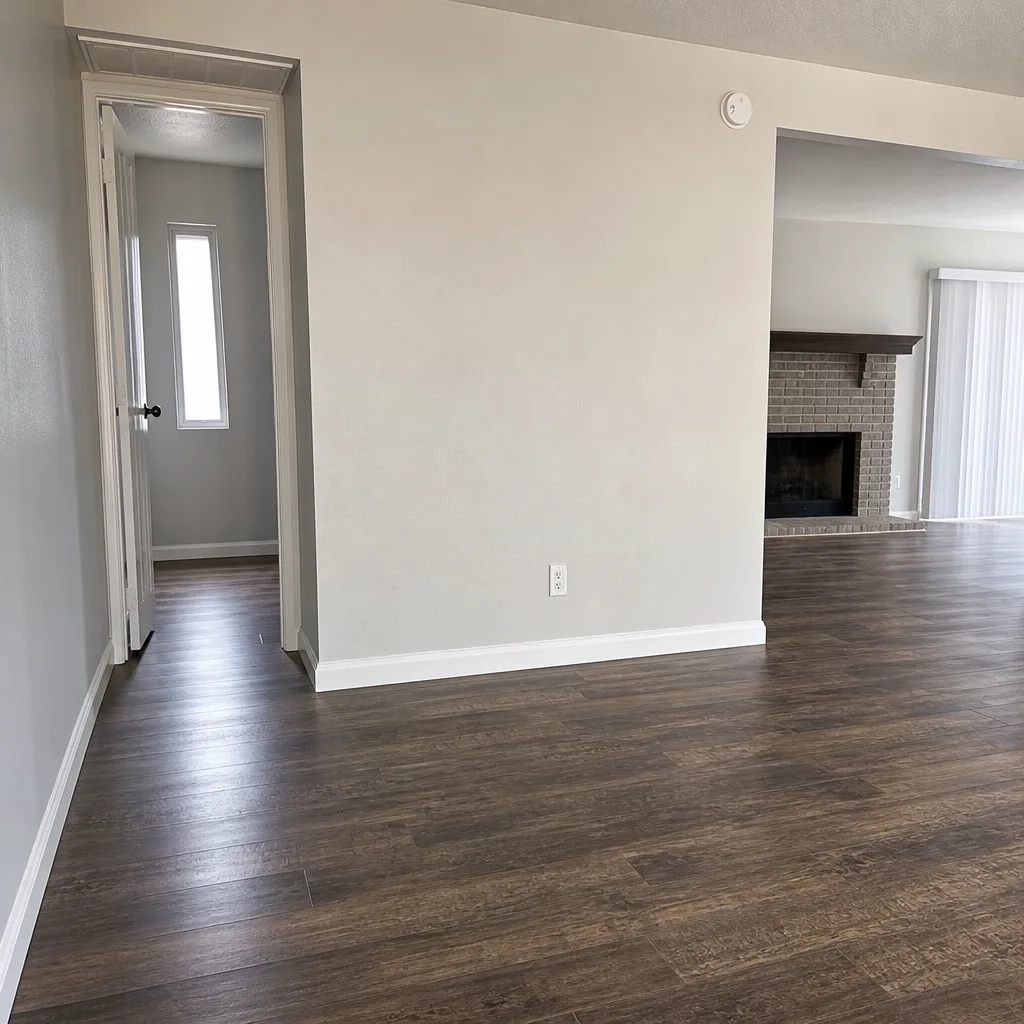 After
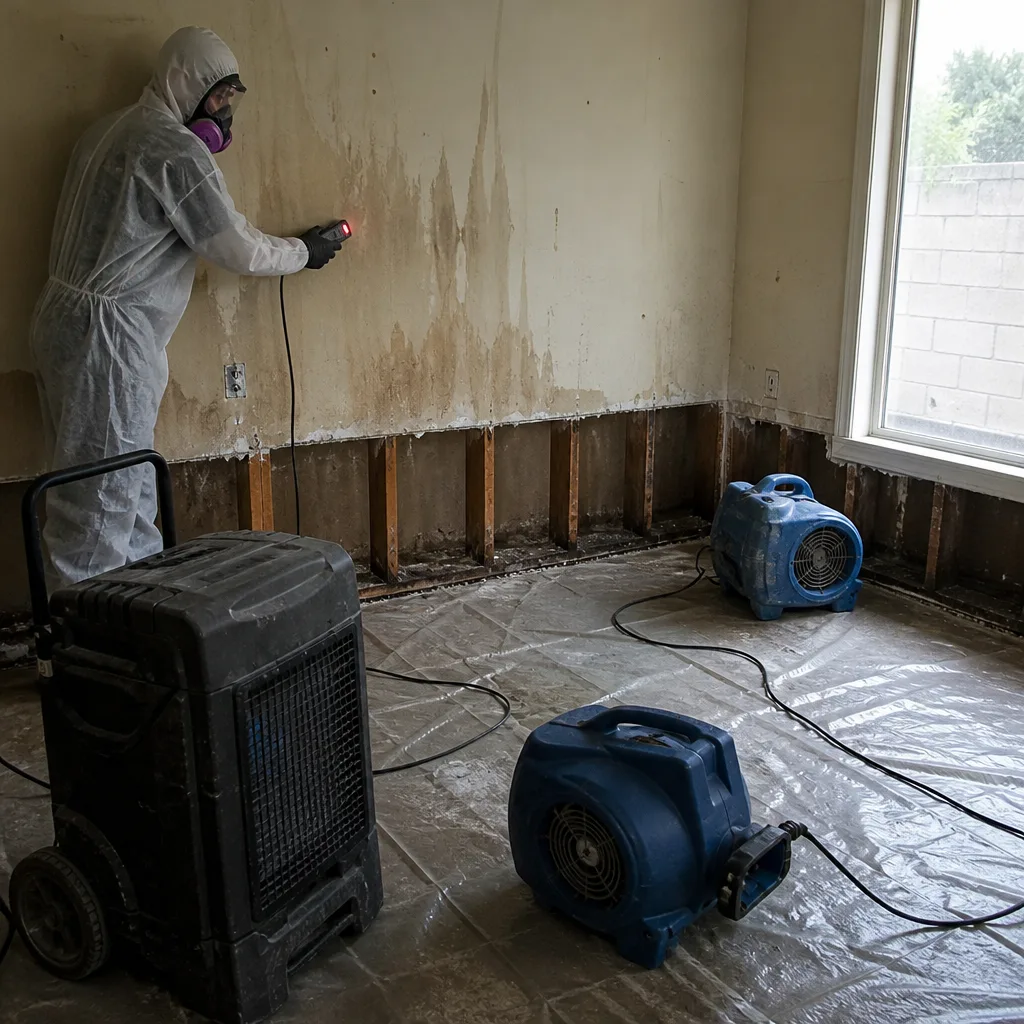 Before
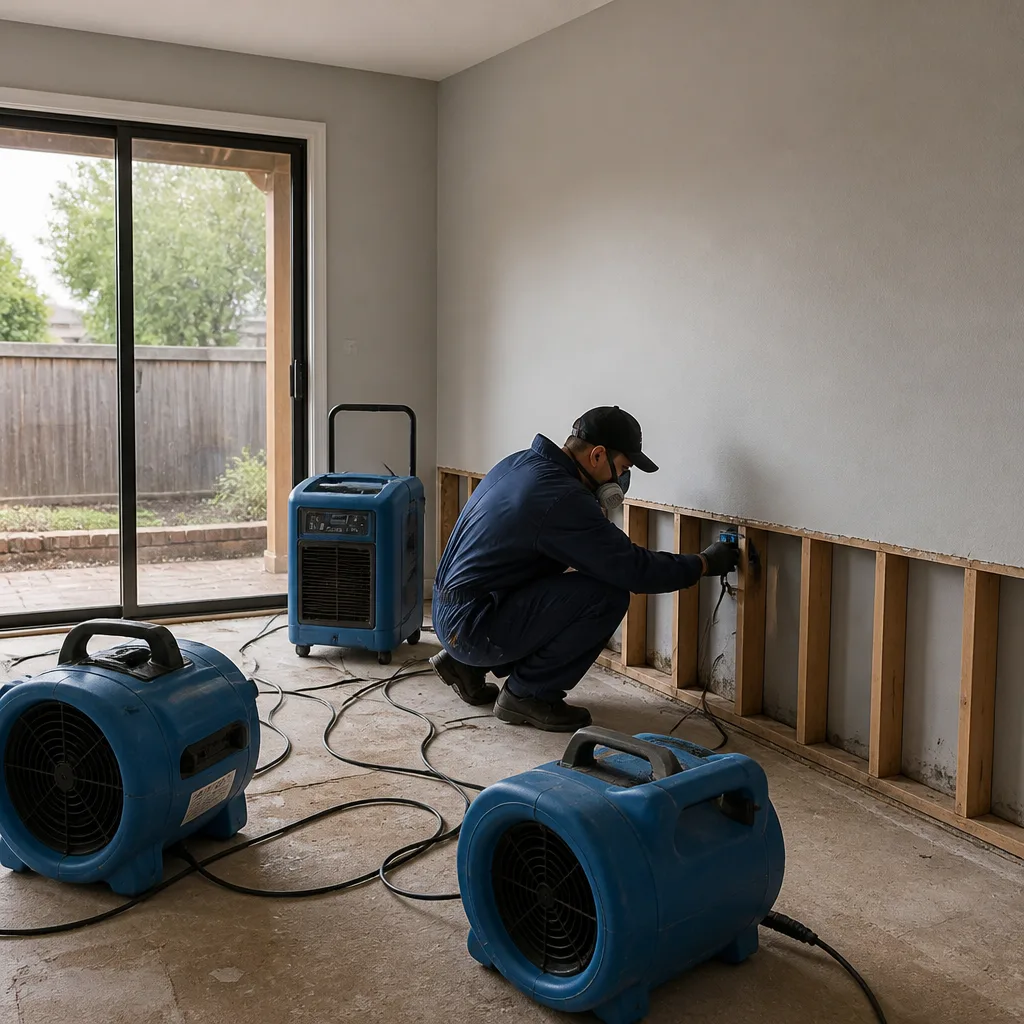 After
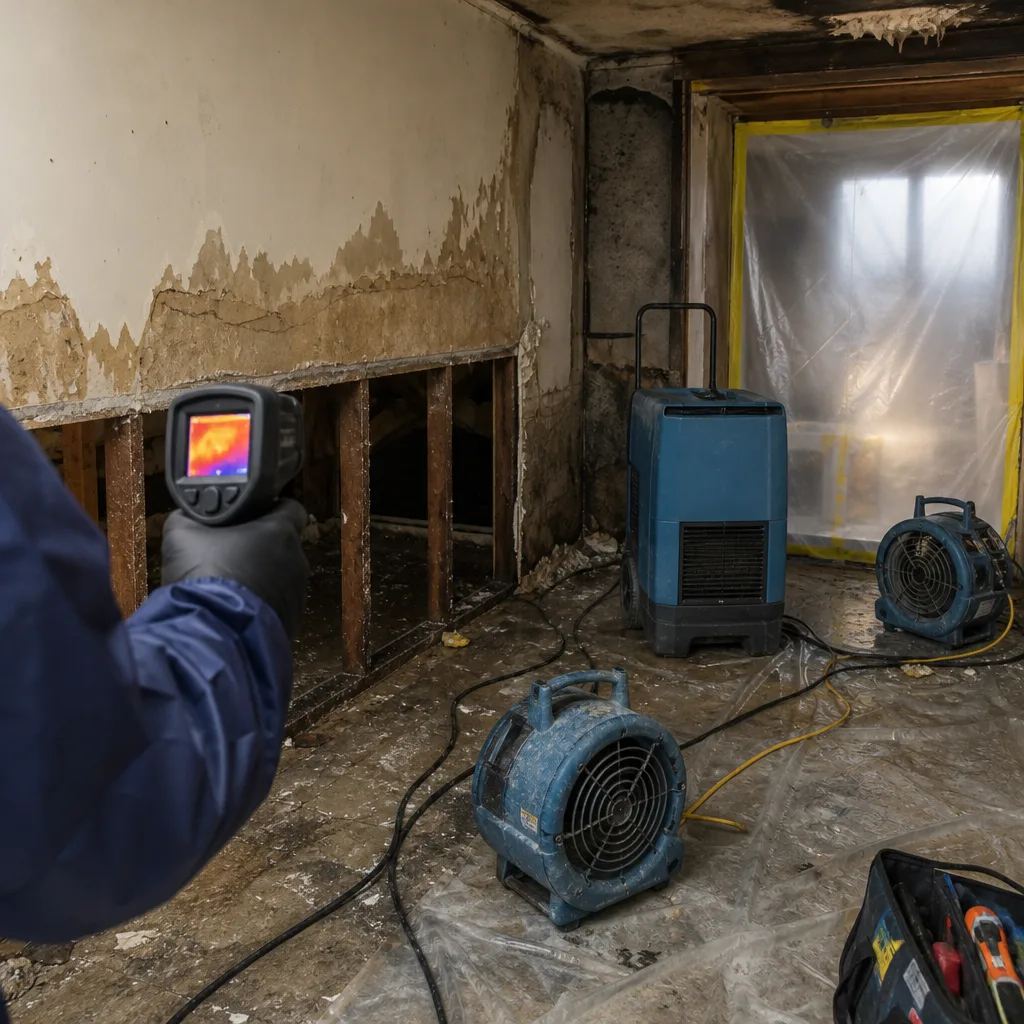 Before
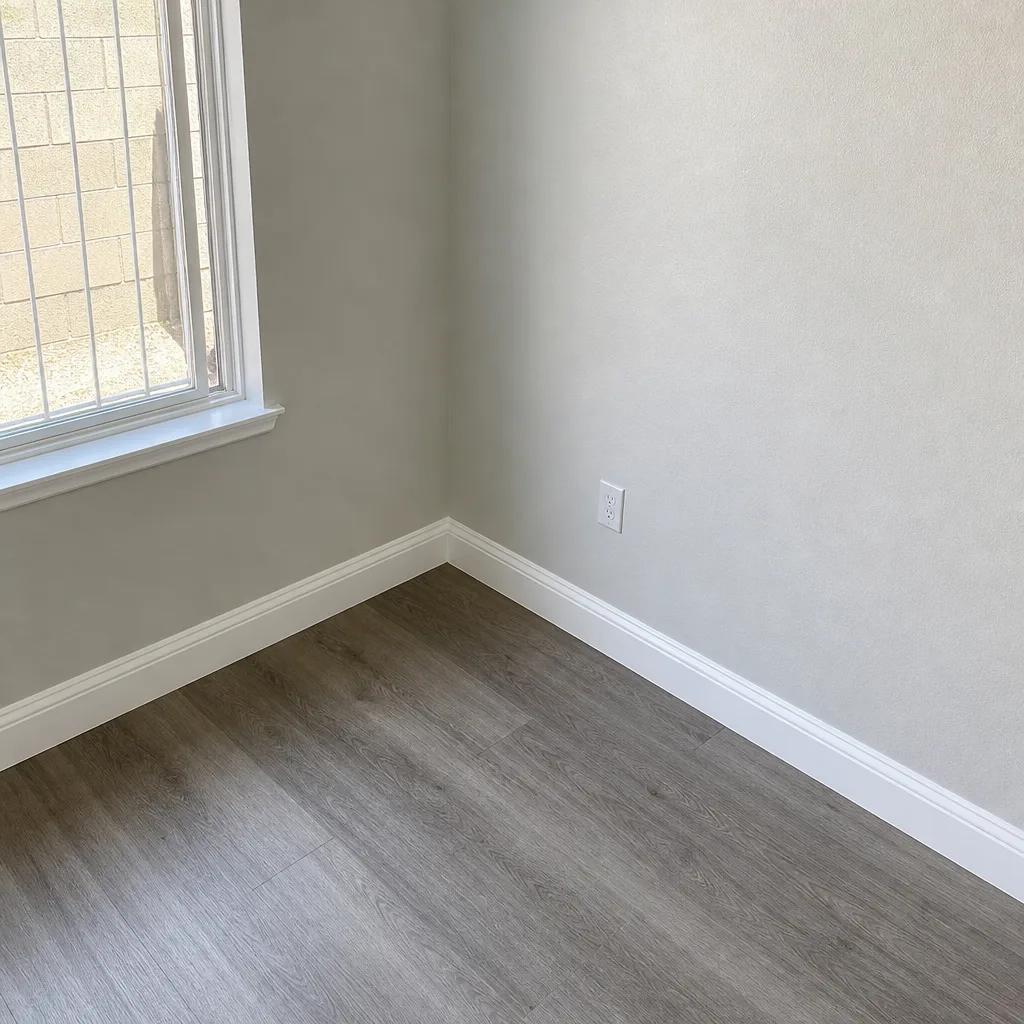 After
Common Water Damage Restoration Problems We See in Corona Homes
- Hidden ash and smoke residue from Santa Ana events. Fine ash gets forced through attic vents and HVAC intakes in hill neighborhoods off the 91 even when the fire front stays inside the Cleveland National Forest. That residue traps moisture and holds odor, and if structural drying doesn’t include the attic, the smell comes back weeks later.
- Slow leaks behind stucco on older tract homes. The 1970s – 90s stucco-on-wood-frame homes throughout 92879 and 92882 hide supply line drips for months. Corona’s temperature swings accelerate material cracking, and by the time water shows on the ceiling, the wall cavity has been wet for weeks.
- Category 3 mudflow intrusion mistaken for clean rain water. Winter storms push muddy debris off the burn-scarred foothills into canyon-adjacent homes. Crews that skip containment and antimicrobial treatment leave homeowners with a dried-out room and a contamination problem in the drywall.
- Slab foundation moisture in older homes. Corona’s dry air makes slab foundations feel dry to the touch while moisture wicks through the concrete from below. Without penetration moisture readings, homeowners end up with flooring failures and mold at the slab-wall junction months after a “completed” dry-out.
Pricing for Water Damage Restoration in Corona, CA
Emergency water removal in Corona runs $450 – $1,200 for initial extraction and equipment setup on a single affected room. Structural drying after flood damage typically lands between $2,800 and $7,500 for a single-story area, while multi-level homes in the hill developments off the 91 can reach $9,000 – $14,000 when water traveled through multiple floors. Factors that move the number: water category, square footage of affected materials, whether Injectidry in-wall drying can save versus replacement, and whether contents require pack-out and storage. We provide a written scope with line-item pricing before any equipment gets placed. Call (844) 716-1094 for a free estimate from a Corona dispatch, and we’ll give you real numbers, not a vague “it depends.”
We Also Serve Cities Near Corona
Along with our Water Damage Restoration work across Corona, we respond to water and flood damage calls in Home Gardens, El Cerrito Corona, Eastvale, and Norco. If you’re in one of those communities and dealing with a ruptured supply line, a failed water heater, or storm-driven mud intrusion, call (844) 716-1094 and we’ll route the nearest available crew. For a full overview of our coverage area and local response times, see our Water Damage Restoration in Corona city page.
Serving Corona, CA — Our Local Coverage Area
We’re based in the Corona area and know this community well. Use the map below to see our service coverage — if you’re nearby, we can almost certainly help.
FAQs About Water Damage Restoration in Corona
Category 3 water protocols are required because winter atmospheric river runoff carries mud, ash, and organic debris from the burn-scarred Cleveland National Forest foothills directly into homes along Corona’s canyon-to-suburb gradient. This water contains contaminants that can’t be treated like a clean supply line leak. Containment, antimicrobial treatment, and documented drying logs are the minimum standard. Call (844) 716-1094 if you suspect your flood water came from runoff, not rain.
Check within 24 hours of the wind event if you live in a hill neighborhood off the 91 in 92880 or 92883. Fine ash and smoke residue get forced through attic vents and HVAC intakes during Santa Ana conditions even when fires stay inside the national forest. The residue traps moisture and odor, and the longer it sits, the harder it is to remove without attic cleaning and HVAC duct work. We can inspect the attic and HVAC returns while we’re on site for any water damage call in Corona.
For a slab-foundation stucco home in 92882, a typical scope starts with extraction, then penetration moisture readings across the slab and lower wall cavities, followed by Dri-Eaz dehumidification and XPOWER air movement. We document the pre-loss condition in writing, run daily drying logs, and apply antimicrobial treatment where water wicked into baseboards or drywall. If slab moisture is present, we include Injectidry floor drying or targeted removal depending on what the moisture mapping shows. Call (844) 716-1094 and we’ll walk you through the scope for your specific home.
Yes, we handle the full chain from emergency extraction through structural drying and final clearance. After the initial water removal and containment, we continue with the same crew through the drying and restoration phases, so there’s no handoff to a subcontractor who never saw the original damage. That continuity matters in Corona’s mudflow scenarios, where the contamination level and hidden moisture patterns are specific to how the water entered the home. Call (844) 716-1094 for a single accountable team from first response to final inspection.
Moisture mapping matters because Corona’s dry air and wide temperature swings make stucco and slab surfaces feel dry while the wood frame and insulation behind them still hold elevated moisture. The 1970s – 90s tract homes concentrated in 92879 and 92882 are especially prone to hidden leaks behind stucco exteriors. Without penetration readings and a documented drying plan, the structure never fully dries, and mold or framing damage shows up later. Call (844) 716-1094 for a moisture assessment with real numbers, not a surface-level guess.