
 Water damage drying
 Fire & smoke cleanup
 Mold remediation
 Storm response
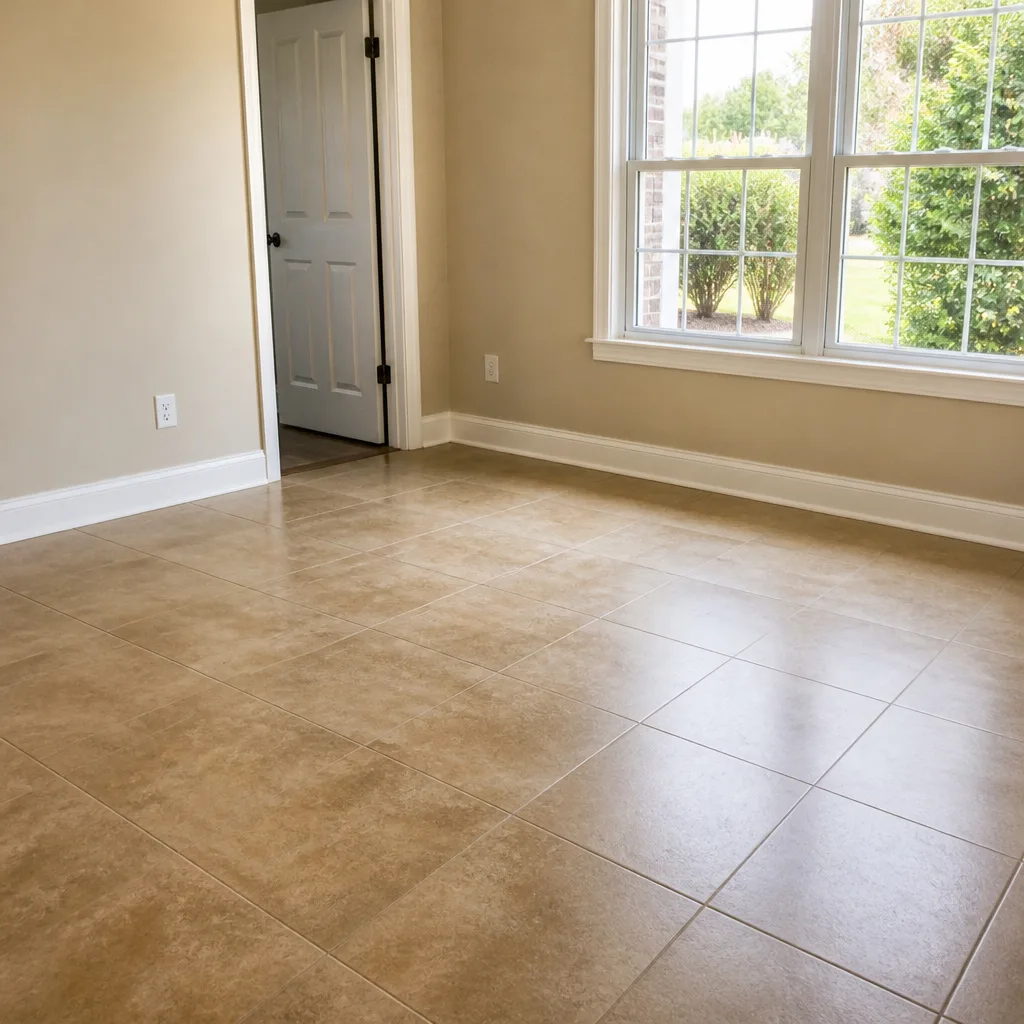 Sewage cleanup
 Reconstruction
Free visual inspection and a written scope of work before any mitigation begins - photos, moisture readings, and drying logs go in your claim file
The scope we write is the scope we bill. Anything new gets shown to you, in writing, before we touch it.
Get your free estimateWater Damage Restoration in Running Springs, CA: What It Costs and How Fast We Can Respond
Water damage restoration in Running Springs typically costs between $2,200 and $7,800 depending on whether you’re dealing with a burst pipe in a crawlspace, ice-dam roof leak, or snowmelt flooding in a lower level. Most mitigation jobs in the 92382 zip code can be started same-day, with structural drying taking 3 to 6 days for mountain cabins with pier-and-beam foundations. Call (844) 716-1094 for a free assessment, and we’ll give you a written scope before any equipment gets unloaded.
Fast, Reliable Water Damage Restoration Across Running Springs
Running Springs sits at roughly 6,000 feet in the San Bernardino Mountains, and the water damage we see here follows a pattern you won’t find in the flatlands below. Freeze-thaw cycles split copper fittings in unheated crawlspaces, snow loads weigh on aging roof sheathing until ice dams form, and spring melt sends runoff into lower levels that were never waterproofed. When you call Flood Guard Water Damage, you’re talking to a team that knows Running Springs cabin construction: pier-and-beam foundations, wood siding, decks that hold snow against the house for weeks. We carry the drying equipment to handle these specific failure modes without tearing out flooring unnecessarily. Our phone line is answered by a person, not an automated tree: (844) 716-1094.
Noel Ibarra leads our restoration crews, and the instruction he gives every team is the same: measure the moisture, map the spread, and dry the structure to a documented standard. That’s IICRC-certified methodology applied to mountain housing stock, not a guy with a shop vac guessing at dry.
Restoration work we handle
Why Flood Guard Water Damage Is Running Springs’s Preferred Water Damage Restoration Company
Homeowners in Running Springs call us after trying the handyman route and watching the problem come back. We work the IICRC-certified drying protocols, which means every job gets moisture mapping, daily drying logs, and a final reading that confirms the structure is actually dry, not just dry to the touch. There’s a difference, and in a mountain cabin with wood framing and no insulation, missing hidden moisture means mold in the wall cavity by the time spring arrives.
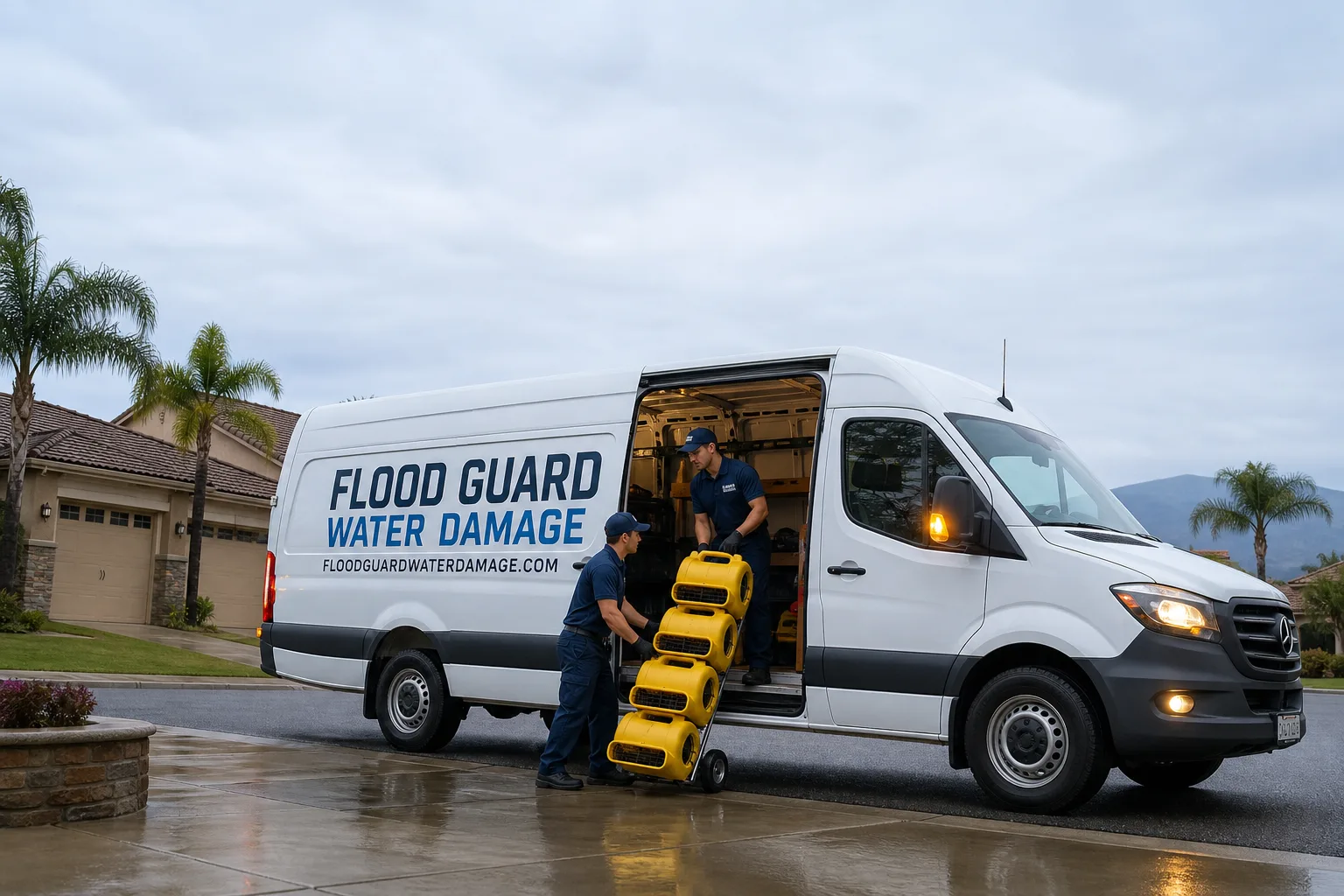
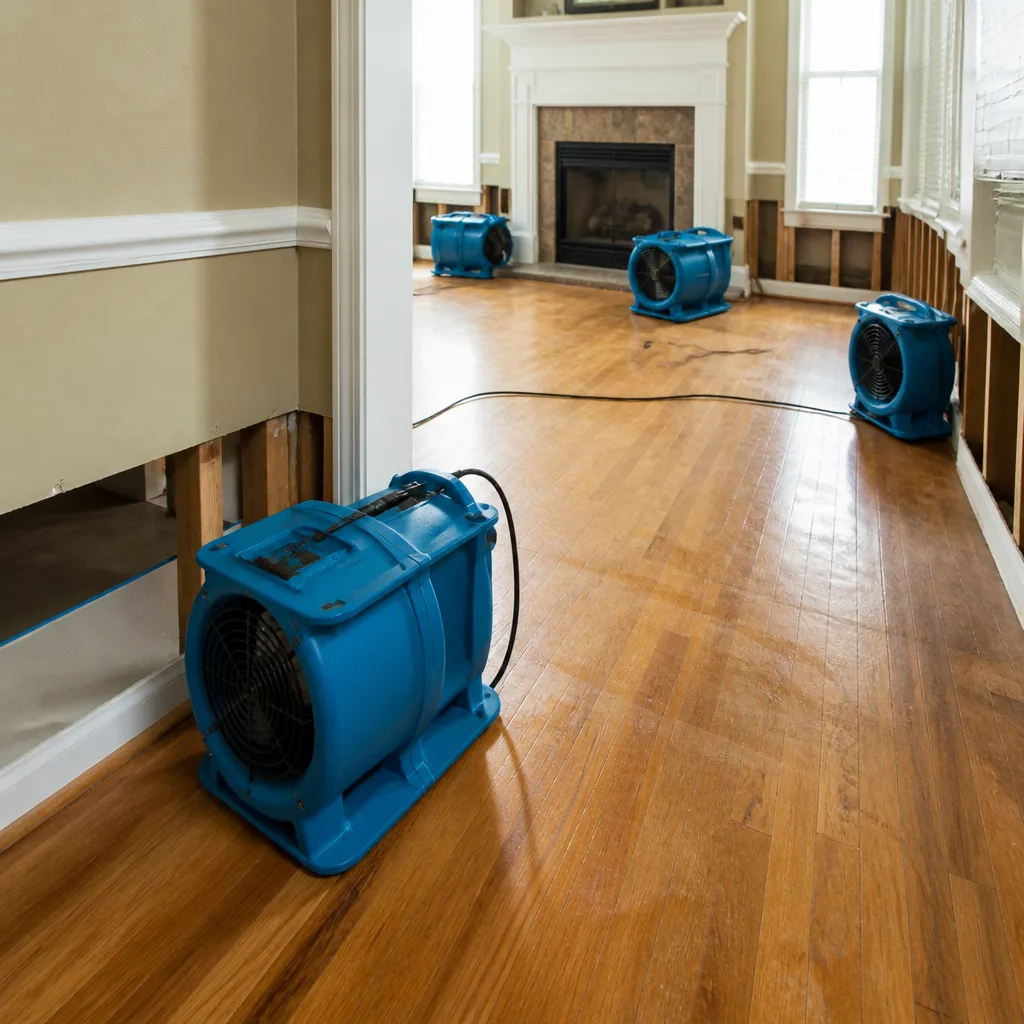
Our equipment list matters up here. We deploy Dri-Eaz air movers, Phoenix dehumidifiers, and Injectidry systems for drying inside walls and floors without automatic demolition. These are the same tools used on large-loss commercial jobs, and they’re what allows us to dry a pier-and-beam substructure from the crawlspace side while leaving the flooring in place. Running Springs homeowners regularly tell us that was the difference between a $3,000 dry-out and a $25,000 rebuild.
We’re members of the Restoration Industry Association (RIA) and affiliated with IFA, which means our standards get audited, not self-certified. That accountability is what you want when your cabin has been leaking into its own foundation for three weeks.
Water Mitigation in Running Springs
Water mitigation in Running Springs is the emergency first response to a water event: extraction, containment, and the start of structural drying before the water migrates deeper into wood, drywall, and insulation. In a mountain cabin with uninsulated walls and pier-and-beam construction, water travels fast and hides well. You need mitigation when a pipe bursts, a water heater fails, an ice dam melts into the ceiling, or snowmelt starts seeping into a lower level. For most Running Springs homes, water mitigation runs $2,200 to $5,500 depending on how many rooms are involved and whether the crawlspace is affected.
Freeze-Burst Pipe Response
The first hard freeze in Running Springs catches weekend cabins with their heat off or set too low. Copper pipe splits, water runs for days, and the owner finds it when they drive up from Highland or Mentone for a weekend. Our mitigation crew extracts standing water, maps moisture in the subfloor and framing, and sets drying equipment that runs on documented cycles, not timers. We coordinate with your plumber so the repair and the dry-out happen in the right order.
Ice-Dam Ceiling Leaks
When snow accumulates on a Running Springs roof and warm attic air melts the bottom layer, water backs up under the shingles and into wall cavities. The leak shows up as a ceiling stain days or weeks later, after the damage has already moved into the sheathing. Mitigation here means finding the true moisture boundary with meters and probes, not just cutting out the visible stain. That’s how you keep a $4,000 mitigation from becoming a $30,000 roof deck replacement.
Flooded Basement in Running Springs
A flooded basement in Running Springs is rarely a true basement. More often it’s a walk-out lower level, a converted garage, or a crawlspace that’s been collecting snowmelt runoff for weeks. The water category matters: snowmelt flowing over ground and entering through a foundation crack is category 2, and if it’s sat for more than 48 hours with organic material in it, it’s category 3. That changes the remediation protocol. For a typical lower-level flood in a Running Springs home, expect $3,200 to $7,800, including extraction, antimicrobial treatment, and structural drying.
Pier-and-Beam Crawlspace Flooding
Running Springs homes built on pier-and-beam foundations have a crawlspace that slopes, collects water, and holds moisture against the floor joists. We dry these from below with Injectidry systems that pull water from the cavity without removing the flooring above. The drying target is a moisture content below 16% in the wood framing, verified with penetrating moisture meters and recorded on daily logs the insurance adjuster can review.
Snowmelt Runoff Intrusion
During the spring thaw, Running Springs sees runoff that finds every gap in a foundation, every poorly sloped deck, every downhill-facing wall. The water pushes into lower levels through sill plates and around plumbing penetrations. Our crews handle the full chain: extraction, dehumidification with Phoenix and Dri-Eaz units sized for saturated wood environments, and clearance testing that proves the space is dry before anyone talks about repairs.
Trusted Brands We Service in Running Springs
Our crews work with every major drying and extraction system in the industry because Running Springs jobs require flexibility that consumer-grade equipment can’t provide. We stock parts and maintain our Dri-Eaz and Phoenix fleet so that response to Running Springs isn’t delayed by equipment failures. If you have a water damage incident in a cabin on Live Oak Drive or a chalet off Highway 18, we have the right tool for the structure. We don’t rent equipment for the day; we own it, and it’s maintained to commercial spec.
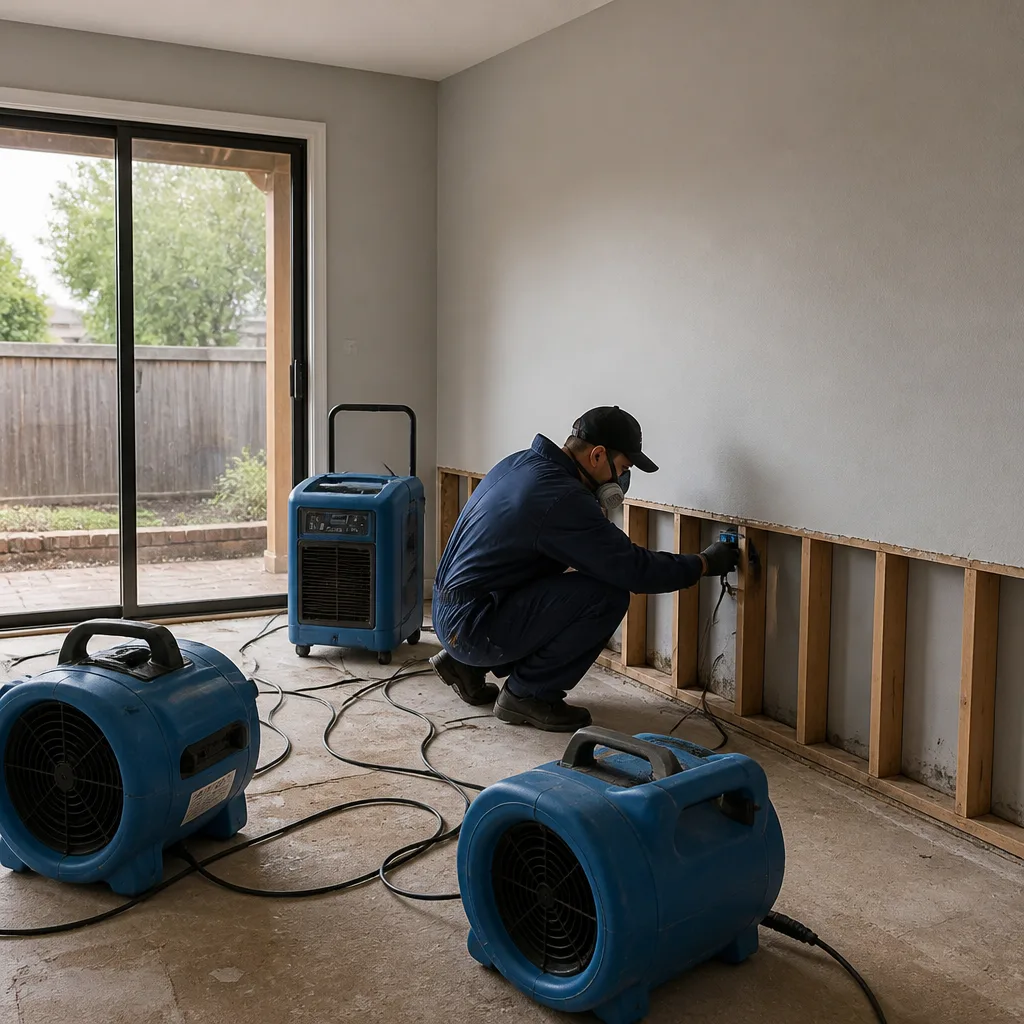
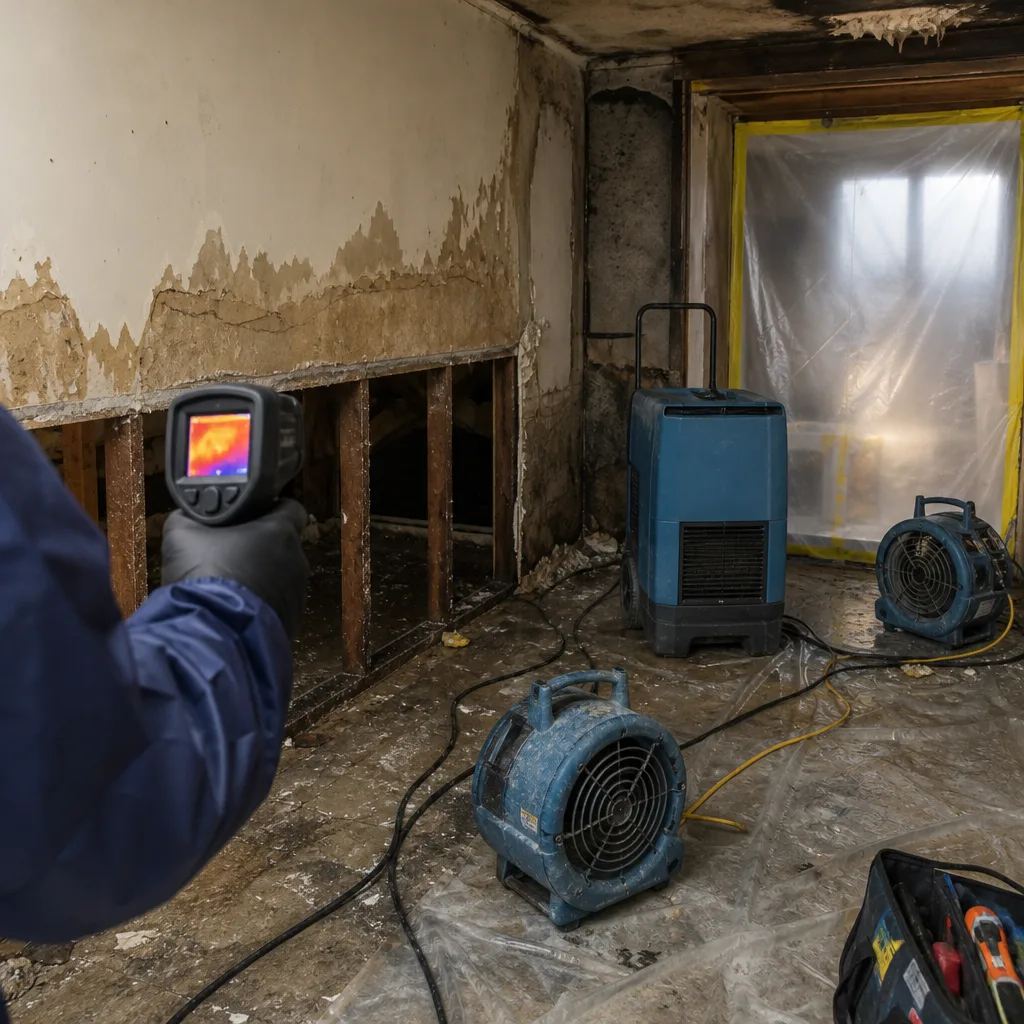
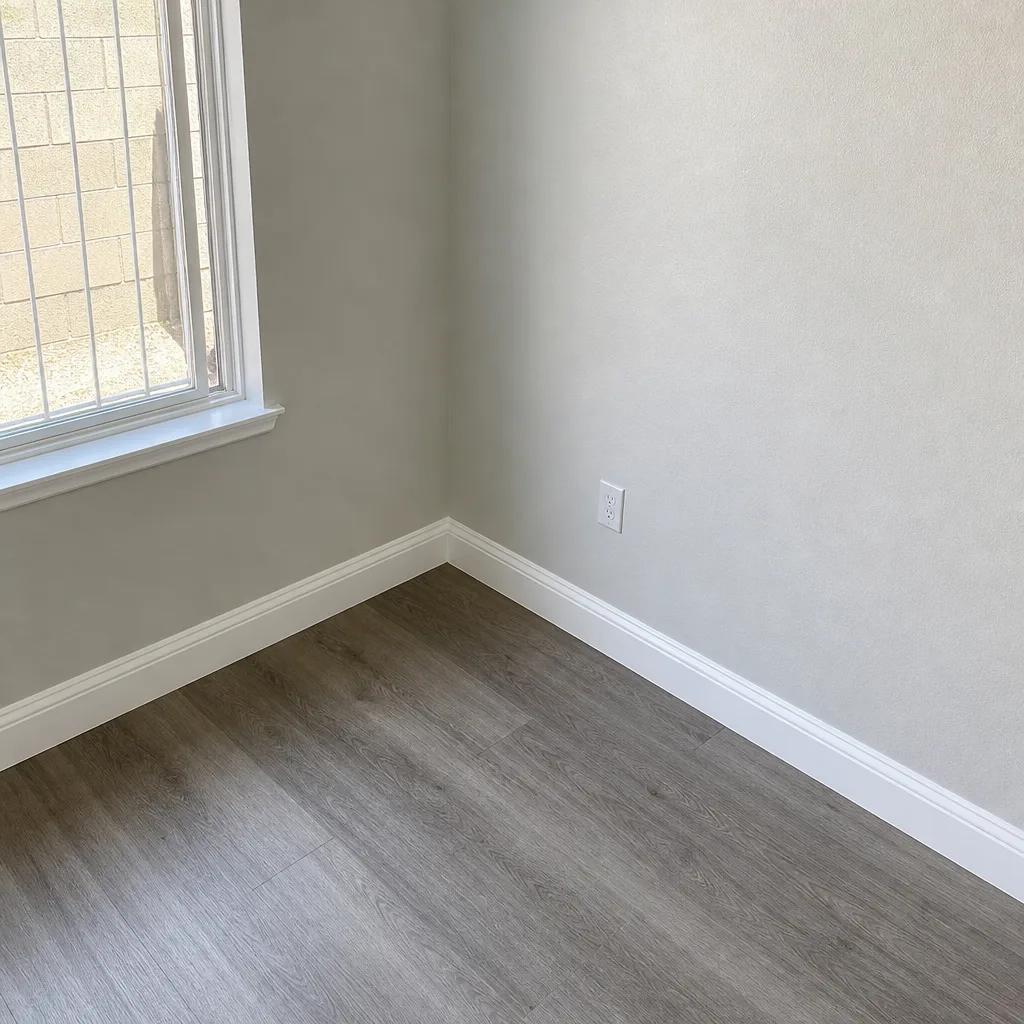
See the difference
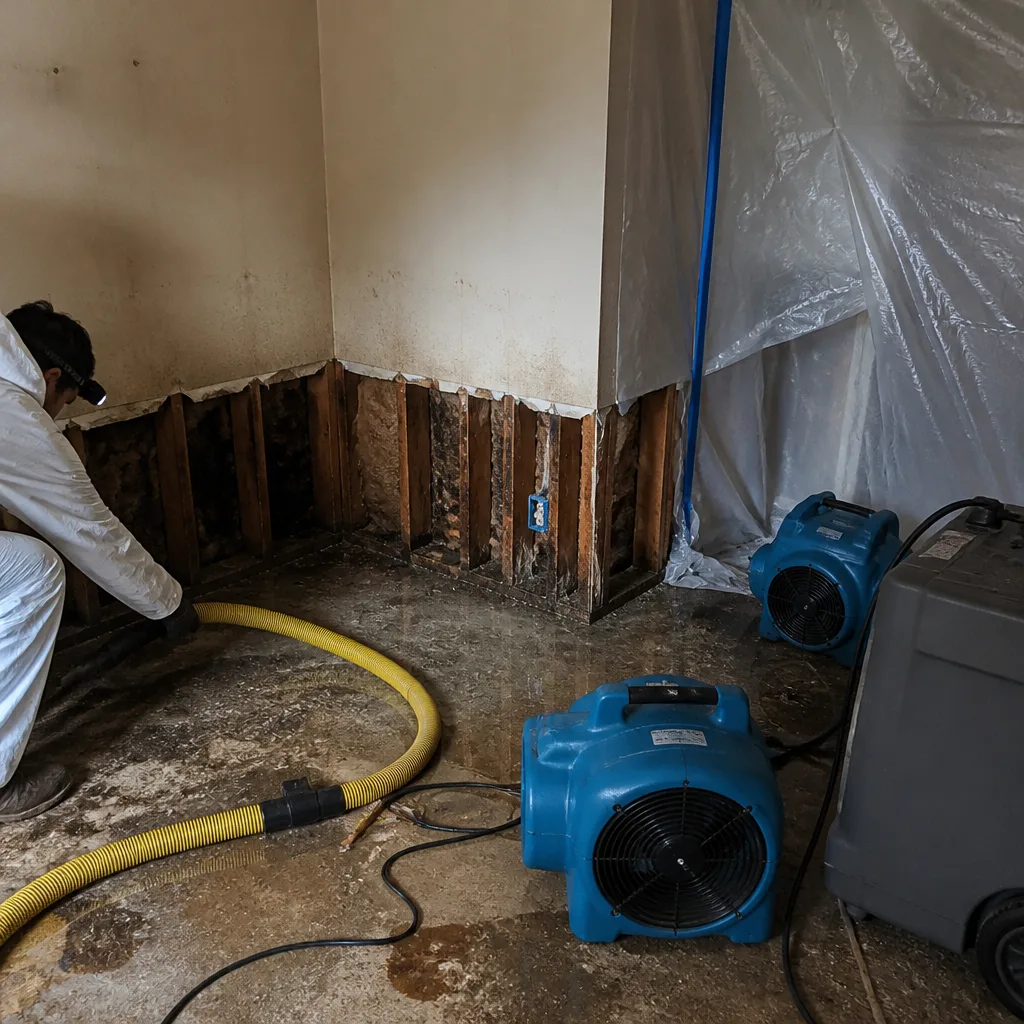 Before
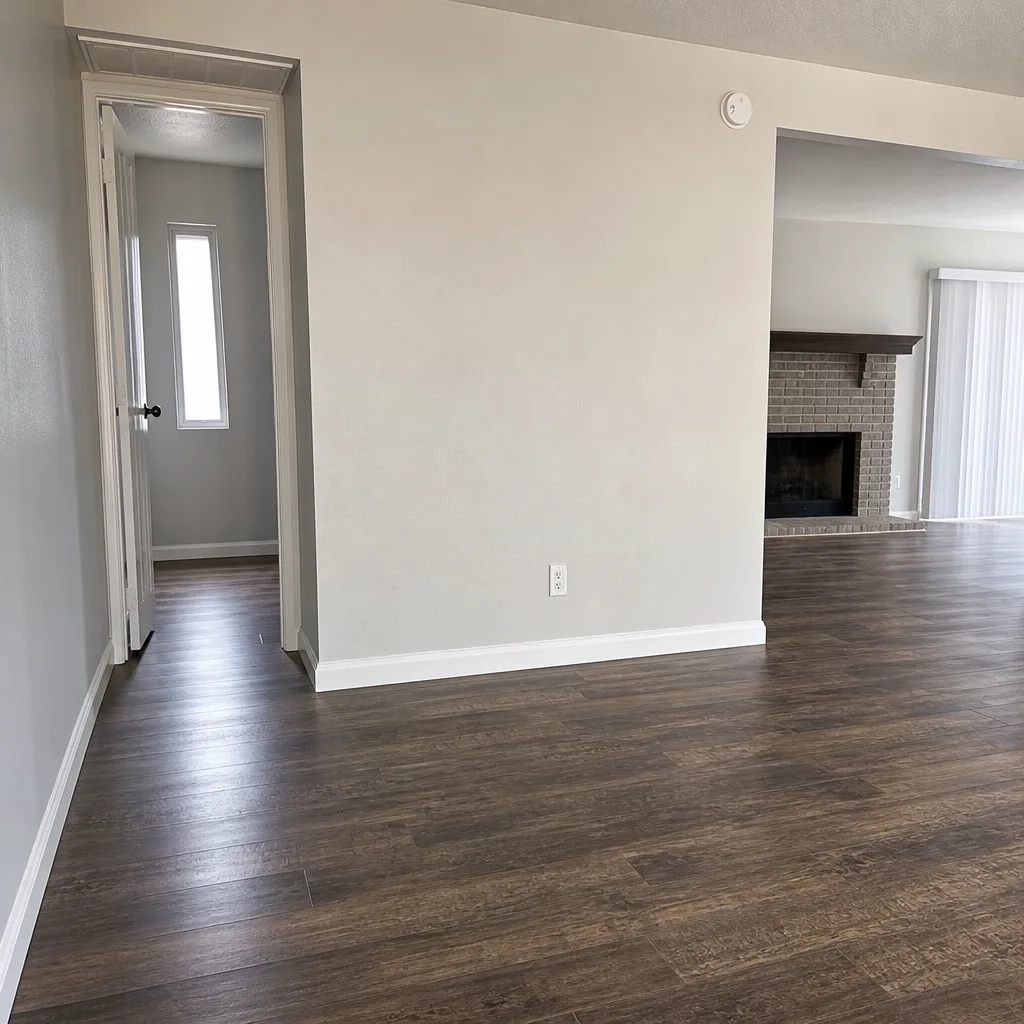 After
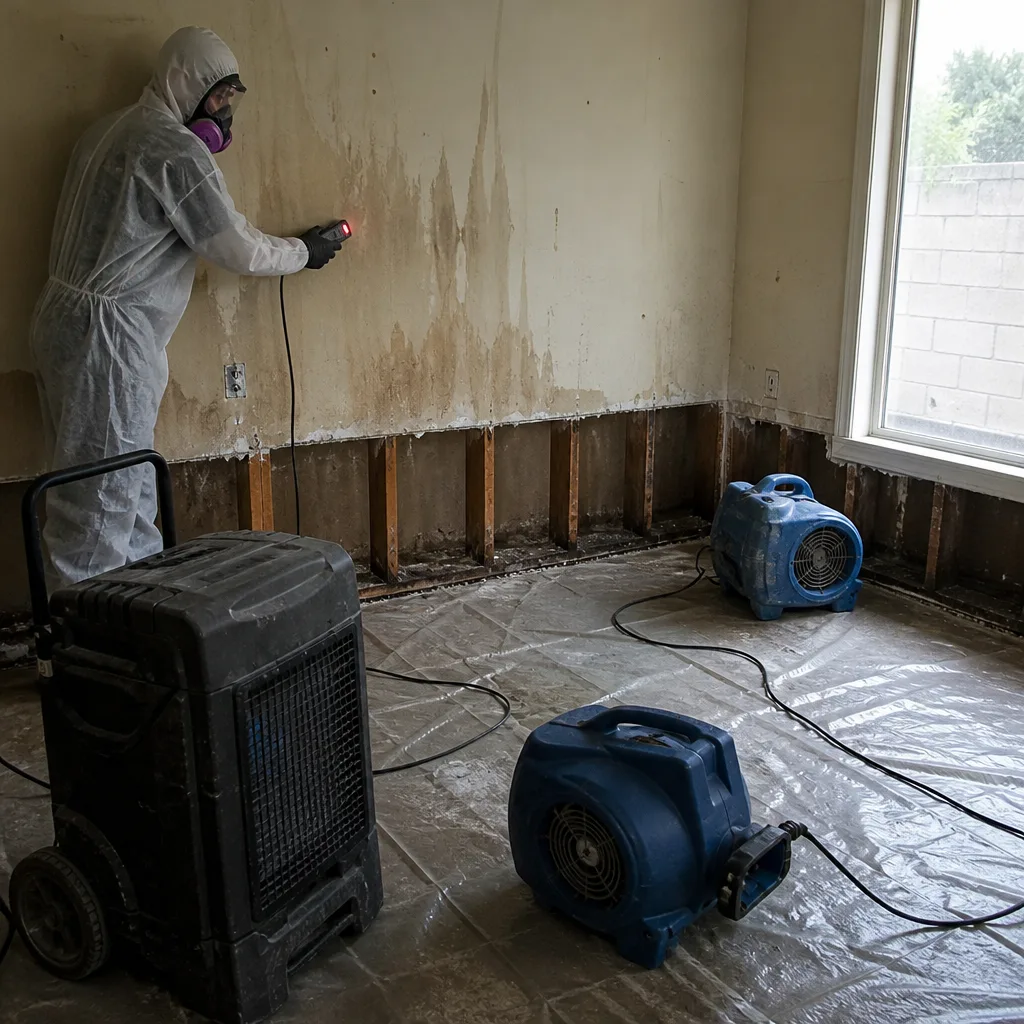 Before
 After
 Before
 After
Common Water Damage Restoration Problems We See in Running Springs Homes
- Burst pipes in unoccupied weekend cabins. When a cold snap hits and the heat is off, copper fittings split. By the time the owner arrives from down the hill, category 3 water has been sitting in the crawlspace for two weeks.
- Ice-dam roof leaks that go unnoticed until spring. Snow melts against warm roof decking, water backs up under shingles, and the leak manifests as a ceiling stain weeks later. The rot is almost always bigger than the stain.
- Pier-and-beam foundation saturation. Runoff and snowmelt collect in low crawlspaces, where wood framing absorbs water and holds it. Mold growth starts within 24 to 48 hours if the moisture isn’t pulled.
- Frozen supply lines in unheated additions. Many Running Springs cabins were built with minimal weatherproofing, and any addition or remodel that didn’t move plumbing inside the thermal envelope is a freeze risk every December through March.
Pricing for Water Damage Restoration in Running Springs, CA
A straight-forward burst pipe in a Running Springs cabin with standing water in one room runs $2,200 to $3,800. Add a flooded crawlspace with category 3 water and the range shifts to $4,500 to $7,800. Ice-dam roof leaks with wall cavity drying typically land between $3,000 and $6,000 depending on how many rooms have hidden moisture. What drives cost in Running Springs specifically is the crawlspace access: pier-and-beam foundations with tight clearances take longer to dry out than a slab home in Highland or Mentone. Every estimate is free, and we provide a written scope before any equipment goes in. Call (844) 716-1094.
We Also Serve Cities Near Running Springs
Flood Guard Water Damage provides Water Damage Restoration to property owners throughout the San Bernardino Mountains. In addition to Running Springs, we regularly service Lake Arrowhead, Highland, Mentone, and Crestline. If your second home is up here and your primary residence is down the hill, one call covers both. Water Damage Restoration in Running Springs is our local focus, but the teams and equipment serve the whole mountain corridor.
Serving Running Springs, CA — Our Local Coverage Area
We’re based in the Running Springs area and know this community well. Use the map below to see our service coverage — if you’re nearby, we can almost certainly help.
FAQs About Water Damage Restoration in Running Springs
Call us immediately and we’ll walk you through shutting off the main water supply if you can reach it safely. Do not enter a flooded crawlspace or lower level if the power is on or the water is deep. Our crew can meet you at the property, or coordinate with a property manager or neighbor to start extraction. The faster extraction begins, the less structural damage spreads into framing and flooring.
The repeated expansion and contraction of frozen water in Running Springs damages pipes, fittings, and foundation materials in ways that lower-elevation homes don’t experience. What looks like a small leak can be a split pipe that’s been weeping moisture for days. Our drying protocols account for the fact that wood framing in mountain cabins may have been through multiple freeze cycles, meaning moisture readings must be taken from multiple depths, not just the surface.
In most cases, yes. We use Injectidry vacuum panels and Dri-Eaz drying systems to pull moisture from the crawlspace side while the flooring stays in place. The key is early response: if water has been sitting for more than two weeks and the subfloor is saturated, targeted opening may be required to check for mold. We’ll give you a written scope listing exactly what will and won’t be opened before work starts.
Snowmelt runoff that enters through a foundation crack or low door is typically category 2 (contaminated) because it’s picked up soil, organic debris, and possibly animal waste from the ground. If the water has been sitting for more than 48 hours or mixed with sewer backup, it becomes category 3. Category 3 requires full containment, antimicrobial treatment, and removal of porous materials. We test and document the category so your insurance claim matches the actual condition, not a guess.
Mold can start growing in 24 to 48 hours when the temperature and moisture conditions are right, and Running Springs’s mountain climate with cool, damp crawlspaces accelerates that timeline. We treat all category 2 and 3 water as a mold risk from the first hour. Our drying targets and antimicrobial applications are set to prevent colonization, not just respond to it after it appears.
If you have water damage in a Running Springs home, cabin, or commercial property, call Flood Guard Water Damage at (844) 716-1094. We’ll answer directly, ask the right questions, and get a crew moving. The damage doesn’t wait, and neither do we.
Written by Noel Ibarra, Owner at Flood Guard Water Damage, serving Running Springs and the San Bernardino Mountains with IICRC-certified restoration practices.