
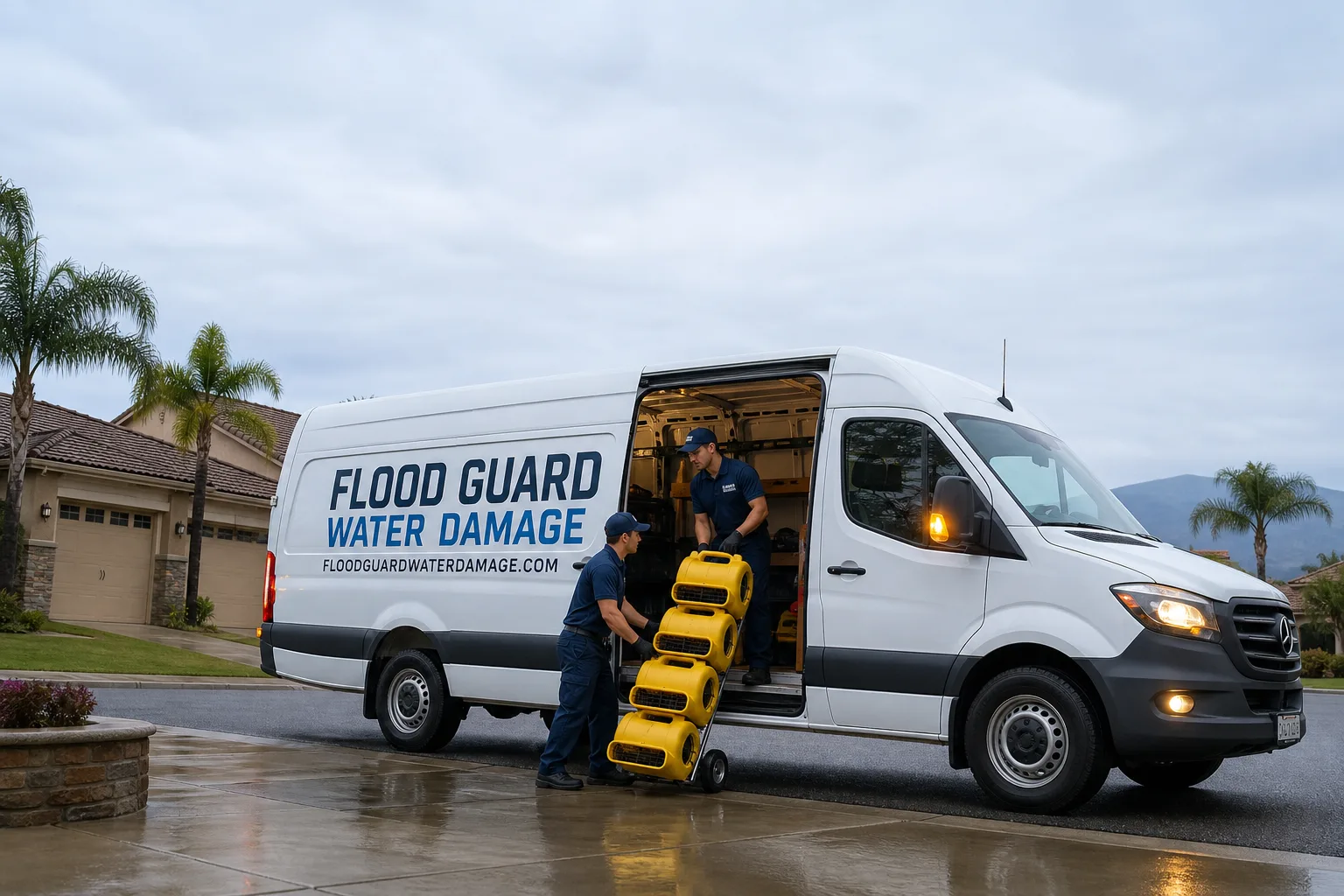
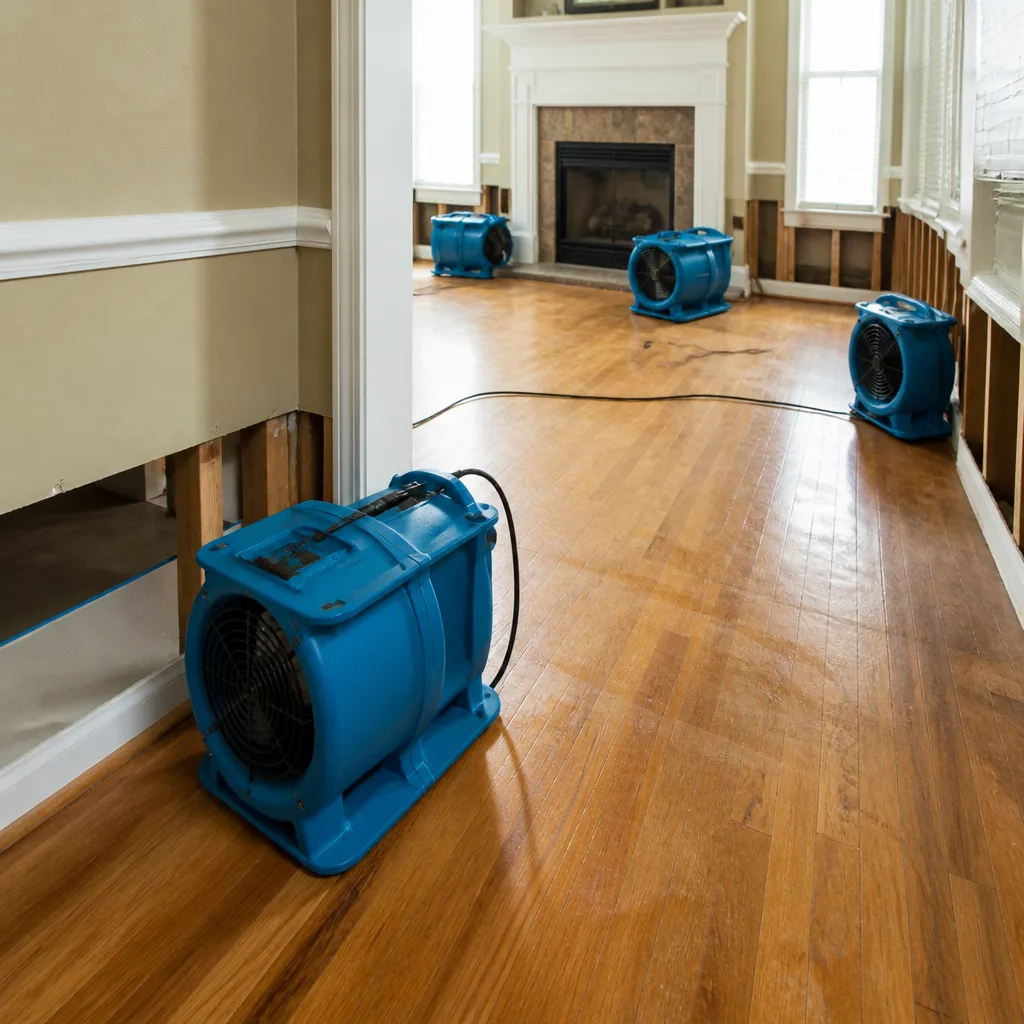
 Water damage drying
 Fire & smoke cleanup
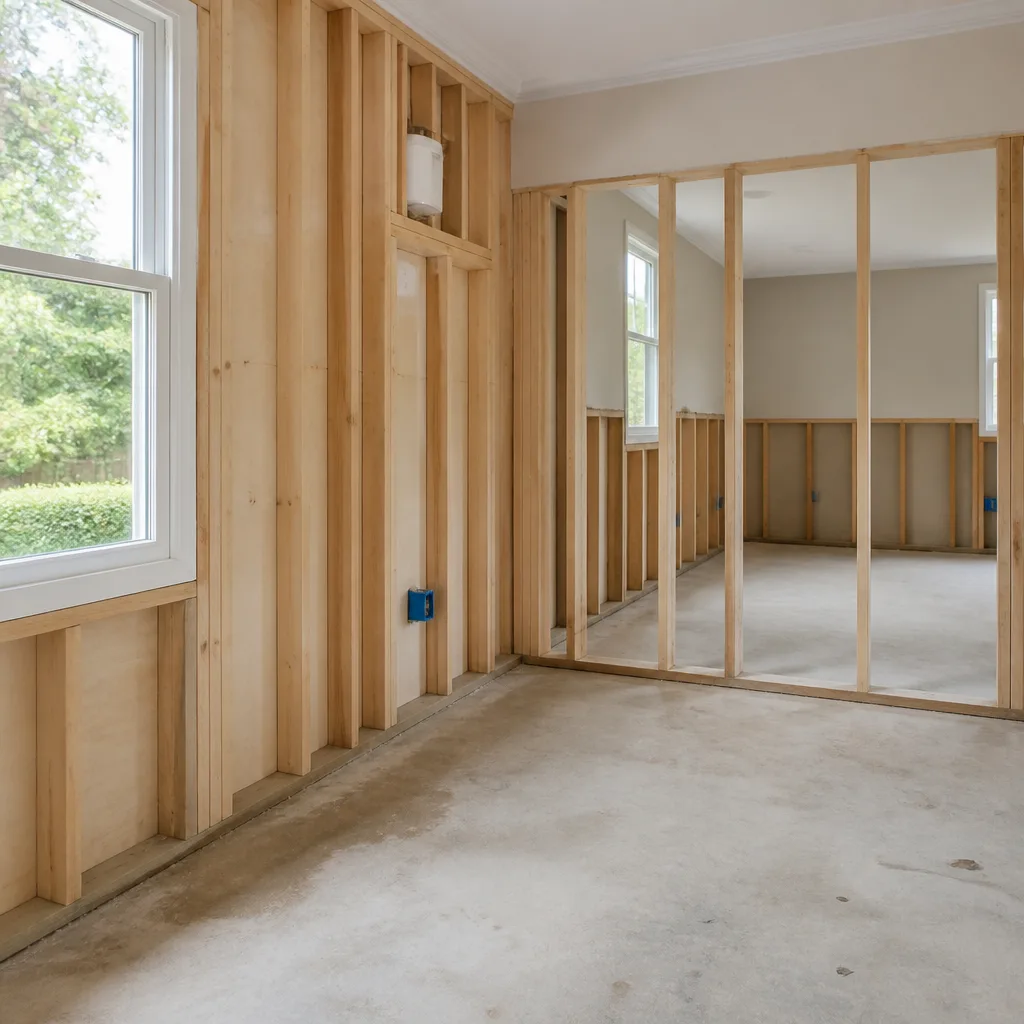 Mold remediation
 Storm response
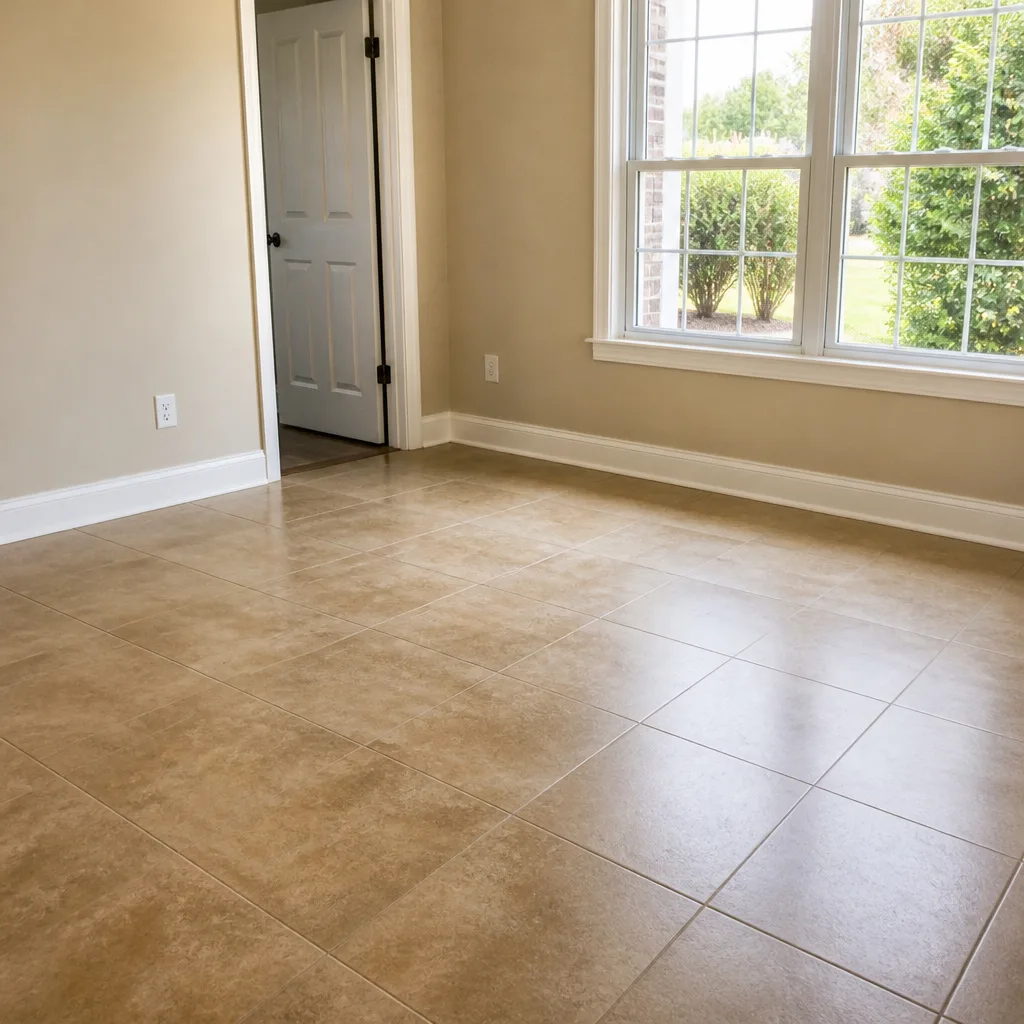 Sewage cleanup
 Reconstruction
Free visual inspection and a written scope of work before any mitigation begins - photos, moisture readings, and drying logs go in your claim file
The scope we write is the scope we bill. Anything new gets shown to you, in writing, before we touch it.
Get your free estimateFast, Reliable Mold Remediation Across Fullerton
Mold remediation in Fullerton usually costs between $1,800 and $6,500 depending on containment area size, and in the older neighborhoods around downtown and Cal State Fullerton, the root cause is often hiding under the slab rather than in the visible drywall. If you’ve spotted black spots along baseboards, caught a musty smell that moves room to room, or had a water event weeks ago and the area still feels damp, call (844) 716-1094. Our containment and drying crews run IICRC-certified protocols, and we respond to Fullerton properties across 92831, 92832, 92833, 92834, and 92835.
We know Fullerton’s housing stock well: 1920s Spanish Colonial Revivals off Chapman, 1950s slab-on-grade tract homes near Commonwealth, newer hillside construction north of Bastanchury. Each presents its own mold reservoir conditions. The house tells you where the mold came from. We read that before we touch a wall.
Why Flood Guard Water Damage Is Fullerton’s Preferred Mold Remediation Company
Fullerton homeowners don’t call us for the first inspection. They call us after another crew dried the visible room and the smell came back. That pattern repeats across the pre-1960 stock here: crews dry surfaces, record the room as “dry,” and miss the moisture still wicking under original oak floors and behind interior plaster where the vapor-barrier-less slab sits in direct soil contact.
Our team has worked Fullerton long enough to know exactly where these reservoirs form. Noel Ibarra leads our crews on the same principle every time: document moisture, not guesses. We run daily drying logs with actual moisture readings until the assembly reads back to pre-loss condition. No air mover gets pulled because the surface feels dry.
We’re also licensed and insured, with RIA membership and IICRC-certified methodology on every project. Equipment matters more than marketing: Dri-Eaz and Phoenix dehumidifiers, XPOWER air movers, B-Air HEPA filtration, and Injectidry panels that dry inside walls without automatic demolition. That last one saves Fullerton customers significant repair cost when custom plaster walls or original built-ins sit near a wet assembly.
Restoration work we handle
Mold Removal Contractor in Fullerton
A Mold Removal Contractor in Fullerton handles what surface cleaning can’t: containment, HEPA air filtration, physical removal of colonized materials, antimicrobial application, and structural drying with documentation at every step. You need a contractor rather than a cleanup service when the mold colony sits inside a wall cavity, under flooring, or in a slab-wicking situation common to the homes off Chapman and Commonwealth.
For Fullerton homes, the job typically runs $2,200 to $5,800 when containment and subfloor drying are required, and less when the affected area is a single bathroom or closet. We give a written scope before any work begins, so you see exactly what’s being removed, what’s being treated, and what each phase costs.
Containment and HEPA Filtration
We set physical containment barriers and negative-air HEPA filtration before disturbing any colonized material. That prevents cross-contamination into hallways, bedrooms, and return air ducts. In older Fullerton homes with shared wall cavities and balloon framing, this step matters more than most contractors admit.
Structural Drying with Documentation
Water left in framing re-blooms mold after the crew leaves. Our Injectidry system pulls moisture from inside wall cavities and under flooring without cutting open every surface. We log readings daily against a written baseline, and the final report shows the assembly read dry, not just the air.
Bathroom Mold Removal in Fullerton
Bathroom Mold Removal in Fullerton usually costs $900 to $3,200, but the more important number is whether the moisture source is ventilation or something beneath the floor. In 1950s and 1960s slab-on-grade homes around 92832 and 92833, what reads as “just bathroom mold” is often a pinhole copper leak under the slab that has wicked up into the baseplate and drywall behind the vanity.
We work the Fullerton bathroom mold problem differently. First, we test the moisture source. If it’s a ventilation issue, the fix is removal plus better airflow. If it’s slab-related, the job expands to containment, subfloor drying, and antimicrobial treatment on framing that would otherwise keep feeding the colony.
Slab-Source Moisture Diagnostics
In slab-on-grade bathrooms, the mold you see on grout or caulk is usually the tail end of a problem underneath. Moisture mapping across the bathroom floor and adjacent hallway tells us whether that water source is supply-line or drain-line, and whether contamination classification changes the remediation scope.
Cavity Drying Without Full Tile Demolition
If the substrate behind a shower wall or adjacent to a tub enclosure is wet, Injectidry panels dry the cavity through small access points. You keep the tile or original plaster; we dry the framing and treat the affected material.
Trusted Brands We Service in Fullerton
We run Dri-Eaz, Phoenix, and XPOWER drying equipment across Fullerton, plus Injectidry for wall and floor cavity drying. These are the same commercial-grade brands used on large-loss restoration projects, not rental-counter units. For Fullerton customers, that means we carry the right parts and know how to dry a 1940s plaster wall differently than a 1990s drywall assembly. We also keep B-Air HEPA filtration units staged for containment work anywhere from downtown to Coyote Hills.
See the difference
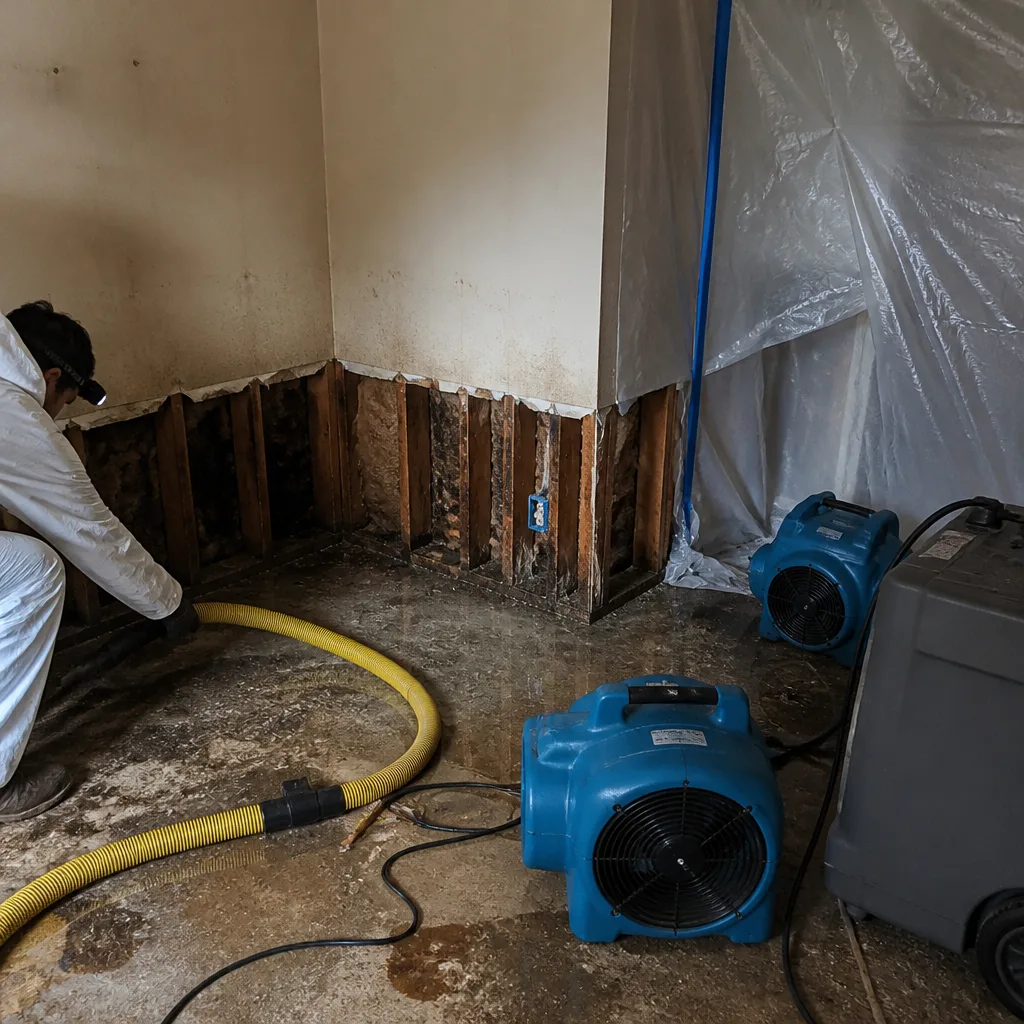 Before
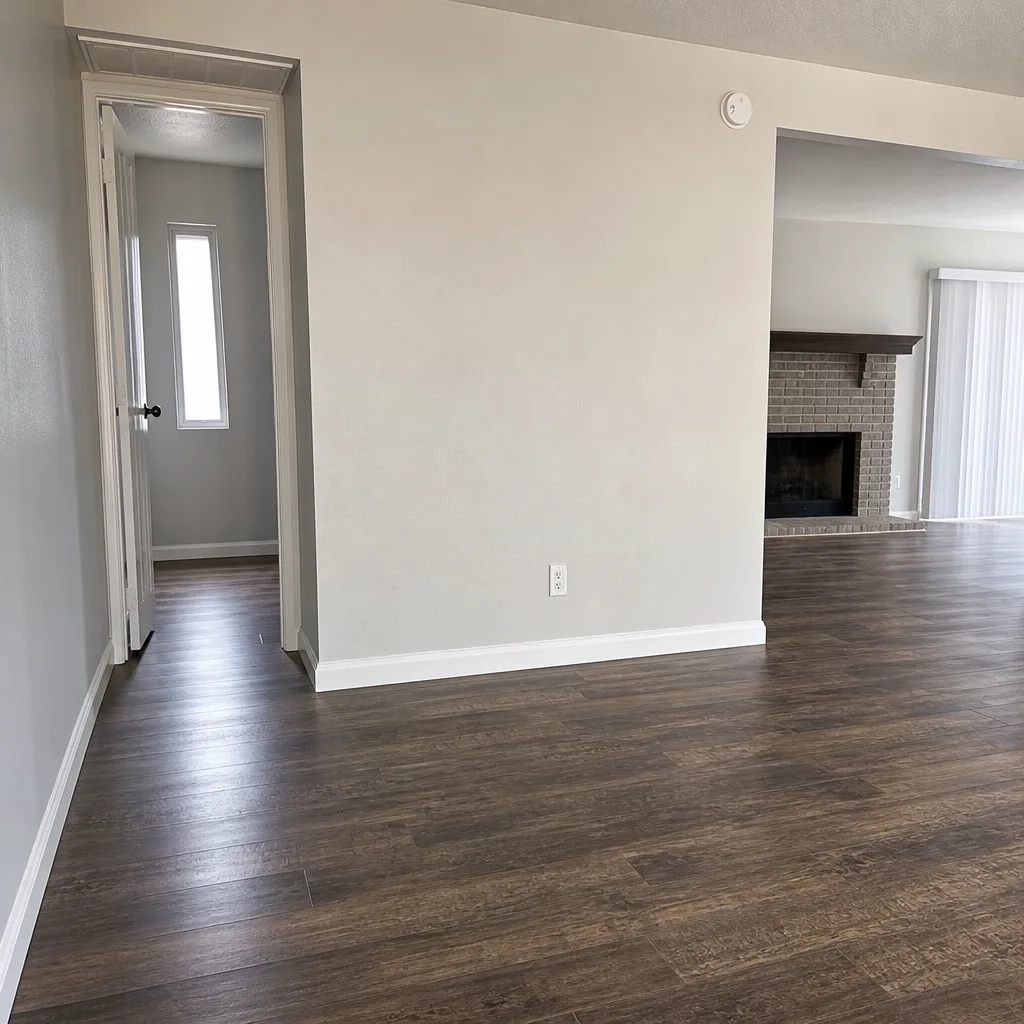 After
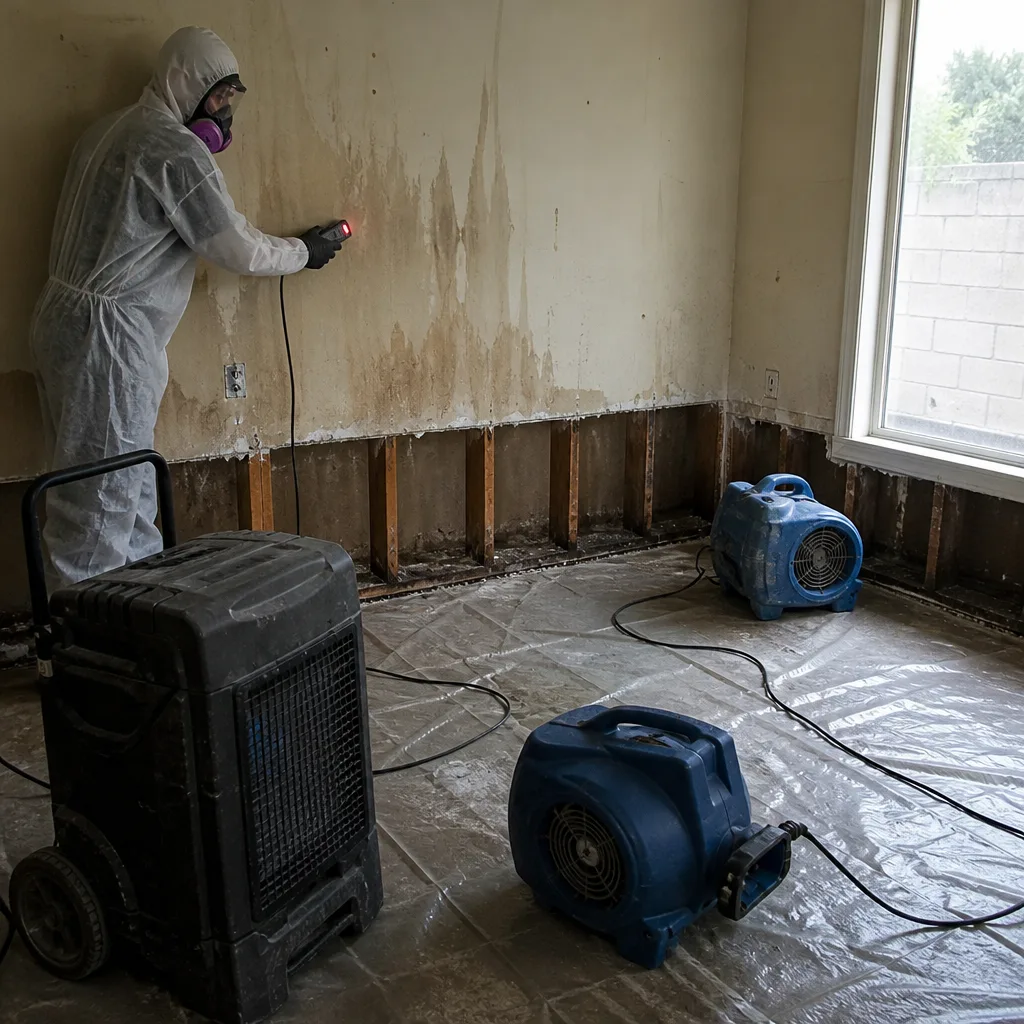 Before
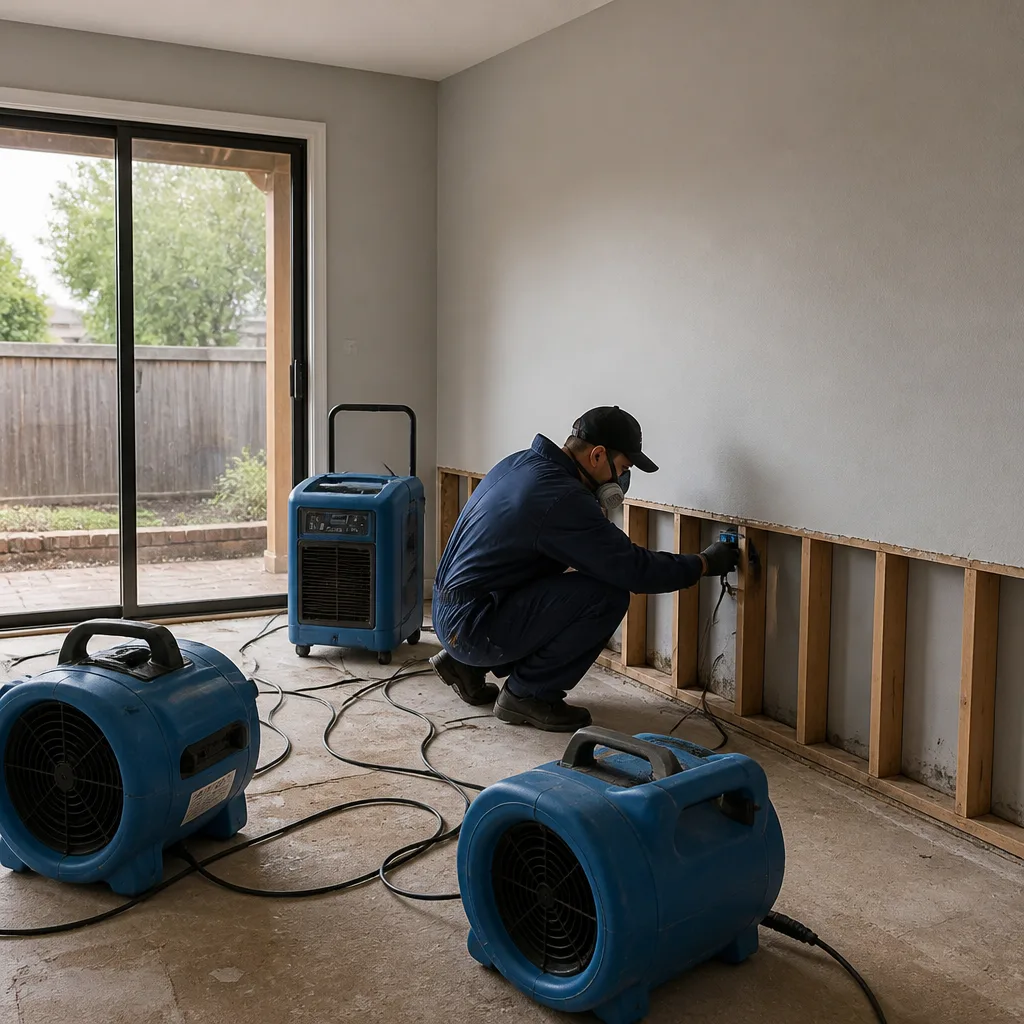 After
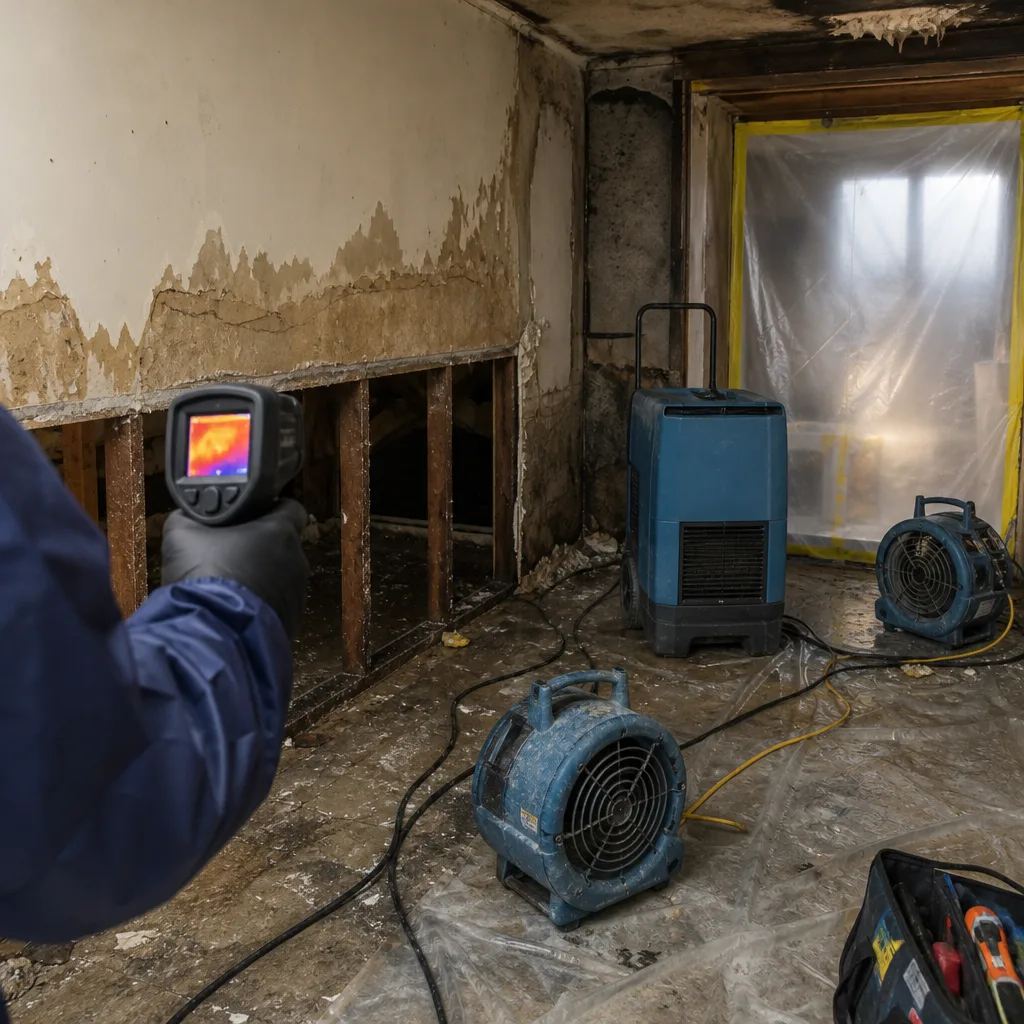 Before
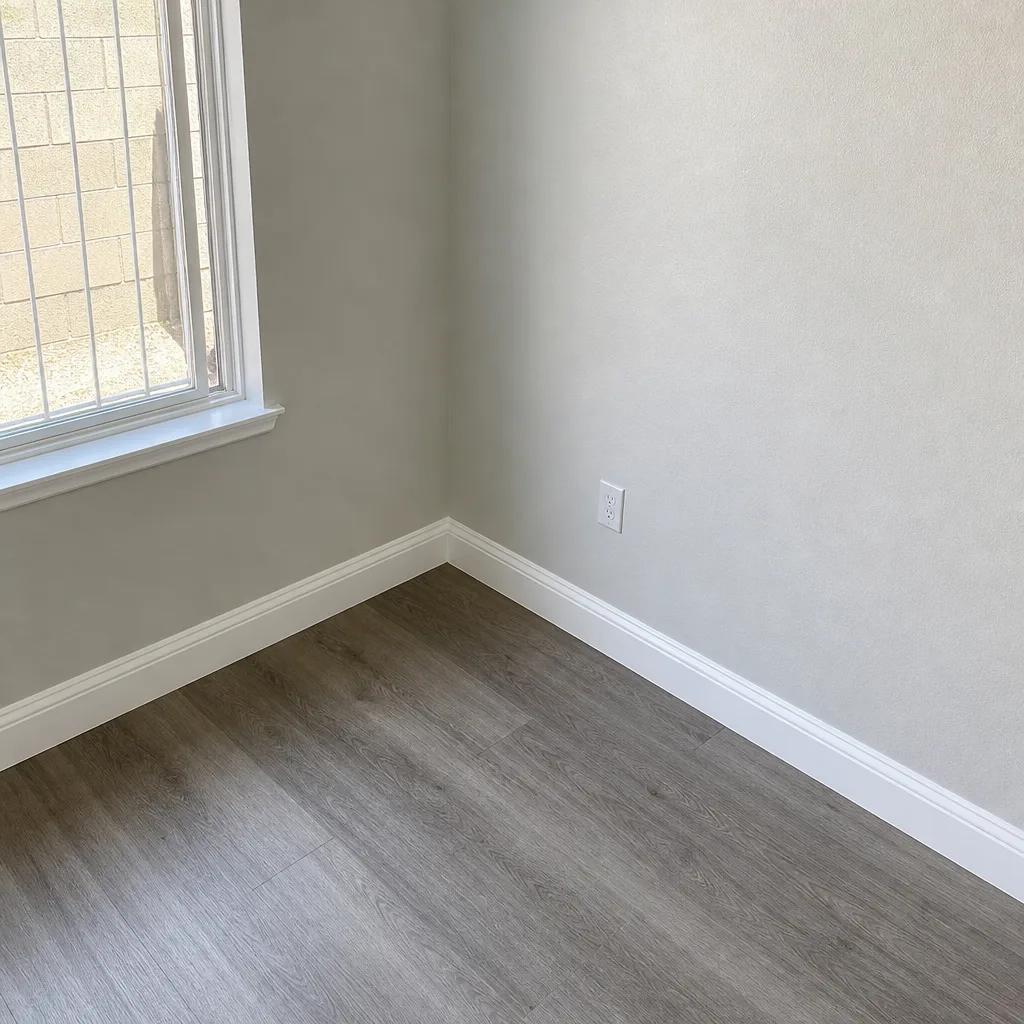 After
Common Mold Remediation Problems We See in Fullerton Homes
- Mold under original oak floors from slab wicking. In the pre-1960s tracts off Chapman and Commonwealth, the original slab has no vapor barrier and copper lines sit in direct soil contact. A pinhole leak feeds hidden mold for weeks before a warped floorboard or high water bill surfaces it.
- Recurring bathroom mold from plumbing below the slab. We see 1950s bungalows where the bathroom exhaust fan was added in the 1980s and never properly vented. The visible ceiling mold gets cleaned, but the real source is a slow leak at the slab penetration.
- Category confusion from cast-iron drain backups. Fullerton’s older homes retain original cast-iron drains. When one backs up, the water is Category 3, but inexperienced crews treat it as if it’s dryable. Contamination spreads, and mold blooms behind baseboards.
- Santa Ana wind-driven rain intrusion. The dry, gusty Santa Ana winds push rain sideways into weep screeds and under door thresholds on stucco homes. The water entry is small, but it travels into wall cavities that never fully dry between storms.
Pricing for Mold Remediation in Fullerton, CA
What changes the number: square footage of contamination, whether the source is clean water versus category 3, and whether subfloor or wall-cavity drying is needed. We don’t bid high to cover uncertainty. We measure moisture, document findings, and give you a written scope before work starts. Call (844) 716-1094 for a free on-site estimate with actual moisture readings.
We Also Serve Cities Near Fullerton
Our Fullerton crews regularly work in Anaheim, La Habra, Placentia, and Brea. If you’re just outside our Fullerton coverage boundary and need the same slab-leak and mold-remediation expertise, the same IICRC-certified team handles those nearby communities. We also maintain the full service hub for Mold Remediation coverage across Orange County.
Serving Fullerton, CA — Our Local Coverage Area
We’re based in the Fullerton area and know this community well. Use the map below to see our service coverage — if you’re nearby, we can almost certainly help.
FAQs About Mold Remediation in Fullerton
A pinhole copper leak under my Fullerton slab went unnoticed for weeks – could there be mold under my original oak floors?
Yes, and in Fullerton’s pre-1960s slab-on-grade homes, this is the most common source of recurring hidden mold. Without a vapor barrier under the slab, moisture from a pinhole leak wicks up through the concrete, feeds the oak subfloor assembly, and regularly climbs into baseboards and interior plaster. You may not see mold at all until we lift a floorboard or check the cavity. We handle this by setting containment, running HEPA filtration, drying the subfloor in place with Injectidry panels, and treating the framing with antimicrobial application. Call (844) 716-1094 and we’ll map the moisture before anyone starts cutting.
When is bathroom mold in a 1950s Fullerton bungalow a slab or plumbing problem instead of just a ventilation issue?
It’s a slab or plumbing issue when the mold recurs after ventilation work, when water staining appears low on the wall near the floor, or when baseboards stay swollen in dry weather. In 1950s Fullerton bungalows with original copper lines, the clean water source is often a weep at the slab penetration or a supply line under the bathroom floor. Slab-source moisture doesn’t dry out on its own. We find the source with moisture mapping and then write the scope from there, whether that’s cavity drying, targeted removal, or both.
Do the Santa Ana wind-driven rain events actually cause indoor mold here, or just exterior damage?
They do cause indoor mold, especially on stucco homes where wind-driven rain pushes in at weep screeds, window returns, and door thresholds. The water enters in a narrow path and wicks into the wall cavity, where framing stays damp for weeks during the cool season. Fullerton’s dry climate can mask it, because the surface plaster dries while the cavity never does. If you had a wet wall after a Santa Ana rain event and no one opened or dried the cavity, we recommend a moisture check before mold shows itself.
How do you handle mold remediation when a Fullerton cast-iron drain backup has soaked the area?
We treat drain backup as Category 3 water, not as a dryable Category 2 event. That means full containment, removal of saturated porous materials, HEPA air scrubbing, antimicrobial treatment on framing and slab, and drying with documentation until moisture readings return to baseline. The cast-iron drain issue itself should be evaluated by a plumber, but the contamination side is ours. Treating a sewer backup as clean water is how Fullerton homes end up with mold spreading behind baseboards months after the backup itself was cleared.
My Fullerton home has a smart-home setup and custom finishes – does mold remediation mean a full pack-out?
Not automatically. We use Injectidry panels to dry wall and floor cavities from small access points, so original built-ins, custom cabinetry, and wall treatments often stay in place. If a room has heavy contamination we’ll contain it and work room by room, but the goal on Fullerton’s custom and historic homes is preservation, not demolition. The first step is always moisture mapping and a written scope, so you know exactly what needs to move and what can stay before work begins. Call (844) 716-1094 to schedule an assessment.
Written by Noel Ibarra, Owner at Flood Guard Water Damage, serving Fullerton and surrounding Orange County communities.