
 Water damage drying
 Fire & smoke cleanup
 Mold remediation
 Storm response
 Sewage cleanup
 Reconstruction
Free visual inspection and a written scope of work before any mitigation begins - photos, moisture readings, and drying logs go in your claim file
The scope we write is the scope we bill. Anything new gets shown to you, in writing, before we touch it.
Get your free estimateFast, Reliable Mold Remediation Across Laguna Hills
Mold inside a Laguna Hills home rarely announces itself politely. By the time you see staining on drywall or catch that musty smell near a shared wall, the moisture source has usually been active for weeks. If you’re dealing with visible mold, chronic condensation, or water damage that was never properly dried, call Flood Guard Water Damage at (844) 716-1094. We run IICRC-certified mold remediation protocols across Laguna Hills, Lake Forest, and the surrounding South Orange County area, using moisture mapping and professional-grade drying equipment before a single section of drywall comes out. You get a written scope of work before any demolition begins. That’s how we operate in 92653 and 92654.
Why Flood Guard Water Damage Is Laguna Hills’s Preferred Mold Remediation Company
Laguna Hills homes share a specific DNA. The 1990s master-planned tracts along Alicia Parkway, the attached townhome clusters in 92653, the condo communities with upstairs laundry closets stacked over living space-those repeat patterns mean we walk into a mold job already knowing where the problem started. Our Mold Remediation team has worked through enough supply-line failures, pan overflows, and shared-wall moisture migration in this city that the first hour is spent confirming what the building tells us, not guessing.
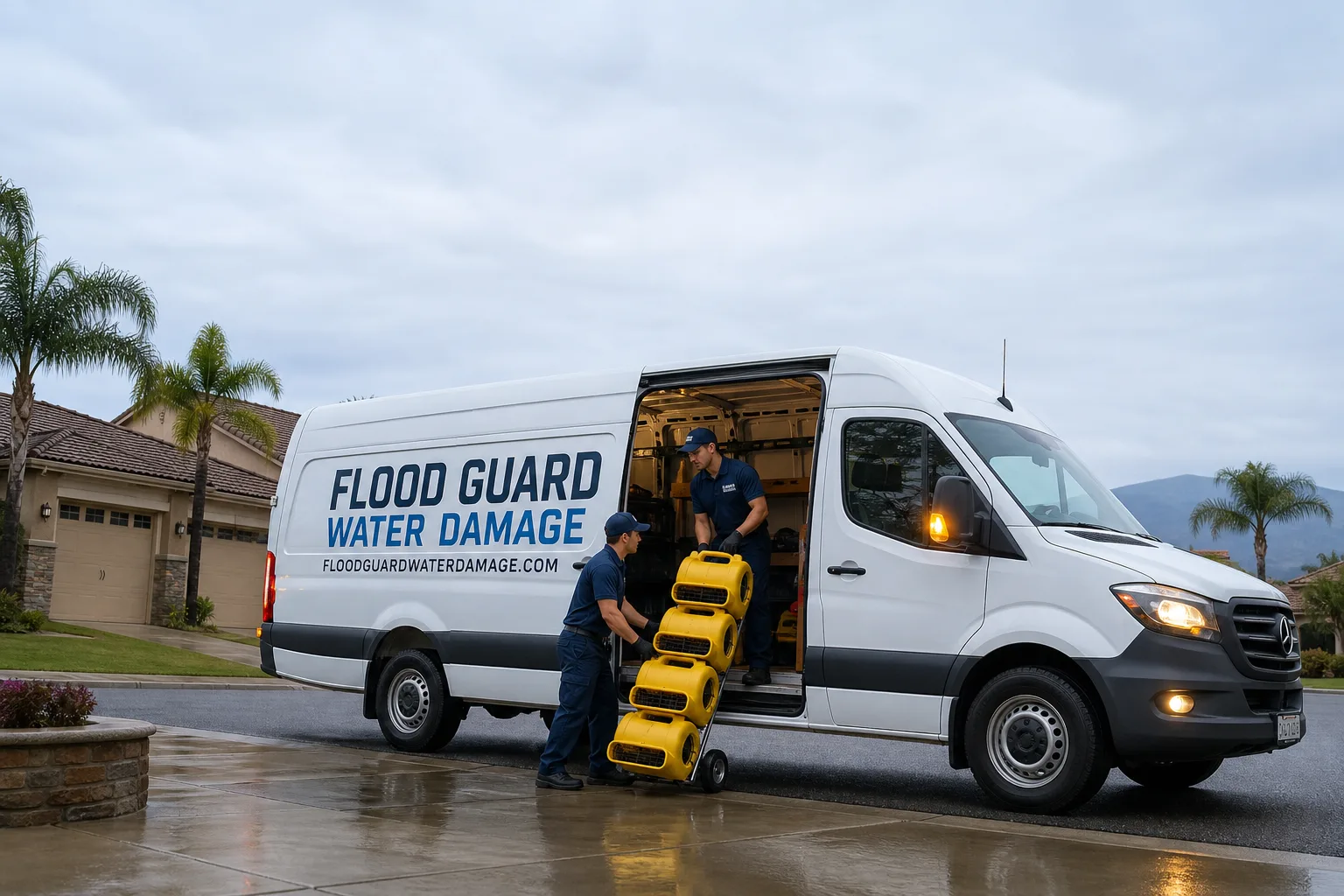
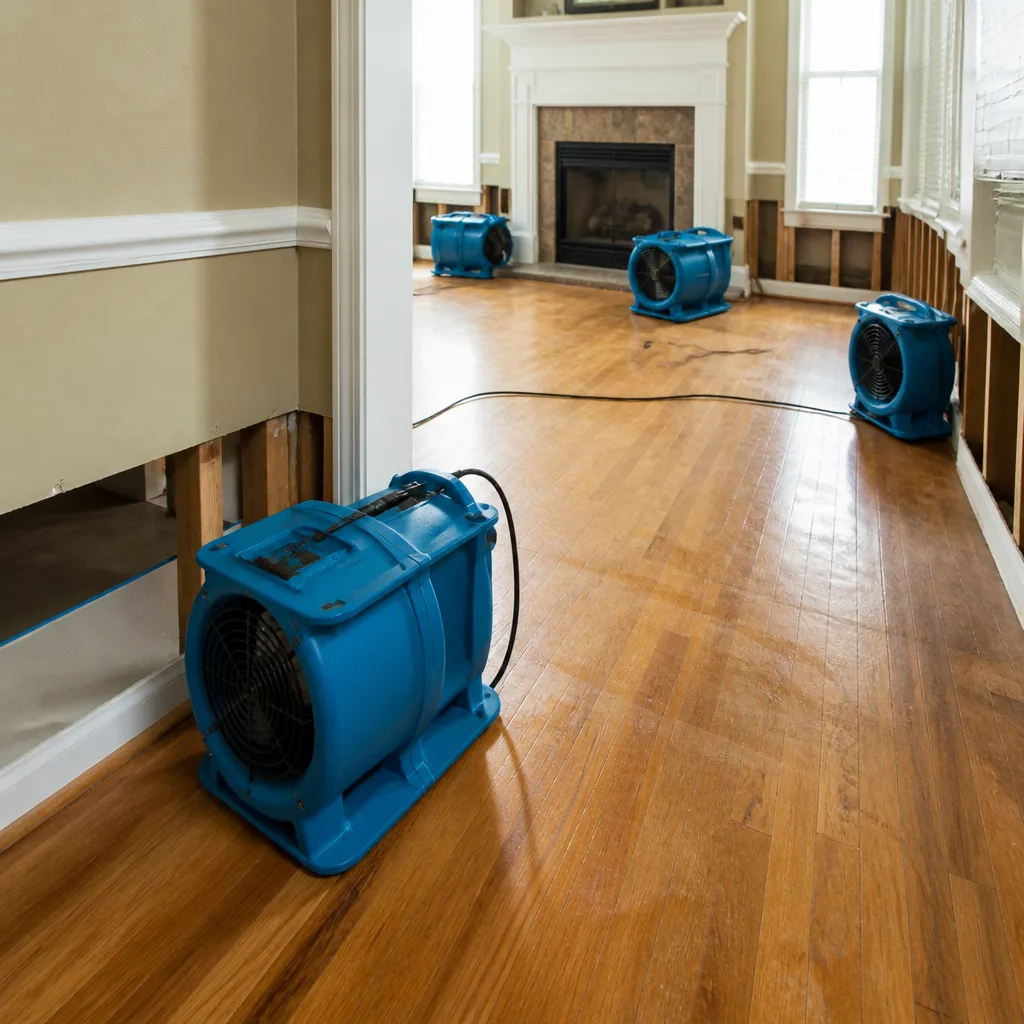
Owners and property managers in Laguna Hills call us because the process is documented, not improvised. Every job follows IICRC-certified methodology. That means atmospheric readings, moisture mapping behind builder-grade drywall, and drying logs that hold up in an HOA file or an insurance claim. Noel Ibarra runs the operation with a simple rule: we measure before we cut. The equipment on the truck reflects that. Dri-Eaz dehumidifiers, Phoenix air movers, and Injectidry drying systems are the same brands used on large commercial losses, not rental-counter gear. For a townhome where mold has crossed a common wall, that equipment difference determines whether the problem gets fixed once or comes back after the HOA closes the file.
Restoration work we handle
Bathroom Mold Removal in Laguna Hills
Bathroom Mold Removal in Laguna Hills usually starts with a fan that wasn’t venting properly, a shower pan that failed, or a supply line that dripped behind a vanity for months before anyone noticed. The bathroom is the most common mold origin point in 92653 homes, and in attached townhome and condo units, the damage rarely stays in one room. We set containment, pull atmospheric readings, and map moisture through the wall cavity before removing affected drywall or trim. The goal is to remove the mold and the moisture source in a single pass.
What We Check in Every Laguna Hills Bathroom
We inspect the exhaust fan routing first. In hundreds of Laguna Hills bathrooms, we find builder-installed fans venting into the attic or into a soffit cavity rather than through the roof. That’s a code issue and a mold factory. We also check the shower pan and valve body for slow leaks, and we map the wall cavity behind the water lines. If the homeowner only wants visible mold treated and the source is still wet, we won’t start work. That would be setting up a callback.
Cost and Timing for Bathroom Jobs
A contained bathroom mold removal in Laguna Hills typically runs $1,200 to $3,800 depending on how much drywall and tile has to come out. Smaller surface jobs under 30 square feet can land closer to $900. If the subfloor or shared wall is involved, the number moves up. We provide a written scope before we start, so you know the line item breakdown and you’re never surprised mid-job. Call (844) 716-1094 for a free estimate specific to your unit.
Mold Removal Service in Laguna Hills
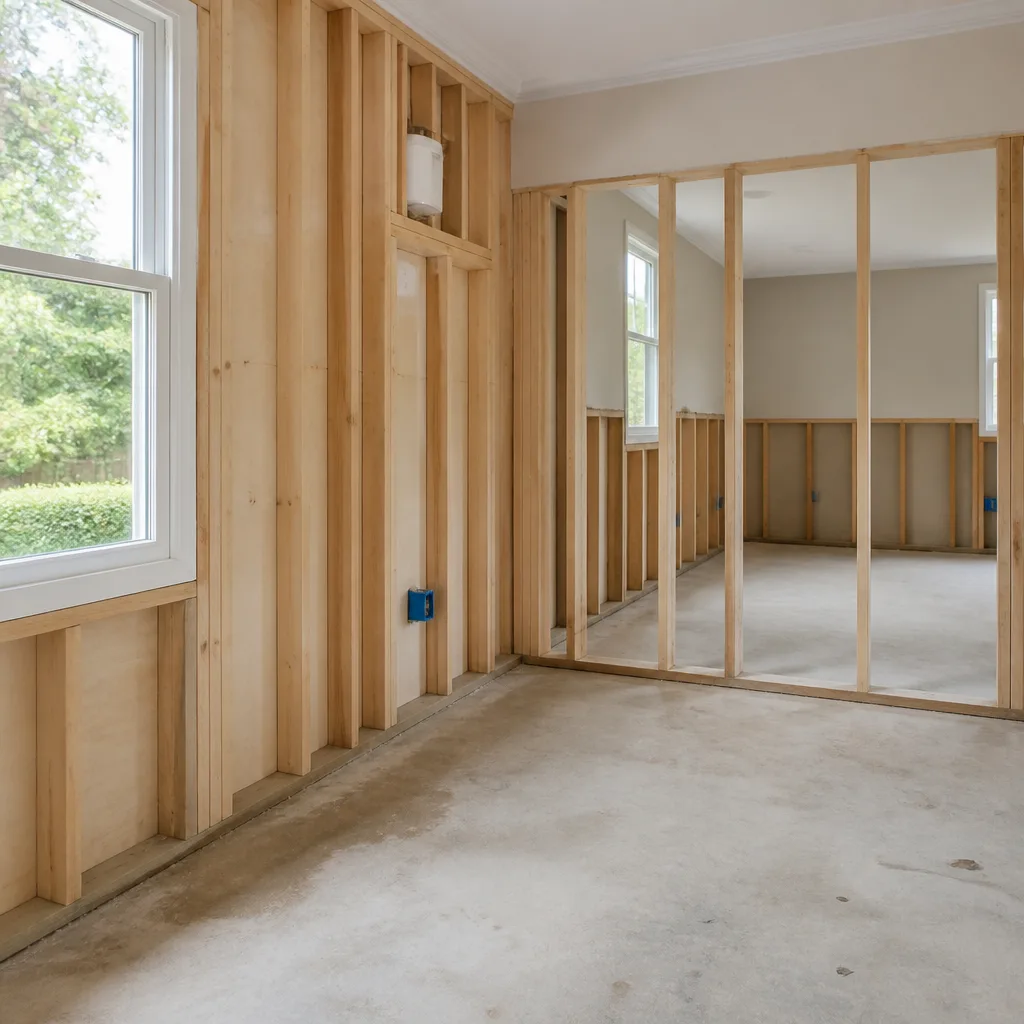
Mold Removal Service in Laguna Hills covers the full containment and removal process, not just wiping surface staining with bleach. When mold is embedded in drywall, framing, or insulation, we remove the affected material under negative air, clean the remaining structure with an antimicrobial, and dry the cavity to IICRC standards. In a city full of HOA-governed townhomes, this work often means coordinating access to a common wall or the unit below. We handle that conversation with the HOA and property manager as part of the job.
Containment and Air Quality Control
Proper containment matters more in attached living than in a detached home. A single mold spore release in a townhome can travel through a shared wall chase or a common attic. We hang containment barriers, run a negative air machine, and monitor the pressure differential throughout the job. If you have asthma or other respiratory sensitivities, this step is not optional. It’s the difference between a controlled removal and a cross-contamination event in your neighbor’s unit.
When Full Removal Is Necessary
If the mold covers more than 10 square feet, if the source leak is ongoing, or if the moisture mapping shows humidity trapped inside the wall cavity, surface cleaning won’t hold. In that case we remove the affected drywall, insulation, or flooring, dispose of it under containment, and dry the framing to a measurable moisture content. Laguna Hills’ semi-arid climate helps drying go fast once the cavity is open, but only if we start immediately. Delaying is what turns a $2,000 remediation into a $9,000 rebuild. Call us before the damage spreads.
Trusted Brands We Service in Laguna Hills
The same Laguna Hills builders put the same equipment in house after house across the Alicia Parkway corridor. That’s why we see familiar failure points-repeat loose tub drain gaskets, the same PEX manifold locations, identical riser geometry behind upstairs laundry closets. We’re familiar with the common shower pan brands, water heater placements, and ventilation routing found throughout 92653 and 92654. When a part needs replacing during remediation, our supply chain keeps the common pieces moving fast so your job isn’t stalled waiting for a specialty fitting. That matters when mold is active and every day of delay means more material removal.
Common Mold Remediation Problems We See in Laguna Hills Homes
- Upstairs laundry closet leaks that travel down: The 1990s townhome clusters along Alicia Parkway share a design flaw-a laundry closet on the second floor with no drain pan under the washer. A supply line or pan overflow soaks through the subfloor and into the unit below. By the time mold shows, two units need work.
- Shared-wall moisture migration: In attached units, a slow leak behind one homeowner’s bathroom fixture wicks into the common wall cavity and molds both sides. If the HOA board treats it as a one-unit issue, the mold returns. We map the full cavity depth and scope for both units.
- Builder-grade exhaust fans venting into attics: Many Laguna Hills bathrooms have original equipment fans that terminate in the attic instead of outside. Warm, humid air blows into a dark, warm space. The mold grows above the ceiling where nobody looks until a water stain appears.
- Slab-on-grade leaks channeling under flooring: Most 92653 homes sit on slabs, not basements. A pin leak in a copper riser or a PEX junction under the slab forces water up through flooring and baseboards. Mold grows at the floor line first, then inside the wall. Moisture mapping is the only way to trace it back to the source.
See the difference
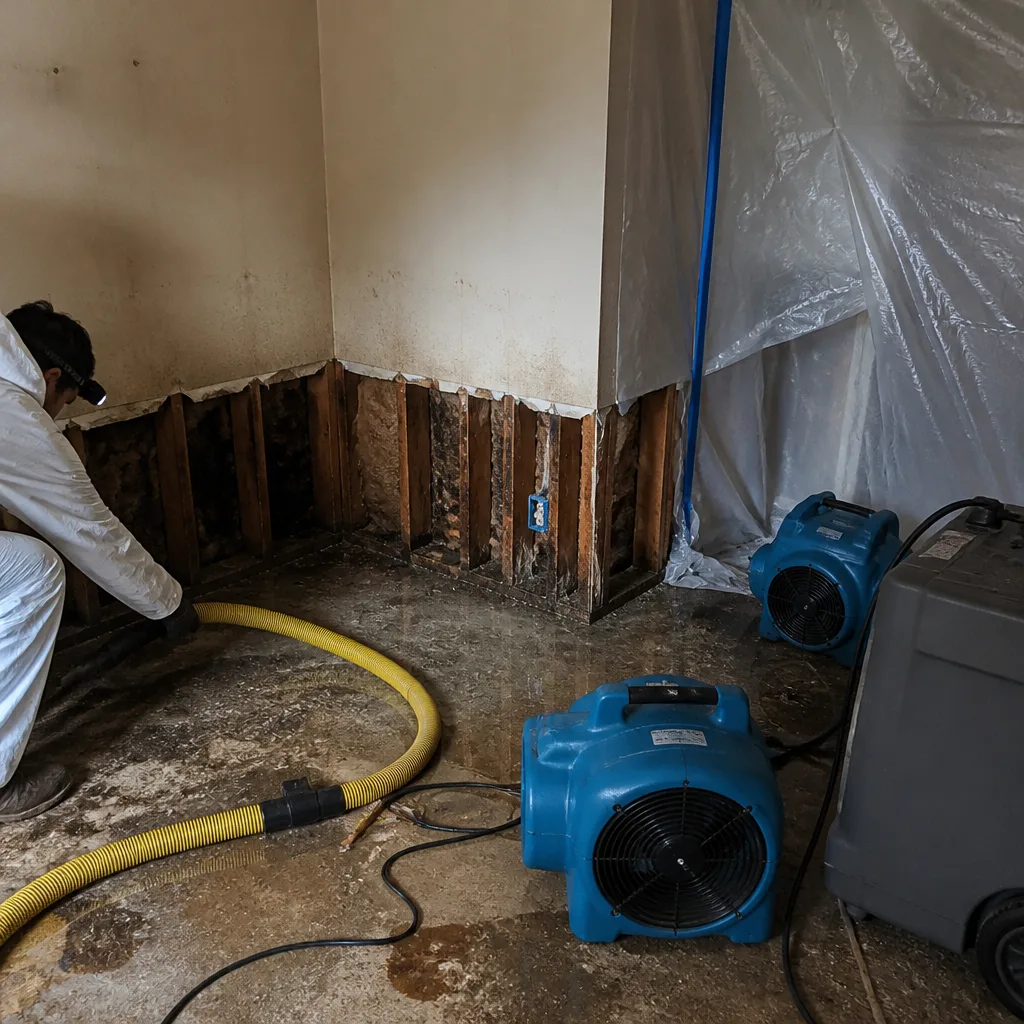 Before
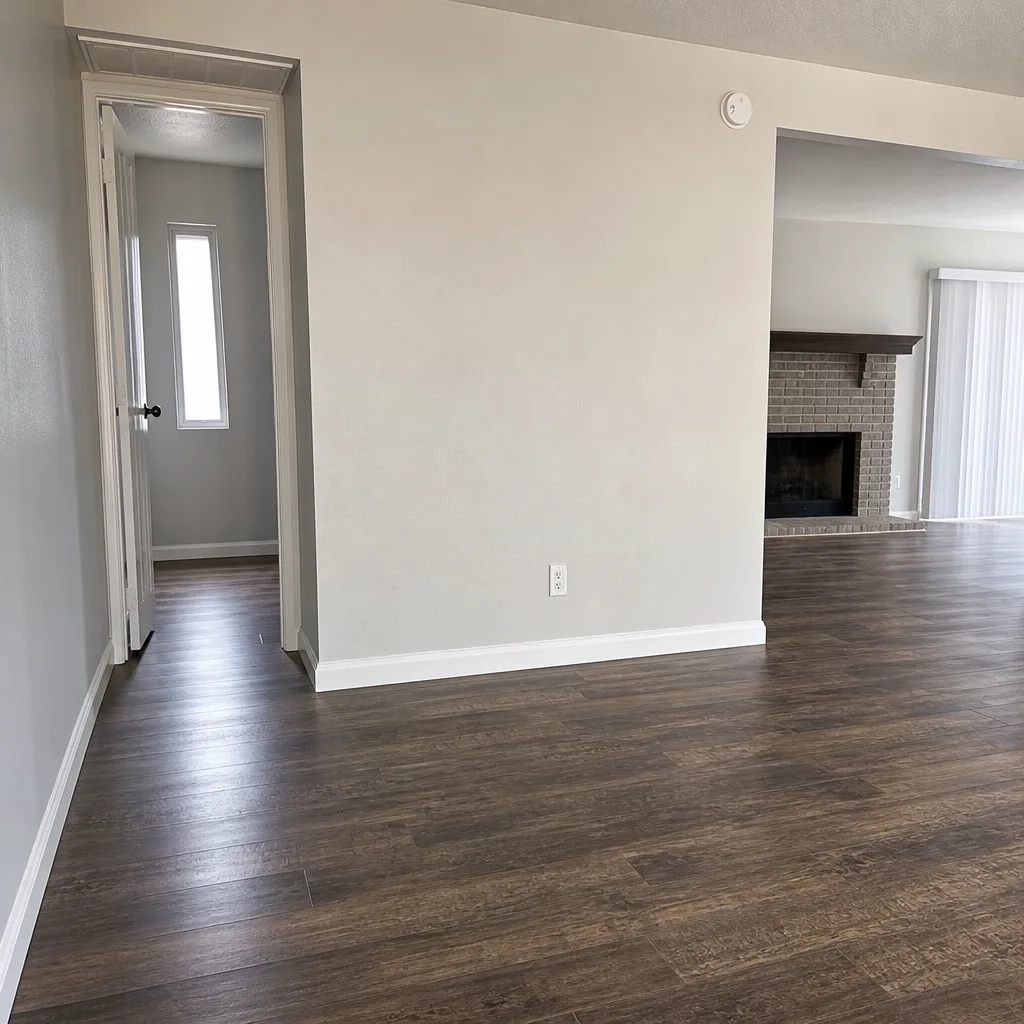 After
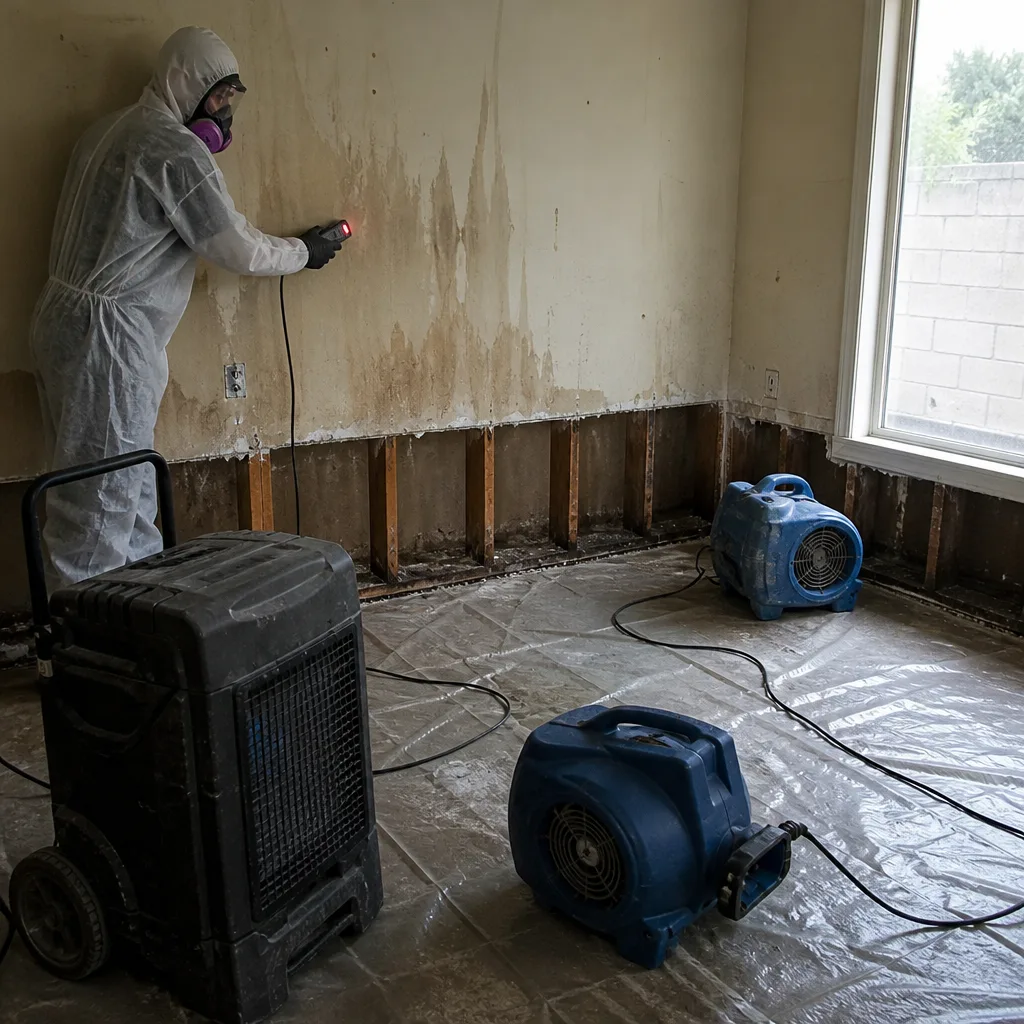 Before
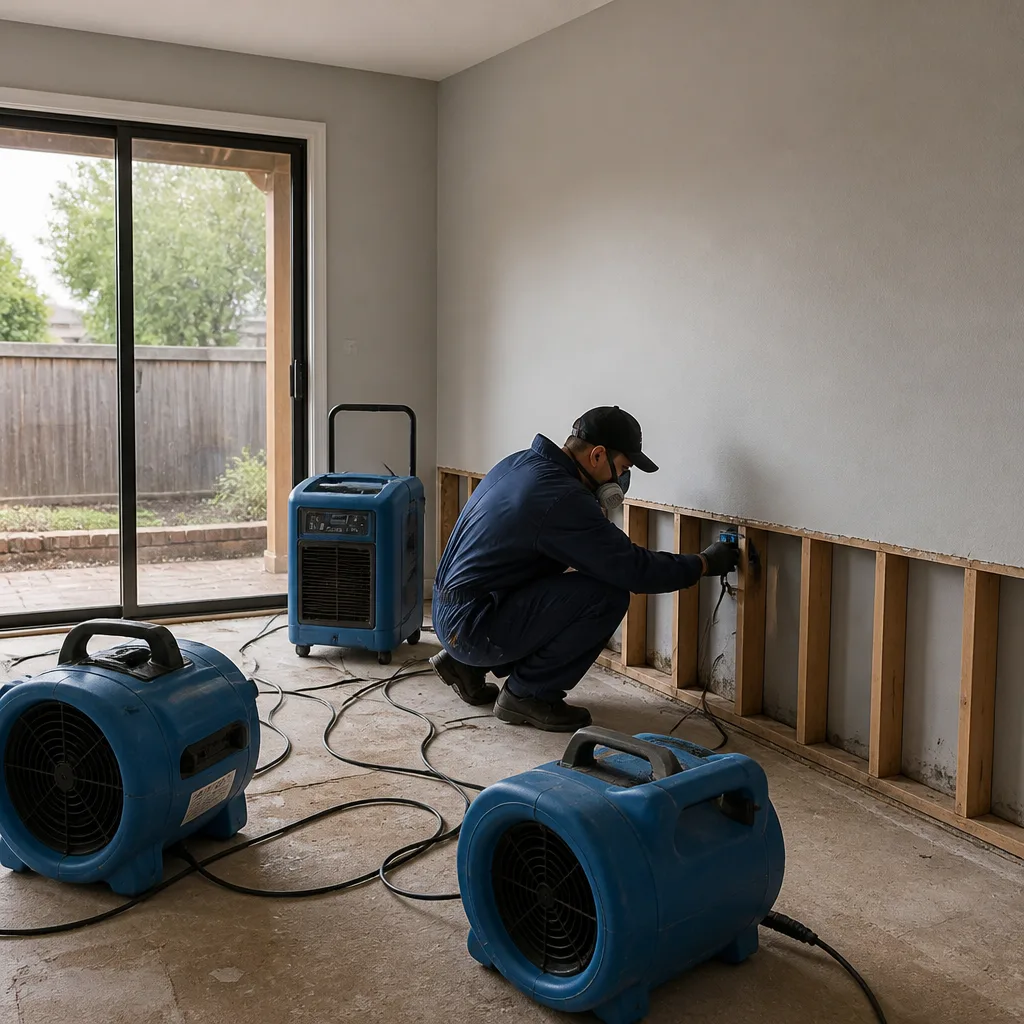 After
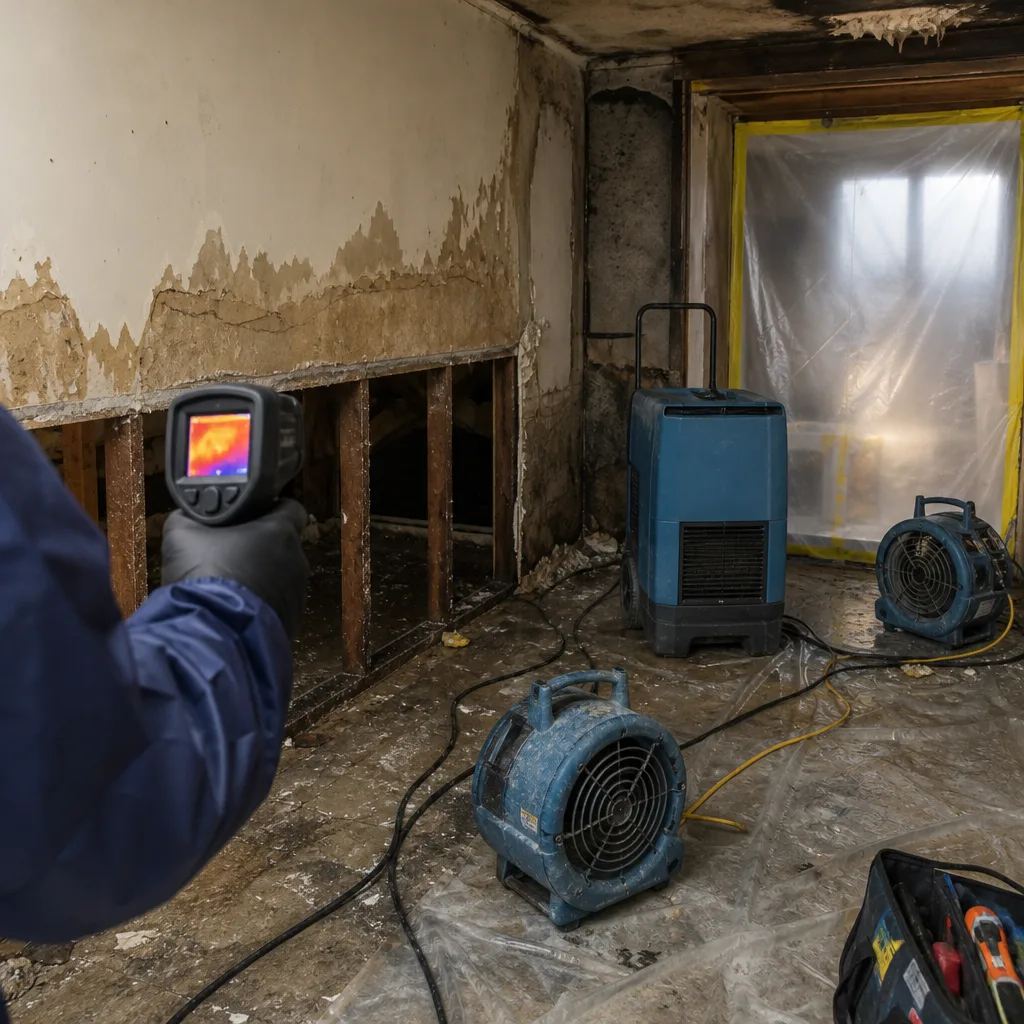 Before
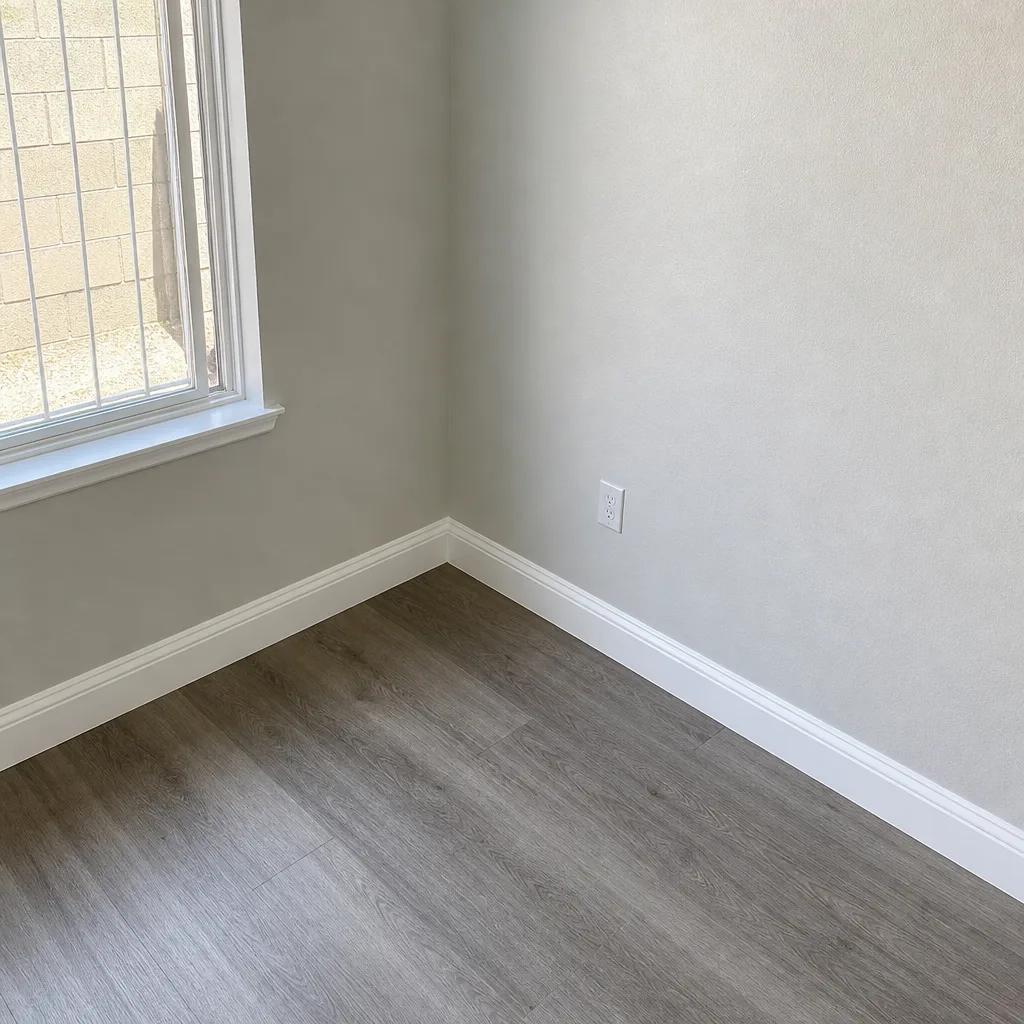 After
Pricing for Mold Remediation in Laguna Hills, CA
We Also Serve Cities Near Laguna Hills
Flood Guard Water Damage runs mold remediation crews across the South Orange County area. If you’re in Laguna Woods, Lake Forest, Mission Viejo, or Coto De Caza, we serve those communities with the same IICRC-certified process and equipment. We work throughout Laguna Hills and the neighboring 92653 and 92654 corridors daily.
Serving Laguna Hills, CA — Our Local Coverage Area
We’re based in the Laguna Hills area and know this community well. Use the map below to see our service coverage — if you’re nearby, we can almost certainly help.
FAQs About Mold Remediation in Laguna Hills
Our upstairs laundry closet leaked and now the unit below has mold – who coordinates the HOA approval for remediation?
Flood Guard Water Damage coordinates with the HOA directly. We document the moisture source, map the affected common wall, and produce a written scope of work that addresses both units. The HOA management company reviews the scope, approves the work, and we handle the scheduling. You don’t have to play messenger between your neighbor and the board. Call us at (844) 716-1094 and we’ll start the documentation the same day.
How fast does mold grow after a slab leak in a Laguna Hills tract home?
Mold can begin colonizing within 24 to 48 hours of a water release in a warm, dark wall cavity or under flooring. A slab leak in a Laguna Hills tract home typically goes unnoticed longer than a visible pipe burst, because the water travels under the slab and wicks into baseboards and drywall slowly. By the time a homeowner sees staining or smells odor, the mold is often 7 to 14 days old. That’s why we treat any slab leak in 92653 or 92654 as a potential mold remediation, not just a plumbing repair.
Does Laguna Hills’ dry climate reduce mold risk after a water loss?
Semi-arid conditions do help-IICRC drying logs in Laguna Hills often show faster evaporation than coastal cities once air movers and dehumidifiers are running. But dry air doesn’t prevent mold inside a wet wall cavity. The cavity itself holds humidity. Mold grows inside the building envelope regardless of outside humidity, which is why we don’t skip containment on a Laguna Hills job just because the air is dry. Rapid drying works in your favor only if someone starts it immediately.
What is the difference between Category 1, 2, and 3 water in mold remediation?
Category 1 is clean water from a supply line or tub overflow-clean at the source. Category 2 is gray water that contains some contamination, like a washing machine discharge or an aquarium leak. Category 3 is black water, which includes sewage backup and floodwater. Mold remediation scope changes based on category: Category 1 losses often allow drywall salvage in some cases, while Category 3 water requires full removal of affected porous materials and more aggressive antimicrobial treatment. We identify the category before we write the scope, because it changes the cost and the safety protocol. Call (844) 716-1094 if you’re unsure what you’re dealing with.
Can you handle bathroom mold removal in a Laguna Hills condo without disturbing our neighbors?
Yes. We run a contained negative air environment inside your unit, seal the common wall penetrations, and keep work noise and debris inside the containment area. Our crews have worked in occupied condo buildings throughout 92653 where neighbors are home during remediation. The process is designed so the mold never leaves the work zone. If access to a shared chase or wall is required from the adjacent unit, we coordinate that access through the HOA with advance notice, never a surprise knock on a neighbor’s door.
Contact Flood Guard Water Damage in Laguna Hills
If you smell mold, see staining, or had a water event that was never professionally dried, call Flood Guard Water Damage at (844) 716-1094. We serve Laguna Hills, Lake Forest, Mission Viejo, Laguna Woods, and Coto De Caza with IICRC-certified mold remediation, commercial-grade drying equipment, and a written scope of work before anything gets opened. Noel Ibarra and the team will walk you through the process, document everything, and get your home back to a condition where you’re not worried about what’s behind the drywall.
Written by Noel Ibarra, Owner at Flood Guard Water Damage, serving Laguna Hills and South Orange County with IICRC-certified mold remediation and structural drying.