 Water damage drying
 Fire & smoke cleanup
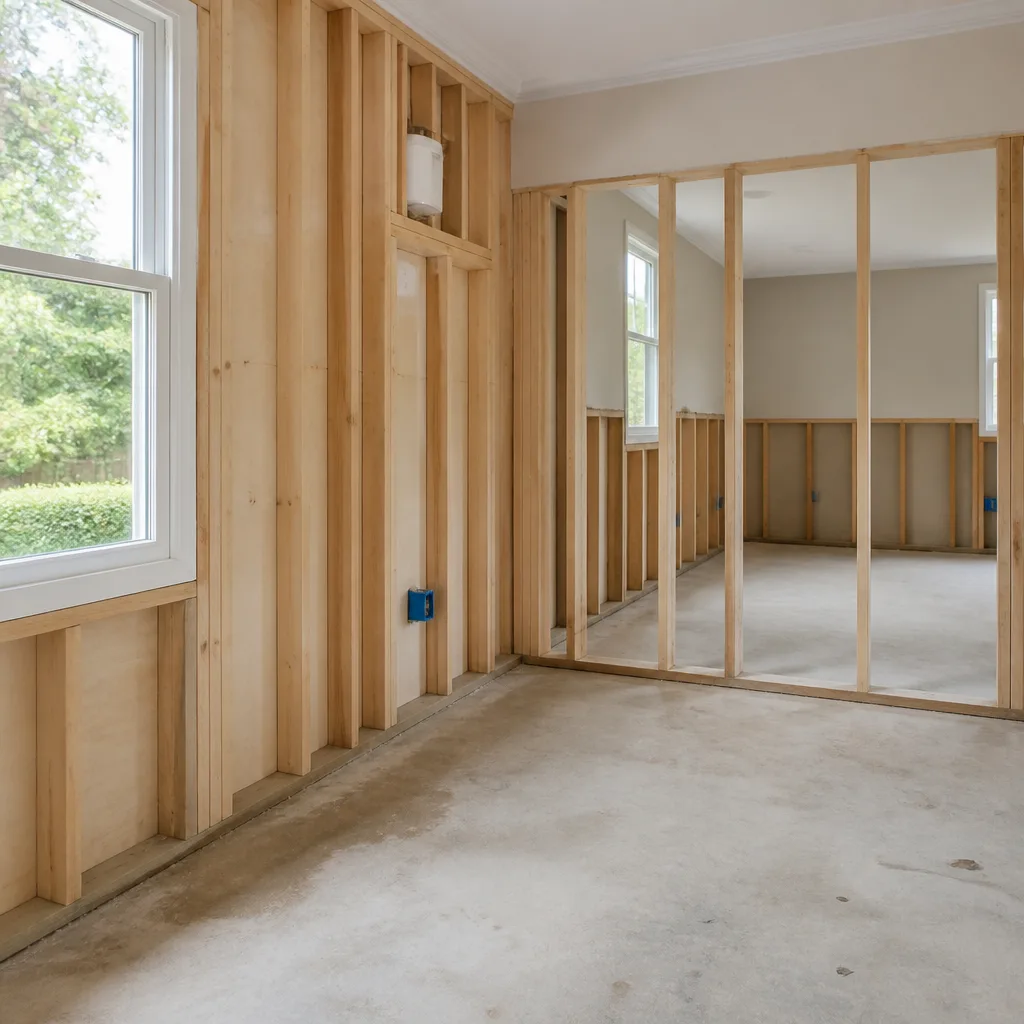 Mold remediation
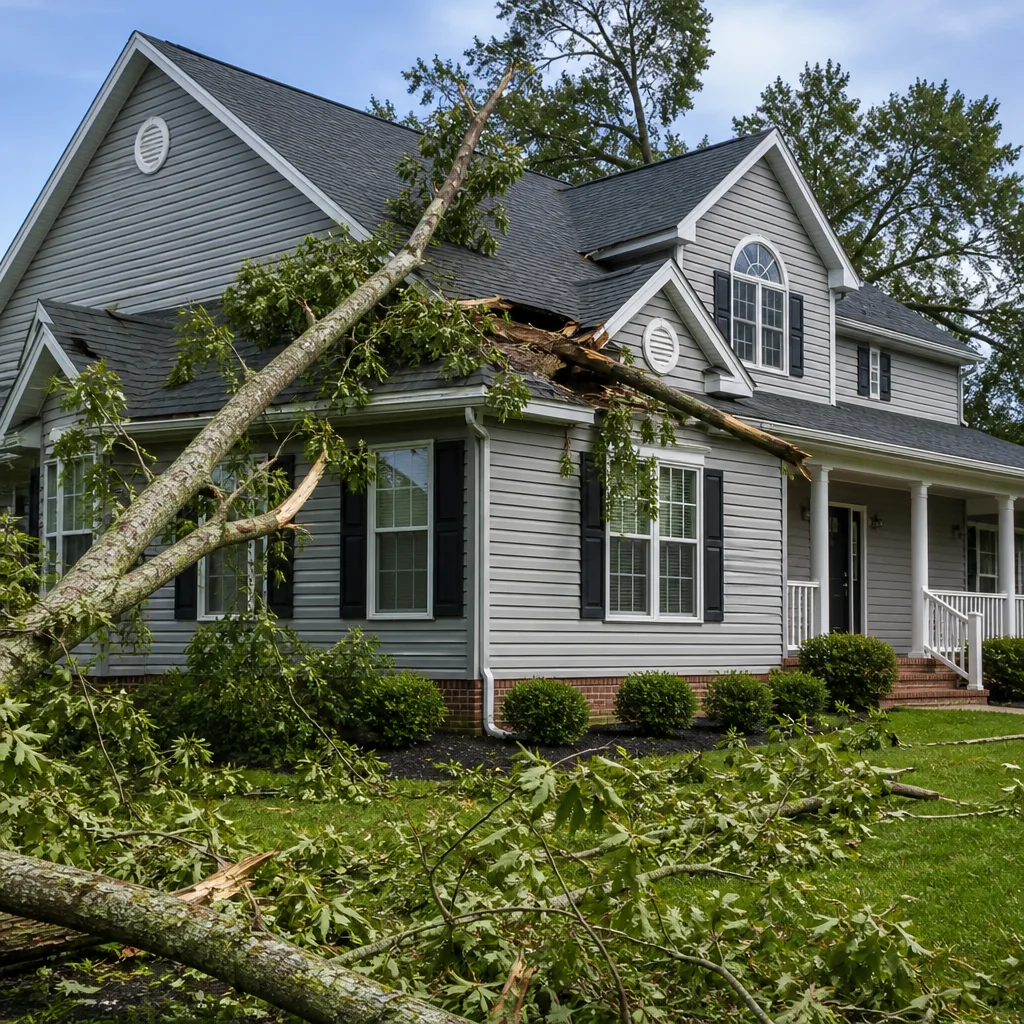 Storm response
 Sewage cleanup
 Reconstruction
Free visual inspection and a written scope of work before any mitigation begins - photos, moisture readings, and drying logs go in your claim file
The scope we write is the scope we bill. Anything new gets shown to you, in writing, before we touch it.
Get your free estimateFast, Reliable Water Damage Restoration Across Calimesa
Water damage restoration in Calimesa usually means two things are happening at once: water is where it shouldn’t be, and the clock is running. The San Gorgonio Pass shapes how homes here fail. Wind tears shingles loose before winter rain arrives, then the next storm pushes water through the gap. When you call us from Calimesa, we answer with a plan, not a pitch. Our crews stage from Rancho Cucamonga and know the drive down the 10, so we arrive prepared for what Calimesa ranch homes and manufactured homes actually do when they get wet. Noel Ibarra leads a team that carries IICRC-certified drying protocols into every job, backed by Phoenix and Dri-Eaz equipment. Call (844) 716-1094 and we’ll get moving.
Why Flood Guard Water Damage Is Calimesa’s Preferred Water Damage Restoration Company
Calimesa homeowners don’t call a restorer twice to test the market. They call once, usually during or right after a storm, and they want the person who answers to know what a wet roof deck over a 1970s ranch home means. Our technicians have worked the streets off Calimesa Boulevard, the bench properties above the valley, and manufactured home parks across the 92320 zip. The reviews from Calimesa customers mention the same thing: we showed up fast, measured before we ripped anything out, and explained the drying plan in plain language. Response time to Calimesa from our Rancho Cucamonga base runs under an hour in typical conditions. When pass winds are gusting, that travel time still holds because we know the 10 corridor and the surface routes.
Local knowledge matters here because the failure mode isn’t always obvious. A Calimesa home with water staining the hallway ceiling might have a supply-line pinhole leak. Or it might have wind-lifted ridge shingles that let a full storm’s worth of water through the roof deck. Those are two different mitigation plans. We find out which one it is before we start cutting.
Restoration work we handle
Water Mitigation in Calimesa
Water Mitigation in Calimesa is the process of stopping active water movement, removing standing water, and drying the structure before secondary damage takes over. In this market, a homeowner typically calls us after a pipe failure, a wind-driven roof leak, or an appliance overflow. The urgency is real: wood-frame walls and original subflooring in 1960s – 1980s homes hold moisture well past the point where the surface feels dry. Costs for water mitigation in Calimesa typically run $1,800 to $4,500 depending on how many rooms are wet and whether cabinetry or drywall removal is required. Most jobs follow a three-step sequence: extraction, containment and airflow, then daily moisture readings until the wood reaches pre-loss equilibrium.
We measure. We don’t guess. Moisture mapping with thermal imaging and pin meters tells us exactly how far water traveled inside a wall cavity. That matters here because Calimesa’s semi-arid climate can fool you. A wall feels dry to the touch in low humidity, but inside the cavity, framing is still holding 80% moisture content. That’s how mold starts.
IICRC-Certified Drying Protocols
Every mitigation job follows the IICRC S500 standard for professional water damage restoration. That means we set containment where needed, calculate the right number of air movers and dehumidifiers per cubic foot of affected space, and log drying progress daily. The goal is documented dry, not surface-dry. Our team is registered with the RIA and holds to IICRC methodology, and Noel Ibarra personally reviews drying logs before any equipment gets pulled from a Calimesa job.
Injectidry for Non-Invasive Structural Drying
Some Calimesa ranch homes have original tongue-and-groove subfloors or walls that don’t dry well through surface airflow alone. For those, we deploy Injectidry systems that pull moisture out through small access points instead of requiring full demolition. We open walls when necessary, not by default. That distinction saves Calimesa homeowners real money in rebuild costs.
Flooded Basement in Calimesa
Flooded Basement in Calimesa usually involves a lower level or a below-grade addition in one of the older ranch homes or manufactured setups off Singleton Road or Sandalwood Drive. The water source could be a failed sump pump, a broken supply line, or surface water that pushed in during one of the rare but intense winter storms this region gets. Basement water removal in Calimesa typically runs $2,200 to $5,800 depending on water depth, category classification, and whether finished walls and flooring are affected. We arrive with truck-mount extraction, remove the standing water, then map moisture in the slab and lower framing before placing dryers.
Manufactured homes and older ranch basements in Calimesa have thinner floor assemblies and often no vapor barrier under the slab. That means water wicks upward into floor joists and wall plates fast. We treat those lower levels as a containment zone, not just a wet room. Drying takes what it takes, verified by daily readings.
Category Classification and What It Changes
Before extraction starts, we classify the water. Category 1 is clean water from a supply line or a failed appliance hose. Category 2 carries contaminants, like sump overflow or washing machine discharge. Category 3 is grossly contaminated, like sewage or stormwater that came through the ground. Calimesa basements that flooded from surface runoff during a winter storm are often Category 2 or 3, which means porous materials like carpet and pad come out, and the remaining surfaces get cleaned and treated before drying begins.
Drying Lower Levels Without Tearing Everything Out
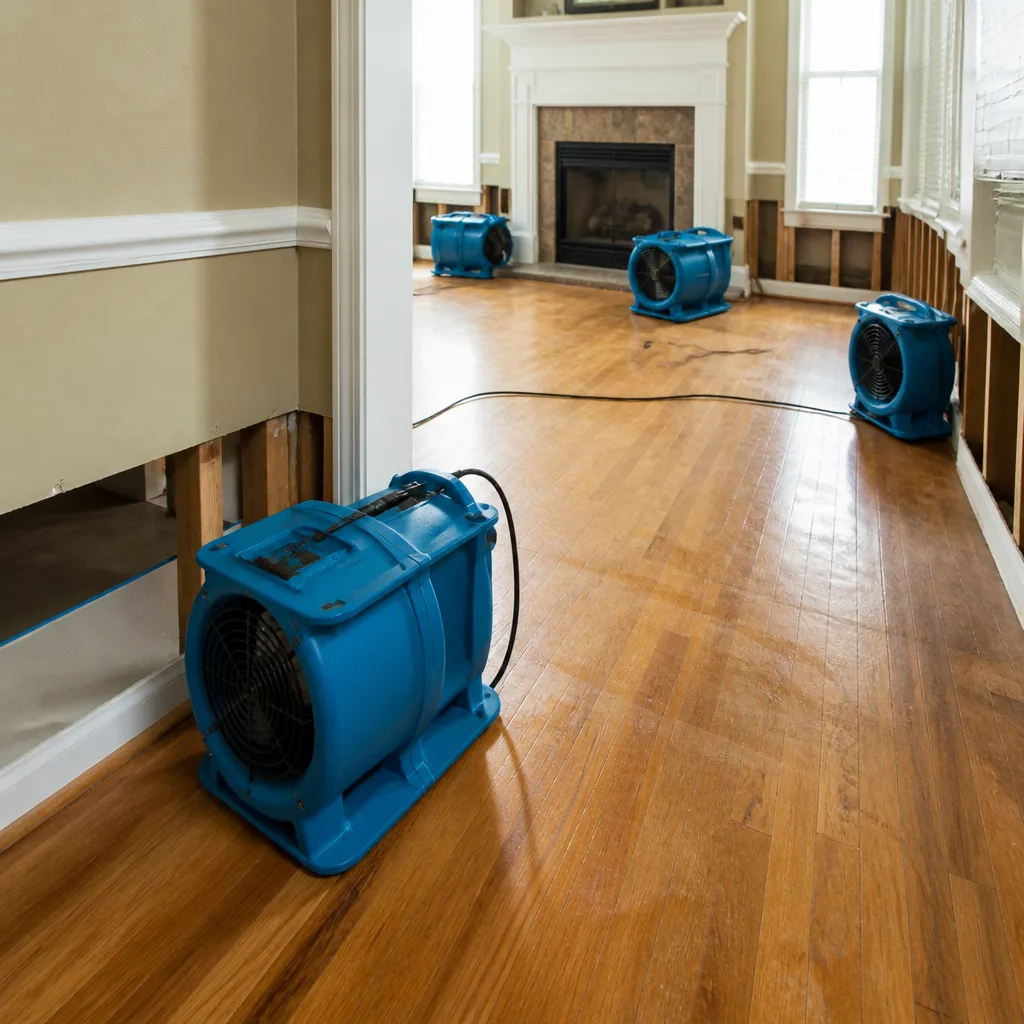
If a Calimesa basement has open framing and an unfinished slab, we can frequently dry it in place with Phoenix axial fans and low-grain refrigerant dehumidifiers. If it’s finished, we remove affected drywall in a clean line, treat the cavity, and set equipment behind the wall. Moisture readings guide every step. We don’t run equipment for the sake of looking busy; we run it until the numbers say the structure is dry.
Trusted Brands We Service in Calimesa
We work on all makes and models of water-affected systems in Calimesa, but we’re also specific about the equipment we bring. Our crews deploy Dri-Eaz and Phoenix drying systems, XPOWER air movers, and B-Air scrubbers on jobs across the 92320 zip. These are the same brands preferred on large commercial loss claims, which means a Calimesa ranch home gets commercial-grade drying capacity with residential attention to detail. We keep a stocked trailer for common local failure points: pipe fittings for original galvanized supply lines, roof tarping materials for wind-damaged ridge sections, and containment supplies for interior cavity drying.
See the difference
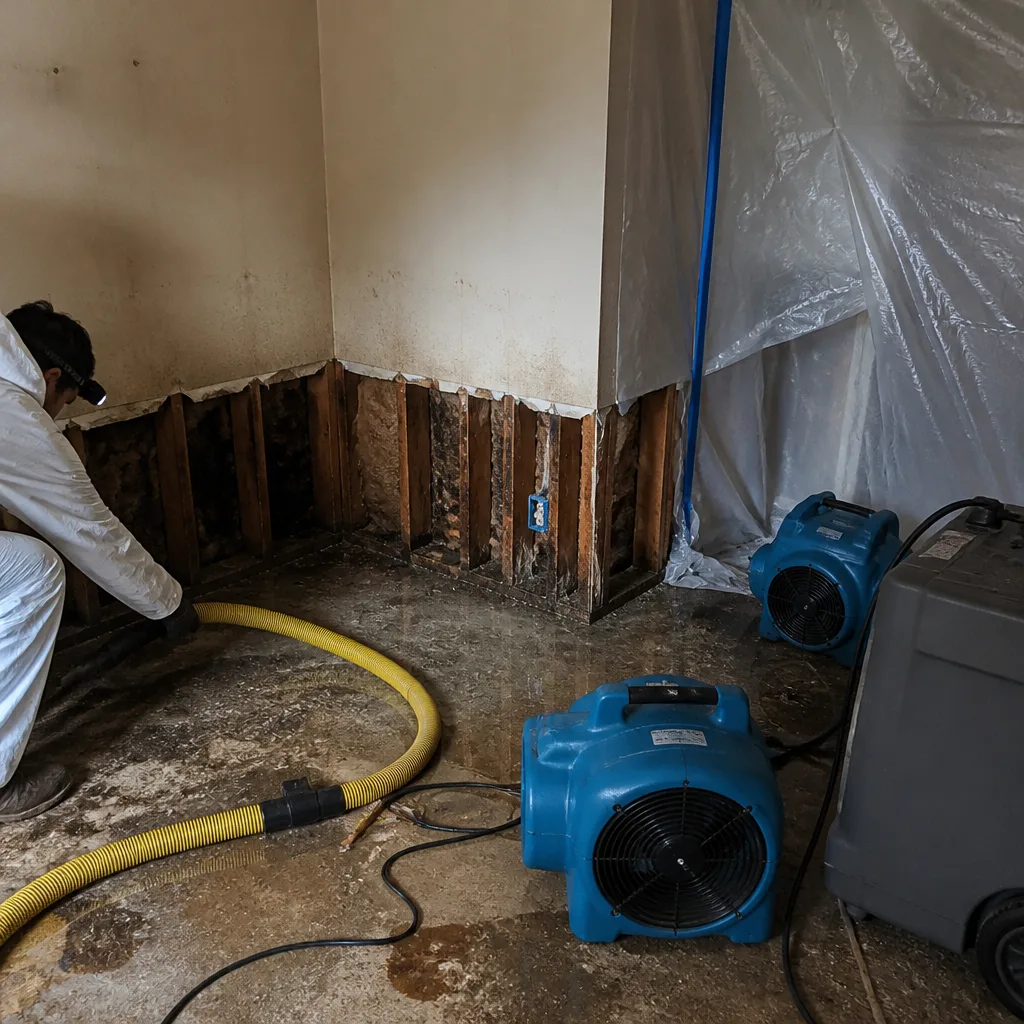 Before
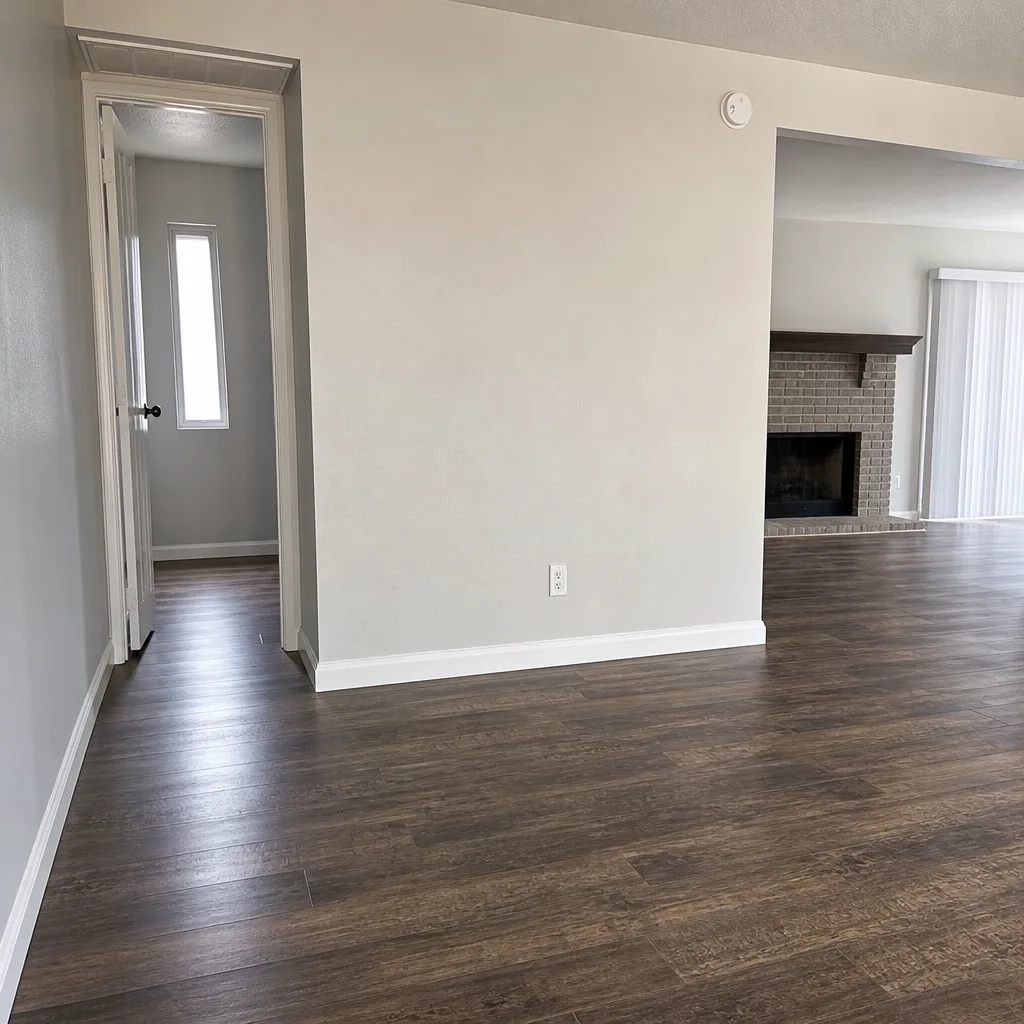 After
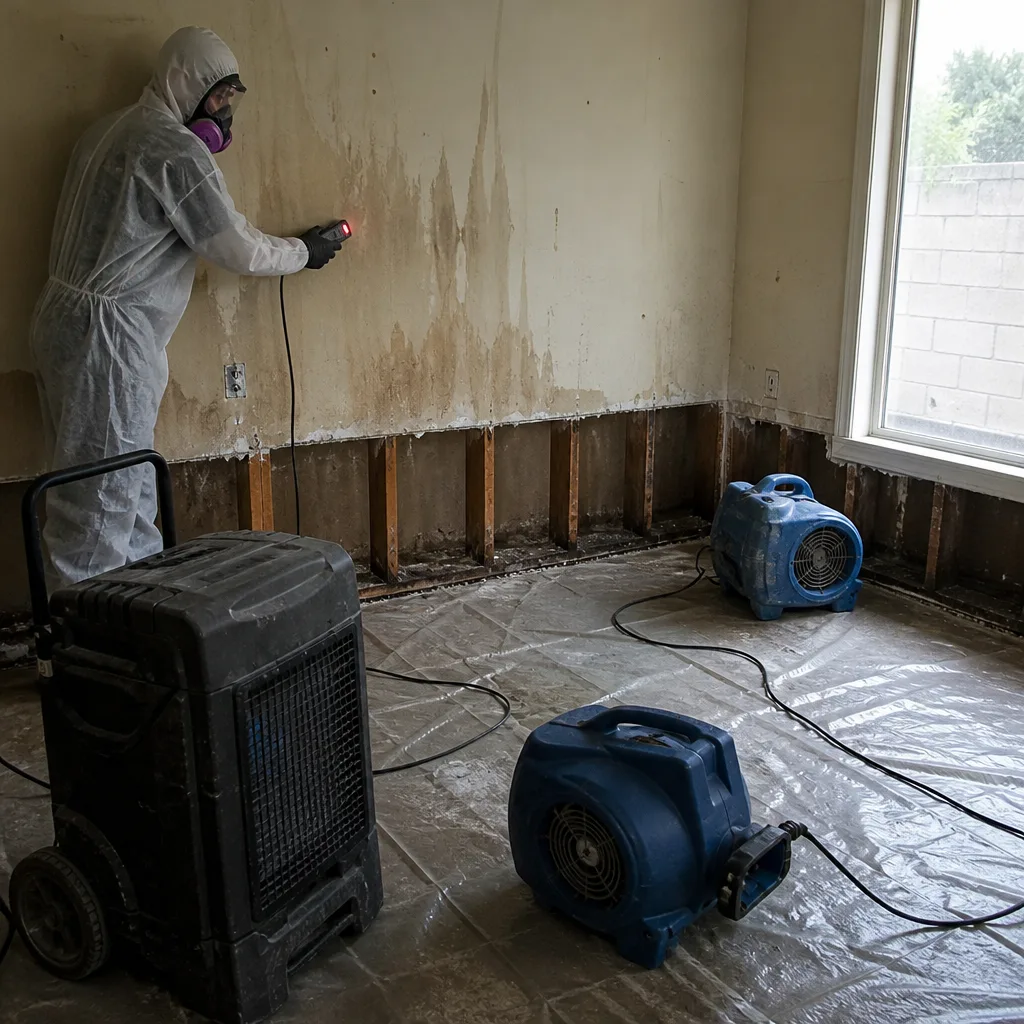 Before
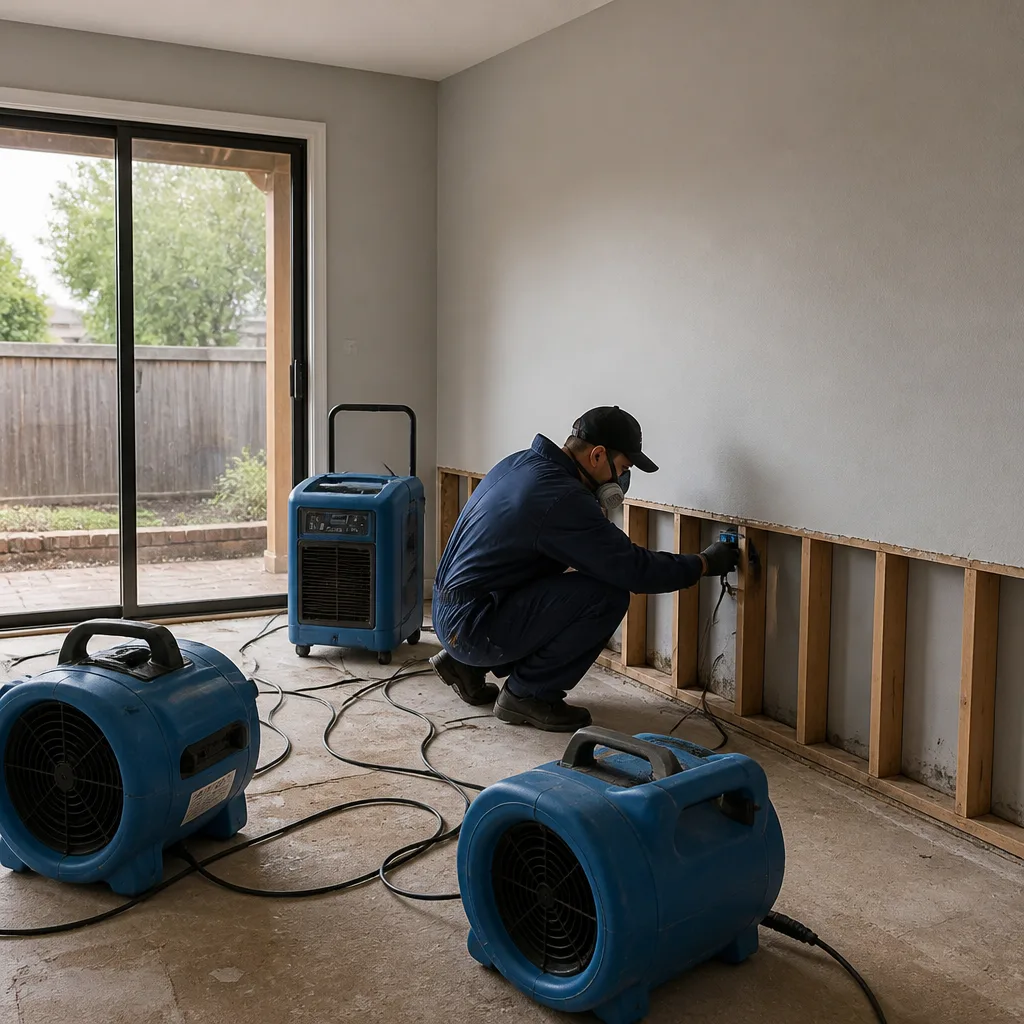 After
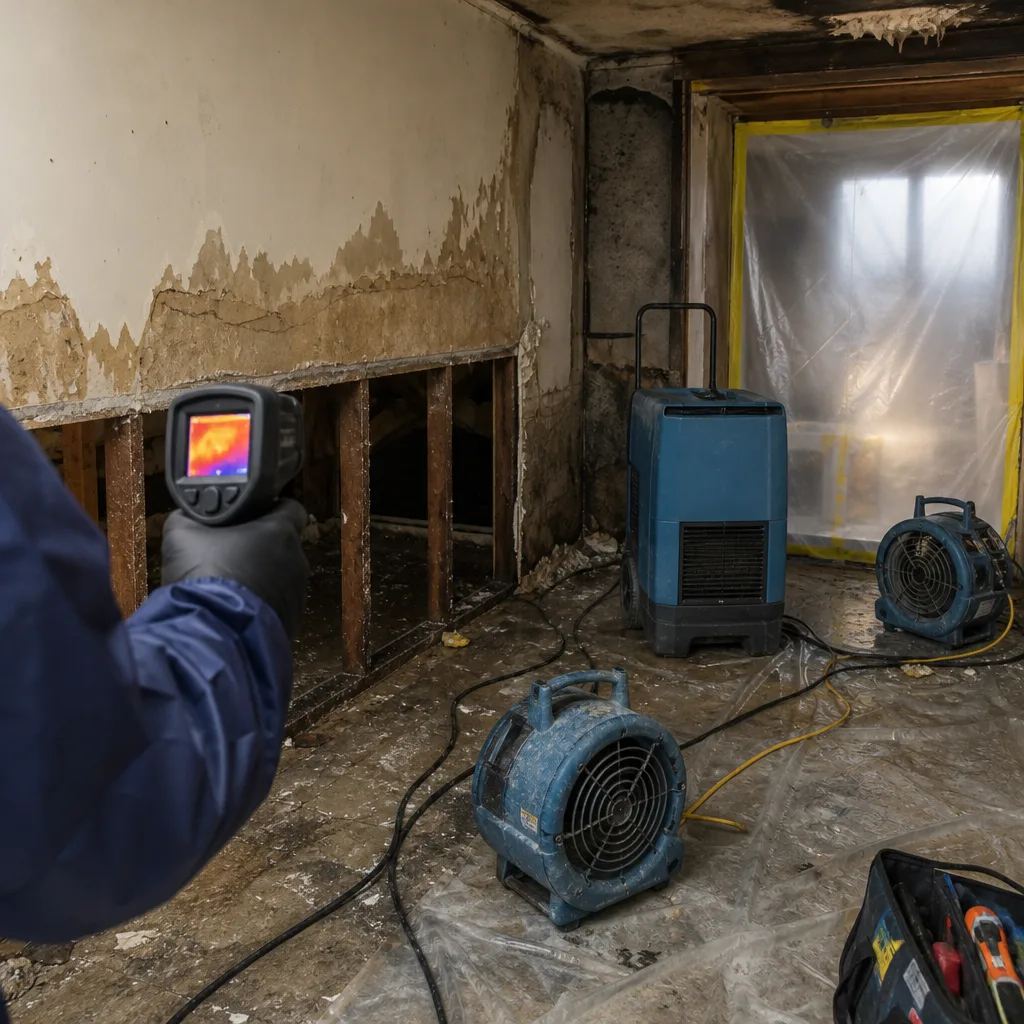 Before
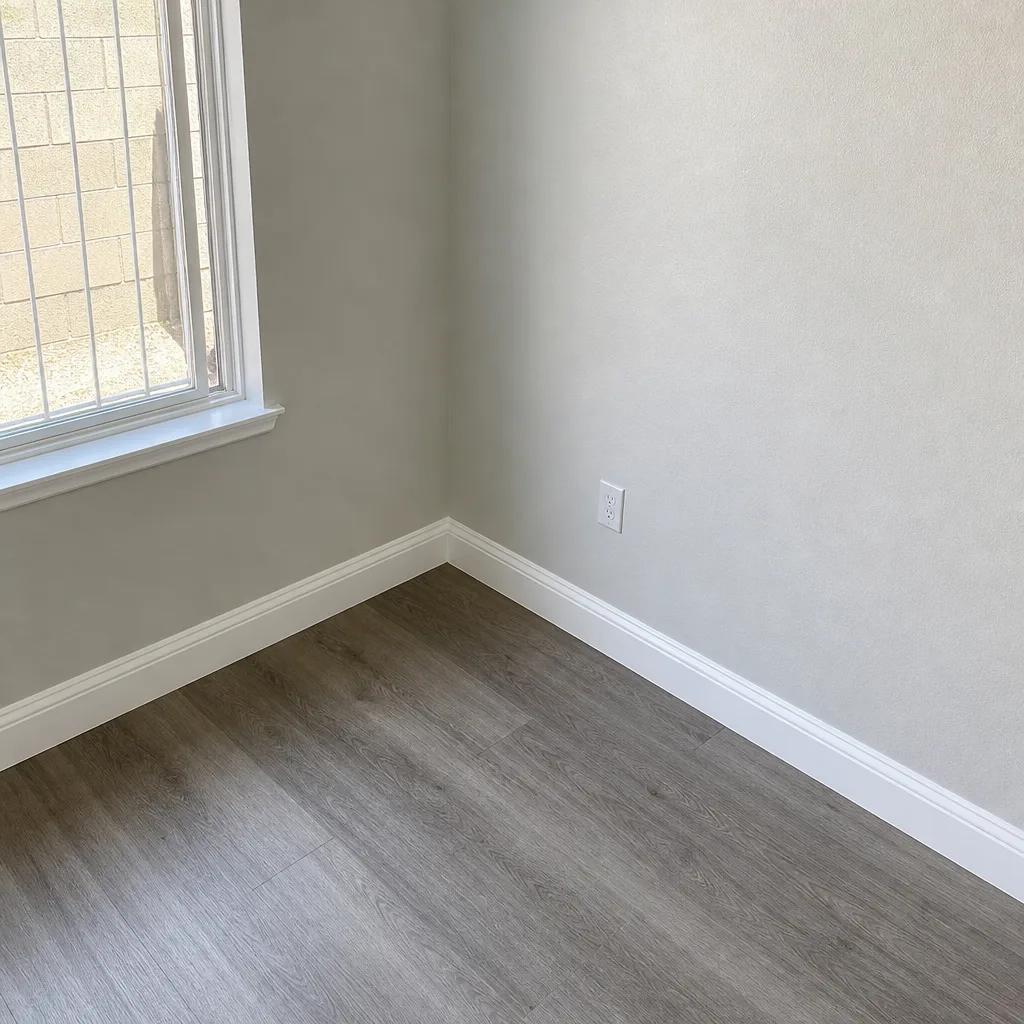 After
Common Water Damage Restoration Problems We See in Calimesa Homes
- Wind-driven rain entering through aged ridge vents and shingles. The San Gorgonio Pass winds tear loose the same shingles that were just barely attached after years of intense sun. The next rainstorm finds the gap before the homeowner does.
- Original galvanized supply lines failing inside wood-frame walls. Homes built in the 1960s and 1970s around Calimesa often still have steel pipes. They corrode from the inside, then fail suddenly. The leak runs inside the wall cavity for days before it shows.
- Manufactured home subfloors absorbing water from appliance overflows. The floor assemblies in many Calimesa manufactured homes are thinner than site-built framing. A washing machine hose failure can soak the subfloor, underlayment, and belly insulation at the same time.
- Smoke and water damage arriving together after a windy spring. A pass-wind event pushes smoke and ash through window seals and vents while also tearing shingles loose. The same property needs odor treatment and structural drying, and treating only one leaves the other behind.
Pricing for Water Damage Restoration in Calimesa, CA
Water damage restoration in Calimesa doesn’t have a flat rate, but the ranges are predictable. Emergency water extraction on a single room typically runs $800 to $1,600. Structural drying for a flooded basement or a multi-room pipe failure falls between $2,200 and $5,800. A wind-driven roof leak that soaked a ceiling and closet runs $1,500 to $4,000 depending on whether the roof membrane itself needs temporary sealing. What moves the number: how many rooms are wet, whether the water is Category 1 or Category 3, and how much drywall or flooring we have to remove to dry the framing. Every Calimesa quote is written before work starts. Call (844) 716-1094 for a free estimate, and we’ll give you the number, not a vague range stretched into a surprise.
We Also Serve Cities Near Calimesa
Beyond Calimesa, our crews regularly handle Water Damage Restoration in Yucaipa, Mentone, Redlands, and Banning. The drive times are short, the failure modes are similar, and the same pass-wind conditions affect all of them. If you’re in one of those communities or anywhere nearby in the Inland Empire, give us a call at (844) 716-1094. We cover Water Damage Restoration in Calimesa and the surrounding area with the same equipment and the same measured approach.
Serving Calimesa, CA — Our Local Coverage Area
We’re based in the Calimesa area and know this community well. Use the map below to see our service coverage — if you’re nearby, we can almost certainly help.
FAQs About Water Damage Restoration in Calimesa
Calimesa sits at the mouth of the San Gorgonio Pass, where a single windy spring can force smoke and ash through window seals and vents while also ripping aging shingles and ridge vents loose. The same house then shows smoke odor inside and a fresh roof leak after the next rain. We run both protocols together: we isolate the smoke-affected areas, treat the odor, and dry the water-damaged framing. Missing either one leaves a problem behind. If you’re seeing water stains and smelling smoke after a wind event, call (844) 716-1094 and we’ll assess both at once.
In Calimesa’s semi-arid climate, mold growth typically starts in 48 to 72 hours when building materials stay wet, especially inside dark wall cavities with minimal airflow. The low outdoor humidity can slow surface growth, but it also lures homeowners into thinking the wall is dry when the framing inside is still saturated. That hidden moisture is where mold starts. The faster we map the wet zone and start drying, the less likely mold gets a foothold. Call us the day you see the leak, not the day you see the staining.
Water Category tells us how contaminated the water is and what we have to remove. Category 1 is clean water from a supply line or appliance hose. Category 2 has some contamination, like sump overflow. Category 3 is unsanitary, like sewage or stormwater that ran across the ground. In Calimesa, basement floods from winter runoff are often Category 2 or 3, which changes the scope. Porous materials come out and affected surfaces get cleaned before drying starts. We classify before we extract, so the estimate you get reflects the actual job.
We start by extracting standing water, then we map moisture in the floor assembly and lower framing. Manufactured home basements and older ranch lower levels in Calimesa often lack a vapor barrier under the slab, so water wicks upward fast. If the floor assembly is open, we dry it in place with Phoenix fans and dehumidifiers. If it’s finished, we remove the minimum amount of drywall needed to get airflow behind the wall, then dry the cavity. Injectidry systems can dry inside tight wall spaces without full demolition. Every day, moisture readings log progress until the framing is back to pre-loss levels.
Yes. A plumbing leak is usually a single, identifiable entry point. A wind-damaged roof or window leak spreads water across a wider area, often trickling through the roof deck, down rafters, and into wall cavities on more than one side of the house. That means the moisture map looks scattered instead of concentrated. It also means the source might still be open, so we tarp or seal the roof area before drying. In Calimesa, where pass winds regularly damage ridge vents and window seals, we check the roof and window condition on every water job, even when a pipe failure looks obvious. Call (844) 716-1094 and we’ll find the actual entry point before we start the mitigation.
Written by Noel Ibarra, Owner at Flood Guard Water Damage, serving Calimesa and the surrounding Inland Empire.