 Water damage drying
 Fire & smoke cleanup
 Mold remediation
 Storm response
 Sewage cleanup
 Reconstruction
Free visual inspection and a written scope of work before any mitigation begins - photos, moisture readings, and drying logs go in your claim file
The scope we write is the scope we bill. Anything new gets shown to you, in writing, before we touch it.
Get your free estimateFast, Reliable Water Damage Restoration Across Banning
Water damage in Banning moves fast, and so do we. When a storm tears through the San Gorgonio Pass and sends water into your home, you need a team that understands Banning specifically – not a generic crew from over the hill. We’re Flood Guard Water Damage, and we’ve seen how wind-driven rain, clogged roof drains, and aging stucco create flood conditions here that you won’t find in Redlands or Beaumont. Our restoration teams respond to Banning with commercial-grade drying equipment and IICRC-certified protocols, usually arriving within hours of your call. Reach us at (844) 716-1094 day or night. When water is spreading through a slab foundation or wicking up plaster walls, waiting isn’t an option.
Why Flood Guard Water Damage Is Banning’s Preferred Water Damage Restoration Company
Banning homeowners call us because we respond like the situation is serious – because it is. Our water damage restoration crews work on the San Gorgonio Pass regularly, which means we arrive already knowing what we’re likely to find. That knowledge matters. A house off Ramsey Street with wind-blown grit packed into weep screeds fails differently than a condo in Yucaipa. We plan for that before the first moisture reading is taken.
Every job follows IICRC-certified drying protocols. That’s the restoration industry’s gold standard, and it means we measure moisture, document every reading, and dry to a standard – not a guess. Our lead technician, Noel Ibarra, has built our Banning reputation on that discipline. We run Dri-Eaz dehumidifiers, Phoenix air movers, and Injectidry systems that can dry wall cavities without ripping out original plaster. We’re active in the Restoration Industry Association and affiliated with the IFA, which keeps us accountable to updated technical standards. Homeowners who’ve called us after a burst pipe or a flash flood on the east side of town know what that means: a crew that shows up equipped, works clean, and leaves a documented drying log, not just a fan running in the corner.
Restoration work we handle
Emergency Water Damage Restoration in Banning
Emergency Water Damage Restoration in Banning usually starts with a call from a homeowner who just watched water pour through a ceiling or spill across a kitchen floor. In this city, that water often arrives with company – wind-driven grit from the pass has already forced its way into vents, window tracks, and stucco cracks. When the rain comes, that grit seals drainage paths and sends water where it shouldn’t go. Our emergency response to Banning covers the full 92220 ZIP code, from the neighborhoods near the I-10 corridor down to the residential streets south of Ramsey. We extract standing water, set containment, and map moisture in walls, floors, and slabs before mold has a chance to start.
Rapid Water Extraction
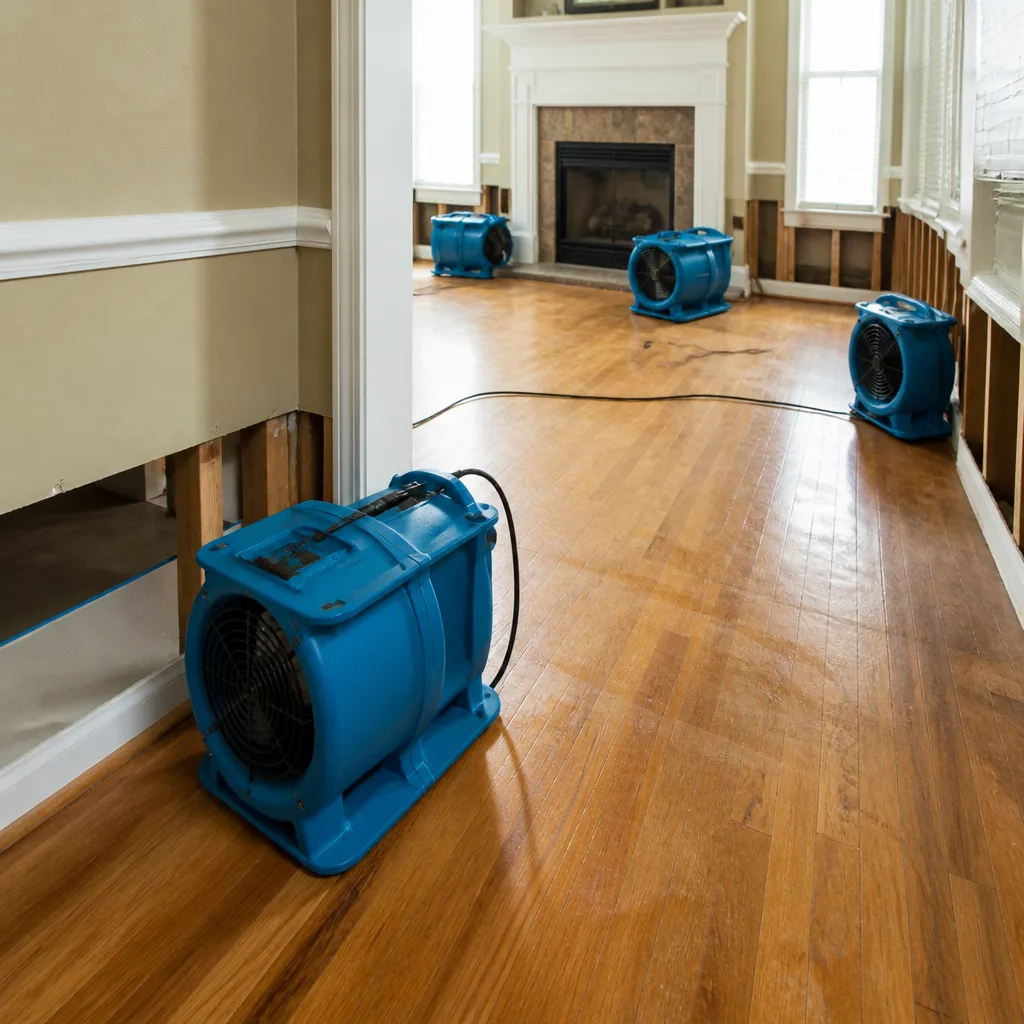
Standing water keeps moving through drywall, baseboards, and concrete long after the rain stops. Our extraction crews use truck-mounted and portable extractors to pull water out fast, then place air movers and dehumidifiers within hours. In Banning’s older slab homes, the first 24 hours determine whether a Category 1 water loss stays clean or degrades into a Category 2 or 3 contamination problem.
Structural Drying After Pass Storms
Wind-driven rain in Banning doesn’t just wet the surface. It forces moisture into wall cavities, behind stucco, and under baseboards. We use moisture mapping to find those hidden pockets, then place drying equipment where the water actually is – not just where it’s visible. Our Injectidry systems can dry inside walls without opening them up, which matters a lot in a 1950s home with original plaster you’d rather not lose.
Water Damage Repair in Banning
Water Damage Repair in Banning means more than drying things out. It means restoring a home so the damage doesn’t return. On many Banning jobs, water intrusion exposes bigger problems: roof drains that were already clogged with sand, stucco cracks that let in wind-driven rain, window tracks packed with grit. Our repair crews address those underlying issues as part of the restoration, not as an afterthought. A dry home with a compromised roof drain is just waiting for the next storm. We dry the structure, not just the surface – then we make sure the path water used to get in is closed.
Stucco and Plaster Repair
Banning’s older homes lean heavily on stucco-on-wood-frame construction. When water wicks up behind stucco, it shows up as efflorescence – white mineral staining – weeks after the storm. By then mold can already be growing inside the wall. We repair the water path and the visible damage together, matching materials to the home’s existing condition.
Floor and Slab Restoration
Many Banning homes sit on slab foundations without vapor barriers. Water from a burst pipe or a flooded wash can wick up through concrete and saturate flooring from below. We use penetrating moisture meters to track that migration, then set up targeted drying. Replacing flooring without drying the slab underneath just traps moisture and invites mold back within months.
Trusted Brands We Service in Banning
Flood Guard Water Damage works on all water damage restoration equipment brands, and we keep parts and consumables for the systems Banning homeowners actually have. If your home has a Dri-Eaz dehumidifier already running from a previous restoration, we can service it. Same with Phoenix air movers and XPOWER units. We restore using the same commercial-grade equipment brands we service – Dri-Eaz, Phoenix, B-Air, and XPOWER – so you’re getting restoration-grade drying, not a rented box fan from a hardware store. For Banning customers, that means faster turnaround on equipment repairs and no waiting on a part shipped from out of state. Call Noel’s team at (844) 716-1094 to schedule service.
See the difference
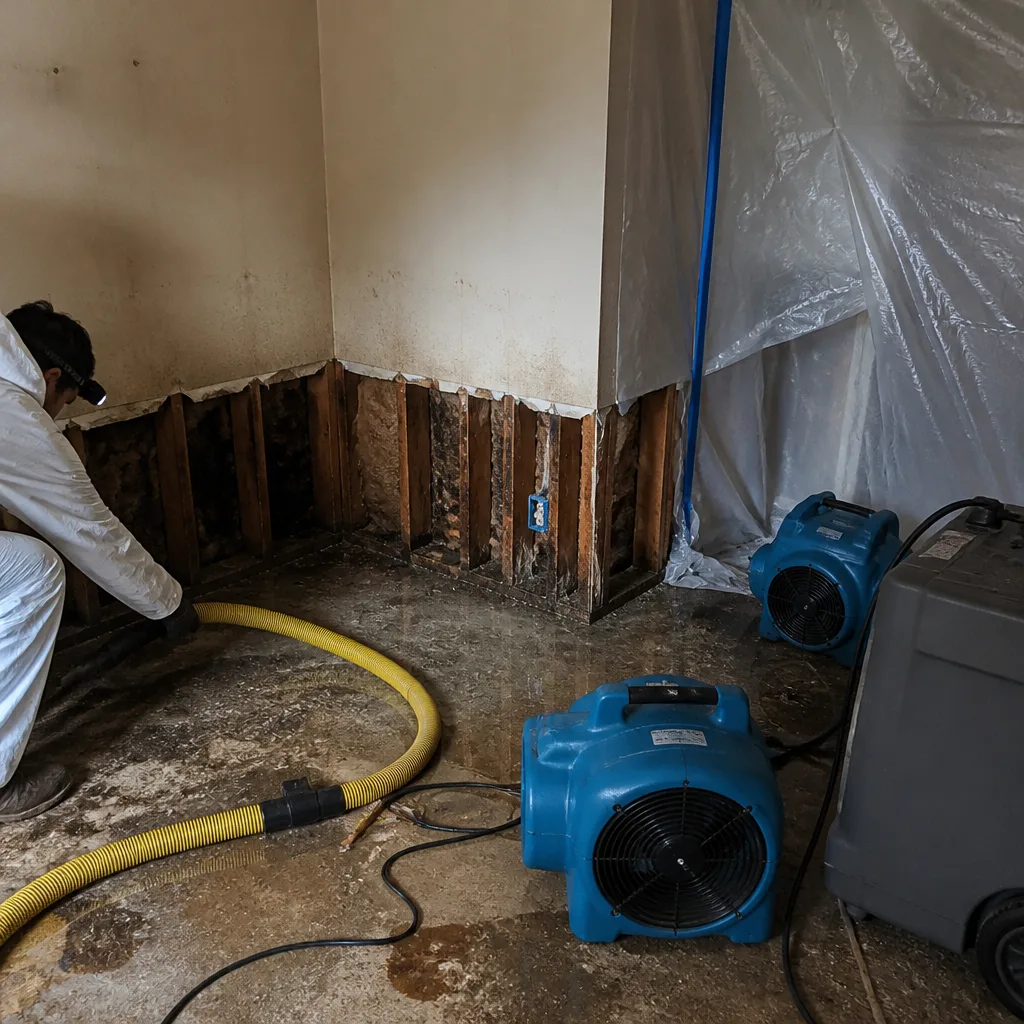 Before
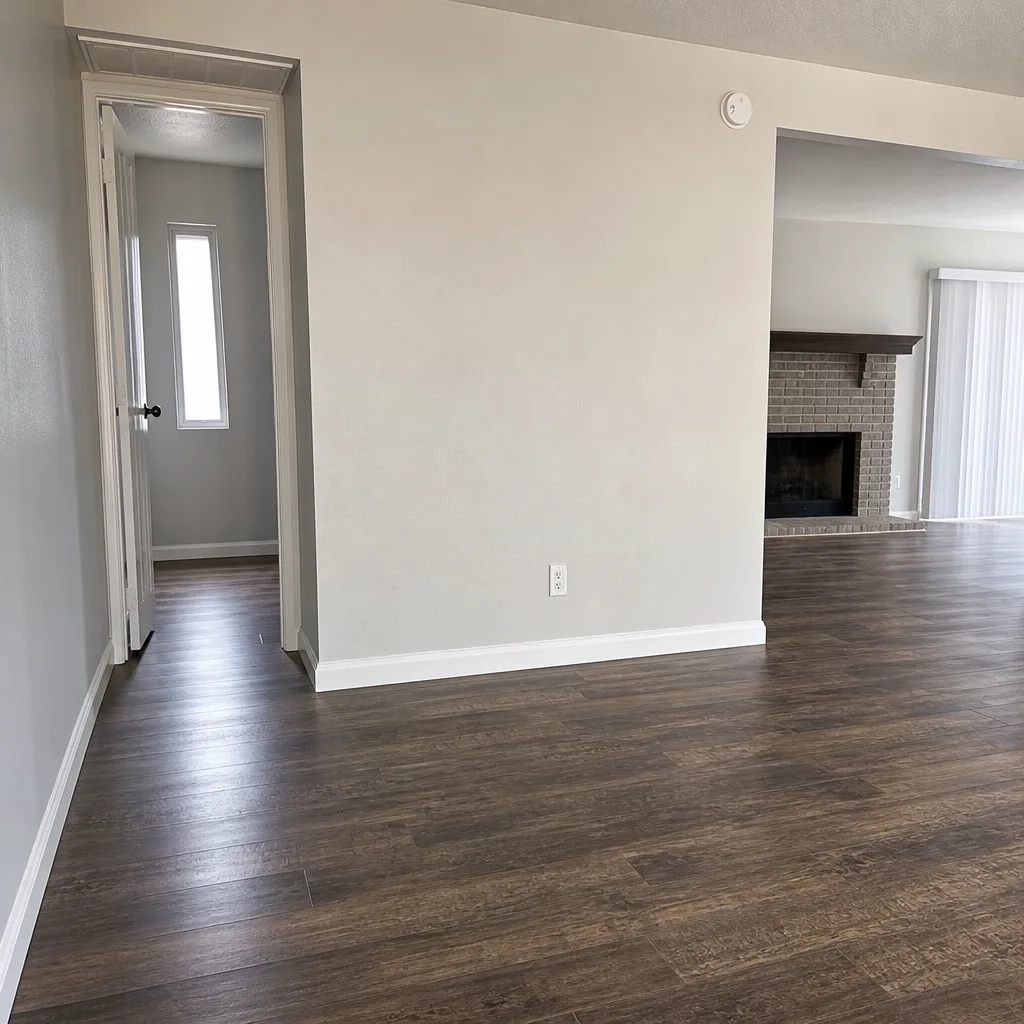 After
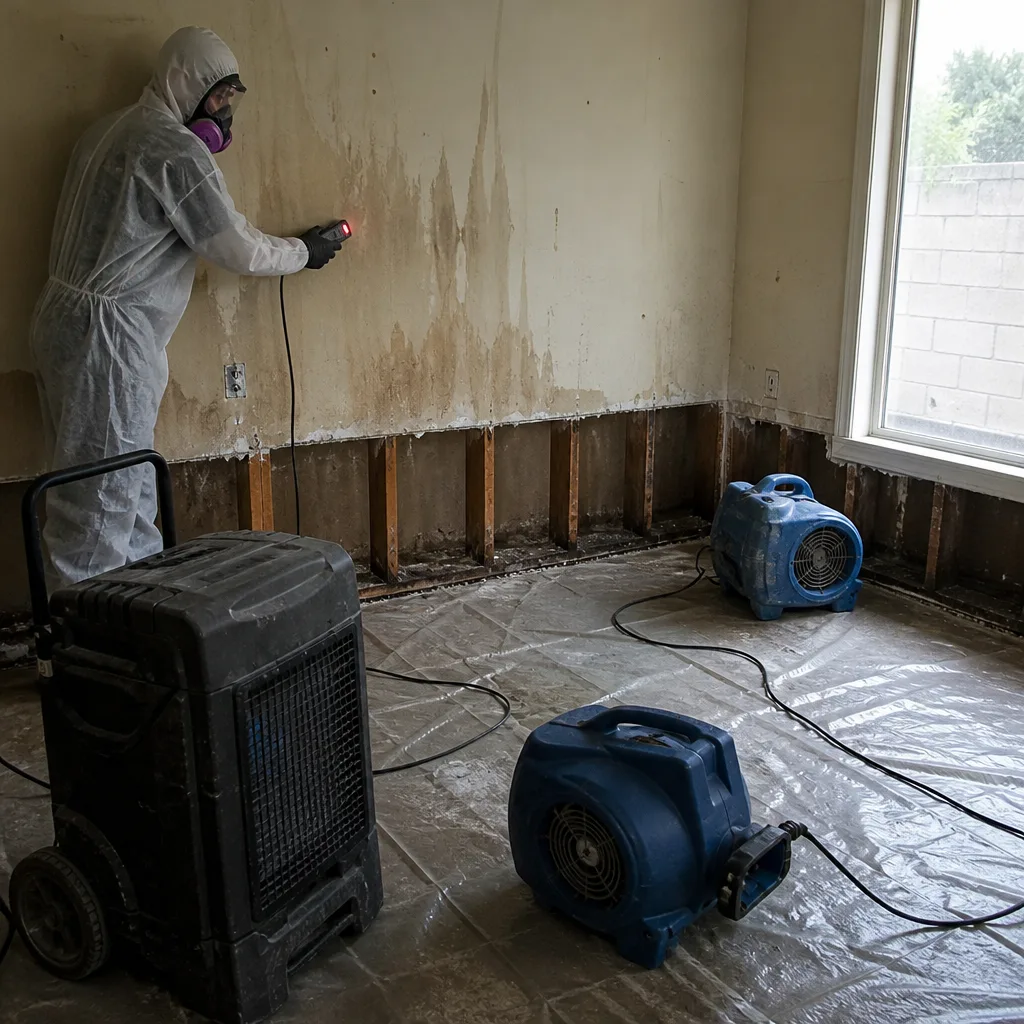 Before
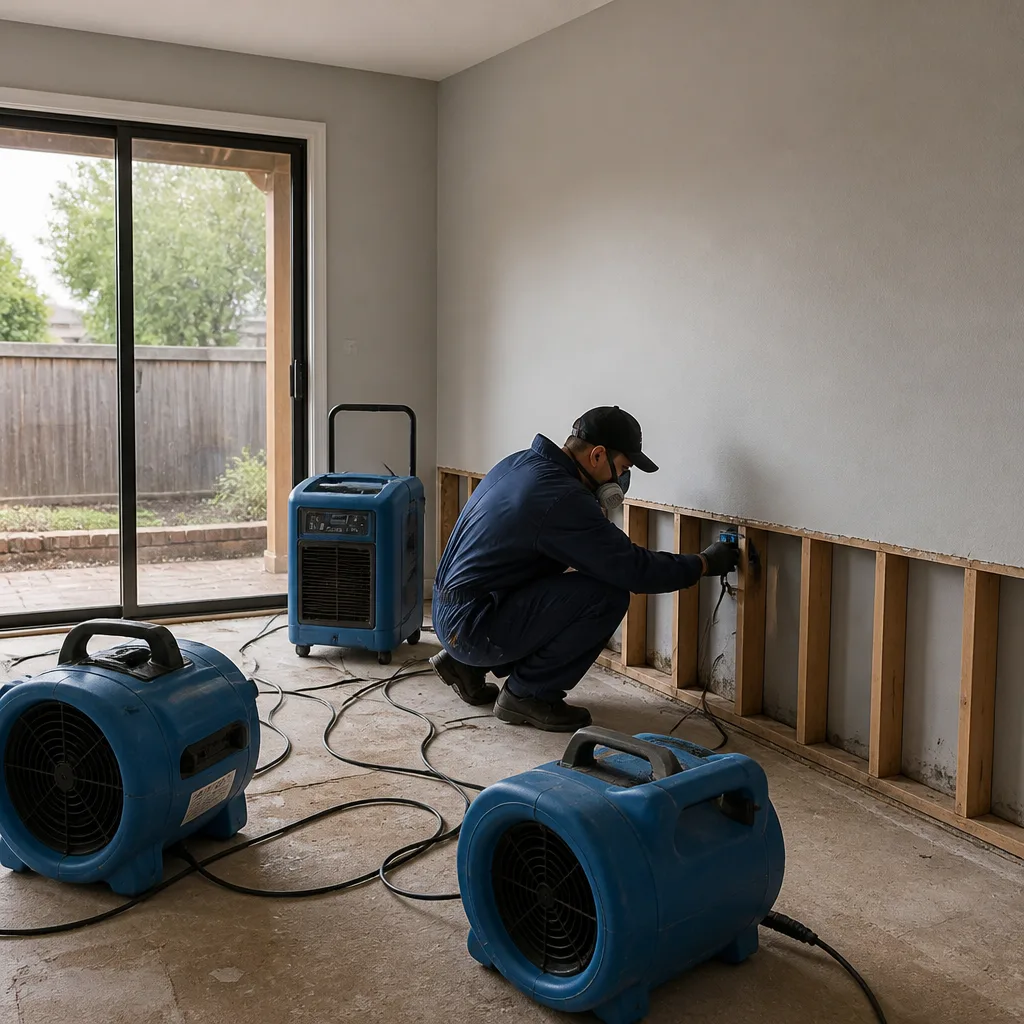 After
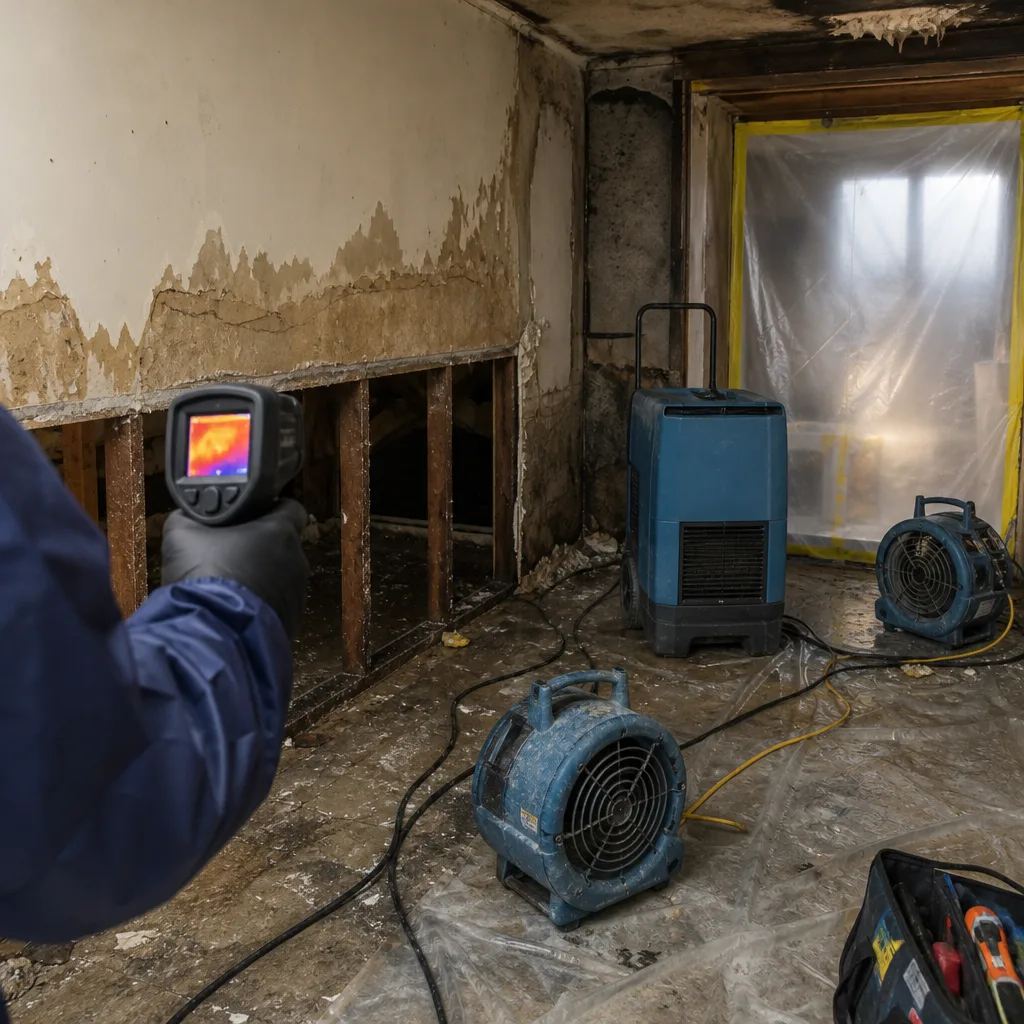 Before
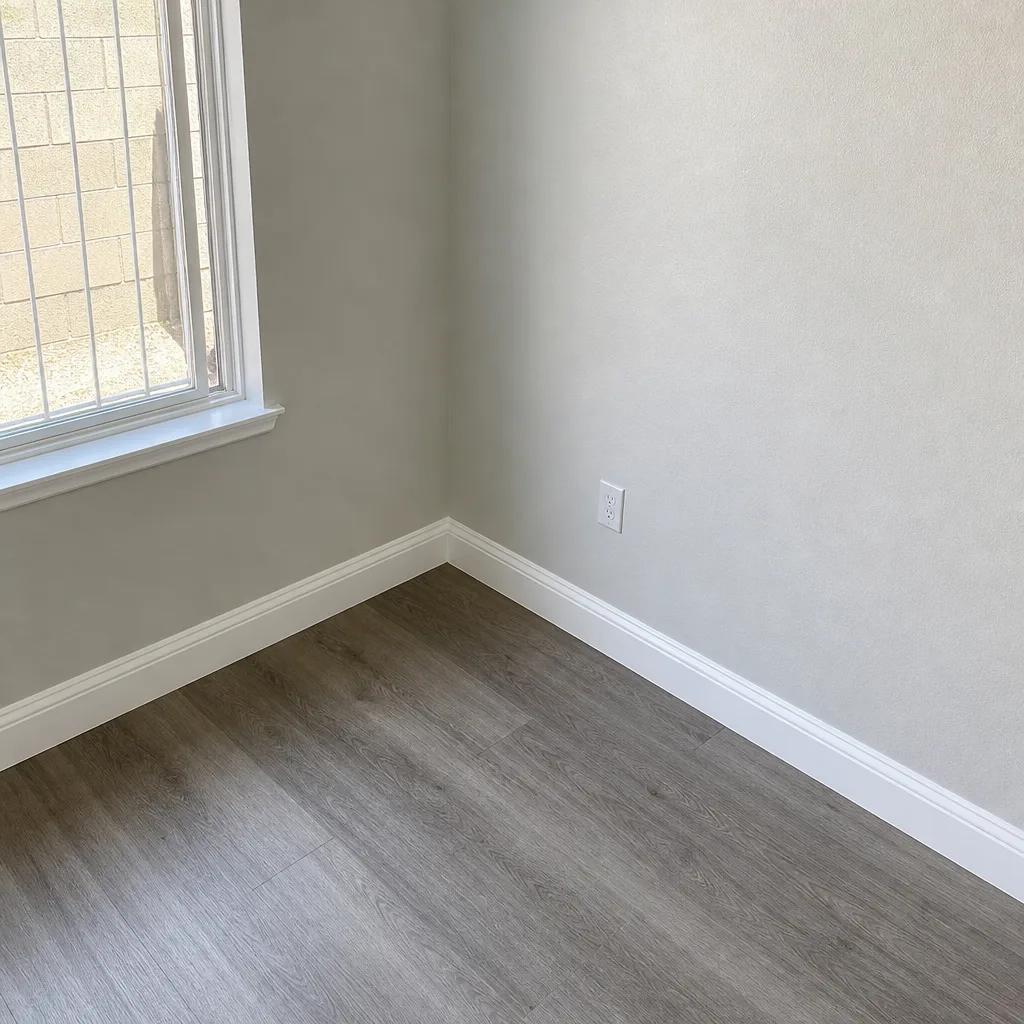 After
Common Water Damage Restoration Problems We See in Banning Homes
- Wind-driven grit clogging drainage paths: Banning’s pass winds push fine sand into roof vents, weep screeds, and window tracks. When rain hits, water backs up and finds its way inside. We regularly find clogged weep screeds as the root cause of stucco wicking on Banning’s older homes.
- Slab foundation wicking without vapor barriers: Many mid-century Banning homes have slab foundations with no moisture barrier underneath. Water from a burst pipe or a heavy monsoon can wick up invisibly through the concrete. DIY drying with household fans just moves humid air around and misses the deep saturation our meters detect.
- Original plaster and stucco that hide moisture: Banning’s housing stock skews older, and original plaster walls don’t show water damage the way modern drywall does. By the time staining appears, mold may have been growing for a week. Our moisture mapping catches what the eye can’t see.
- Legacy garage doors letting wind-driven rain in: One-piece and early sectional garage doors with aging openers are common in Banning. Wind-driven rain can pool inside a garage, and parts for that old hardware are scarce. A temporary fix fails before drying completes, which is why we address the water entry point during restoration.
Pricing for Water Damage Restoration in Banning, CA
A typical Emergency Water Extraction in Banning runs $350 – $650 for a single room, with whole-house extraction after a burst pipe or flood usually landing between $1,200 and $3,000. Structural Drying & Dehumidification adds $800 – $2,500 depending on square footage and the number of days equipment needs to run. Flood cleanup with contaminated water starts at $1,500 and climbs with the extent of the affected area. Water damage repair following drying – drywall, stucco, flooring – typically runs $2,000 – $6,000 on Banning homes. The biggest cost driver in Banning is whether water got into wall cavities and slab foundations, because that requires Injectidry drying or controlled demolition. Call (844) 716-1094 for a free estimate on your specific loss. We provide a written scope before any work begins.
We Also Serve Cities Near Banning
Flood Guard Water Damage covers the full San Gorgonio Pass region. In addition to Water Damage Restoration in Banning, we serve Water Damage Restoration in Cabazon, Calimesa, Yucaipa, and Valle Vista. If your home is in one of those communities, you get the same IICRC-certified drying protocols and commercial-grade equipment – and the same team that knows how the pass behaves when the wind and rain hit at once.
Serving Banning, CA — Our Local Coverage Area
We’re based in the Banning area and know this community well. Use the map below to see our service coverage — if you’re nearby, we can almost certainly help.
FAQs About Water Damage Restoration in Banning
Banning sits directly in the San Gorgonio Pass, one of the windiest corridors in Southern California. The same storm system that drops rain can push sand and grit into roof vents, weep screeds, and stucco cracks first. When the rain arrives, that debris blocks drainage and forces water into places it wouldn’t normally go. We treat every Banning water damage job as a wind-and-water event, because in this city, they’re usually the same thing. If you’ve had water intrusion after a wind event, call (844) 716-1094 – our moisture mapping will find what the wind pushed in.
Call immediately. Mold begins forming within 24 – 48 hours of water intrusion, and Banning’s warm, dry climate doesn’t slow that down inside a wet wall cavity. The faster extraction starts, the more of your original flooring, drywall, and plaster can be saved. We respond to Banning calls the same day in most cases, with equipment and a plan before we arrive. Waiting a day to see if things “dry on their own” usually turns a $500 extraction into a $5,000 repair. Call (844) 716-1094 as soon as water appears.
Yes – in most cases, our Injectidry system can dry wall cavities from the inside without pulling off original stucco or plaster. We drill small, discreet ports and run vacuum-assisted drying that pulls moisture through the cavity. This works particularly well on Banning’s mid-century stucco-on-wood-frame homes, where preserving original materials matters to homeowners. The approach isn’t right for every loss – saturated insulation or category 3 water may require removal – but our technicians always evaluate non-invasive drying before recommending demolition. If you’ve got original plaster or stucco, tell us when you call (844) 716-1094.
Category 1 is clean water from a supply line or rainwater. Category 2 is “gray” water from a washing machine or sump pump with some contamination. Category 3 is sewage or floodwater from outside with significant bacteria. The category determines what we can dry in place versus what must be removed, and how we set up containment to protect the rest of the home. In Banning, it matters because flash floods down the washes are almost always category 3 water – and drying it with a household fan won’t make it safe. We test, classify, and document the water category on every job, because insurance companies ask for that documentation. Call (844) 716-1094 if you’re not sure what got your floors wet.
Yes. We provide documented moisture readings, photo-documented assessments, and written drying logs that insurance adjusters expect. If your Banning home needs a pack-out – contents removed, cleaned, and stored while we restore the structure – we handle that too. Our documentation helps your claim move faster, and we coordinate directly with your adjuster so you’re not translating restoration jargon into insurance language. Many Banning homeowners tell us this is what finally got their claim approved. Call (844) 716-1094 and ask for a documented assessment – our estimates are free.
Written by Noel Ibarra, Owner at Flood Guard Water Damage, serving Banning and the San Gorgonio Pass with IICRC-certified restoration practices.