
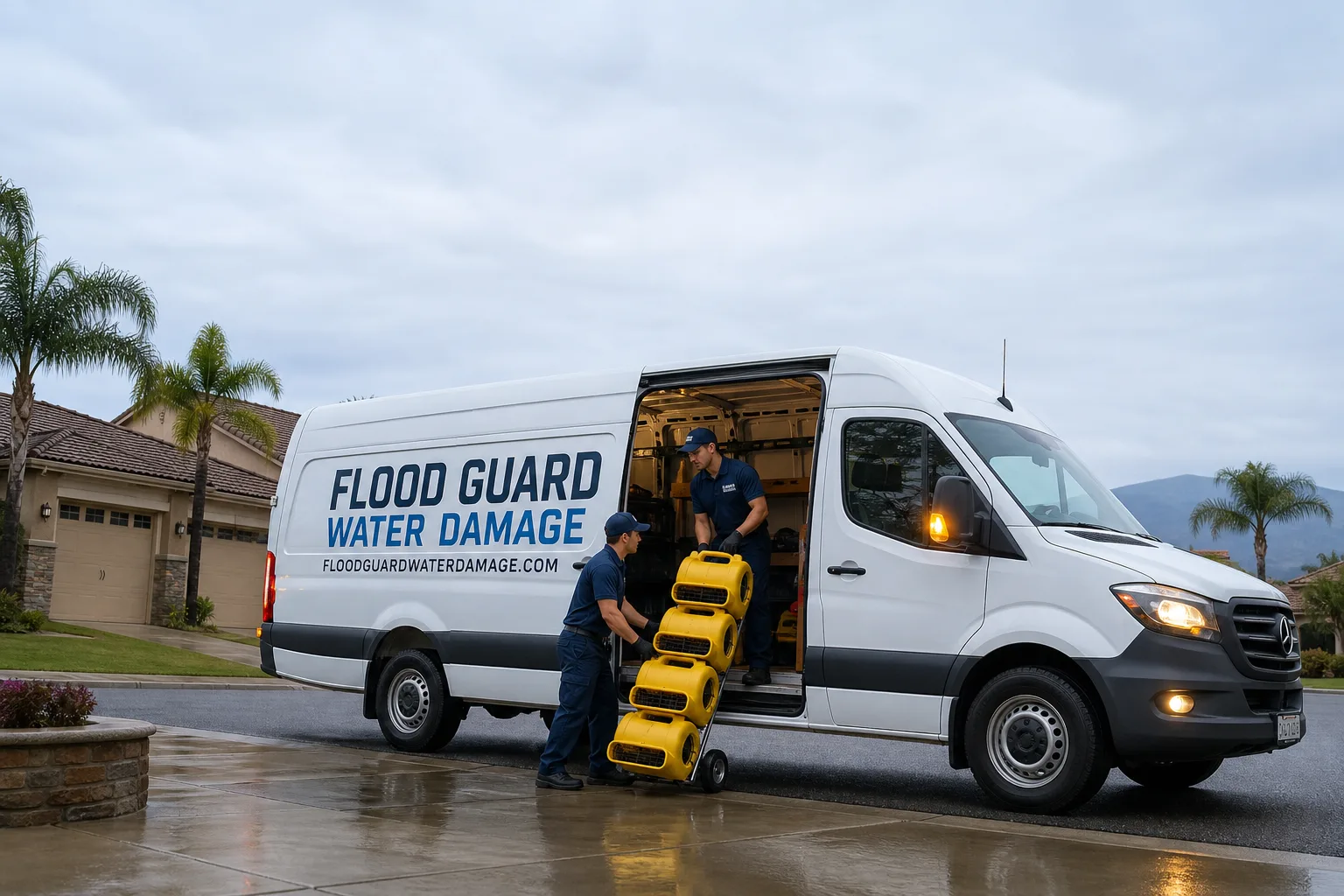
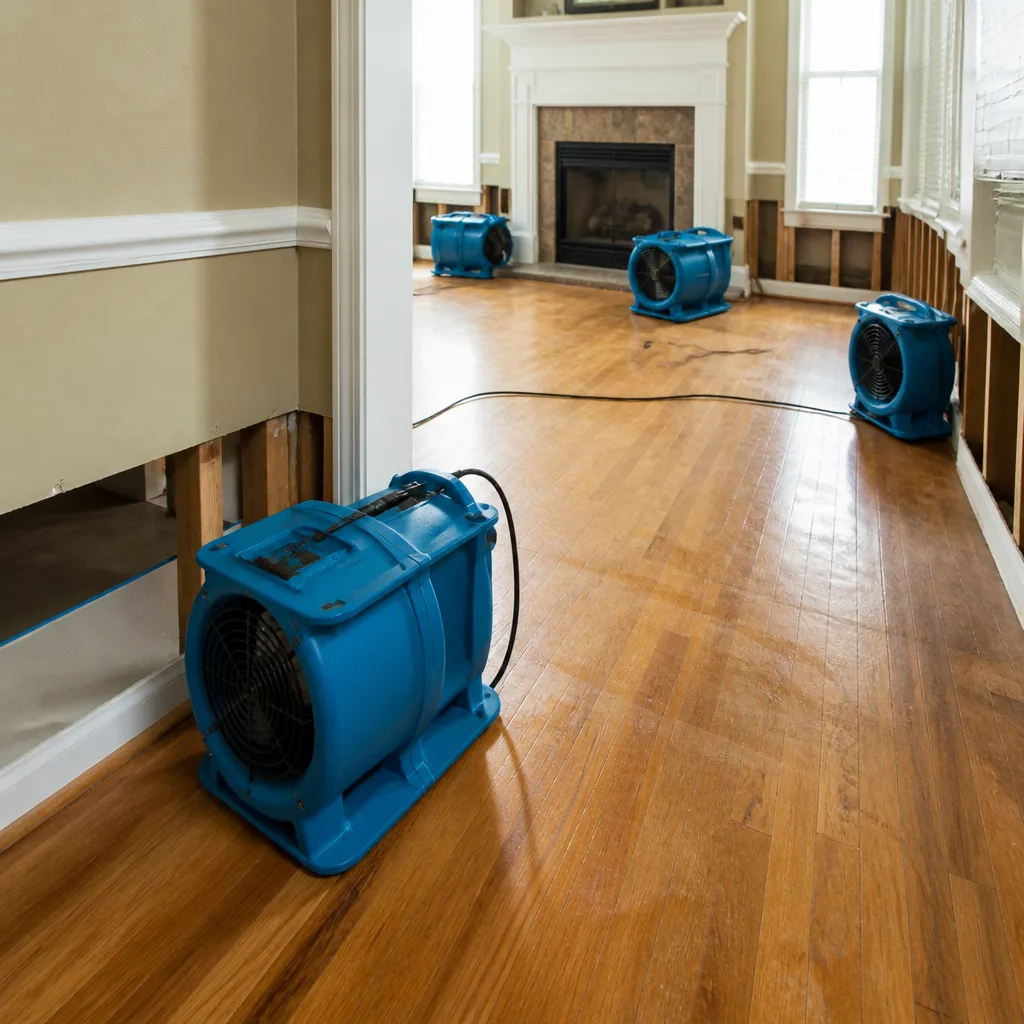
 Water damage drying
 Fire & smoke cleanup
 Mold remediation
 Storm response
 Sewage cleanup
 Reconstruction
Free visual inspection and a written scope of work before any mitigation begins - photos, moisture readings, and drying logs go in your claim file
The scope we write is the scope we bill. Anything new gets shown to you, in writing, before we touch it.
Get your free estimateFast, Reliable Water Damage Restoration Across Costa Mesa
Water damage restoration in Costa Mesa typically runs $1,800 to $7,500 depending on the size of the affected area, water category, and how far moisture has traveled through the slab. Most jobs in the 92626 and 92627 zip codes start with emergency extraction within 60 to 90 minutes of our arrival, followed by structural drying that takes three to five days. If you’re dealing with a burst pipe, a slab leak, or a flooded basement in Costa Mesa, call us at (844) 716-1094 and we’ll have a crew on the way.
We know Costa Mesa’s housing stock intimately: the 1950s stucco tract homes off Baker Street, the Westside bungalows near Plumer Street, the condos around South Coast Plaza. Each neighborhood has its own failure patterns, and that matters when you’re deciding what to dry versus what to remove. Our Water Damage Restoration team carries commercial-grade equipment and follows IICRC-certified drying protocols on every job, no exceptions.
Why Flood Guard Water Damage Is Costa Mesa’s Preferred Water Damage Restoration Company
Costa Mesa homeowners call us because we show up with Dri-Eaz and Phoenix equipment, not a shop vac and a box fan. The difference matters. A slab leak under a 92627 bungalow sends water traveling under tile, through the slab, and up into drywall. Surface drying leaves that moisture in place; within 24 to 48 hours, you’re looking at mold behind the baseboard. We measure, log, and document moisture levels until the structure reads dry, not just until the carpet feels dry.
Our work in Costa Mesa consistently hits the same notes: unpermitted additions off the back of a 1950s tract home, converted garages used as rental units, and original galvanized supply lines that have outlived their service life by decades. That’s why our scope-of-work discussions happen before we start cutting, and why we document everything with photo evidence and moisture readings. Noel Ibarra leads our team with a focus on getting the scope right the first time, because mid-job surprises in Costa Mesa usually mean re-piping or code complications, and those don’t get cheaper by ignoring them.
We’re not a franchise operation running a script. We’re restoration specialists who work the same neighborhoods repeatedly, and we know that a “small” water loss in a 92627 fourplex is very different from a water loss in a newer Irvine build. That local knowledge shapes every drying plan we write.
Restoration work we handle
Flooded Basement in Costa Mesa
A flooded basement in Costa Mesa usually means one of two things: a failed cast-iron drain line backed up into the lower level, or a slab leak that pooled water against the foundation wall and found its way down. Either way, the window to act is short. In Costa Mesa’s 1950s and 1960s homes, many basements and lower split levels sit below grade with original concrete that hasn’t been sealed since construction. Water sitting against that concrete pulls contaminants from the soil, and what started as a Category 2 loss becomes a Category 3 removal within 48 hours.
Most flooded basement jobs in Costa Mesa run between $2,200 and $6,800. The range depends on whether we’re extracting standing water and drying the space, or removing saturated drywall, flooring, and baseboards that can’t be salvaged. If the water came from a sewer backup or a slab leak pulling soil contact, the cost climbs because we’re removing materials rather than drying them.
Extraction and Drying Sequence
We start with truck-mounted extraction to remove standing water, then set up containment if we’re dealing with contaminated water. Phoenix air movers and Dri-Eaz dehumidifiers go in next, positioned to force air through the slab and wall cavities. We log moisture readings every 12 to 24 hours until the structure hits its dry standard, then we hand you a drying log with the numbers.
When Removal Becomes Necessary
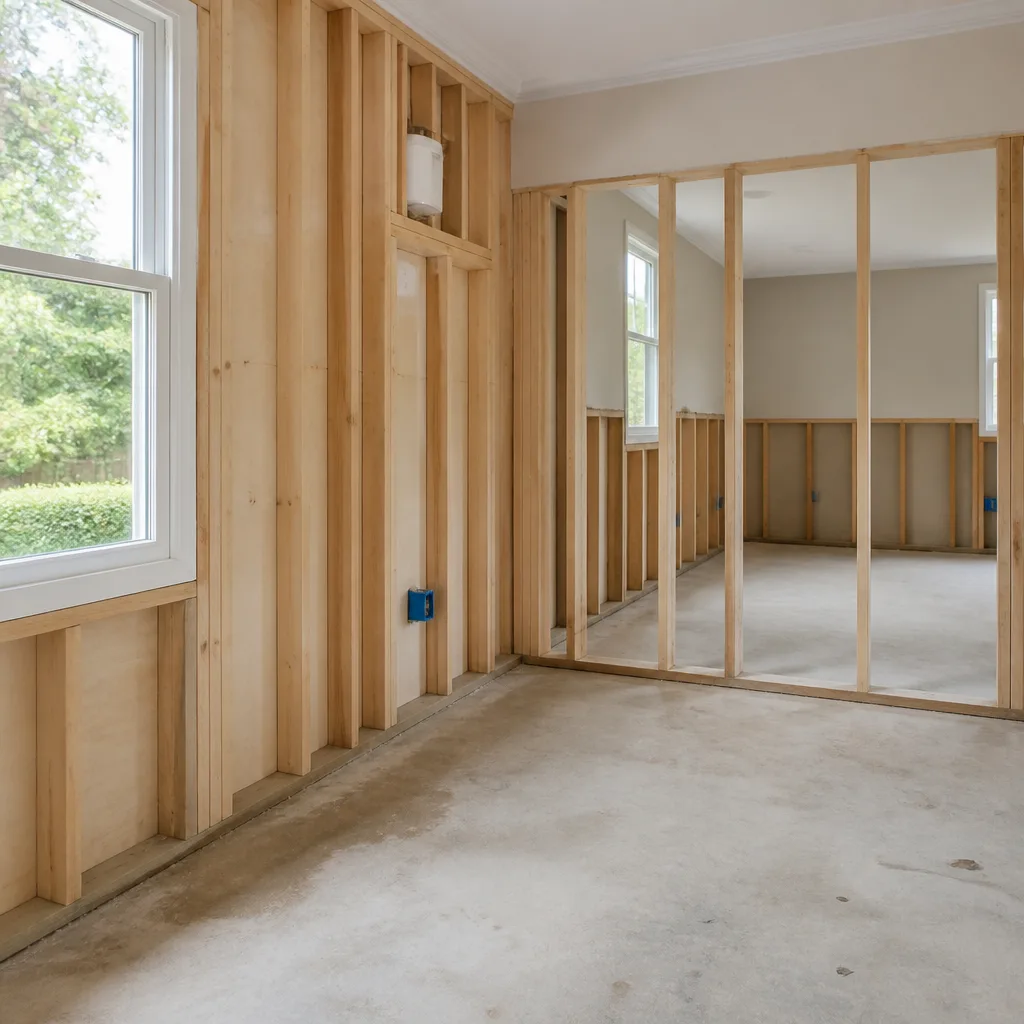
If water sat in the basement for more than 24 hours before we arrived, or if the source was a drain backup, we’re usually removing drywall, padding, and baseboards rather than trying to dry them. Costa Mesa’s older basements often have organic materials (wood paneling, original carpet) that wick moisture fast and don’t release it cleanly. We’d rather cut out 18 inches of drywall early than chase mold for the next six months.
Water Extraction in Costa Mesa
Water extraction in Costa Mesa is the first 30 minutes that determines whether a loss is a cleanup or a reconstruction. When a supply line lets go under a 92626 tract home while the homeowner is at work, water runs for hours before anyone notices. By the time we arrive, the floor is saturated and water has already started migrating up the drywall. Our extractors pull the standing water fast, but the real work is the moisture we can’t see.
Extraction alone runs $800 to $2,400 in Costa Mesa. That covers standing water removal, initial moisture mapping, and setting up the drying system. If the water is contaminated (Category 2 or 3), extraction includes containment and antimicrobial treatment, which adds cost. Most Costa Mesa residents pay between $1,500 and $4,500 for extraction plus the drying that follows.
Slab Leak Response
Costa Mesa’s slab-on-grade homes are uniquely vulnerable to hidden water travel. A leak under the kitchen slab in a 1950s build can migrate six to ten feet before showing at the wall line. Mapping moisture with probes and thermal imaging tells us where the water actually went, not just where the pipe failed.
After-Hours Calls
We respond to Costa Mesa water emergencies around the clock. If a supply line bursts at 2 a.m. in an apartment off Harbor Boulevard, the water doesn’t wait for business hours, and neither can we. Call (844) 716-1094 and we’ll dispatch a crew to start extraction immediately.
Trusted Brands We Service in Costa Mesa
We use Dri-Eaz, Phoenix, and Injectidry equipment on Costa Mesa jobs because these are the brands built for commercial-scale drying. A Dri-Eaz dehumidifier removes moisture from the air at a rate consumer units can’t match, and Phoenix air movers push air deep into wall cavities and under slab. For water trapped inside walls and floors, our Injectidry system dries cavities without opening them when possible, which matters in Costa Mesa where unpermitted additions and older framing make demolition riskier and more expensive. We don’t use consumer gear. The structure deserves better, and so does your timeline.
See the difference
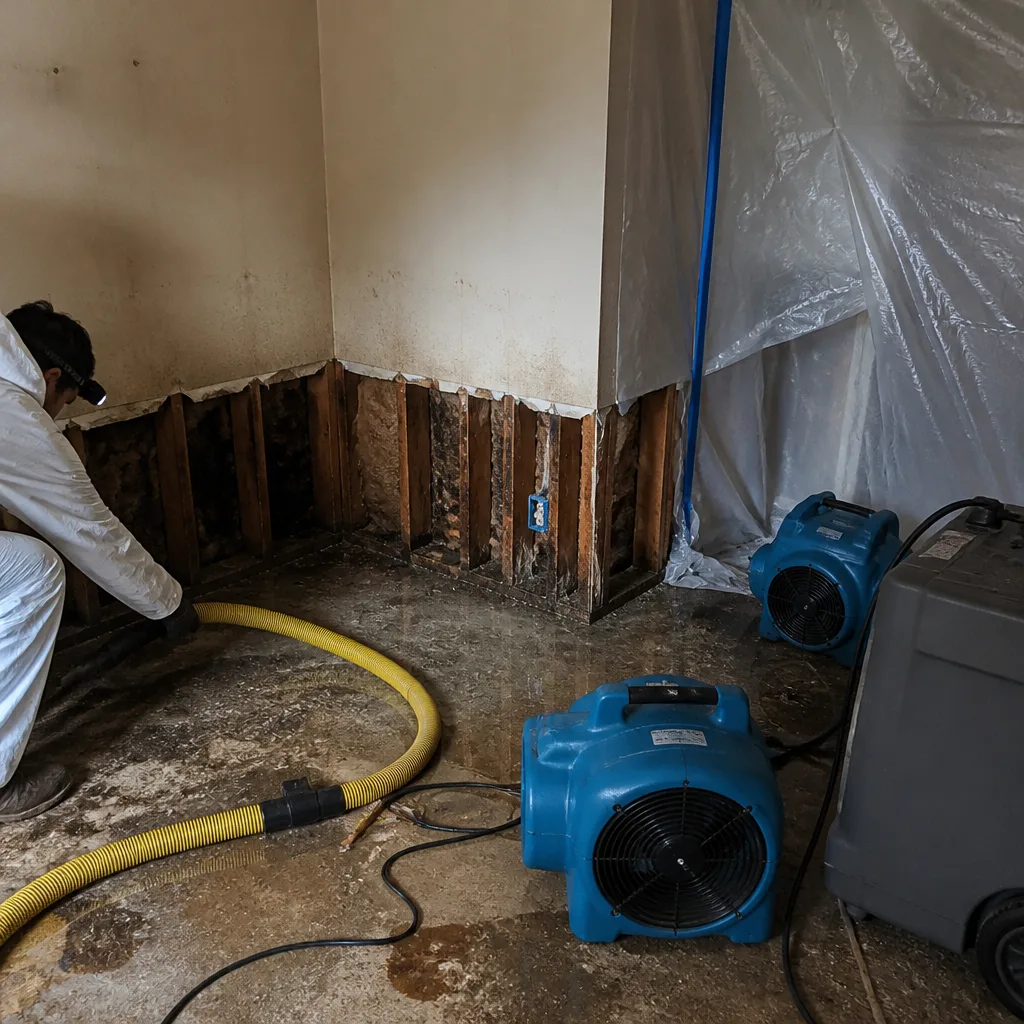 Before
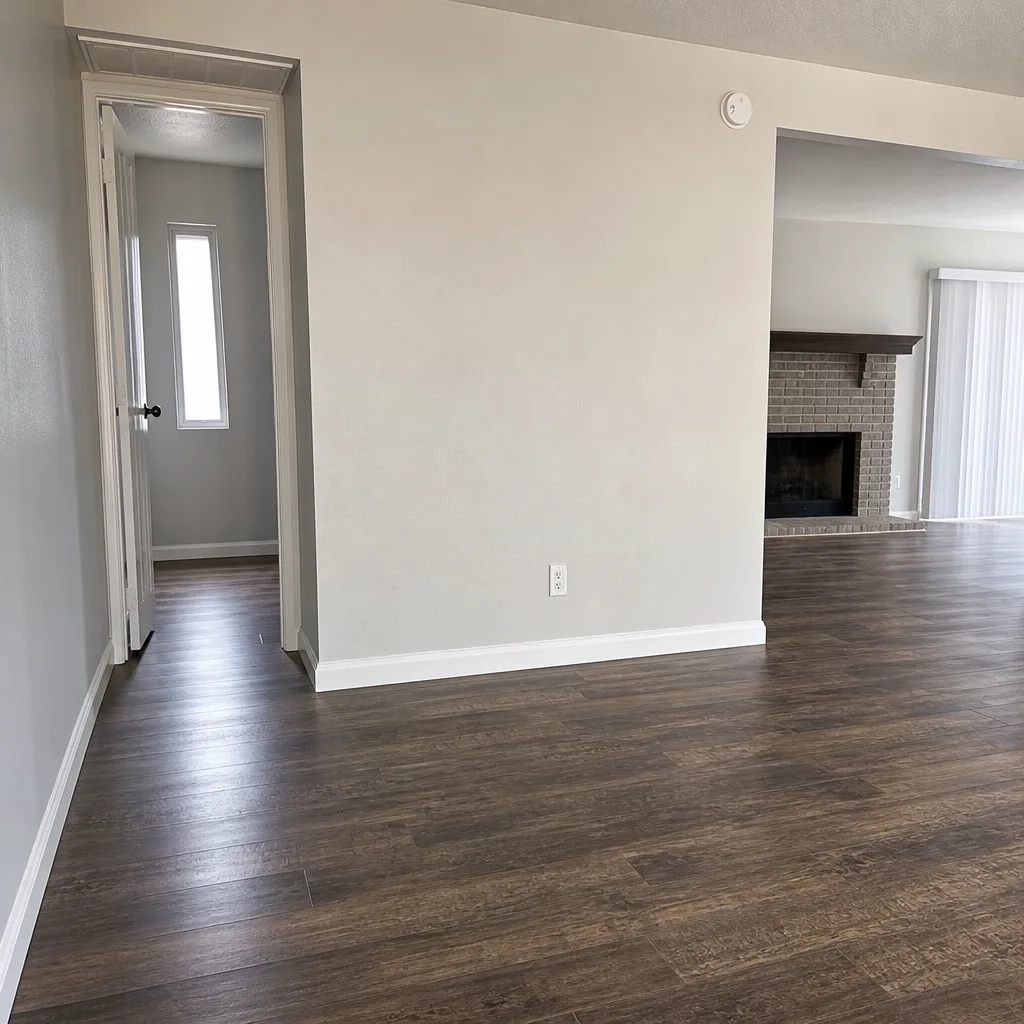 After
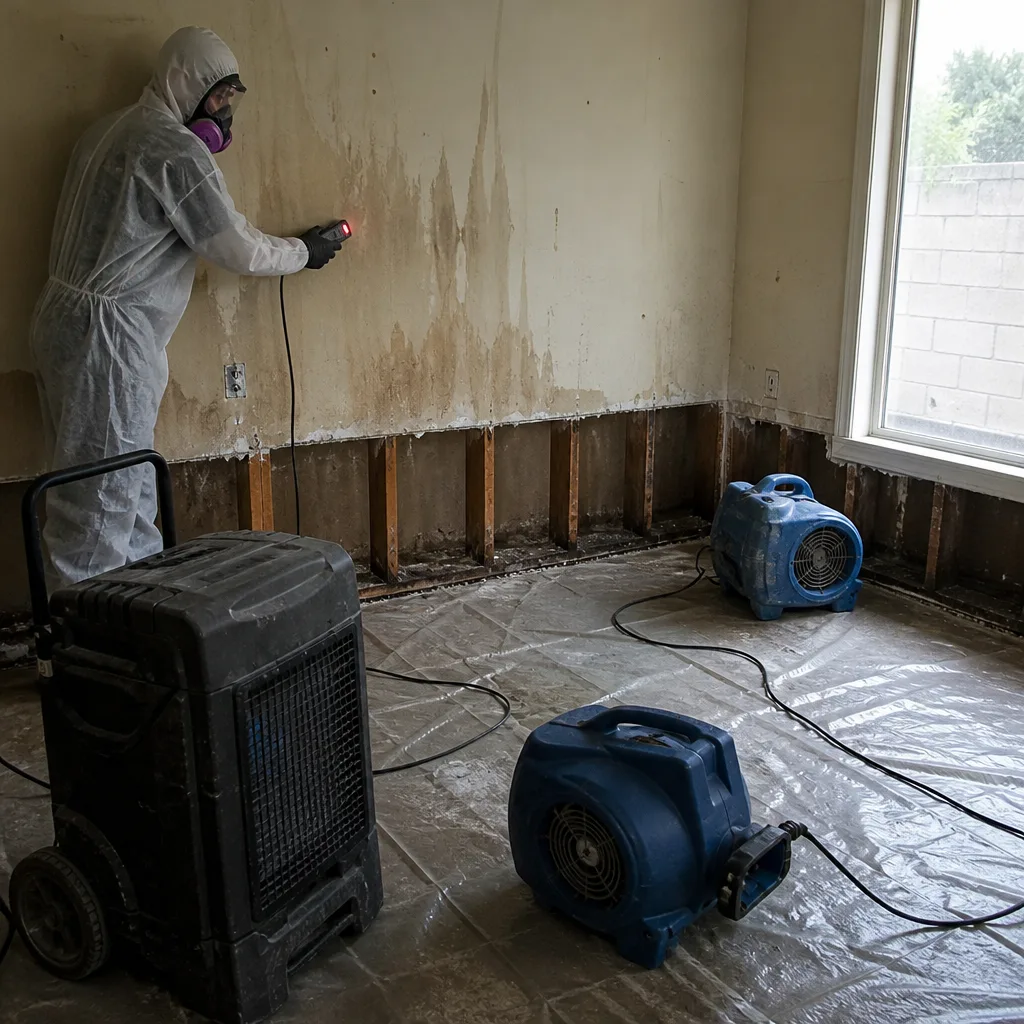 Before
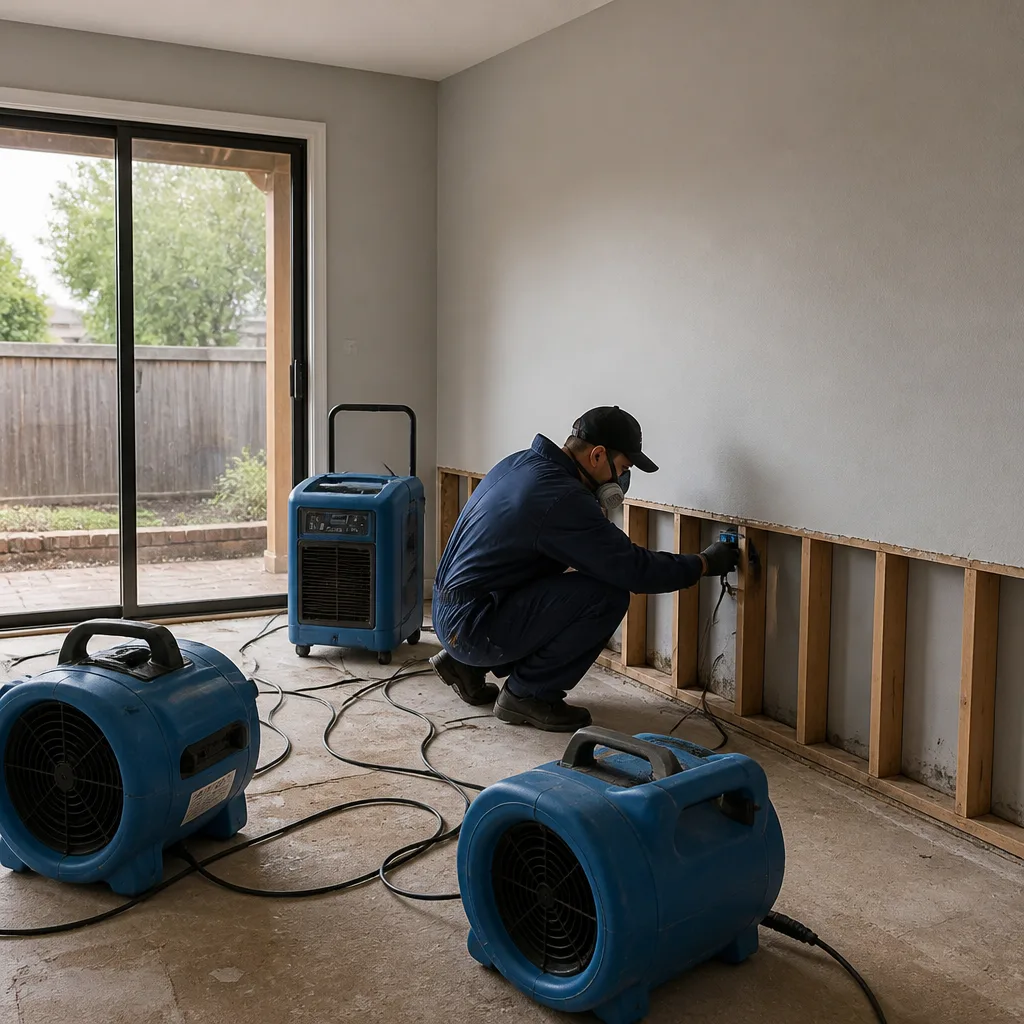 After
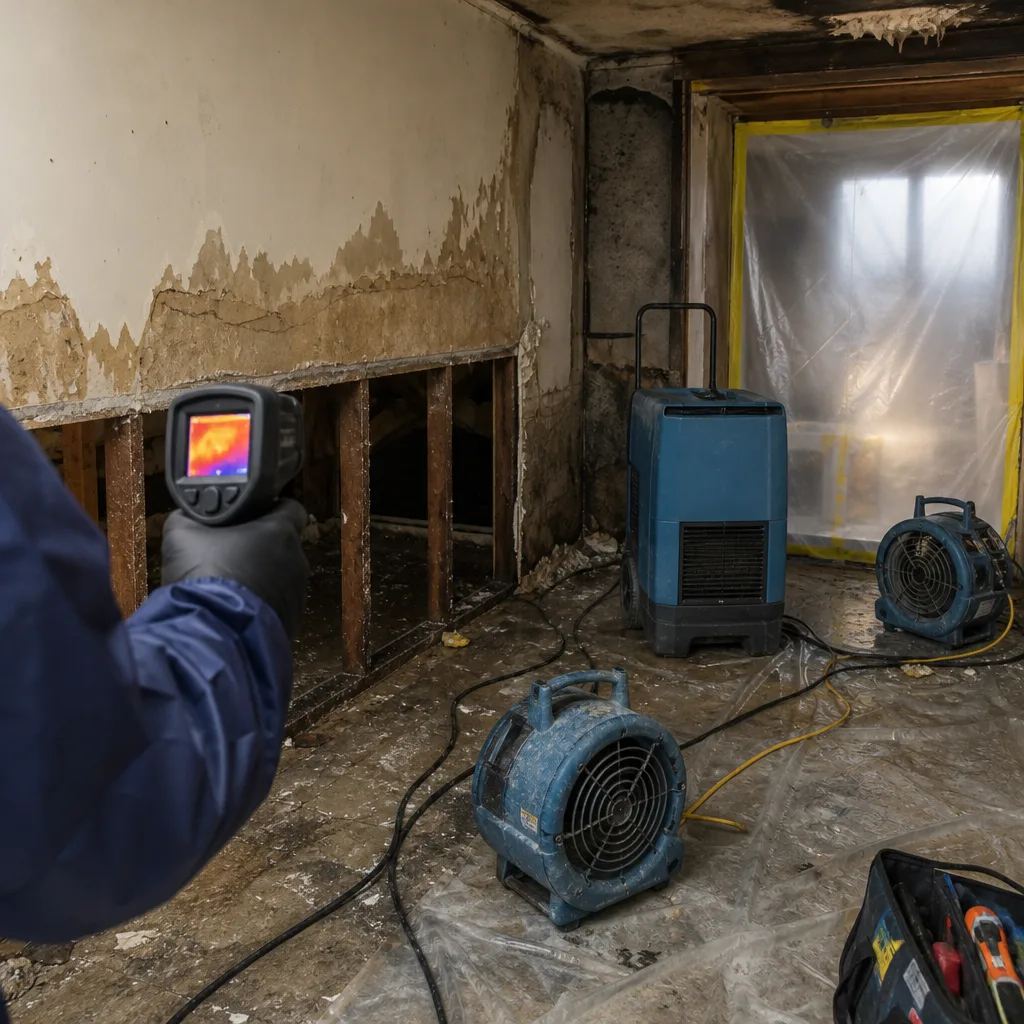 Before
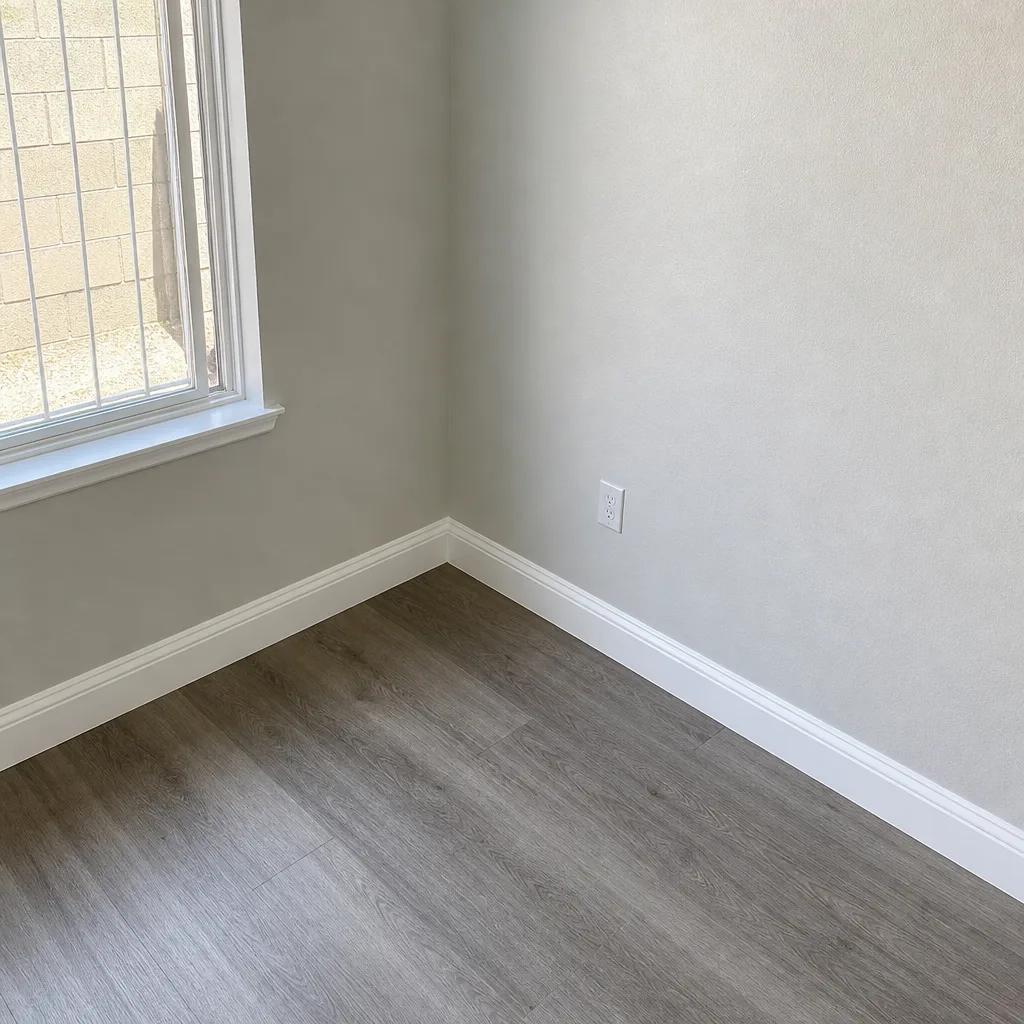 After
Common Water Damage Restoration Problems We See in Costa Mesa Homes
- Slab leaks under original galvanized lines in 92627 Westside bungalows. These pipes fail at the slab after 60-plus years of corrosion, and water travels under the foundation before anyone sees it. By the time a homeowner notices warm spots or a spiking water bill, the moisture has often already reached the wall framing.
- Unpermitted additions and converted garages that change the scope mid-job. When water reaches an addition that was never permitted, we’re dealing with unknown framing, unknown moisture barriers, and sometimes soil-contact floors. That can shift a Category 2 drying job into a Category 3 removal if contaminated water is found.
- Marine-layer corrosion on exposed pipes and fixtures. Costa Mesa’s coastal air carries salt and moisture that accelerates rust on exposed supply lines, shutoff valves, and drain hardware. A valve that fails at the wall connection can flood a bathroom in minutes, and these failures spike in older 92627 units where original plumbing was never upgraded.
- Santa Ana wind damage that opens water intrusion paths. High winds lift roof edges, crack stucco, and drive dust and debris into flashing. When the next marine layer rolls in, moisture finds those openings and works its way into attics and wall cavities. We see this pattern regularly in the 92626 corridor near South Coast Plaza.
Pricing for Water Damage Restoration in Costa Mesa, CA
Here’s what Costa Mesa homeowners can expect to pay for common water damage restoration work:
| Service | Typical Cost in Costa Mesa |
|---|---|
| Emergency water extraction | $800 – $2,400 |
| Structural drying (3-5 days) | $1,200 – $3,500 |
| Flooded basement cleanup | $2,200 – $6,800 |
| Slab leak restoration | $2,800 – $7,500 |
| Ceiling/roof leak water damage | $1,500 – $4,200 |
The biggest variables are square footage affected, water category, and whether materials can be dried or must be removed. Costa Mesa’s older homes trend toward removal because original materials don’t dry cleanly. Call (844) 716-1094 for a free estimate, and we’ll give you a written scope before any work begins.
We Also Serve Cities Near Costa Mesa
Flood Guard Water Damage handles restoration work throughout central Orange County. Beyond Costa Mesa, our crews regularly serve Newport Beach, Fountain Valley, Huntington Beach, and San Joaquin Hills. If you’re on the edge of Costa Mesa or managing a property in a neighboring city, call us and we’ll let you know our current response time.
Serving Costa Mesa, CA — Our Local Coverage Area
We’re based in the Costa Mesa area and know this community well. Use the map below to see our service coverage — if you’re nearby, we can almost certainly help.
FAQs About Water Damage Restoration in Costa Mesa
Costa Mesa’s 92627 Westside bungalows sit on slab-on-grade foundations with original galvanized supply lines and cast-iron drains that are now 60 to 70 years old. Those pipes corrode from the inside while buried in soil, and when they fail, the water has direct contact with the slab, soil, and foundation materials. In Irvine, newer construction uses copper or PEX lines with modern installation standards, so failures are rarer and water travel is more predictable. In a 92627 bungalow, a slab leak often pulls soil-contact water up into the wall, shifting the job from drying to removal within hours. Call (844) 716-1094 if you suspect a slab leak, and we’ll verify it with moisture mapping before recommending any repairs.
Within 24 to 48 hours is the critical window for starting structural drying in Costa Mesa, because mold begins to colonize wet organic materials within that timeframe. Costa Mesa’s marine layer adds humidity to indoor air, which slows natural drying and gives mold a head start. We dispatch same-day for water emergencies, and our goal is to have extraction done and drying equipment running within hours of your call. If you wait a weekend before calling, a salvageable carpet pad becomes a removal, and your bill goes up. Call (844) 716-1094 right away, even if you’re not sure how bad it is, and we’ll talk you through what we see.
Yes, Costa Mesa’s marine layer keeps ambient humidity higher than inland Orange County, so our drying plans account for both the water event and the baseline moisture already in the air. We take moisture readings at every wall, floor, and ceiling surface, then compare them to the ambient humidity readings we log at the start of the job. That tells us whether the moisture is from the leak or from the coastal air. In practice, we usually run dehumidifiers longer in Costa Mesa than we would in Rancho Cucamonga or other inland cities, because the structure reaches dry standard slower in coastal air. We don’t guess; the readings tell us when the job is done.
We document it, notify you, and adjust the scope of work to match what’s actually there. Costa Mesa’s older homes frequently have additions or garage conversions that were never permitted, and that changes how we approach drying and removal. An unpermitted addition may have no moisture barrier, old wiring, or soil-contact flooring that makes remediation more complex. We don’t stop work over a permitting issue, but we do flag it clearly so you know what’s involved. If the water category shifts because we find contaminated materials, we’ll explain the change in writing before we adjust the scope. You’ll always know what we’re doing and why.
Yes, Santa Ana winds in Costa Mesa create water intrusion risk even without rain. High winds lift roof edges, crack stucco, damage flashing, and drive dust into seals around windows and doors. When the next marine layer or seasonal rain arrives, those openings become water paths into attics and wall cavities. We’ve also seen wind-blown debris puncture roof membranes on older Costa Mesa homes, especially along the 92626 corridor where mature trees and older roofing meet strong gusts. If you’re inspecting after a Santa Ana event, check the roofline and window seals, and call us at (844) 716-1094 if you find moisture or staining.
Written by Noel Ibarra, Owner at Flood Guard Water Damage, serving Costa Mesa’s 92626, 92627, and 92628 zip codes with IICRC-certified restoration practices and commercial-grade drying equipment.