Last updated October 30, 2026
 Water damage drying
 Fire & smoke cleanup
 Mold remediation
 Storm response
 Sewage cleanup
 Reconstruction
Free visual inspection and a written scope of work before any mitigation begins - photos, moisture readings, and drying logs go in your claim file
The scope we write is the scope we bill. Anything new gets shown to you, in writing, before we touch it.
Get your free estimateDamage Restoration Emergency Preparedness Guide for Rancho Cucamonga Homes
The two calls that determine how bad a water damage event gets are the one you make to your insurance company and the one you make to a restoration company. The order you make them in, and what you say on each, materially affects your claim outcome and your total loss. Most homeowners in Rancho Cucamonga get this backwards. They call the insurance company first, describe the damage incorrectly, wait for an adjuster to show up days later, and by then the water has migrated through the slab foundation and into drywall, baseboards, and cabinetry. This guide fixes that sequence. You’ll learn the first 15-minute protocol, how to document without hurting your claim, what Rancho Cucamonga’s specific housing stock and climate mean for moisture migration, and how to pre-vet a restoration team before the emergency ever happens. For Damage Restoration Warning Signs: A Rancho Cucamonga Homeowner’s Reference Guide, see our companion post.
Restoration work we handle
Quick Answer
Water damage preparedness for a Rancho Cucamonga home means knowing your main water shutoff location before an emergency, documenting damage with video before touching anything, calling a certified restoration company before your insurance carrier, and using the phrase “mitigating further damage” when you do notify your insurer. Homes on slab foundations in this region have no crawl space to vent moisture, so the 24-to-48-hour window for effective intervention is shorter here than in many other markets.
Table of Contents
- The First 15 Minutes: What Actually Reduces Total Loss
- Why Rancho Cucamonga Homes Fail Differently: Slab Foundations and Santa Ana Winds
- Building Your Home Emergency Data Sheet
- The Insurance Notification Sequence: What to Say and What Not to Admit
- What a Professional First Response Should Look Like
- Why Equipment Matters: The Difference Between Measuring and Guessing
- Preparing Before the Emergency: The 2-Hour Weekend Checklist
- Common Mistakes to Avoid
- When to Call a Professional
- Frequently Asked Questions
- The Bottom Line
The First 15 Minutes: What Actually Reduces Total Loss
When water is actively entering a Rancho Cucamonga home, the first 15 minutes determine whether you’re looking at a $3,000 drying job or a $30,000 rebuild. The sequence matters more than the speed. Here’s the protocol we train our clients on, in order.
- Locate and shut the main water supply. Every home has a main shutoff valve, typically at the meter near the street or where the main line enters the house. On Rancho Cucamonga slab homes, the main shutoff is often on an exterior wall or in the garage. Turn it clockwise until it stops. Do this before moving any furniture or touching any electronics. Stopping the source is the single most cost-determining action in any water event.
- Document with video before touching anything. Walk the affected area with your phone recording. Capture wide shots showing the full extent of standing water, then close-ups of affected materials: baseboards, drywall, flooring, cabinetry. Narrate what you see and note the time. This video is your claim’s foundation. Never move soaked items, mop, or extract water before filming. The adjustment process relies on showing what was wet, not what you dried.
- Do not run the HVAC system. If the water is from a toilet overflow, washing machine discharge, or any source that contacted human waste or chemicals, it’s a Category 2 or 3 loss under IICRC classification. Running the HVAC circulates contaminated moisture into ductwork, behind walls, and into rooms that were never wet. Insurance adjusters know this. Running the system on a Category 2 or 3 loss can reduce your claim or create subrogation issues down the line.
- Call a certified restoration company before calling your insurance carrier. This is the step most homeowners get wrong. A IICRC-certified restoration firm can document the loss state, start extraction, and deploy drying equipment immediately. When the adjuster arrives days later, they see a stabilized property with professional documentation, not a worsening loss. The insurance company’s own policy language requires you to mitigate further damage. Starting mitigation before notifying the carrier is not a claim violation. It’s compliance.
We’ve walked into homes in north Rancho Cucamonga near the foothills where homeowners waited 48 hours before acting. On slab foundations with no subfloor ventilation, that’s enough time for moisture to channel through concrete and wick into drywall two rooms away from the source. The drying footprint triples. The invoice follows.
Why Rancho Cucamonga Homes Fail Differently: Slab Foundations and Santa Ana Winds
Rancho Cucamonga’s housing stock creates specific water damage patterns that a generalist restoration guide won’t tell you about. Understanding these patterns changes how you prepare and how you respond. For a deeper look at whether to tackle problems yourself or call in experts, read our DIY vs Professional Damage Restoration: The Rancho Cucamonga Homeowner’s Decision Guide.
The dominant construction type across Rancho Cucamonga, from the Alta Loma foothill neighborhoods to the newer tracts near Victoria Gardens, is slab-on-grade. There is no crawl space. No subfloor cavity to vent. When water penetrates a slab home, it has nowhere to go except sideways. Moisture migrates laterally through the concrete and wicks up into anything porous touching it: baseboards, drywall, carpet tack strips, lower cabinetry. In homes with raised foundations, a restoration crew can access the subfloor, install venting, and dry from below. On a slab, that access doesn’t exist. The drying strategy shifts to Injectidry-style systems that pull moisture from wall cavities and under flooring without opening every surface.
The second local factor is the Santa Ana wind season, typically September through January. These winds drive exterior moisture into places it wouldn’t normally reach: weep screed gaps, window flashing, roof valleys. A driving rain during a Santa Ana event can push water through a window assembly that’s been dry for a decade. Homeowners in Rancho Cucamonga should inspect exterior seals and flashing before wind season, not after the first storm.
The third factor is the age split in the city’s housing inventory. Homes built before 1980 in central Rancho Cucamonga often have copper supply lines that have reached end-of-life. We see pinhole leaks in slab-embedded copper lines regularly in the neighborhoods south of Foothill Boulevard. These leaks are insidious because they often show no visible source. The first sign is a warm spot on the floor, a spike in water bills, or baseboard discoloration in an interior wall with no plumbing nearby. By the time the leak is visible, the slab has been channeling water for weeks.
Building Your Home Emergency Data Sheet
The information you need during a water emergency should not be something you look up while standing in water. It should be written down, stored in your phone and in a physical location, and shared with every adult in the household. Here’s what goes on it.
- Main water shutoff location. Exact location with a photo. Note whether it requires a tool. Some Rancho Cucamonga homes have shutoff valves at the meter that need a curb key. Buy the tool and store it where you remember it.
- Water meter location. Usually at the street or sidewalk. Knowing where your meter is means you can confirm water has stopped flowing after shutting the main. If the meter is still spinning with the main closed, the leak is between the meter and the house.
- Insurance policy number and 24-hour claims line. This goes in the data sheet, not buried in an email from three years ago. Write the claims phone number, not your agent’s office line. Agents work business hours. Claims lines work all night.
- Pre-vetted restoration contact. One phone number. Not a list of five. When you have water actively flowing, you want one call. Flood Guard Water Damage’s line is (844) 716-1094. Write it down. Our team handles Water Damage Restoration in Rancho Cucamonga with IICRC-certified methodology and commercial equipment.
- Breaker panel location for the affected zone. You may need to kill power to a room or area that’s taking on water. Know which breakers control which rooms before you’re trying to read labels in the dark.
- Household inventory. A running photo log of major possessions, stored in cloud storage. Update it seasonally. In a fire or catastrophic water loss, this becomes a claims document.
Print this data sheet and tape it inside a kitchen cabinet. Save it as a note in your phone. Share it with your spouse, your adult children, and any long-term guests. The goal is that anyone in the home can execute the first 15 minutes without asking questions.
The Insurance Notification Sequence: What to Say and What Not to Admit
Insurance adjusters are not adversaries, but they are evaluating everything you say. The words you use when you call the claims line get entered into the claim file and follow you through the entire process. Here’s the sequence and the language that protects your claim.
- Say what happened, not what you think it’s worth. “A supply line failed in the upstairs bathroom and water ran through the ceiling into the living area.” That’s a factual statement. “I think the whole ceiling needs to come down and the floors are ruined” is an assessment you’re not qualified to make, and it can be used later to contradict the adjuster’s scope. Describe. Do not estimate.
- Use the phrase “mitigating further damage.” Every homeowner’s policy includes a duty to mitigate. When you say “I’ve called a restoration company to start mitigating further damage,” you’re telling the claims rep that you understand your policy obligations and you’re acting on them. This phrase carries weight in claim documentation.
- Do not admit to deferred maintenance. If the adjuster asks when you last inspected the washing machine hoses, the answer is not “I don’t know, probably years ago.” The answer is “I’m not sure of the exact date.” Do not volunteer information about pre-existing conditions, slow drips you noticed last month, or anything that suggests the loss was gradual rather than sudden. Sudden and accidental is the coverage trigger. Gradual is excludable.
- Ask for the claim number and adjuster assignment timeline. Write down the claim number. Ask when an adjuster will be assigned and when you can expect contact. Ask whether the policy includes emergency mitigation coverage and whether there’s a preferred vendor list. You are not required to use a preferred vendor, and it’s often in your interest to use an independent IICRC-certified firm like the team behind the Flood Guard Water Damage home operation, rather than a carrier-preferred vendor who may be incentivized to minimize scope.
- Document the call. Note the date, time, name of the representative, and what was said. If the rep tells you something over the phone that later isn’t honored, your notes are the evidence.
One more thing: the restoration company you hire should be prepared to work directly with your adjuster. At Flood Guard Water Damage, we provide photo documentation, moisture mapping reports, and a written scope of work that aligns with IICRC drying standards. When the adjuster sees a professional drying log with psychrometric readings, the conversation about scope gets shorter.
What a Professional First Response Should Look Like
When you call a restoration company in a water emergency, you should know what to expect from the moment they arrive. If the company cannot describe their process in the first five minutes, they don’t have one. Here’s what a legitimate first response includes.
A certified restoration team should arrive with a printed or digital work order, identifiable vehicles, and equipment staged for extraction and drying. You should expect the crew to:
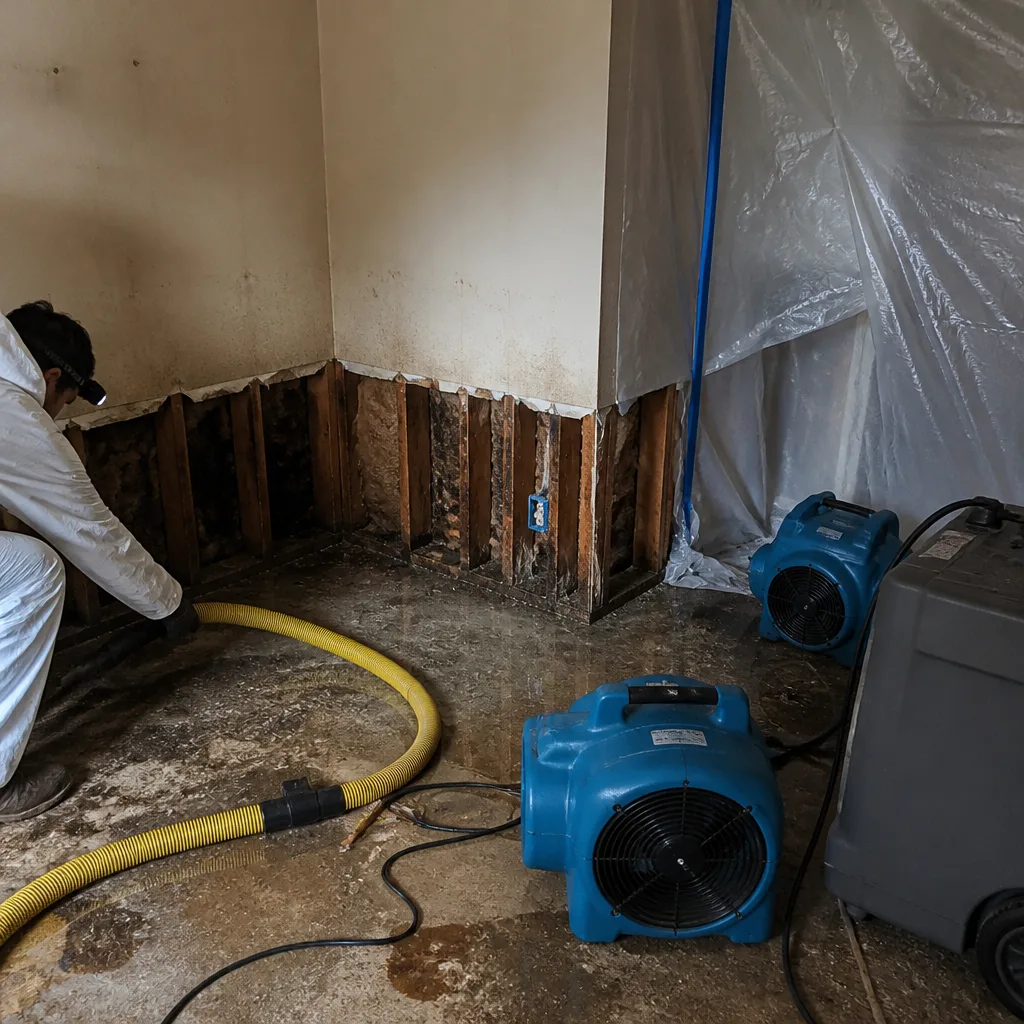
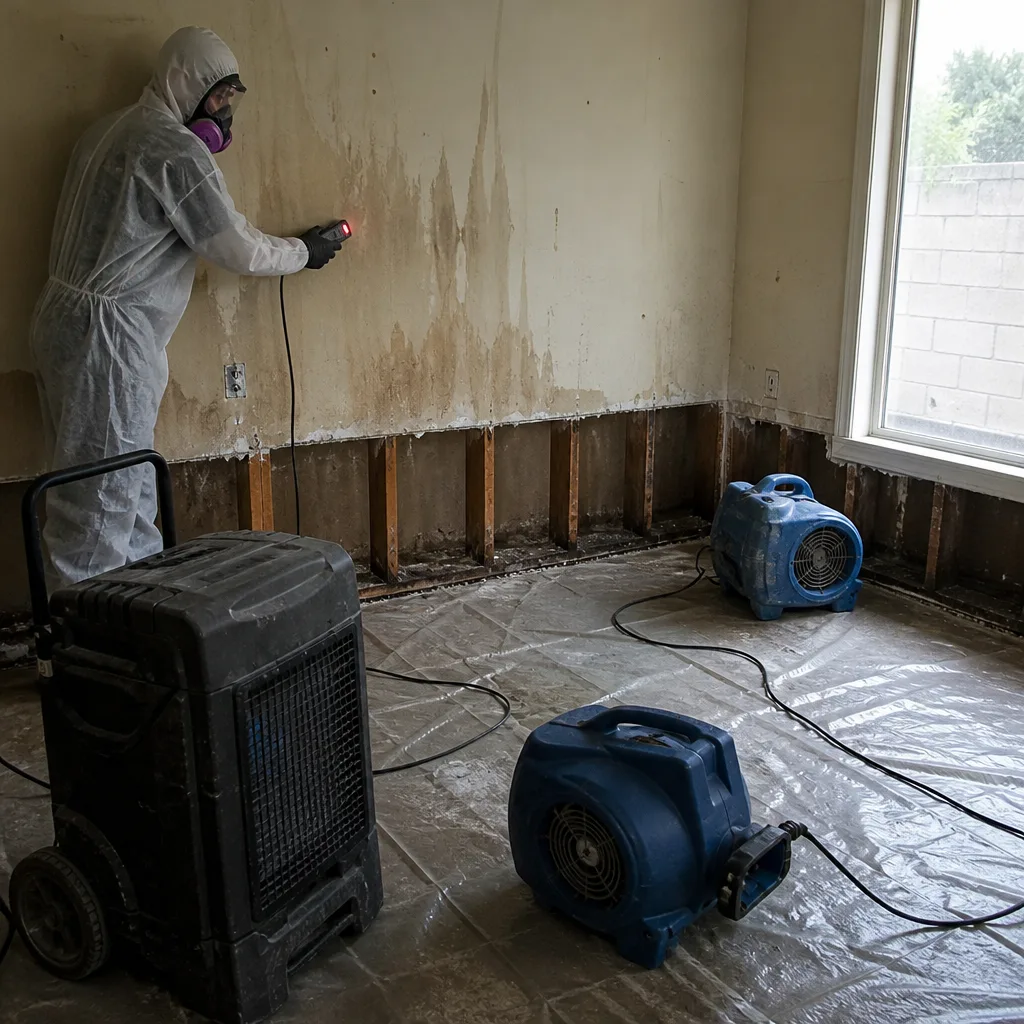
- Set up containment if the water is Category 2 or 3 to prevent cross-contamination to unaffected areas
- Extract standing water with truck-mounted or portable extraction units
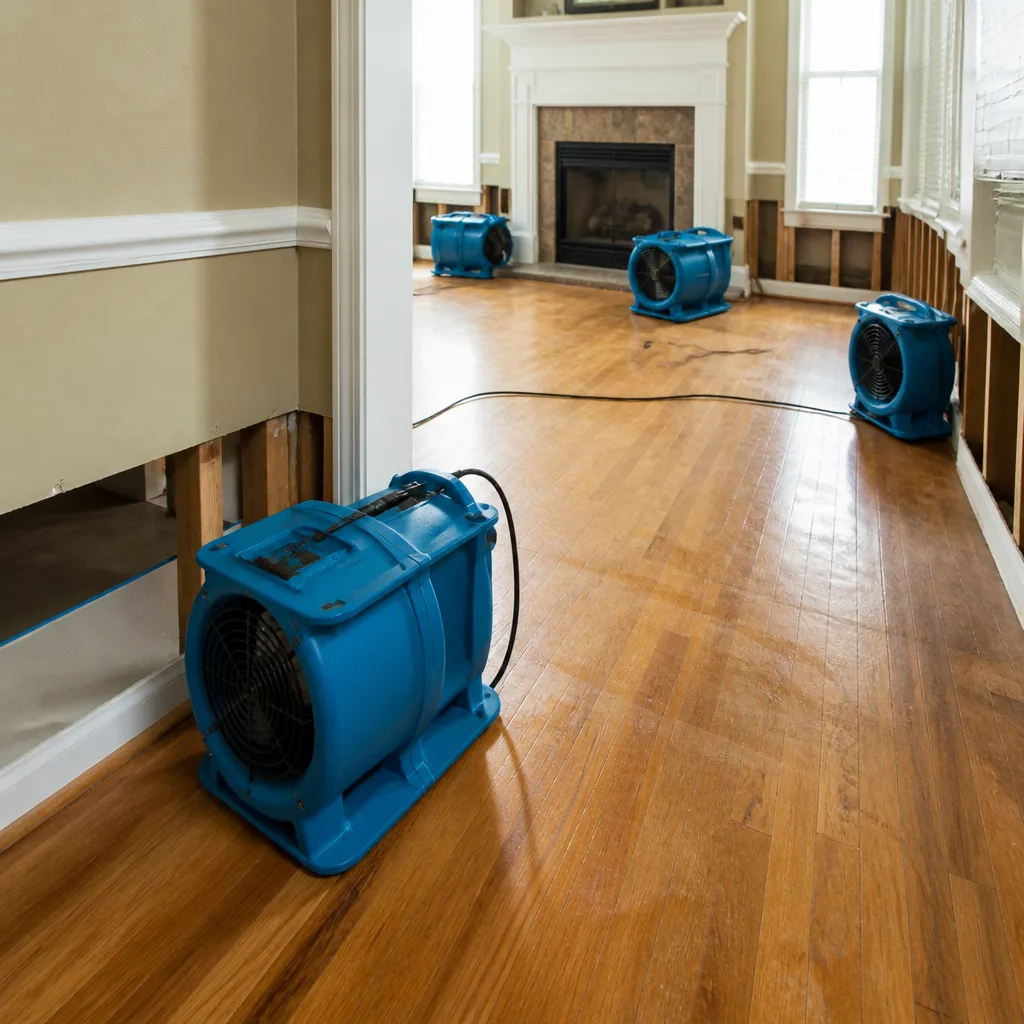
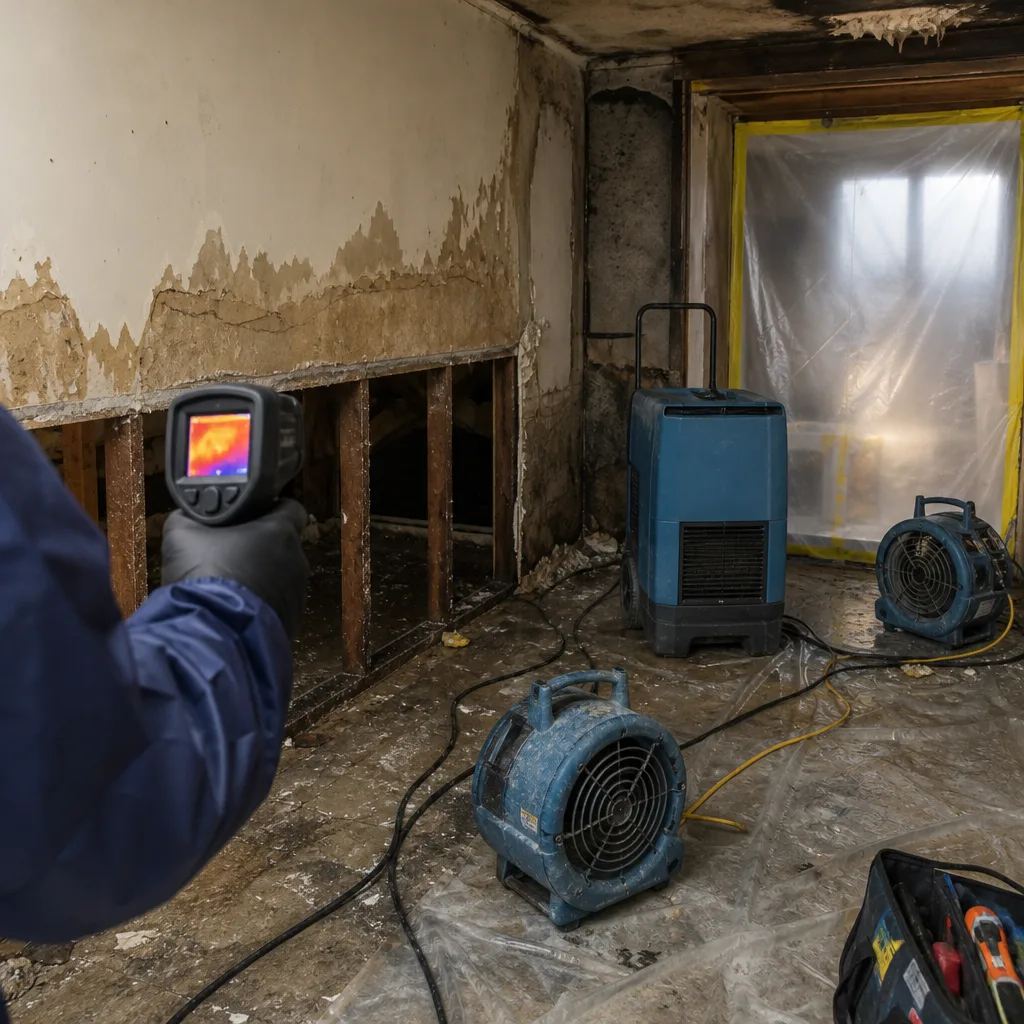
- Perform moisture mapping within the first hour on-site, using penetrating and non-penetrating moisture meters, thermal imaging cameras, and psychrometers to establish ambient humidity and dew point
- Document everything: photos, moisture readings, equipment placement, and a written scope of work before drying begins
- Explain, in plain language, what they found and what the drying plan is
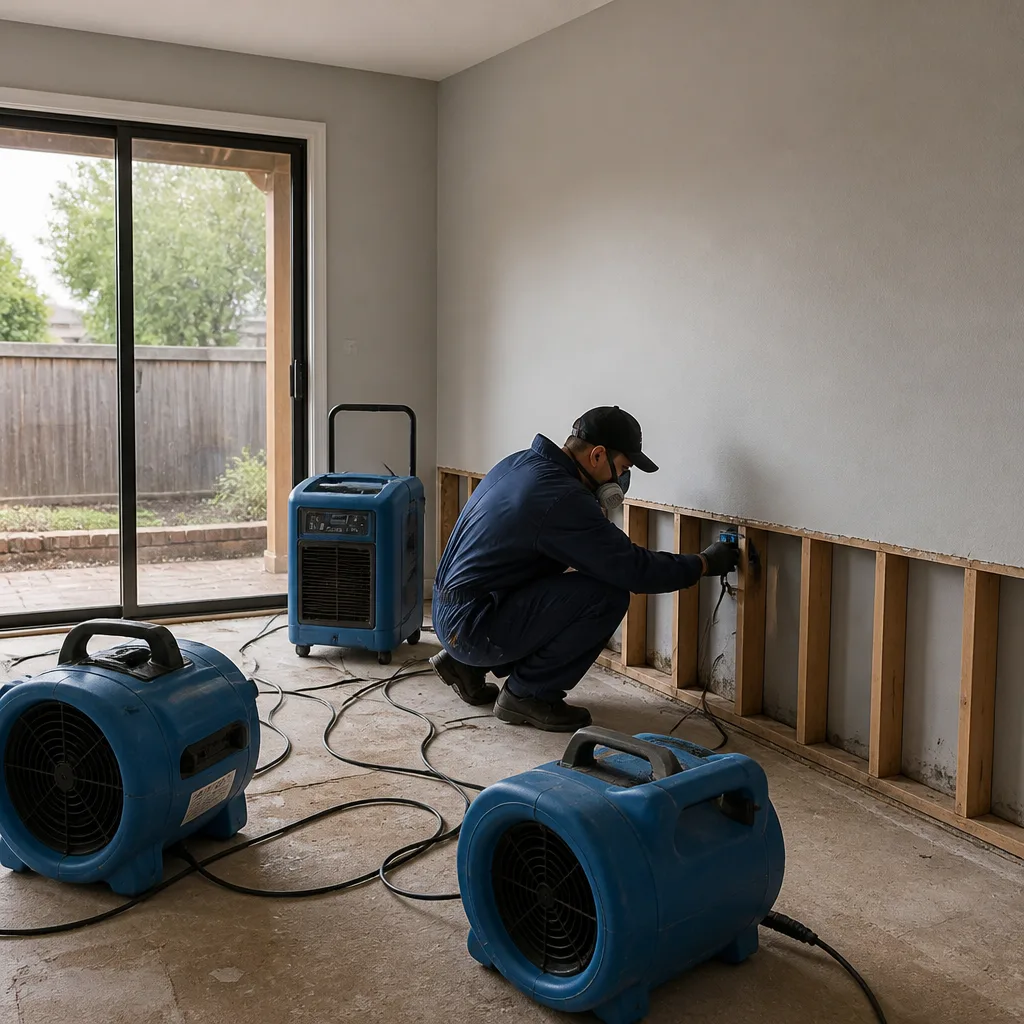
For Rancho Cucamonga slab homes, the moisture mapping step is non-negotiable. Because there’s no crawl space, the technician must map moisture migration through the concrete and into adjoining wall cavities. This isn’t a guy with a hand-held pin meter wandering around looking for damp spots. It’s a systematic survey using professional equipment. The brands matter here. At Flood Guard Water Damage, our crews deploy Dri-Eaz dehumidifiers, Phoenix air movers, and XPOWER air scrubbers, the same equipment used on commercial large-loss jobs, not the consumer-grade units you can rent from a hardware store.
If a restoration company arrives without moisture meters, without a plan for containment, and without documentation, that’s a red flag that they’re operating on guesswork. The difference between a company that measures and a company that guesses is the difference between a dry structure and a future mold problem.
Why Equipment Matters: The Difference Between Measuring and Guessing
You can’t see moisture inside a wall cavity. You can’t feel the moisture content of a concrete slab with your hand. And you can’t dry a structure to IICRC standards with a box fan from a home improvement store and a rental dehumidifier that’s rated for a basement, not a flooded home.
The restoration industry separates into two tiers: companies that use commercial-grade equipment and documented drying science, and companies that use residential-grade tools and hope. The first tier deploys machines like the Dri-Eaz LGR 2800i dehumidifier, which removes up to 130 pints of water per day at AHAM conditions, and Phoenix air movers that push 2,800 CFM of air across wet surfaces. The second tier deploys a 30-pint portable dehumidifier and a floor fan. The outcome difference is measurable: faster drying, lower relative humidity, less secondary damage, fewer mold issues down the line.
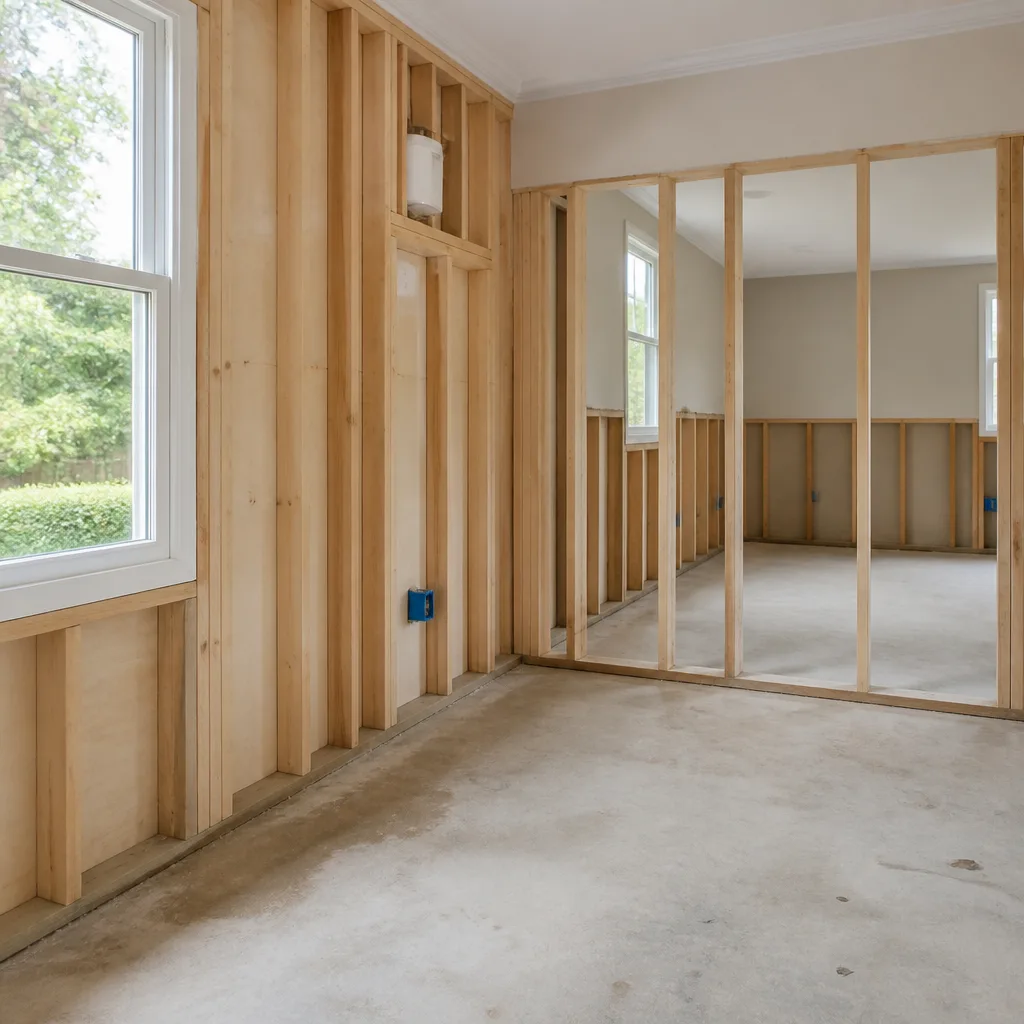
For Rancho Cucamonga slab homes specifically, the equipment list should include Injectidry capability. Injectidry is a vacuum-panel system that draws moisture from wall cavities, under hardwood floors, and from other inaccessible spaces without cutting open drywall or pulling up flooring. On a slab home where moisture has wicked up into walls, Injectidry can dry the cavity through existing outlet holes and small access points. No demolition. No open walls. No replacement drywall. The Mold Remediation in Rancho Cucamonga team at Flood Guard Water Damage uses this same technology, which means a water event doesn’t have to become a mold remediation project.
Air movement matters too. Professional air movers like the Phoenix Axial or B-Air Vantage are designed to create a vortex of airflow that accelerates surface evaporation. The plastic fans you buy at a big-box store move a fraction of the air and overheat under continuous load. In a drying chamber, airflow is the engine. If the engine is undersized, drying time extends from days to weeks.
The takeaway: when you’re pre-vetting a restoration company, ask what equipment they deploy and what brands. If the answer is vague, that’s your answer.
Preparing Before the Emergency: The 2-Hour Weekend Checklist
Most emergency preparedness happens before the emergency. This checklist takes about two hours on a Saturday and will materially change how a water, mold, or fire event plays out in your Rancho Cucamonga home. Browse more guides & resources on our blog.
- Locate and label your main water shutoff. Test it. Turn it off and back on to confirm it operates. If it’s seized, call a plumber to replace it now, not during an emergency.
- Photograph your home’s baseline condition. Every room, both walls, floors, ceilings. Store these photos in the cloud. When you file a claim, baseline photos help prove the loss was sudden and not pre-existing.
- Inspect appliance supply lines. Washing machine hoses, dishwasher lines, ice maker lines, water heater connections. Look for bulging, cracking, or corrosion. Replace rubber hoses with braided stainless steel. This is the single most common preventable water loss we see in Rancho Cucamonga homes.
- Check your water pressure. High water pressure stresses every fitting, valve, and hose in your system. If your pressure reads above 80 psi at a hose bib, install a pressure regulator. Homes in the foothills of north Rancho Cucamonga are more prone to pressure spikes because of elevation changes.
- Clear your exterior drainage. During Santa Ana season, leaves and debris clogging gutters and downspouts send water into foundation walls and window wells. Clean gutters in September and again in January.
- Pre-vet a restoration company and write their number on your data sheet. You don’t want to research restoration companies while water is flowing. Flood Guard Water Damage serves Rancho Cucamonga with IICRC-certified methodology, professional equipment brands including Dri-Eaz, Phoenix, and XPOWER, and full-spectrum Fire Damage Restoration in Rancho Cucamonga alongside water and mold. One call: (844) 716-1094.
Two hours of preparation before an emergency is worth thousands of dollars and weeks of disruption after one.
Common Mistakes to Avoid
- Calling your insurance company before a restoration company. This delays mitigation by days while the adjuster gets assigned and schedules a visit. During that delay on a Rancho Cucamonga slab home, moisture is migrating through concrete and into drywall. Mitigate first, notify second, using the language from the insurance section above.
- Using a shop vacuum and a rental fan. Consumer-grade equipment cannot extract water from slab-embedded materials or dry wall cavities. You’ll remove surface water and leave the structural moisture that causes warping, buckling, and mold. By the time you call a professional, the damage footprint has grown.
- Waiting to see if it dries on its own. It’s not going to dry on its own, not in a Rancho Cucamonga summer with ambient humidity, and not in a winter with closed windows. The 24-to-48-hour window is real. Waiting past it converts a drying job into a demolition and rebuild job.
- Using an unlicensed or unbonded handyman for water damage. Water damage restoration is a trade with specific technical standards. A handyman with a wet/dry vacuum is not a restoration professional. When the handyman’s work fails and mold develops, your insurance company has documented evidence that you attempted mitigation with unqualified labor.
- Ignoring small leaks because they’re small. A pinhole leak in a slab-embedded copper line doesn’t stay small. In Rancho Cucamonga’s hard water environment, slow leaks in copper lines gradually erode and become ruptures. The first sign you see, a damp spot or a water bill spike, is rarely the first day of the leak.
- Not documenting before moving things. Every adjuster has heard some version of “the water was much higher before we started cleaning.” Photos and video are what make that statement provable. Film first. Touch second.
- Trusting a restoration company that doesn’t measure moisture. If the technician doesn’t use moisture meters, thermal imaging, or psychrometric readings, they’re guessing. Guesses don’t hold up in insurance claims and they don’t hold up in a structure six months later.
When to Call a Professional
Call a professional restoration company when water has touched drywall, flooring, or cabinetry, not just when you have standing water. Call when you smell musty odors that persist after cleaning. Call when you see discoloration or staining on walls, ceilings, or baseboards that wasn’t there before. Call when a fire has affected any part of the structure, even a small kitchen fire, because smoke and soot penetrate materials you can’t see. Call when you’ve had a water event and it’s been more than 48 hours, even if it seems dry. Flood Guard Water Damage offers free estimates in Rancho Cucamonga – call (844) 716-1094. Our team responds with commercial equipment, IICRC-certified protocols, and documentation that supports your insurance claim.
Frequently Asked Questions
Water damage in a Rancho Cucamonga slab home gets measurably worse within 24 hours, as moisture migrates laterally through the concrete and wicks into drywall, baseboards, and lower cabinetry. After 48 hours, mold colonization can begin on porous materials, and the drying footprint expands to rooms that were never wet. The 24-to-48-hour window is the standard intervention period in this region, and acting within it typically reduces total loss by a significant margin.
Call a restoration company first. Your policy requires you to mitigate further damage, and a IICRC-certified restoration firm can start extraction and drying immediately while documenting the loss state. Your insurance company’s claims line can be called after mitigation has begun, using the language in this guide to avoid claim complications. Call Flood Guard Water Damage at (844) 716-1094 for a free estimate.
Water damage restoration in Rancho Cucamonga typically ranges from $2,500 to $8,000 for a contained, Category 1 event affecting a single room, and from $8,000 to $25,000 or more for multi-room events, slab moisture migration, or Category 2 or 3 water. Specific costs depend on square footage, material affected, class of water, and drying equipment days. Estimates are free and insurance often covers the majority of mitigation costs.
Homeowners insurance typically covers sudden and accidental water damage, including burst pipes, supply line failures, and appliance overflows. Mold remediation is covered when it results from a covered water event, not from deferred maintenance or long-term humidity issues. Fire damage and smoke restoration are covered under standard policies. Document everything with photos and video, and use the phrase “mitigating further damage” when you speak with your carrier. For details on local requirements, see Damage Restoration Permits, Codes & Inspections in CA: What You Need to Know.
Slab foundation homes in Rancho Cucamonga have no crawl space to vent moisture, so water that penetrates the slab migrates laterally through concrete and wicks upward into drywall, baseboards, and cabinetry. This creates hidden moisture in wall cavities that requires professional moisture mapping and Injectidry-style vacuum drying to address without unnecessary demolition. Homes with raised foundations can dry from below, an option that doesn’t exist on a slab.
A professional IICRC-certified restoration company should work directly with your adjuster, providing photo documentation, moisture mapping reports, psychrometric drying logs, and a written scope of work that aligns with industry standards. This documentation shortens the claims process and reduces disputes over scope. Flood Guard Water Damage coordinates directly with adjusters on every claim. Call (844) 716-1094 to discuss your situation.
The Bottom Line
Water damage emergencies in Rancho Cucamonga are won or lost in the first 48 hours, not the first week. Knowing where your main shutoff is, documenting before you touch anything, calling a restoration company before your insurance carrier, and using the phrase “mitigating further damage” when you notify your insurer are the four actions that reduce total loss more than anything else. Rancho Cucamonga’s slab foundation housing stock makes the timeline stricter than in other markets, which means preparedness before the emergency is the highest-value investment you can make. Build your data sheet. Pre-vet your restoration team. Store the number. When water hits, you’ll execute instead of panic. Flood Guard Water Damage is ready at (844) 716-1094, with commercial equipment, IICRC-certified protocols, and one team handling water, mold, and fire from extraction to clearance.
Written by the team at Flood Guard Water Damage, serving Rancho Cucamonga since 2018.
See the difference
 Before
 After
 Before
 After
 Before
 After