
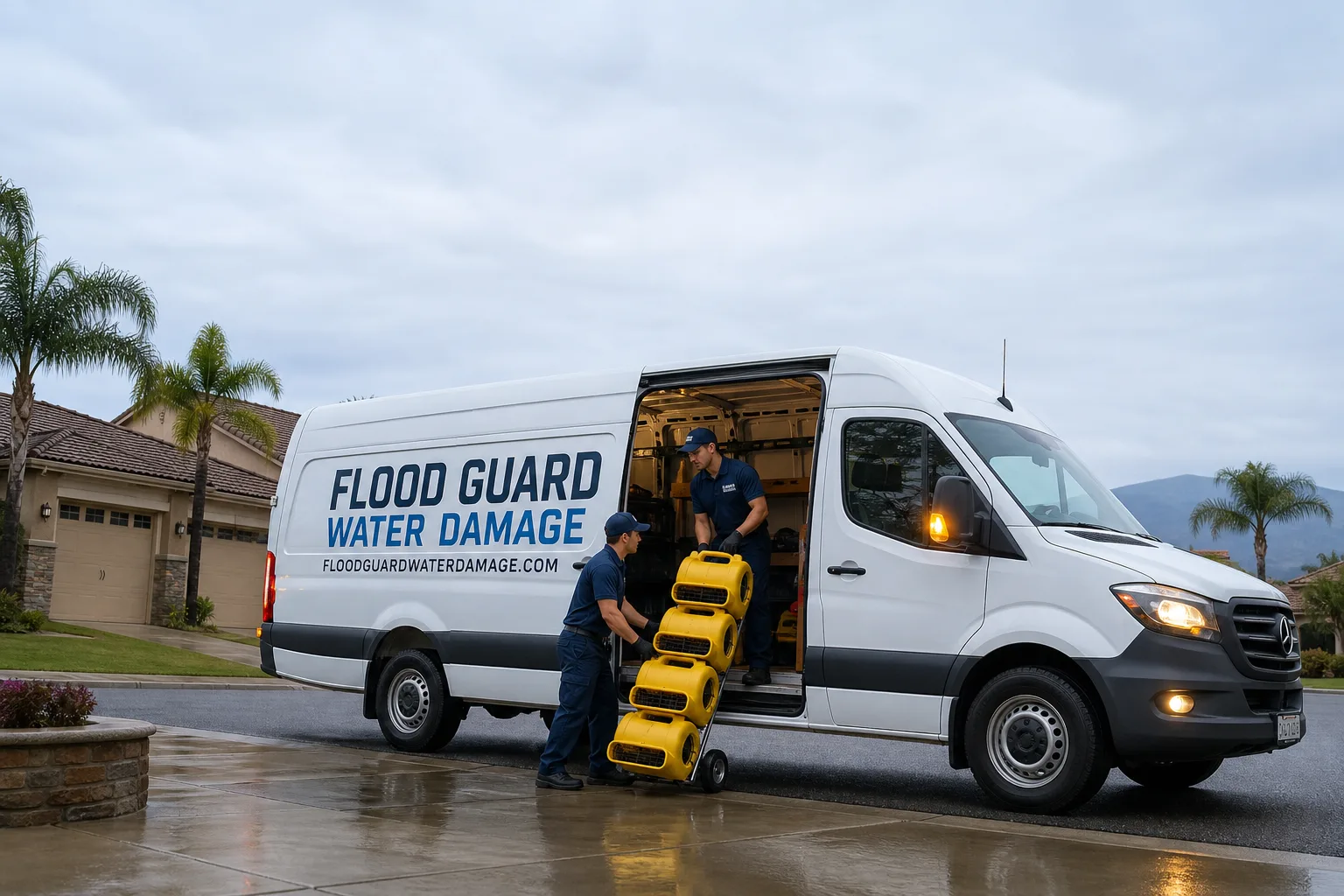
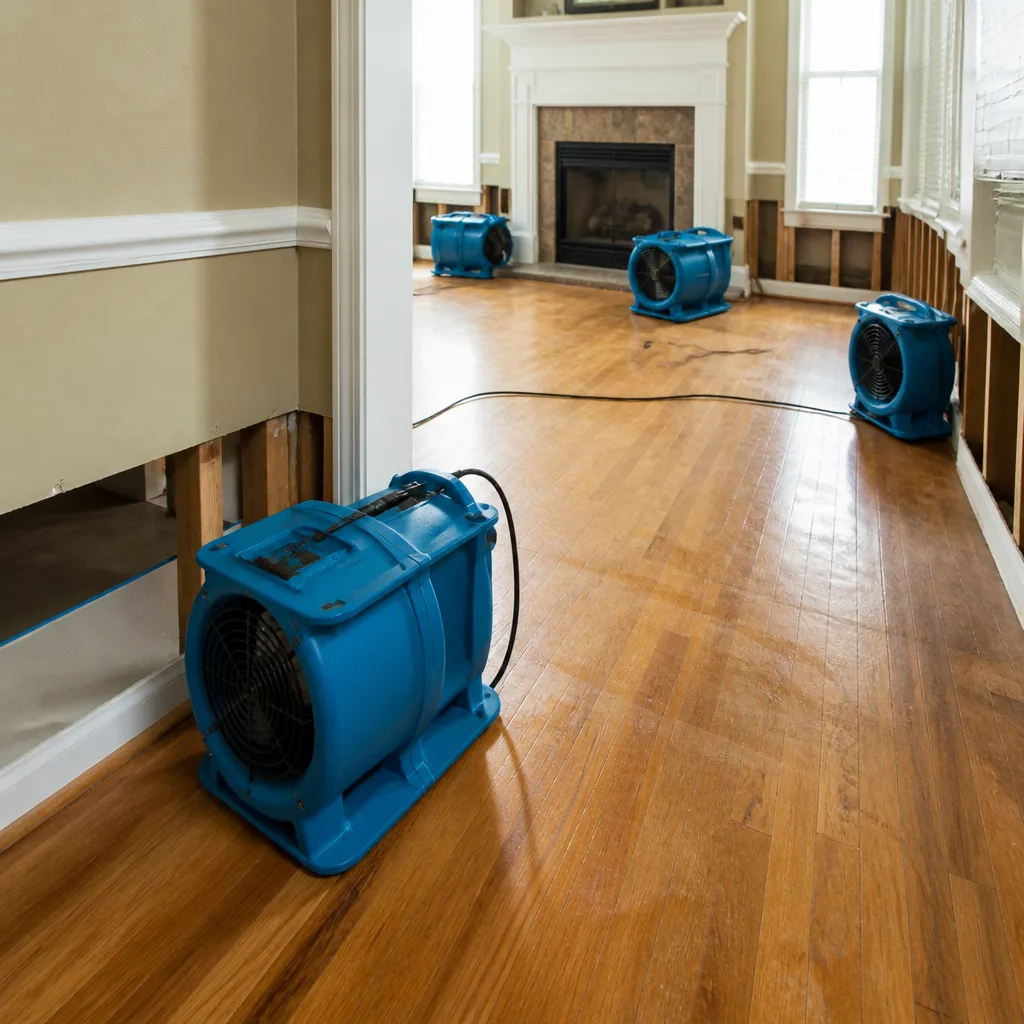
 Water damage drying
 Fire & smoke cleanup
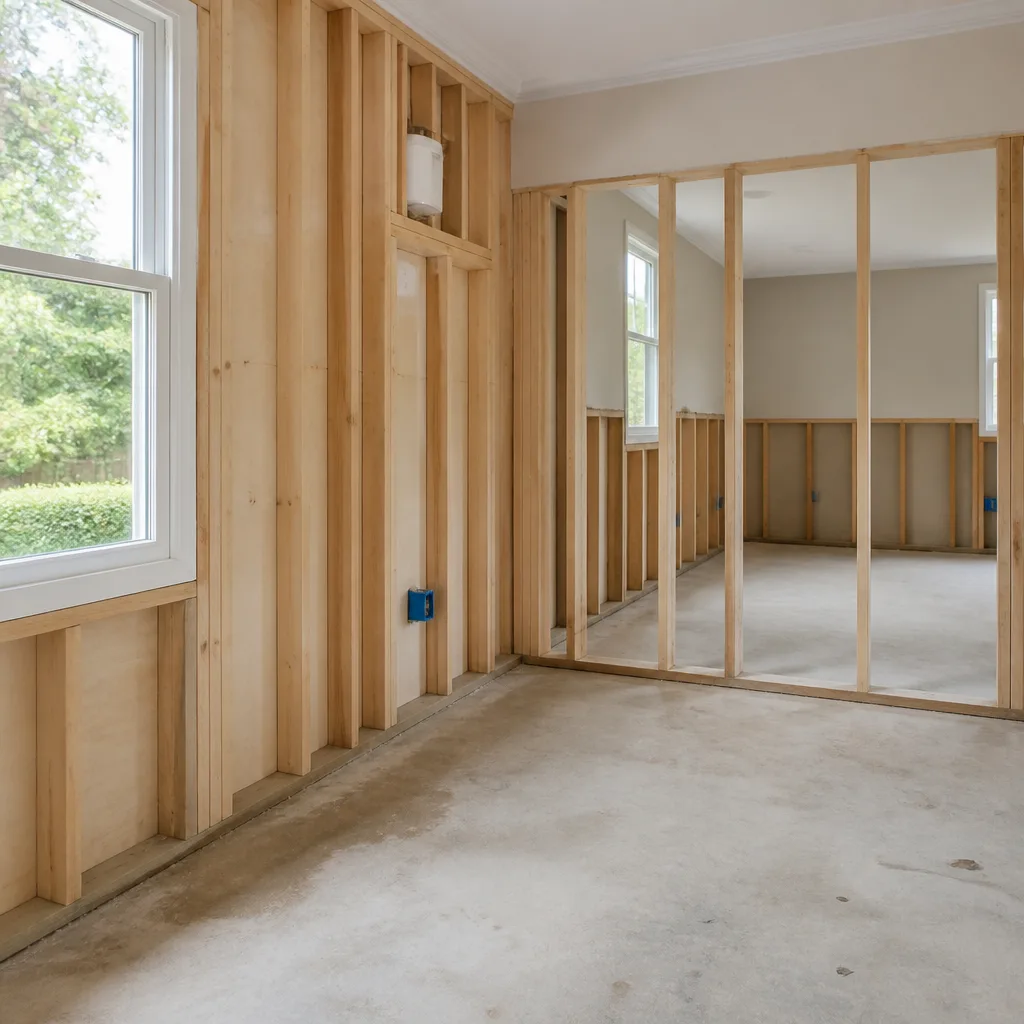 Mold remediation
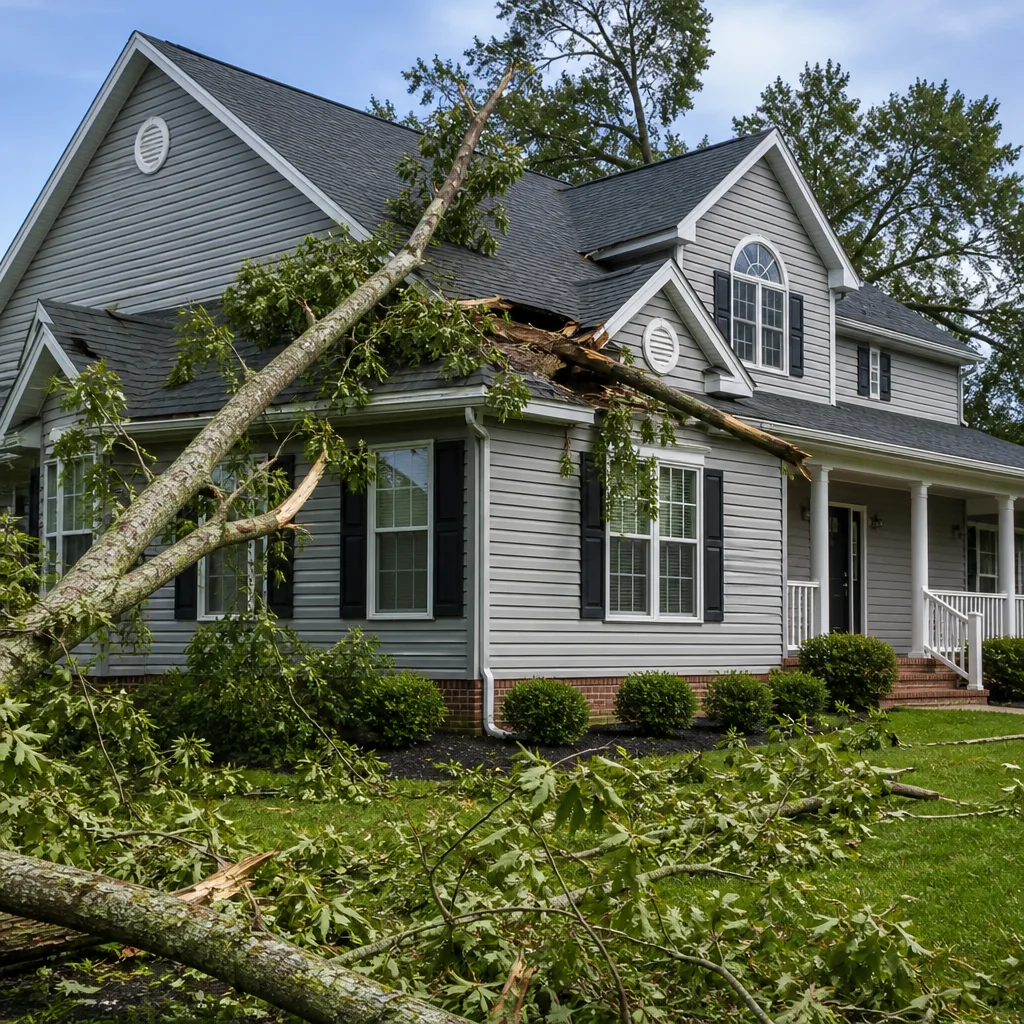 Storm response
 Sewage cleanup
 Reconstruction
Free visual inspection and a written scope of work before any mitigation begins - photos, moisture readings, and drying logs go in your claim file
The scope we write is the scope we bill. Anything new gets shown to you, in writing, before we touch it.
Get your free estimateFast, Reliable Water Damage Restoration Across Lakeland Village
Water damage in Lakeland Village moves fast, and so do we. A burst pipe, a lake-water surge during a Santa Ana wind event, or a slow leak behind a 1970s wall can soak framing, ruin drywall, and trigger mold within 24 to 48 hours. Flood Guard Water Damage serves Lakeland Village with IICRC-certified restoration protocols and commercial-grade drying equipment, not consumer gear. We measure moisture, document what’s wet, and dry the structure using Dri-Eaz, Phoenix, and Injectidry systems you’ll find on large-loss commercial jobs. Call (844) 716-1094 for a free estimate and a same-day assessment.
Why Flood Guard Water Damage Is Lakeland Village’s Preferred Water Damage Restoration Company
Lakeland Village isn’t like inland Riverside County. Homes here sit between Lake Elsinore and the Ortega Mountains, which means water damage and wildfire smoke can hit the same street within the same week. We know this because we work it. Our crews understand manufactured home vapor barriers, 1960s slab foundations, and the low-lying shore properties along Grand Avenue and Lakeshore Drive that take the brunt of wind-driven lake water. That local knowledge changes how we set up drying systems and where we look for hidden water.
Noel Ibarra leads Flood Guard Water Damage with a standards-first approach. Every job follows IICRC-certified methodology, the restoration industry’s highest technical benchmark. We hold active standing with the Restoration Industry Association (RIA), which means we answer to a professional body that enforces ethical and technical standards. Homeowners in Lakeland Village call us because a neighbor or property manager recommended the crew that showed up with moisture meters and a written drying plan, not a shop vac and a fan.
Restoration work we handle
Flooded Basement in Lakeland Village
A Flooded Basement in Lakeland Village usually means one of two things: lake water pushed in by Santa Ana winds, or a plumbing failure in an older home. Both require the same first move: stop the water source, extract what’s standing, then measure what you can’t see. Basement water removal in this area typically runs $1,800 to $4,200 depending on square footage and how long water sat before we arrived. The low-lying homes near the southwest shore flood faster and stay wet longer because the water table sits close to grade.
Subfloor and Vapor Barrier Concerns
Many older Lakeland Village homes, especially manufactured units, have vapor barriers under the floor that trap water after a flood. Water pools against the barrier, wicks into framing, and hides there. We check every flooded basement with moisture meters in the subfloor, not just the visible concrete or carpet. Missing this step means mold starts in a place nobody looks.
Category 2 Water in Basements
Lake water and storm runoff carry contaminants that classify as Category 2 water. That changes the drying and cleaning protocol because it’s not clean water from a supply line. We apply antimicrobial treatment to saturated framing and use containment where needed so drying doesn’t spread airborne particles through the rest of the house. You need a restoration crew that treats lake intrusion as contaminated until proven otherwise.
Water Extraction in Lakeland Village
Water Extraction in Lakeland Village is the emergency step that determines whether a flooded home becomes a mold job. When lake water sheets across a low-lying lot or a supply line ruptures inside a wall, every hour of standing water drives moisture deeper into building materials. Professional extraction in this area typically runs $900 to $2,500 for a single room or crawlspace, with whole-home extraction reaching $5,000 or more. The cost reflects the truck-mounted and portable extraction systems used, not the water volume alone.
Extraction Fueled by Measurements
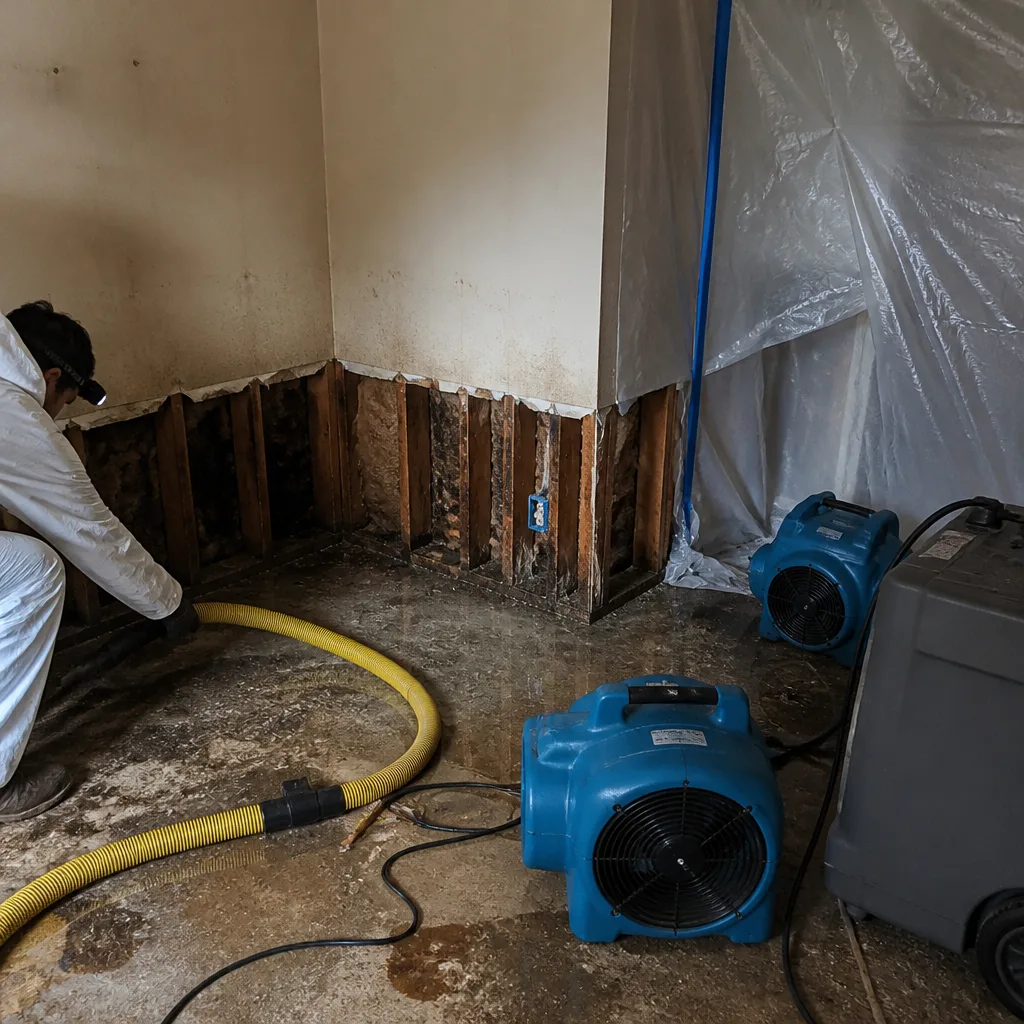
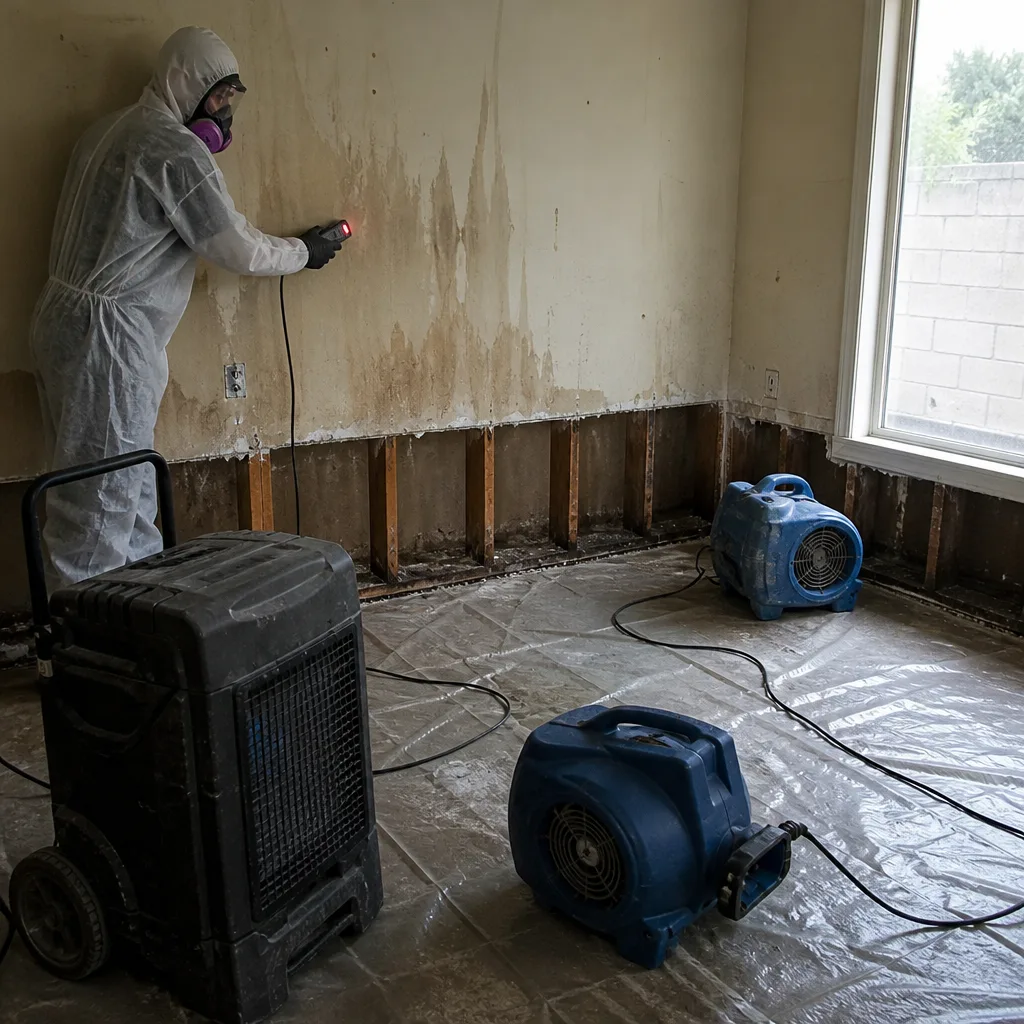
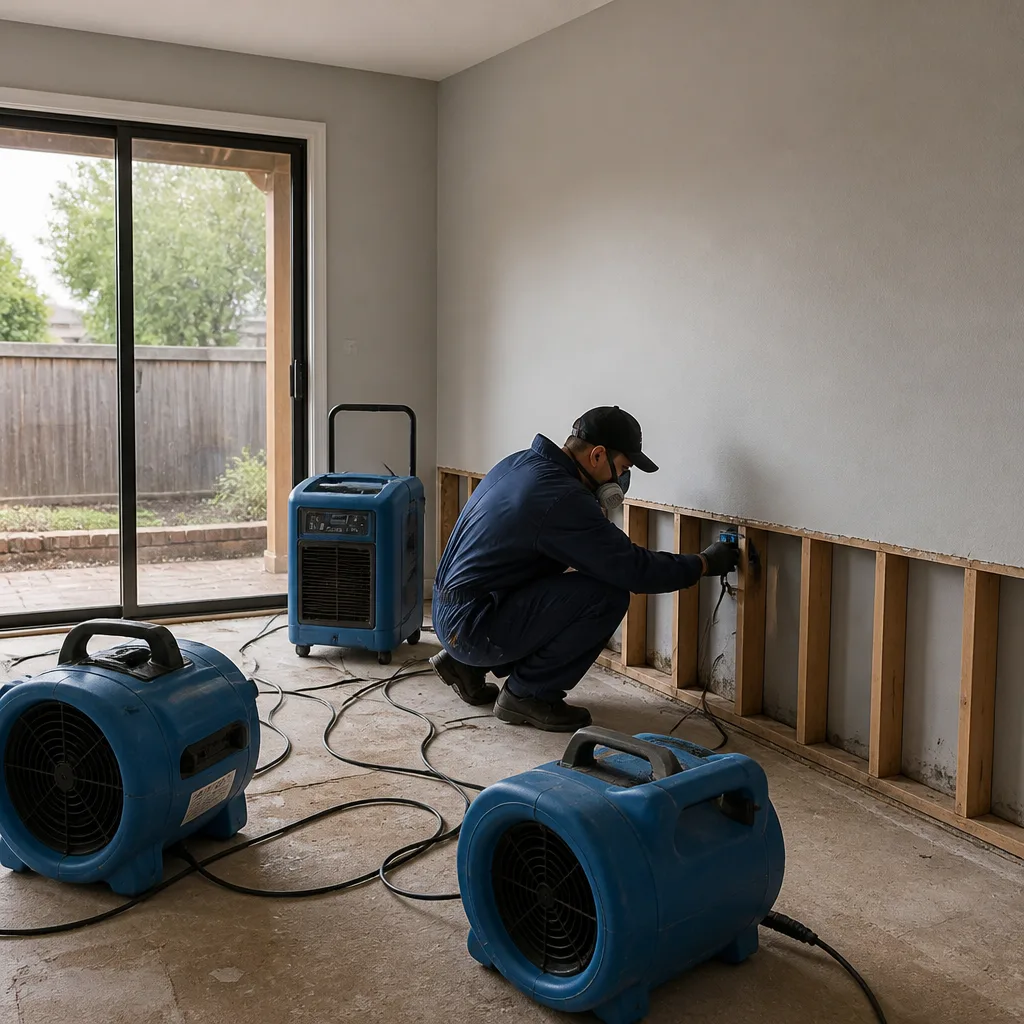
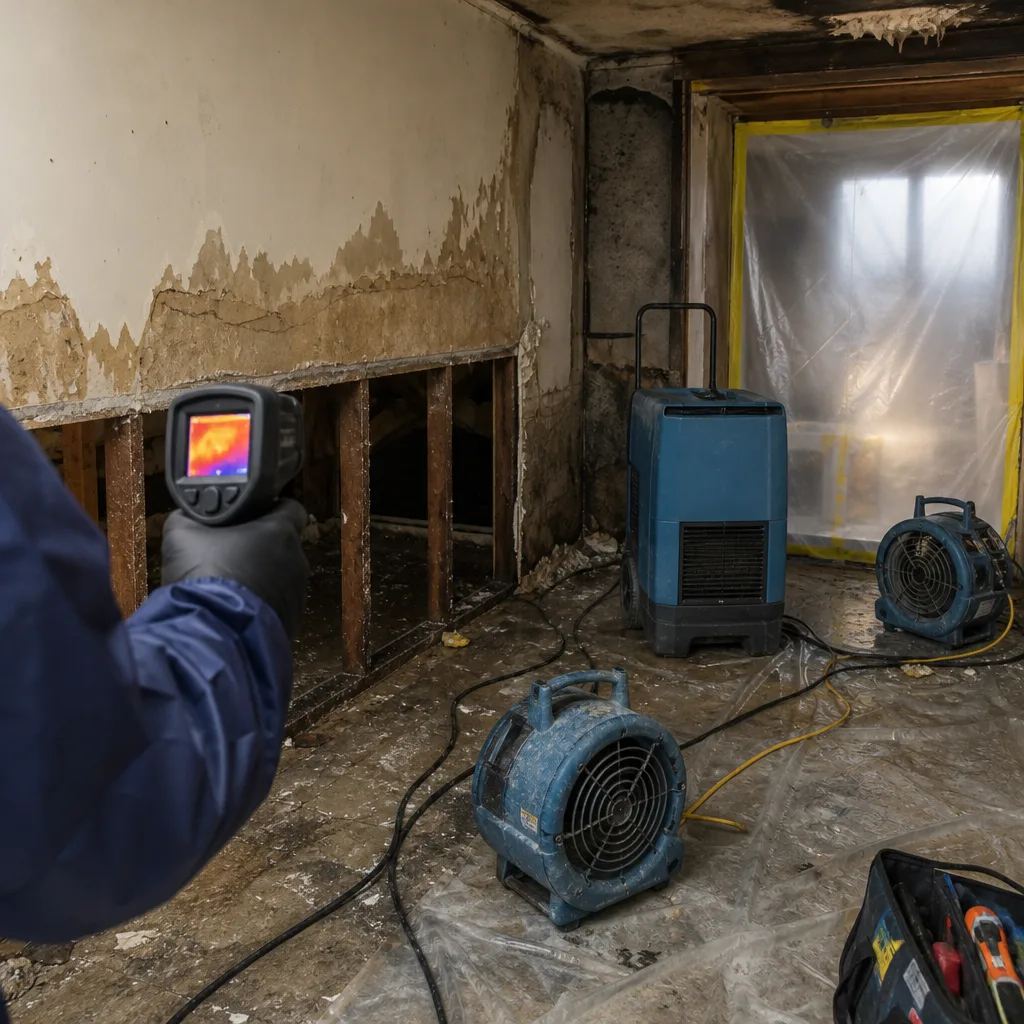
We don’t pull water until we know where it is. Our crews use moisture meters and thermal imaging to locate saturated drywall, insulation, and subfloor before extraction starts. That’s the difference between restoring a room and replacing it. After a February storm pushed lake water into a low-lying manufactured home near the shore, our crew used water extraction and moisture mapping to find trapped water under the vapor barrier. We set up containment and Dri-Eaz dehumidifiers with air movers, then applied antimicrobial treatment to the wet framing before structural drying could begin. The homeowner had no idea the flooding had also soaked the subfloor until our moisture readings showed elevated levels in rooms that looked dry.
Drying the Structure, Not Just the Surface
Extraction removes standing water. Structural drying removes the water you can’t see. We pair air movers with commercial dehumidifiers and monitor daily with moisture meters until materials return to dry standard. Injectidry technology lets us dry inside wall cavities and under flooring without ripping everything open. That means less demolition, lower repair bills, and a faster return to normal.
Trusted Brands We Service in Lakeland Village
Flood Guard Water Damage works on all makes and models of water damage scenarios across Lakeland Village, from older manufactured homes to newer tract builds. We stock professional drying equipment brands including Dri-Eaz, Phoenix, XPOWER, and B-Air, and keep Injectidry systems ready for non-invasive structural drying. Because we’re based in Rancho Cucamonga and respond regularly to the Lake Elsinore basin, we can dispatch equipment and parts to Lakeland Village quickly. Whether it’s a crawlspace flood under a 1970s single-story or water behind the walls of a newer build near the lake, our Water Damage Restoration team arrives equipped for the job, not for a trip to the supply house.
See the difference
 Before
 After
 Before
 After
 Before
 After
Common Water Damage Restoration Problems We See in Lakeland Village Homes
- Lake-water surges into low-lying shore properties. Santa Ana winds push lake water onto lots that have never flooded before, and homeowners lose precious hours searching for a restoration crew while water saturates flooring and subfloor.
- Vapor barriers trapping water under manufactured homes. Older mobile and manufactured homes near the shore often have vapor barriers that trap water underneath. If extraction and drying don’t address the subfloor, mold begins within 24 to 48 hours and nobody notices until the smell spreads.
- Outdated plumbing in 1960s to 1980s homes. Wet-season pipe failures in aging Lakeland Village homes frequently happen behind walls, and slow leaks go unnoticed until elevated moisture readings reveal hidden Category 2 water that’s been soaking framing for days or weeks.
- Wildfire smoke and ash entering homes after water events. Summer wildfires in the Ortega Mountains generate smoke and ash that infiltrate homes, and embers carried over the lake can ignite spot fires. When a home faces water intrusion days after ash exposure, restoration must account for both moisture and airborne particulates.
Pricing for Water Damage Restoration in Lakeland Village, CA
Water damage restoration in Lakeland Village runs from about $900 for a small room extraction to $12,000 or more for a whole-home flood with structural drying and rebuild. Here’s what you can expect, line by line:
| Service | Typical Range in Lakeland Village |
|---|---|
| Emergency water extraction (single room) | $900 – $2,500 |
| Flooded basement water removal | $1,800 – $4,200 |
| Structural drying and dehumidification | $1,500 – $5,000+ |
| Burst pipe restoration | $2,000 – $6,000 |
| Ceiling or roof leak water damage | $700 – $2,800 |
| Whole-home flood cleanup | $5,000 – $12,000+ |
Material costs, the age of your plumbing, and how long water sat before mitigation starts all affect the final number. Homes near the shore with vapor barrier complications tend toward the higher end. Call (844) 716-1094 for a free estimate, and we’ll send a moisture map and a written scope before any work begins.
We Also Serve Cities Near Lakeland Village
If you’re in Sedco Hills, Canyon Lake, Meadowbrook, or Wildomar, we respond there too. Our team covers the entire Lake Elsinore basin, and we bring the same Lakeland Village level of local knowledge to neighboring communities, including the same IICRC-certified drying protocols and commercial-grade equipment.
Serving Lakeland Village, CA — Our Local Coverage Area
We’re based in the Lakeland Village area and know this community well. Use the map below to see our service coverage — if you’re nearby, we can almost certainly help.
FAQs About Water Damage Restoration in Lakeland Village
Lake water often enters crawlspaces first because they sit below the living area’s grade. You need a moisture meter on the subfloor, joists, and any vapor barrier. Staining on the foundation, a musty smell, or condensate on ductwork are all warning signs. Call (844) 716-1094 if you suspect crawlspace water, and we’ll measure rather than guess.
Yes. Ash and smoke easily infiltrate wall cavities and insulation, and when water gets added, it creates a slurry that dries differently than clean water. Restoration in Lakeland Village must account for both moisture and airborne particulates, which is why we use containment and HEPA-filtered air movers when needed. Schedule an assessment at (844) 716-1094.
Call (844) 716-1094 before you start moving things. Standing water in a Lakeland Village basement is usually Category 2, and walking through it spreads contamination. We’ll shut off power if needed, extract the water, and start moisture mapping before the water spreads into framing and subfloor.
Often, yes. Many 1960s and 1970s homes have solid lumber framing that absorbs water slowly, and manufactured homes trap moisture under vapor barriers. Injectidry systems dry inside walls and under floors without demolition, which matters when you don’t want to tear into original materials. We’ll tell you if your home needs this approach.
We treat it as a dual-contamination event. Lake water or plumbing water carries Category 2 contamination, and wildfire smoke adds soot and ash particles that must be contained before drying starts. Our crews use containment, HEPA filtration, and moisture mapping in sequence so the drying process doesn’t blow ash through the rest of the house. Call (844) 716-1094 and mention the wildfire, and we’ll bring the right equipment the first time.
Written by Noel Ibarra, Owner at Flood Guard Water Damage, serving Lakeland Village and the Lake Elsinore basin.
Call (844) 716-1094 for a free estimate. We answer around the clock, and we’ll give you a written scope before any work starts.