Last updated October 30, 2026
 Water damage drying
 Fire & smoke cleanup
 Mold remediation
 Storm response
 Sewage cleanup
 Reconstruction
Free visual inspection and a written scope of work before any mitigation begins - photos, moisture readings, and drying logs go in your claim file
The scope we write is the scope we bill. Anything new gets shown to you, in writing, before we touch it.
Get your free estimateDamage Restoration Cost Breakdown: The Rancho Cucamonga Homeowner’s Reference for 2026
Here’s what nobody tells you about restoration pricing in Rancho Cucamonga: the same water-damaged hallway can draw estimates ranging from $1,400 to $6,200, and the higher bid isn’t the one ripping you off. The variable isn’t square footage or even the amount of water. It’s what the contractor plans to do about the water you can’t see. This guide walks through the actual cost drivers – water category, material composition, equipment hours, and documentation standards – so you can read an estimate line by line instead of circling the bottom number, and you can explore more guides & resources to deepen your understanding. By the end, you’ll understand why structural drying logs matter more to your long-term cost than any upfront savings.
Restoration work we handle
Quick Answer
Water damage restoration in Rancho Cucamonga typically costs between $1,200 and $6,500 for a single-room loss in 2026, with mold remediation averaging $2,000 to $7,500 depending on affected square footage and cavity involvement, and fire damage restoration ranging from $3,500 to $25,000 based on soot penetration and structural compromise. The single largest cost variable is not the visible damage but whether hidden moisture inside walls, subflooring, and ceiling cavities is properly dried and documented. A complete restoration with drying logs and clearance testing costs more upfront and almost always less than the mold claim denial that follows an undocumented job.
Table of Contents
- Why Water Category Determines Your Real Cost
- Equipment Deployment: The Line Item That Separates Real Restoration From Surface Drying
- Drying In Place vs. Demo-and-Dry: When Opening Walls Saves Money
- How Rancho Cucamonga and San Bernardino County Rates Compare to Insurer Benchmarks
- Insurance Reimbursement: ACV, RCV, and the Documentation That Prevents Claim Denials
- Mold Remediation and Fire Damage: Cost Frameworks That Follow the Same Logic
- How to Read a Restoration Estimate Line by Line
- Common Mistakes to Avoid
- When to Call a Professional
- Frequently Asked Questions
- The Bottom Line
Why Water Category Determines Your Real Cost
The IICRC classifies every water loss into one of three categories, and that classification drives more of your final bill than any other single factor. Category 1 is clean water from a supply line, sink overflow without contaminants, or a tub left running. Category 2 is gray water – washer discharge, dishwasher overflow, sump pump seepage with some cleaning chemicals or biological material. Category 3 is black water: sewage backup, toilet overflow with solid waste, river or flood water, or any Category 1 or 2 water that has sat long enough to grow bacteria.
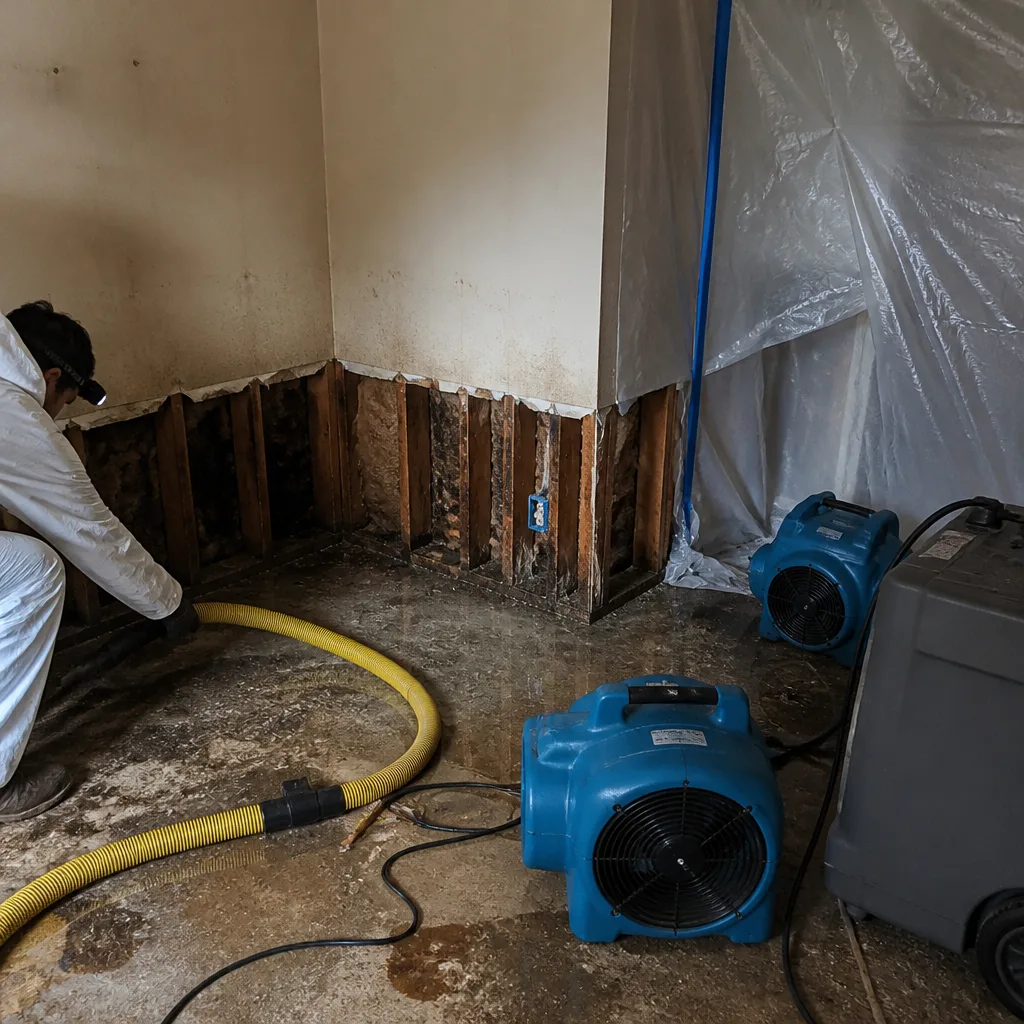
Here’s the cost implication most Rancho Cucamonga homeowners don’t realize until it’s too late: Category determines what gets removed, and removal is where material replacement costs enter. A Category 1 leak under a bathroom sink might be fully restorable – dry the cabinet, dry the drywall cavity, no replacement needed. A Category 3 sewage backup in the same bathroom will require removal of carpet and pad, baseboard, and often the bottom 12 to 24 inches of drywall because those materials cannot be sanitized once exposed to sewage. Same room. Same exact square footage. The Category 3 job costs three to five times more because you’re replacing materials, not just drying them.
In Rancho Cucamonga’s climate, the category risk is elevated by heat. A Category 1 leak during a July afternoon becomes Category 2 within 24 to 48 hours as warm air accelerates microbial growth inside wall cavities. We regularly see losses in neighborhoods like Alta Loma and Etiwanda where a slow supply-line leak behind a kitchen cabinet has gone unnoticed through a heat wave, and what should have been a $1,500 drying job requires $4,000 in cabinet demolition and replacement because the water turned gray inside the wall—a scenario covered in our Damage Restoration Warning Signs: A Rancho Cucamonga Homeowner’s Reference Guide. The lesson: response time is a cost variable, not just a convenience.
Equipment Deployment: The Line Item That Separates Real Restoration From Surface Drying
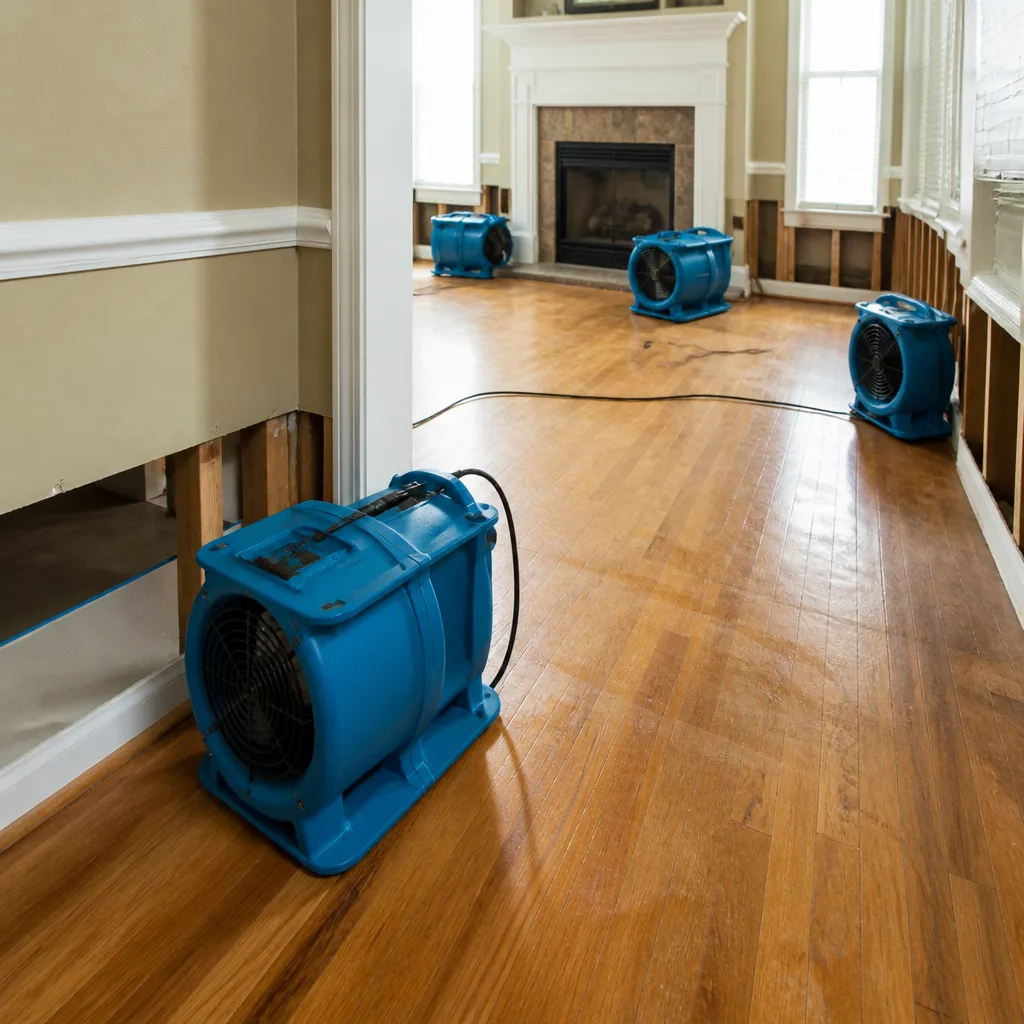
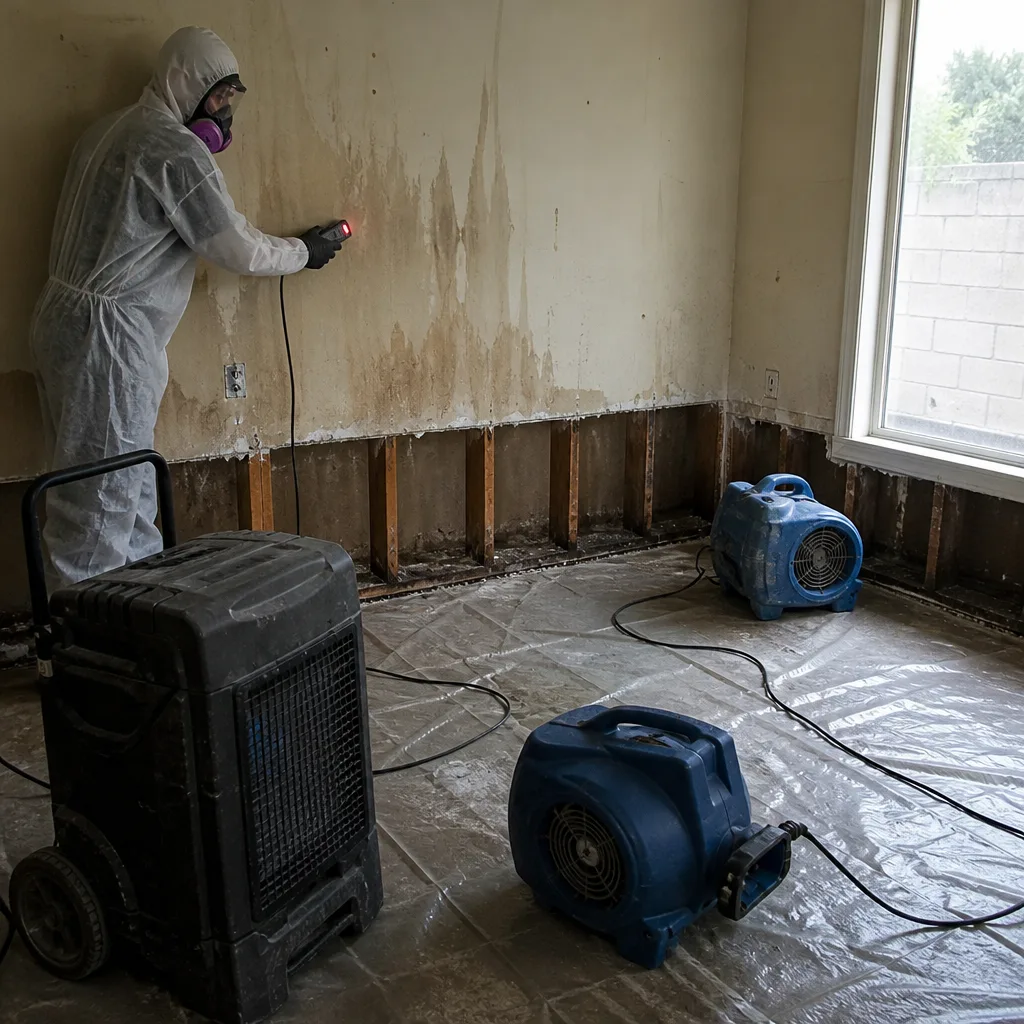
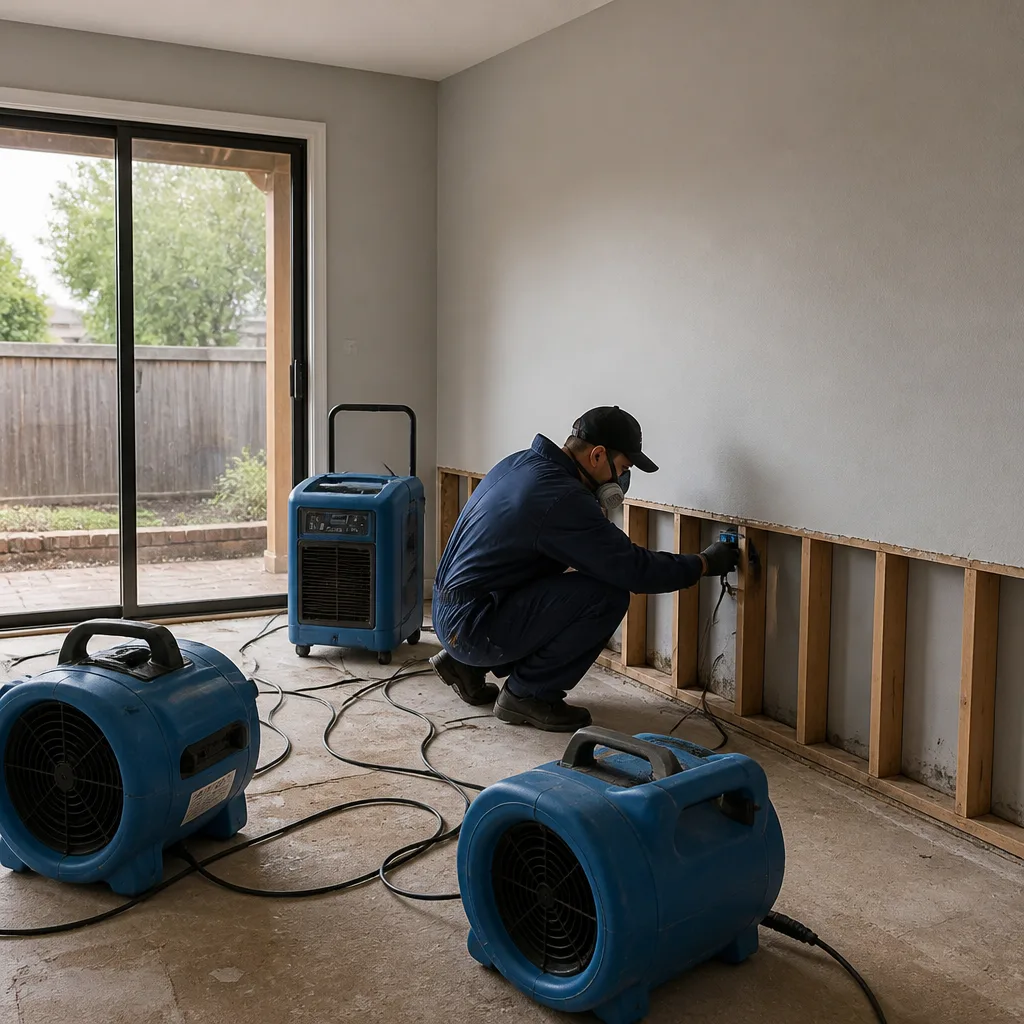
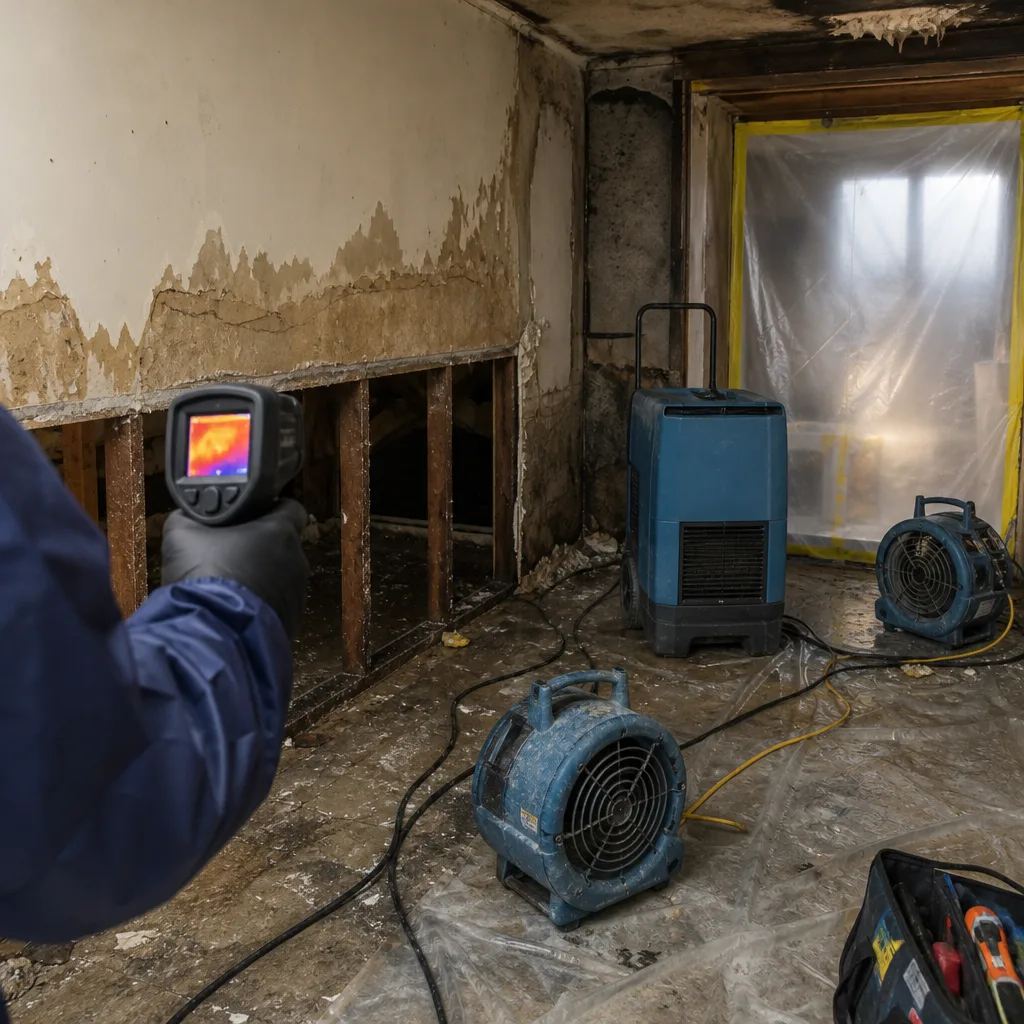
When you see “equipment fees” on a restoration estimate in Rancho Cucamonga, you’re looking at the difference between a restoration contractor and a guy with a wet vac. Professional drying requires managing vapor pressure inside your structure, not just removing visible water. That means low-grain refrigerant dehumidifiers (the industry standard is Dri-Eaz and Phoenix units), high-velocity air movers, and in many cases thermal imaging cameras and moisture meters that document moisture content before, during, and after the drying process.
Daily equipment fees typically run $40 to $85 per dehumidifier and $20 to $40 per air mover, depending on unit size and whether your restoration company owns or rents the equipment. A single-room water loss in a Rancho Cucamonga home might require two dehumidifiers and six air movers running for three to five days. That’s $600 to $1,000 per day in documented drying capacity – and it’s a legitimate restoration expense your insurer will pay when the drying logs demonstrate the equipment was necessary.
What’s not legitimate is equipment deployed for show and pulled after 48 hours. IICRC-certified drying protocols require daily moisture readings in affected materials – drywall, subfloor, framing in exposed cavities – tracked against drying goals. A contractor who cannot show you daily psychrometric readings and final moisture content verification did not dry your structure. They dried the air. The reason insured restoration costs in Rancho Cucamonga sometimes look inflated is that certified contractors are documenting every kilowatt-hour of drying against a science-based goal. You’re not paying for fans. You’re paying for proof that the moisture that would otherwise grow mold in your walls is gone. For a deeper look at how this process works on an actual water event, see our Water Damage Restoration in Rancho Cucamonga page.
Drying In Place vs. Demo-and-Dry: When Opening Walls Saves Money
Here’s the counterintuitive economics of structural drying: opening a wall can be the cheaper option, even though demolition sounds expensive. Traditional restoration thinking says dry everything in place to avoid reconstruction costs. But drying in place only works when the moisture source is stopped, the affected materials are porous enough to release water, and the cavity has consistent airflow. When those conditions are not met, drying in place fails slowly – and every day of failed drying is another day of equipment rental, another day of your family living with noise and humidity, and another increment of microbial risk.
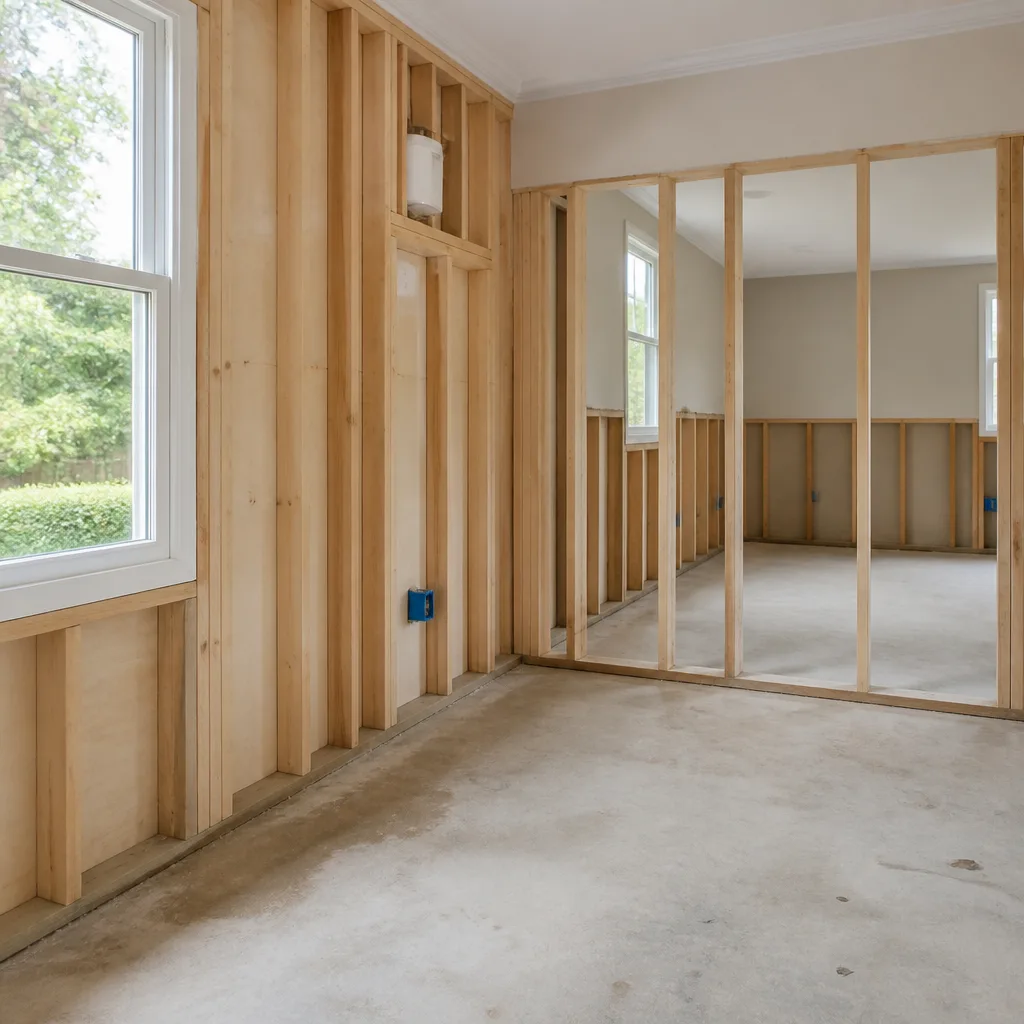
The tech that changed this equation is Injectidry, a system that forces controlled airflow inside wall cavities and under flooring through small access points rather than full demolition. Instead of removing drywall from floor to ceiling, a technician cuts small ports, injects dry air through the cavity, and monitors moisture content until the structural materials hit their drying goal. That approach can reduce reconstruction costs by thousands on a two-story Rancho Cucamonga home where water has traveled from an upstairs bathroom down into first-floor ceiling cavities. You’re paying $500 to $1,000 in Injectidry deployment instead of $3,500 in drywall replacement and repainting.
The decision point is structural framing and insulation type. If the affected wall is a standard interior partition with fiberglass insulation, drying in place with Injectidry is often the right move. If it’s an exterior wall with wet insulation, or if the drywall has already begun to sag or show mold growth, removal is the structurally honest answer. A restoration estimate should explain why the contractor chose demo over drying, not just list a line item. The test we apply on every Rancho Cucamonga job: can we document that the cavity reached its drying goal, or are we leaving hidden moisture that becomes a mold problem six months from now? If we cannot document it, we open the wall. A full discussion of how we handle moisture that has already become mold is on our Mold Remediation in Rancho Cucamonga page.
How Rancho Cucamonga and San Bernardino County Rates Compare to Insurer Benchmarks
Insurers price restoration claims against national and regional software benchmarks like Xactimate, which generate line-item pricing based on ZIP code. Those benchmarks are updated regularly, but they represent an average – and Rancho Cucamonga is not an average market. San Bernardino County contractor rates in 2026 run meaningfully higher than the national median for restoration labor, driven by the same pressures affecting all construction in the Inland Empire: labor competition from LA and Orange County spillover, fuel costs for crews covering a wide service area, and material inflation that has not leveled off at national averages.
What this means in practice: when your adjuster compares a Rancho Cucamonga restoration bid to a benchmark that blends national labor rates, the local bid can look 15 to 25 percent high. It isn’t. A licensed and certified restoration company in this market paying commercial insurance, certified technicians, and the equipment overhead required to maintain IICRC-standard drying capacity cannot operate at Topeka rates. The counter-strategy is documentation, as explained in our Damage Restoration Permits, Codes & Inspections in CA: What You Need to Know. A detailed estimate that aligns to Xactimate line-item codes, shows equipment deployment days, and includes daily moisture logs is much harder to lowball than a one-page invoice that says “drying and restoration – $4,200.”
Material costs matter too. The drywall, baseboard, paint, and flooring materials used in reconstruction have inflated unevenly since 2021, and the Inland Empire’s construction boom has kept local material pricing above national averages. A skilled restoration company writes estimates with local material vendor pricing, not online averages. If you’re reviewing an estimate in Rancho Cucamonga in 2026 and the line items match exactly what you’d expect to pay at a big-box store’s national pricing, that bid was written by someone who has not actually bought materials in this market recently.
Insurance Reimbursement: ACV, RCV, and the Documentation That Prevents Claim Denials
Most Rancho Cucamonga homeowner policies are written as Replacement Cost Value (RCV) or Actual Cash Value (ACV), and the difference is thousands of dollars out of your pocket. RCV pays what it costs to replace damaged materials at current market prices. ACV pays replacement cost minus depreciation, and depreciation schedules on flooring, cabinetry, and drywall can subtract 20 to 50 percent of your material value. If your policy is ACV, you are under-reimbursed for almost every restoration event – which is why the lowest restoration bid is rarely your real cost, because a restoration company that survives on low margin will substitute cheaper materials during reconstruction to make up for the depreciation gap.
The more critical reimbursement variable is documentation. Insurance policies require that damage be mitigated promptly and that restoration work be performed to a professional standard. When mold appears in a wall cavity a year after a water event, the standard insurer response is to deny the claim on the grounds that the original restoration failed or that the damage is excluded as gradual. The homeowner’s only defense is proof that the original restoration was done correctly. That proof takes three forms: moisture readings taken before drying, drying logs taken daily during equipment deployment, and final moisture content verification showing affected materials reached their drying goal. A restoration that skipped those steps is undefendable in a claim dispute.
This is the hidden cost of choosing the cheapest bid. The savings you keep today become the claim you eat tomorrow. When you hire a company that follows IICRC-certified drying protocols and gives you a drying log as a project deliverable, you are purchasing an insurance policy against future claim denial. In our experience across Rancho Cucamonga, the homeowners most satisfied with their restoration outcome are not the ones who paid least. They’re the ones whose contractor handed them a binder of documentation at the end of the job and said “keep this.
Mold Remediation and Fire Damage: Cost Frameworks That Follow the Same Logic
Mold remediation in Rancho Cucamonga runs $2,000 to $7,500 for typical residential cases in 2026, but the variance is not random. It follows the same framework as water: affected square footage, accessibility of the growth, and whether the mold has reached structural materials or is confined to surface layers. Surface mold on visible drywall might be treatable via containment, HEPA air scrubbing, and antimicrobial application without removing material. Mold inside a wall cavity or HVAC ductwork involves containment under negative pressure, material removal, and post-remediation clearance testing. The containment setup alone – poly sheeting, air scrubbers from manufacturers like XPOWER, and negative-air pressure differentials – accounts for $800 to $1,800 of most remediation budgets because it is what prevents cross-contamination during the job.
Fire damage in Rancho Cucamonga follows the same structural logic with the added variable of soot chemistry. Protein soot from a kitchen fire is invisible but acidic, attacking paint and metal surfaces within days. Synthetic soot from burned furniture or carpet is black, greasy, and spreads on air currents throughout the structure. The cost spread on fire restoration largely tracks three questions: how far did soot travel, what surfaces did it contact, and did the fire department use water to extinguish. A fire that pushed soot through a whole house requires HEPA cleaning of every surface, cleaning or replacement of soft goods, and often ozone or hydroxyl treatments to address residual odor. Add water from fire suppression and you’re running a water restoration event simultaneously. For a complete walkthrough of what that recovery looks like, see our Fire Damage Restoration in Rancho Cucamonga page.
How to Read a Restoration Estimate Line by Line
The restoration estimate in front of you is either a good-faith scope of work or a marketing document with a price attached. Here’s how to tell the difference in five minutes.
- Look for moisture readings, not adjectives. A legitimate estimate references initial moisture content in affected materials and states a drying goal. “We will dry to IICRC standard” with no numbers is a wish, not a scope. You want “initial drywall moisture content 28%, drying goal below 12%.”
- Count equipment days. The estimate should show how many dehumidifiers and air movers will run, for how many days. If it says “dry as needed” without a day count, the bidder is not committing to actually drying your structure.
- Check for containment on mold and sewage jobs. Any Category 3 water loss or mold remediation should include a containment line item. If it doesn’t, the contractor is not following IICRC protocol and is legally exposing your home to cross-contamination.
- Identify the reconstruction boundary. Restoration stops at a certain point and reconstruction begins. Your estimate should state explicitly what is being removed, what is being dried in place, and what gets rebuilt. A bid that just says “restore to pre-loss condition” without a material list is a blank check waiting to bounce.
- Confirm final documentation. Ask the contractor to commit in writing to providing a drying log and final verification report. If they hesitate, that is your signal to call someone else.
Common Mistakes to Avoid
- Choosing the lowest bid without reading the scope. The cheapest restoration estimate in Rancho Cucamonga is usually cheap because it skips drying documentation, equipment days, or material replacement that a proper job requires. You do not want to be the homeowner explaining to an adjuster why your restoration company did not provide a drying log.
- Waiting to call because “it’s just a small leak.” A small supply line leak behind a Rancho Cucamonga wall becomes a big problem faster than most homeowners expect. In warm months, Category 1 water becomes Category 2 inside 48 hours as temperatures accelerate bacterial growth in wall cavities.
- Treating mold as a cleaning problem. Mold is a moisture problem. Killing visible surface mold without fixing the moisture source and removing affected porous material guarantees recurrence. Mold remediation without containment is worse than no remediation because it spreads spores during the attempt.
- Filing a claim before mitigation. Homeowner policies require you to mitigate ongoing damage. Waiting for an adjuster to visit before stopping active water flow or beginning drying can reduce your payout if the insurer argues the delay made the damage worse.
- Assuming the restoration company handles everything. Restoration companies remove water, dry structures, remediate mold, and often handle reconstruction. But you’re still responsible for understanding what your policy covers, what your deductible is, and what the company committed to in the scope of work. Nobody protects you from a bad contract except you.
- Throwing away damaged materials before documentation. Your insurer needs evidence. Take photos before anything is removed, keep damaged material samples where feasible, and make sure your restoration contractor photographs before, during, and after. Throwing away the evidence makes your claim harder to prove.
When to Call a Professional
Call a restoration professional when water has touched anything beyond surface tile, when you see mold growth on any porous material, or when a fire has left soot anywhere in the structure. These are the moments when amateur mitigation creates long-term liabilities. Water inside drywall does not dry on its own in Rancho Cucamonga’s climate. Mold in a wall cavity does not die from bleach spray. Soot on a ceiling does not wipe clean. The truth about restoration is that the first 48 hours determine the scope of the next six months, and the contractors who handle that window well are the ones with equipment, certification, and documentation discipline. Flood Guard Water Damage offers free estimates in Rancho Cucamonga – call (844) 716-1094, and we’ll give you an honest read on what you’re dealing with.
Frequently Asked Questions
Water damage restoration in Rancho Cucamonga typically costs between $1,200 and $6,500 for a single-room residential loss in 2026, with the spread driven by water category, affected materials, and equipment deployment days. A simple Category 1 leak caught the same day might cost under $2,000, while a Category 3 sewage backup requiring demolition and reconstruction can exceed $6,000. Call (844) 716-1094 for an exact quote – estimates are free.
Most Rancho Cucamonga homeowner policies cover sudden and accidental water damage, including burst pipes, overflow incidents, and sewage backup when you carry that endorsement, but they exclude gradual damage from unresolved leaks or moisture. The key to getting full reimbursement is documented mitigation and restoration work that follows IICRC-certified drying protocols, because insurers will deny mold claims later when the original job lacks drying logs. Flood Guard Water Damage provides photo documentation and drying logs on every job, and we work directly with your adjuster to support your claim.
A restoration company with local capacity can typically respond to a Rancho Cucamonga water emergency within 60 to 90 minutes for active water flow, and same-day for non-emergency assessments. The limiting factor is not distance but whether the company has crews available and equipment on trucks – which separates dedicated restoration firms from generalist contractors who subcontract water work. For active water emergencies, call (844) 716-1094 and we’ll dispatch immediately.
If mold covers less than 10 square feet on a non-porous surface like tile or glass, cleaning may be adequate, but any mold growth on drywall, wood, carpet, or inside wall cavities requires professional remediation because those materials are porous and mold roots penetrate beyond the visible surface. The IICRC standard requires containment and HEPA air scrubbing for any remediation job, which is not something a cleaning crew can do. If you’re not sure, call (844) 716-1094 and we’ll assess honestly.
Stop the water source if you can safely do so, shut off electricity to affected areas, move valuables and furniture away from the wet zone, and call a restoration company before you call your insurer. Your policy requires prompt mitigation, and restoration contractors document the initial condition in ways that strengthen your claim—part of why we recommend reviewing our Damage Restoration Emergency Preparedness Guide for Rancho Cucamonga Homes before you need it. Do not attempt to dry inside walls or under flooring yourself – that moisture requires professional equipment to remove.
Rancho Cucamonga’s hot, dry summers and mild, occasionally rainy winters create two specific cost pressures on restoration. Summer heat accelerates microbial growth in wet materials, so Category 1 water becomes Category 2 faster than in cooler coastal climates, increasing the urgency and sometimes the removal requirement. Winter rains bring the opposite problem – saturated soil around foundations and increased hydrostatic pressure that causes slab and crawlspace moisture issues. Both climates make professional drying equipment and documentation more important, not less.
Professional restoration costs more because it involves commercial-grade drying equipment brand like Dri-Eaz and Phoenix dehumidifiers, daily moisture monitoring, and documented drying protocols that meet IICRC-certified standards. A contractor with box fans is moving air around your wet structure, not extracting the water from drywall, subfloor, and framing cavities. The cost difference is real, and so is the mold risk that comes with skipping proper drying. For a complete look at how we approach water mitigation, see our Flood Guard Water Damage home page.
The Bottom Line
The cheat-codes to restoration pricing in Rancho Cucamonga are not secret. Water category determines what gets removed. Equipment days determine whether your structure is actually dry. Drying logs determine whether your insurer pays the mold claim two years later. Local labor costs determine whether the estimate is realistic or a lowball benchmark from a different market. When you learn to read estimates through those four lenses, the spread between bids stops looking random and starts looking like exactly what it is: different commitments to doing the job properly. Choose the contractor whose documentation you want to keep for years. Choose the one whose drying log you’d be comfortable showing an adjuster. That’s the bid that costs less, even when it costs more.
Written by the team at Flood Guard Water Damage, serving Rancho Cucamonga since 2018.
See the difference
 Before
 After
 Before
 After
 Before
 After